What Is The Best Month To Go To Bogotá?
The best months to visit Bogotá for food and weather, month by month, with 2026 festival dates, market hours and which tasting walk pairs with each season.
Bogotá does not have a summer and winter the way most capitals do. At about 2,640 m above sea level, the city runs on a bimodal rhythm: two rainy stretches, roughly April to May and October to November, and two drier stretches around December to February and July to August. Rain usually arrives as an afternoon shower rather than an all-day soaker, so a wet-season month is not a ruined trip, it is a trip where you plan the walking tour for the morning.
The food calendar matters as much as the sky. December brings the Festival del Tamal across more than 17 market plazas, late November stacks up a wine festival and a chocolate expo, and October 2026 closed with a craft beer festival that drew 60 local producers. If your trip is built around eating, the month you pick should follow the festival calendar first and the forecast second.
For most visitors the best single month is December: it sits in the drier stretch, the Festival del Tamal runs 5 to 8 December 2026 across 17-plus market plazas, Christmas fairs fill the centre, and the fruit stalls at Paloquemao are fully stocked. July and August are the strong runner-up, drier and quieter, while April, May, October and November trade rain for the year's biggest food festivals.
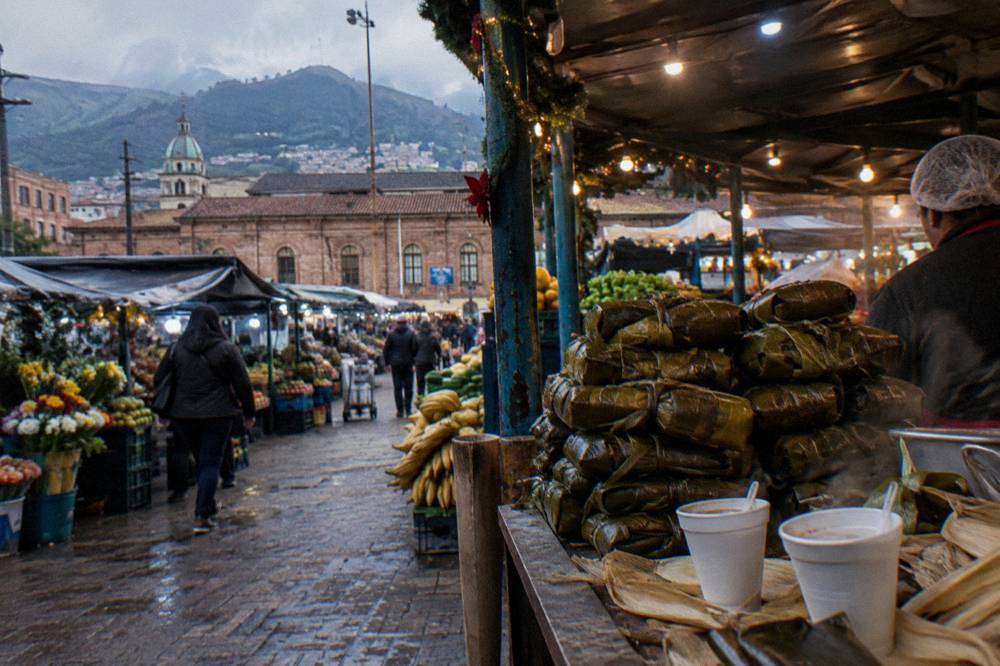
December wins because three things line up. The weather is in the drier half of the year, the city is in festival mode, and the markets are at their fullest before the holidays. The Festival del Tamal is the anchor: across the participating plazas, a combo of a tamal, a hot drink and an arepa or bread has been reported at 10,000 COP, and past editions sold more than 14,484 tamales. That is a city actively feeding itself in public, which is exactly what a food traveller wants to walk into.
If you would rather avoid holiday crowds and prices, July and August give you the same drier pattern with a quieter centre. And if you do not mind carrying a rain jacket, late October and November are arguably the richest food weeks of the whole year, with beer, wine, chocolate and restaurant festivals stacked back to back. The trade-offs are real, and the rest of this article walks through them month by month.
For a first visit in almost any month, the Viejo Bogota Food Tour with 12+ Tastings is a sensible anchor booking: four hours in the historic centre, rated 5.0 across 714 reviews, from $55 per person.
How Does Bogotá's Weather Actually Work Across The Year?
Bogotá's year splits into two rainy seasons, April to May and October to November, and two drier stretches, roughly December to February and July to August, with rain typically falling in afternoon showers rather than lasting all day. Daytime conditions stay mild year round because the city sits at about 2,640 m, so packing layers matters more than packing for heat.
The pattern is bimodal, which means you get two of each season every calendar year. Locals plan around the afternoon: markets, walking tours and climbs are morning activities, and the hours after about 2 p.m. are when the sky is most likely to open. The altitude shapes everything else. First-timers are advised to take one to two easy days, drink plenty of water, keep meals light and go easy on alcohol while the body adapts, because symptoms such as headache and fatigue usually peak in the first 24 to 48 hours.
One wrinkle for late 2026 and early 2027: the September 2026 IDEAM forecast put the probability of a strong El Niño above 90 percent for late 2026 into early 2027, potentially the most intense since 1950. For Bogotá that points toward less rain than average, sunnier days and colder nights through about February 2027. If you are travelling in that window, expect a drier, cooler version of the usual dry season, and pack accordingly.
What this means practically: a rainy-season month changes your schedule, not your destination. Paloquemao market opens Monday to Saturday from 4:30 a.m. to 4:30 p.m. and on Sundays and holidays from 5 a.m. to 4:30 p.m., so a morning market visit beats the showers almost every day of the year. The Paloquemao market hours guide covers the timing in detail.
Which Months Carry The Biggest Food Festivals?
Late October through early December is Bogotá's festival high season: the craft beer festival ran 23 to 24 October 2026, Chocoshow and Vino al Parque both land 27 to 29 November 2026, the ajiaco festival tradition falls in November, and the Festival del Tamal runs 5 to 8 December 2026 across more than 17 plazas. If festivals are the point of the trip, aim for those eight weeks.
The calendar below gathers the 2026 dates that are confirmed. Note that the October beer event has already passed; it is included to show the rhythm of the season.
| Event | 2026 dates | What it is | Where |
|---|---|---|---|
| Festival de la Cerveza Artesanal | 23 to 24 October (past) | 60 local producers, music, La Copa de las Alturas beer contest | Gran Estación |
| Bogotá Gourmet | 22 October to 22 November | Fixed two-person menus at 80-plus restaurants, three price tiers from a reported COP 89,000 | Citywide |
| Chocoshow | 27 to 29 November | Cacao expo with 175-plus exhibitors, tastings and demos | Corferias |
| Vino al Parque | 27 to 29 November | Wine festival with more than 1,100 references and live bands | Central Bogotá venue |
| Festival del Tamal | 5 to 8 December | Tamal combos across 17-plus market plazas, reported at 10,000 COP | District market plazas |
The ajiaco tradition deserves its own note. The Instituto Distrital de Turismo has run the Días de Ajiaco Santafereño in November, with plazas and restaurants across the city participating, and the official festival page carries the current year's dates and sign-up details. Ajiaco, the chicken and potato soup thickened with guascas herb, is the city's signature dish, and festival weeks are when family-run stalls at plazas like La Perseverancia serve it with the most pride.
Weather-wise, late October and November sit inside the second rainy season, so a festival-focused trip in those weeks means mornings out and afternoons indoors, which the festival venues conveniently are. December flips the equation: drier streets, plaza seating, hot chocolate weather.
Is December The Best Month For A First Food Trip?
For a first trip, December is the safest call: dry-season weather, the tamal festival from 5 to 8 December, Christmas fairs and the fullest markets of the year, all in one window. The trade-offs are bigger crowds in La Candelaria, higher demand for accommodations, and chilly evenings that genuinely call for a jacket and the hot-chocolate-with-cheese tradition.
December is when Bogotá behaves like the postcard version of itself. The plazas fill, the tamal festival runs across the district markets, and almojábanas and hot chocolate stop being a curiosity and become the obvious breakfast. Reported street-level prices give a sense of the season: an almojábana around 4,700 COP and a pan de bono around 4,300 COP at city bakeries, and a tamal festival combo with a hot drink at 10,000 COP. None of these are tour prices, they are what the city itself charges, and they are why a December trip feels abundant rather than expensive.
The counterargument is December's popularity. The historic centre is busier, and the run-up to Christmas means some businesses shift hours. A guided walk solves most of that friction: the best food walk for your dates question is worth settling early, because the most reviewed walks fill first in festival weeks. The Viejo Bogota Food Tour with 12+ Tastings, from $55 per person and rated 5.0 across 714 reviews, runs four hours through the historic centre and is the most reviewed food walk on this site; check availability for your exact dates on the operator's booking page.
If a four-hour walk feels like a lot for a first day at altitude, the morning or evening question is worth reading before you pick a time slot.
What About The Rainy Months, April, May, October And November?
Rainy-season months are when Bogotá's food calendar peaks, with the beer, chocolate, wine and restaurant festivals all landing between late October and late November, and April to May offering quieter markets and lower shoulder-season rates. The rain itself usually arrives as afternoon showers, so morning tours and evening indoor plans keep a wet-week trip fully workable.
The case for October and November is simply the density of events. Where else can you land a cacao expo with 175-plus exhibitors, a wine festival pouring more than 1,100 references, and a citywide restaurant festival with fixed menus, all inside the same month? Bogotá Gourmet's 2026 edition runs 22 October to 22 November with fixed two-person menus at a reported COP 89,000 for the basic tier, COP 139,000 intermediate and COP 199,000 premium, each including two drinks, a shared starter, two mains and a shared dessert. That is a restaurant-week structure that rewards travelling exactly then. Everything else covered here is indexed on Bogota Food Tours.
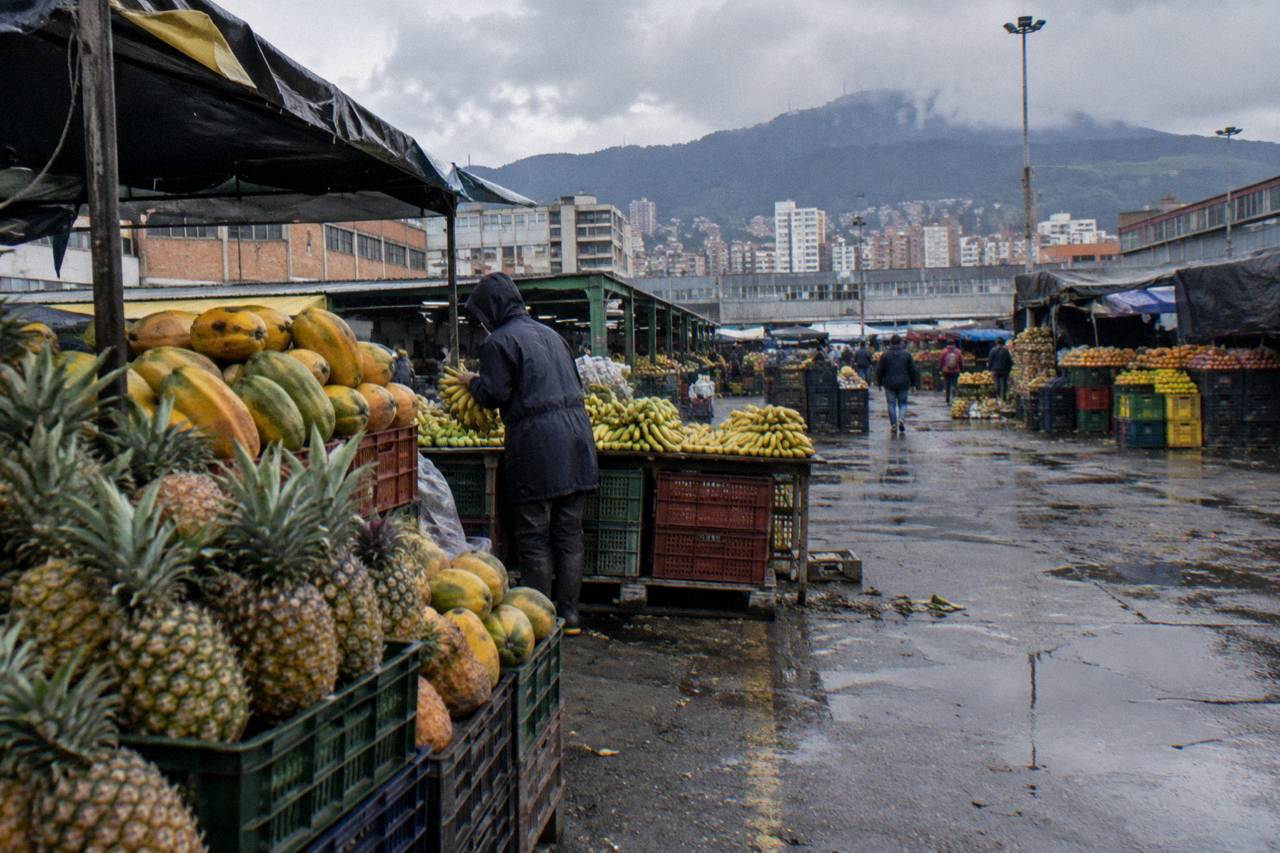
April and May are the quieter rainy stretch. Markets run their normal hours, the pre-dawn wholesale energy at Paloquemao, trucks unloading and vendors offering tastes of granadilla, lulo and uchuva before about 10 a.m., is at full volume on weekdays, and there are fewer visitors competing for walk slots. You will get wet some afternoons. You will also get a calmer version of the city.
One indoor option that shrugs off rain entirely: coffee and chocolate experiences. The Coffee and Chocolate tour in Bogota runs 2 hours 15 minutes, rated 5.0 across 79 reviews from $49 per person, and pairs two of the country's flagship flavours under one roof. It is a natural rainy-afternoon booking; confirm the current inclusions and meeting point on the booking page before you go.
Month By Month: What Each Part Of The Year Offers
January and February are dry and sunny with cold nights; March transitions toward rain; April and May are the first rainy season; June to August bring the second dry stretch and the calmest visitor flow; September warms into festival season; October and November are wet but event-packed; December is dry, festive and the fullest food month of the year.
The table compresses the year into one view. Weather entries reflect the typical bimodal pattern reported for Bogotá, and event entries reflect the confirmed 2026 calendar; dates for recurring festivals in other years should be checked against official pages.
| Month | Typical weather | Food reason to go | Watch out for |
|---|---|---|---|
| January | Dry, sunny days, cold nights | Holiday fairs winding down, calm markets | Colder nights than visitors expect |
| February | Dry, stable | Last of the dry stretch, easy walking | Dry season crowds in the centre |
| March | Transition, showers building | Quieter, pre-festival lull | Unpredictable afternoons |
| April | Rainy season | Shoulder rates, calm plazas | Afternoon showers |
| May | Rainy season tail | Green hills around the city | Wet weekends |
| June | Drying out | Mid-year calm | Variable skies |
| July | Dry stretch | Quiet visitor flow, full market hours | Book ahead for peak local holidays |
| August | Dry stretch | Stable mornings for tours | Cool evenings |
| September | Transition | Festival season begins, VegUp-style events | Showers returning |
| October | Rainy season | Craft beer festival (23 to 24 Oct 2026, past), Bogotá Gourmet starts | Rain, event ticket demand |
| November | Rainy season, events peak | Chocoshow and Vino al Parque 27 to 29 Nov, ajiaco tradition, Bogotá Gourmet ends 22 Nov | The busiest event calendar of the year |
| December | Dry, festive | Festival del Tamal 5 to 8 Dec, Christmas fairs | Peak crowds, book tours early |
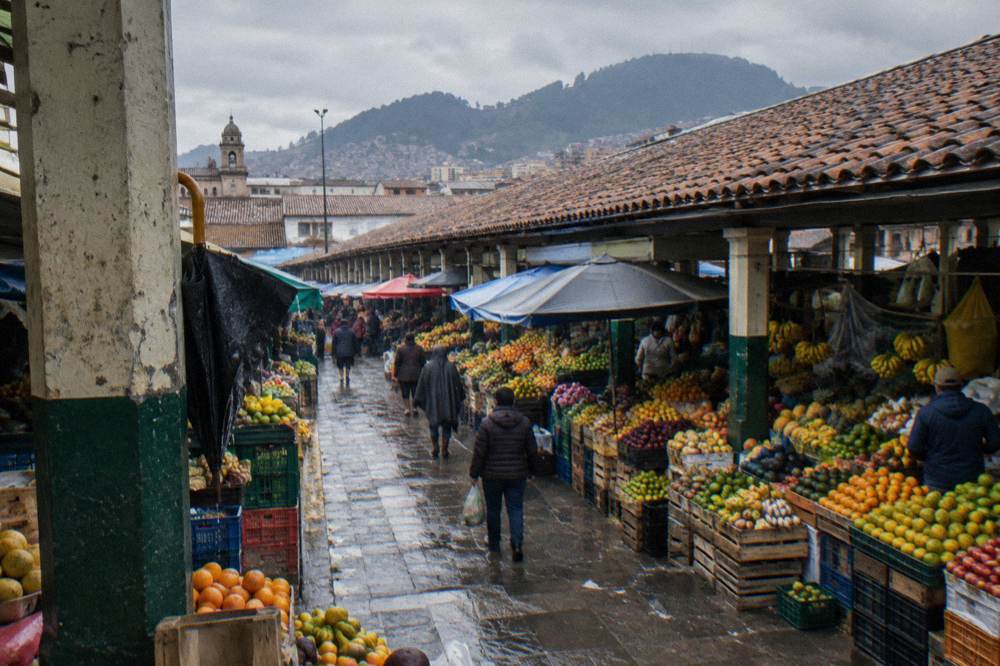
If fruit is your priority rather than festivals, note that Bogotá's markets run the same spectacular fruit stalls all year: lulo, curuba, granadilla, uchuva and dozens more do not take months off. A juice at a La Candelaria street cart has been reported at 4,000 COP for lulo and 5,000 COP for curuba with milk, year-round prices, not seasonal ones. The Colombian fruits guide lists what to look for.
Does The Time Of Year Change What A Trip Costs?
Tour prices in Bogotá generally do not swing by month the way hotel rates do; the walks compared here run from about $15 to $259 per person year-round, so the seasonal cost of a trip is driven mainly by flights and accommodation, plus event tickets in festival weeks. The peso has traded in a wide band recently, near 3,183 COP to the dollar as of early November 2026, which shapes street-level spending more than the calendar does.
Break the budget into three layers. Tour prices are fixed by listing: the Shared Gastronomy Tour in the Historic Center starts at $15 as a guide fee with tastings about US$12 extra, mid-range walks like the Viejo Bogota Food Tour run from $55 per person, and private options such as the Gastronomy of Colombia Private Tour reach $259. Those numbers do not move because it is December. Flights and hotels are the layer that does move, and festival weeks, especially late November and December, are when accommodation demand peaks. Event tickets are the third layer: Vino al Parque sells through major ticketing with limited capacity, so festival weeks add both ticket cost and the need to book ahead.
The exchange rate is the quiet variable. A peso near 3,183 to the dollar makes street food and market eating remarkably cheap for anyone earning dollars or euros, and that is true in every month. Time Out naming Chapinero Alto the seventh coolest neighbourhood in the world in 2026 has added visitor footfall to that district's dining scene, a good reason to look beyond La Candelaria whenever you come, and the neighborhood food guide maps the options.
Any Month Works If You Plan Around The Afternoon Rain
Every month in Bogotá delivers a good food trip provided you match the plan to the season: dry months reward long walking tours and plaza lingering, while rainy months shift the weight to morning markets and indoor tastings. There is no month to avoid outright, only months that ask for a rain jacket and a slightly earlier start.
The honest summary is that Bogotá rewards two kinds of traveller differently. If you want dry pavements, easy walking and the classic first-visit experience, come in December through February or July through August, and accept the crowds that come with the holiday weeks. If you want the food calendar at its loudest, come in late October or November, pack a rain layer, and structure your days around morning markets and indoor afternoon tastings. Both are good trips.
Whatever month you land on, the same planning rules hold: give yourself a light first day at 2,640 m, book the walks you care about before you fly, and keep at least one morning free for a plaza market at its pre-10 a.m. best. The rest, including whether the sky cooperates at 3 p.m., is part of the city's character rather than a problem to solve.
Common Questions About The Best Month To Visit Bogotá
What Is The Best Month To Go To Bogotá?
December is the best single month for most visitors: it falls in the drier stretch, the Festival del Tamal runs 5 to 8 December across more than 17 market plazas, and the city's food scene is at its most festive. July and August are the best quieter alternative, with the same dry pattern and fewer crowds.
What Is The Rainy Season In Bogotá?
Bogotá has two rainy seasons in a typical year, roughly April to May and October to November, with rain usually arriving as afternoon showers rather than lasting all day. Mornings are generally the most reliable window for markets and walking tours in those months.
Is Bogotá Worth Visiting In The Rainy Season?
Yes. Late October and November are the busiest food-festival weeks of the year, including a cacao expo, a wine festival and a citywide restaurant festival. Plan mornings outdoors and afternoons at indoor tastings or festival venues and the rain rarely disrupts the trip.
What Is The Driest Month In Bogotá?
January and February sit in the middle of the driest stretch, with July and August forming a second drier window. Daytime conditions stay mild year round at the city's altitude, so the dry months bring sun and cold nights rather than heat.
When Is The Tamal Festival In Bogotá?
The Festival del Tamal runs 5 to 8 December 2026 across more than 17 district market plazas, with a combo of a tamal, a hot drink and an arepa or bread sold at 10,000 COP in the last edition. Check the district's official pages for the dates in any future year.
Do Food Tour Prices Change By Season In Bogotá?
The walking tours compared here keep fixed listing prices year-round, from a $15 guide-fee walk with tastings extra to $259 for a long private tour. Seasonal cost differences come from flights, hotels and festival tickets rather than the tours themselves; confirm current prices on each booking page.