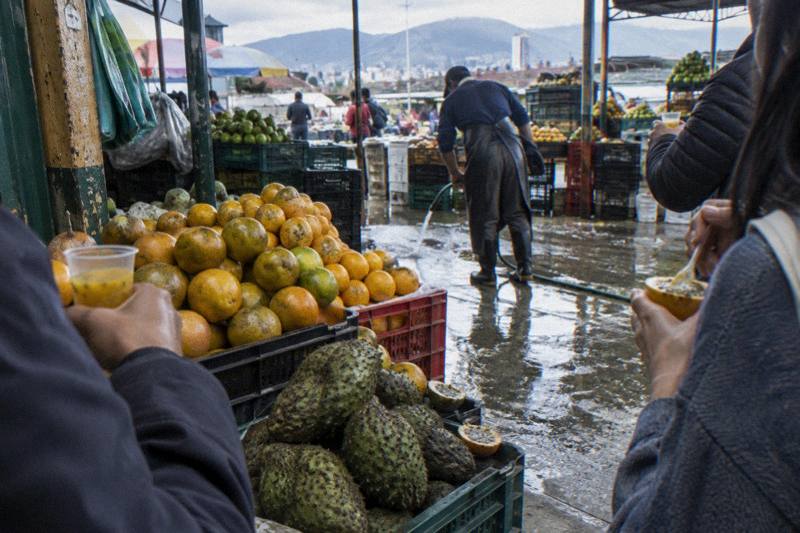
Paloquemao Market Hours And The Best Time To Go
Paloquemao opens at 4:30 in the morning, six days a week, and the character of the place changes completely depending on when you arrive. Here is the official schedule, what each part of the day feels like, and how to slot a guided tasting into it.
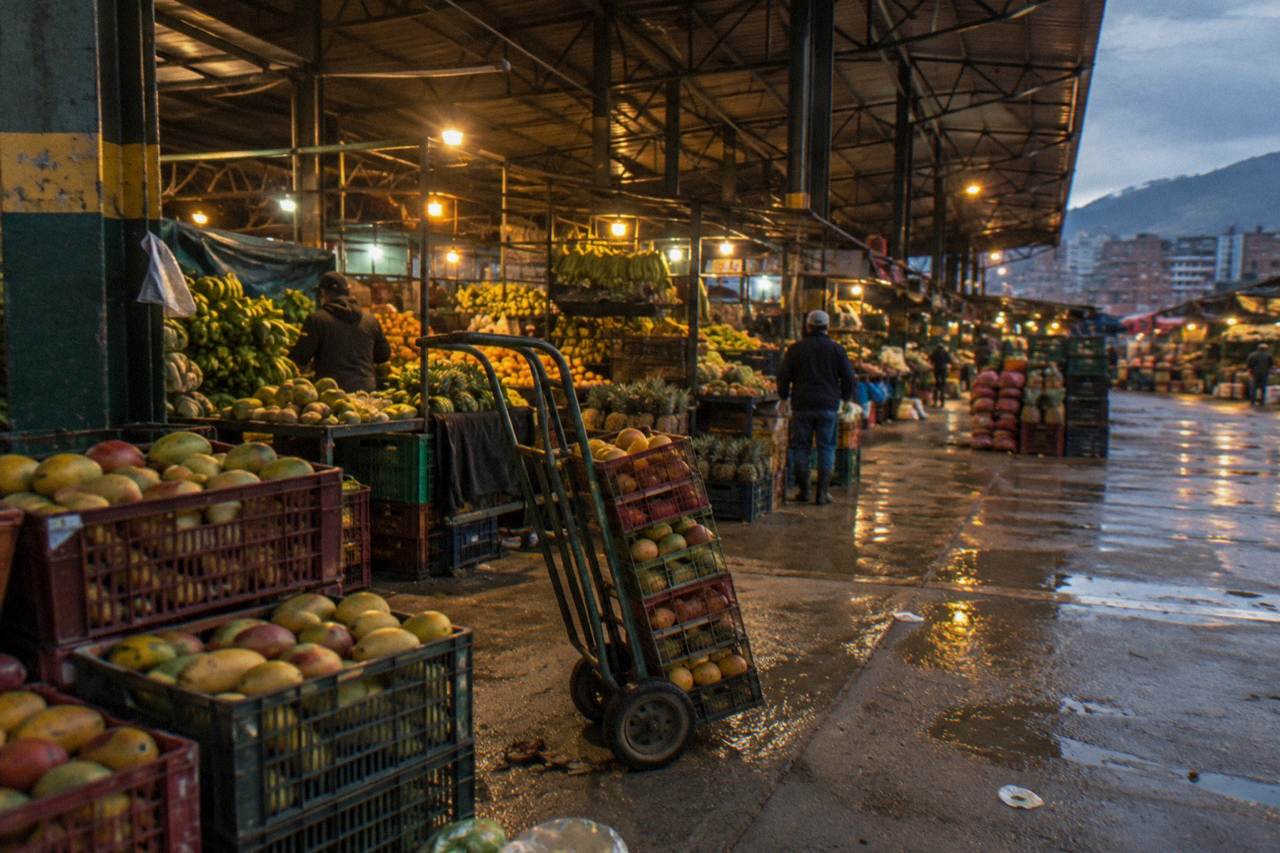
Short answer
Paloquemao Market is open Monday to Saturday from 4:30 a.m. to 4:30 p.m., and Sundays and public holidays from 5:00 a.m. to 4:30 p.m.; the flower section winds down by 11:00 a.m. The pre-dawn to mid-morning stretch is the wholesale rush; after midday the market thins out. Guided fruit walks run mornings.
Paloquemao is not a market that eases into its day. By the time most visitors are checking out of their hotels, the wholesale trade has been running for hours, trucks have come and gone from the loading bays, and vendors have already handed out hundreds of fruit samples. The official opening time is 4:30 in the morning, and that single fact shapes everything about timing a visit.
Getting the timing right matters more here than at almost any other food stop in Bogotá, because the market you meet at 7 a.m. and the one you meet at 2 p.m. are close to two different places. This guide sets out the official hours, walks through what each stretch of the day actually looks like, covers Sundays and Colombian public holidays, explains how to reach the market, and helps you decide whether to go alone or with a guide. It draws on the market's own published schedule, official city tourism sources, and the tour details this site covers elsewhere, including the Paloquemao market food guide for the full stalls-and-fruit picture.
What Are Paloquemao Market's Official Hours?
Paloquemao Market opens Monday through Saturday at 4:30 a.m. and closes at 4:30 p.m., according to the market's own published schedule; on Sundays and Colombian public holidays the hours shift to 5:00 a.m. until 4:30 p.m. The flower section, a major draw in its own right, runs daily but effectively winds down by 11:00 a.m. Arrive after mid-afternoon on a weekday and you will find it closed.
Those hours come straight from the market operator's contact page and are matched by the official Visit Bogotá listing for the plaza, so you are not relying on a guidebook's memory of last decade. The key number to plan around is not the closing time but the opening: 4:30 a.m. is a genuine wholesale start, not a symbolic one.
| Day | Opening | Closing | Notes |
|---|---|---|---|
| Monday to Saturday | 4:30 a.m. | 4:30 p.m. | Wholesale peak pre-dawn to about 10 a.m. |
| Sundays and public holidays | 5:00 a.m. | 4:30 p.m. | Opens 30 min later; calmer floor |
| Flower section | Daily | Until about 11:00 a.m. | Best flower selection is in the morning |
One practical consequence of these hours: the market is one of the few major food attractions in Bogotá that is genuinely better early. Museums open at 10, restaurants barely function before noon, but Paloquemao is at full volume while the rest of the city is still waking up. If you are jet-lagged or freshly landed from a red-eye, that works in your favor.
It is also worth knowing that these are the plaza's own reported hours and that individual stalls inside can pack up on their own schedule, especially late in the day. If a specific purchase matters to you, flowers above all, treat the morning as the safe window rather than betting on the final hour.
A small note on how Colombian holidays work, because it bites trip planners every year: many public holidays are moved to the nearest Monday under national law, which creates long weekends and shifts crowd patterns citywide. A Monday that looks ordinary on your calendar may be a festivo with the shortened market schedule. When in doubt, treat any Monday adjacent to a known holiday as a possible festivo and plan for the 4:30 p.m. close; the safest check is the market's own page or the booking page of any tour you have reserved for that day.
What Does The Market Day Actually Look Like?
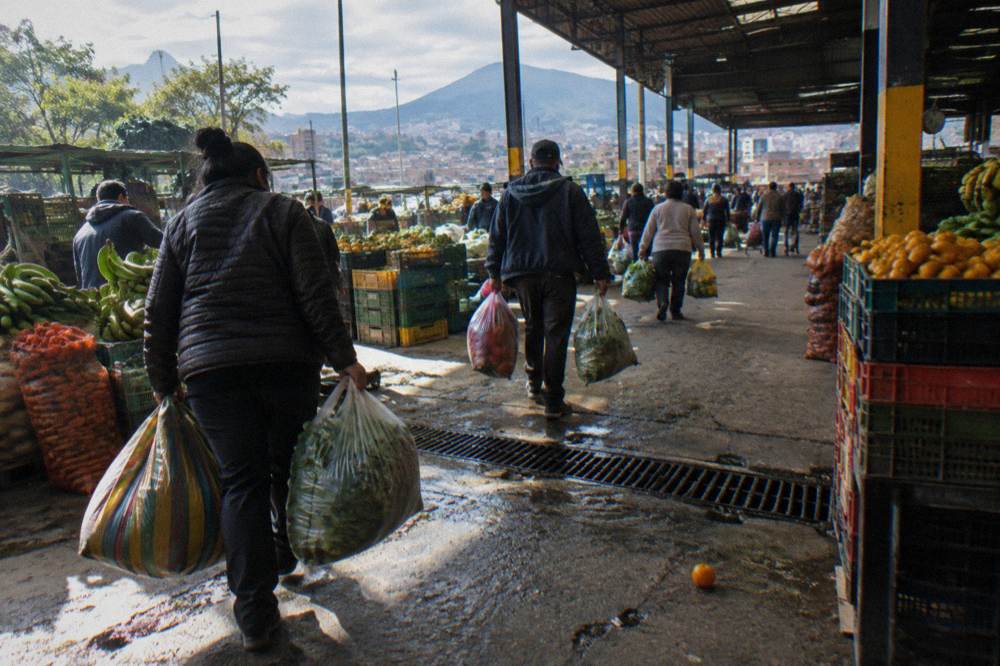
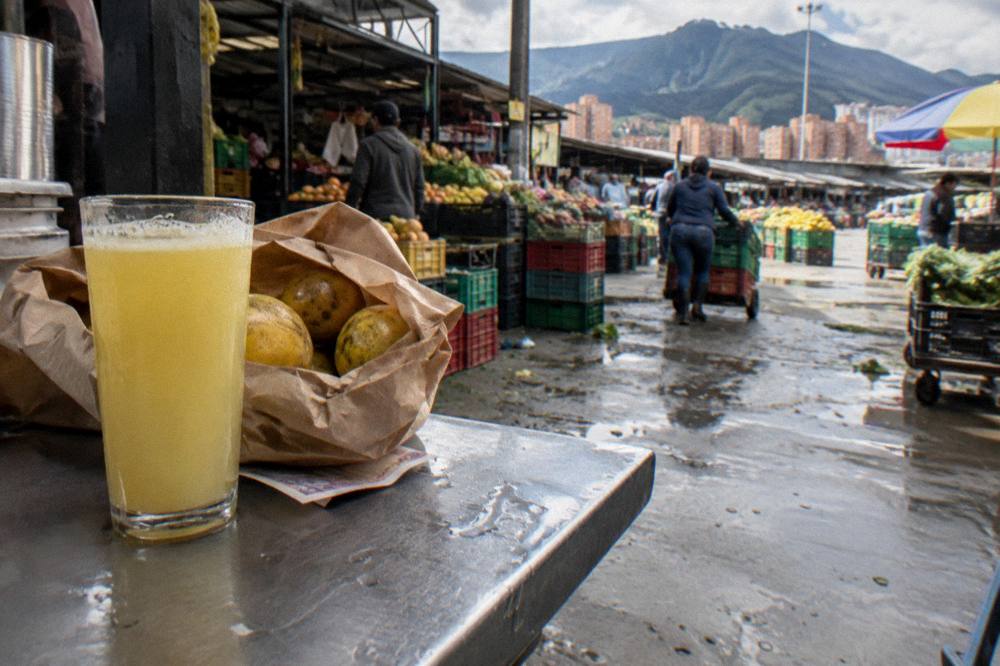
From pre-dawn until roughly 10 a.m. on weekdays, Paloquemao runs at wholesale energy: trucks unload produce, vendors call out across the aisles, and fruit sellers hand out tastes of granadilla, lulo and uchuva to anyone who stops. After midday the floor thins noticeably, and by mid-afternoon many stalls are winding down. The market's intensity is front-loaded into the morning.
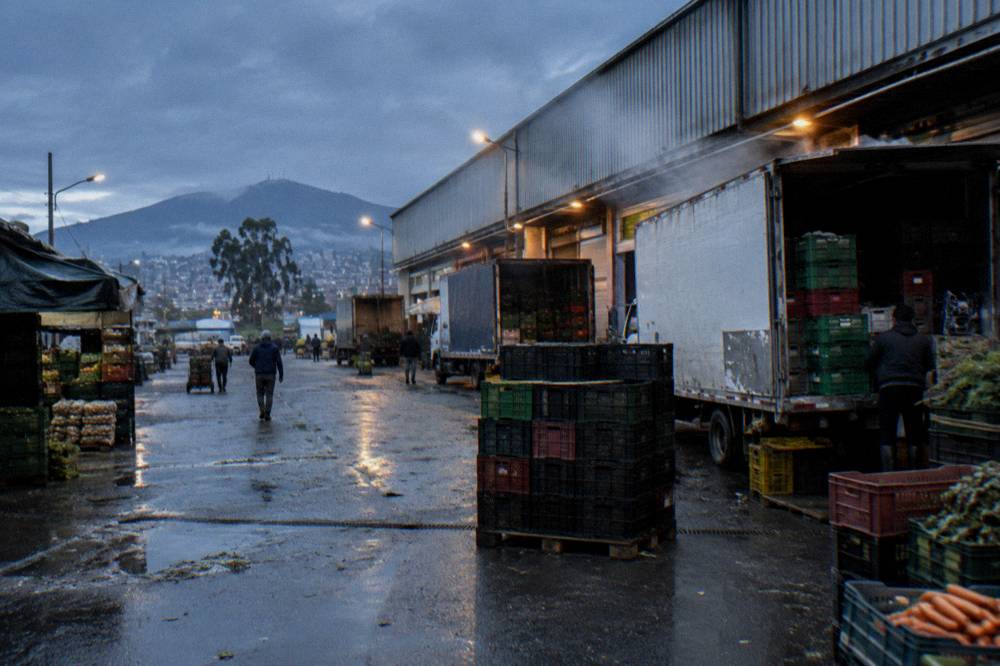
That description of the early stretch, the unloading trucks and the free tastes of exotic fruit, comes from recent traveler reporting on the market, and it matches what the plaza is: the supply point for a large share of the city's produce trade. The morning is louder, colder, wetter underfoot and far more alive. Visitors who want the sensory version of Paloquemao, the one photographs never quite capture, need to be there before the wholesale trade goes quiet.
The midday and afternoon market is not a write-off. It is easier to walk, easier to photograph, and the sit-down food stalls keep serving. But you trade away the atmosphere, and you run closer to the 4:30 p.m. close, which leaves no margin if something runs long. A good middle path, if an early start is unrealistic, is to arrive shortly after the morning rush relaxes, when the energy is still there but the aisles are passable.
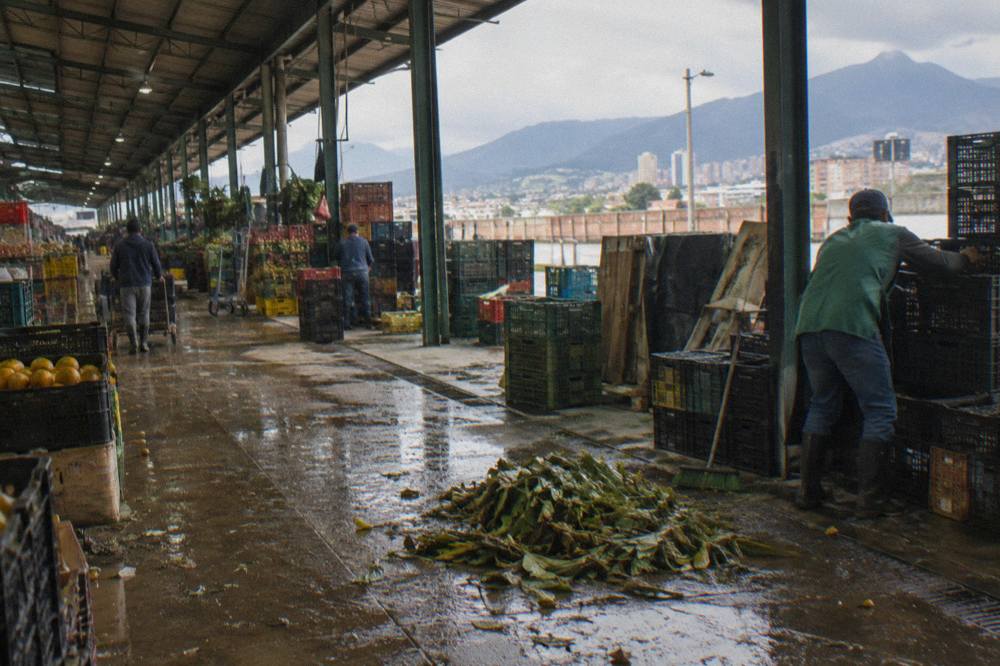
This rhythm is exactly why guided fruit walks cluster in the morning. The featured walk on this site, the Paloquemao Market Food Tour with exotic fruit and local snacks, runs about 3 hours, is priced from $82 per person, and is rated 4.9 across 71 reviews; it exists to convert the market's chaos into a counted, explained tasting route, which is most valuable when the floor is at its busiest.
If you would rather read the full stall-by-stall picture before deciding how to spend your morning, the guide to Bogota's markets beyond Paloquemao covers the other plazas, and the fruit primer on Colombian fruits to try in Bogotá explains what those free morning samples actually are.
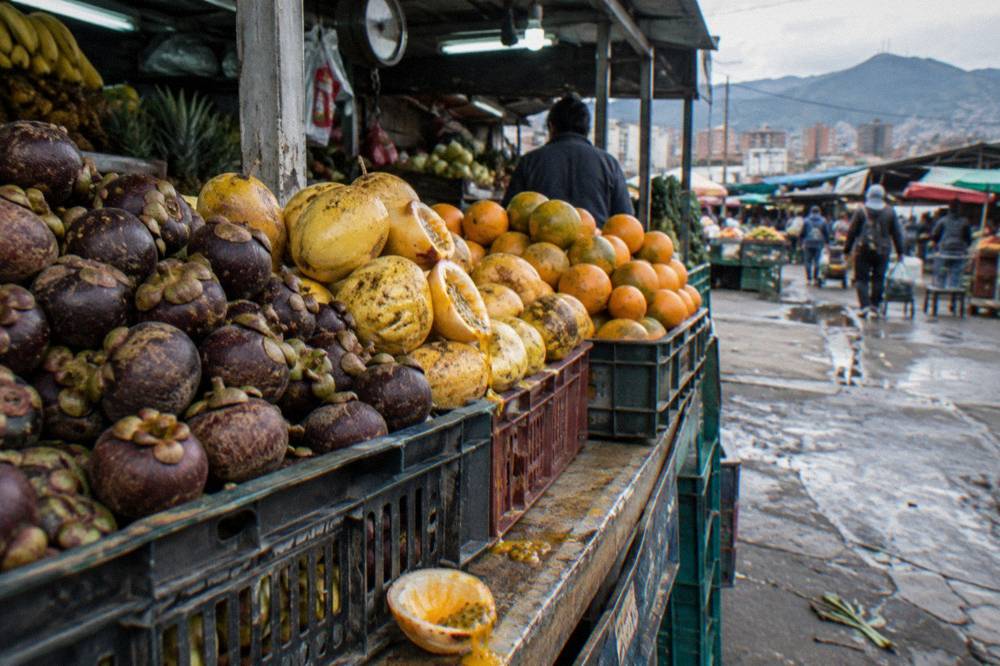
When Is The Best Time To Visit Paloquemao?
For atmosphere, arrive between about 6:30 and 9:30 a.m. on a weekday: the wholesale energy is at full pitch, fruit tasting is easiest, and you are safely inside every section's hours, including flowers. For comfort and photographs, late morning works. Avoid the last two hours before closing, when stalls are already packing up and the flower section is long finished.
The weekday versus weekend distinction matters more than most first-time visitors expect. Saturday keeps the full 4:30 a.m. to 4:30 p.m. schedule but draws a heavier retail crowd, including families doing the week's shopping. Midweek mornings, Tuesday through Thursday, tend to give you the wholesale spectacle with a little more room to stand in.
If you are pairing the market with a guided tasting, the arithmetic is simple: most market walks run about 3 hours, so a 9 or 10 a.m. start still lands you inside the good window, while anything beginning after noon fights both the thinning floor and the afternoon close. A tour that starts at 2 p.m. on a Sunday, when the plaza shuts at 4:30 p.m., is not a tour that happens.
| Time of day | What you get | What you trade away | Who it suits |
|---|---|---|---|
| Pre-dawn to about 7:30 a.m. | Trucks unloading, loudest wholesale energy, freshest arrivals | Thin retail service, cold and wet underfoot, few other visitors | Photographers, early risers, red-eye arrivals |
| About 7:30 to 9:30 a.m. | Full atmosphere plus fruit samples, all sections open | Busiest aisles of the day | First-time visitors, most guided walks |
| Late morning, 10 a.m. to noon | Easier walking, flowers until about 11 a.m., calmer stalls | Wholesale trade winding down | Families, slow movers, photography |
| After noon | Quiet floor, sit-down food stalls still serving | Thin stalls, closing time approaching | Only for late starts or return visits |

For readers who want the market experience handed to them, the shared exotic fruit walk at Paloquemao is a strong middle option: it runs 3 hours, is priced from $50.17 per person, and carries a 4.6 rating across 32 reviews, enough of a review pool to read meaningfully. It hits the same morning logic as any independent visit, with a guide doing the stall selection.
Whichever way you go, check the booking page for the exact start time of the specific date you want, since tour slots, not the market, are usually the binding constraint on a morning plan.
What About Sundays And Public Holidays?
On Sundays and Colombian public holidays, Paloquemao opens at 5:00 a.m., thirty minutes later than the weekday start, and closes at the same 4:30 p.m. The only real change is that later opening, not an early finish. Still, if Sunday is your only day, build the market into the morning, when stalls and fruit sellers are at their busiest, and keep the afternoon for something else.
The Sunday market is a different animal in feel as well as in hours. The wholesale trade is largely absent, families replace restaurant buyers, and the pace is slower and more stroll-like. For travelers who want photographs and an easy wander rather than the full industrial spectacle, that can actually be the better version. For travelers chasing the pre-dawn energy described above, Sunday will not deliver it.
Colombian holidays deserve a specific warning because they do not always match the calendar intuition of foreign visitors: many are moved to Mondays, creating long weekends that change crowd patterns across the city. If a public holiday falls on your planned day, the 4:30 p.m. close applies, and guided walks that day may also shift their schedules, so confirm the slot on the booking page before locking the rest of your day around it.
A natural Sunday pairing exists, and it runs later in the day: the Usaquén Sunday market and food guide covers the flea and food market in Usaquén, which operates Saturdays, Sundays and holiday Mondays from 9:00 a.m. to 5:30 p.m. Usaquén in the late morning or afternoon after Paloquemao early is one of the better one-day market combinations in the city, and it neatly covers the gap after Paloquemao's holiday close. The Usaquén market's food stalls sell arepas, fresh-cut fruit with salt and lime, empanadas and hot chocolate, so the two markets together give you both the wholesale spectacle and a lazy grazing afternoon without repeating yourself.
How Do You Get To Paloquemao Market?
Paloquemao sits west of the historic center, roughly 10 minutes by car from La Candelaria and 15 to 20 from Chapinero depending on traffic, and the practical answer for most visitors is a taxi or ride app, especially early in the morning. Public transport reaches the area but involves a walk with market-bound crowds and, often, wet floors and heavy bags on the way out.
The early start is the deciding factor. Bogotá's TransMilenio system runs a unified fare of COP 3,550 as of January 2026, and it does serve the area, but at 6 a.m., with the city still dark and the market's aisles ahead of you, a door-to-door ride is what most people actually want. Ride apps and taxis are inexpensive by the standards visitors arrive with, and the market's main entrance is a known landmark for any driver.
Going back is the same calculation in reverse. If you have bought fruit or flowers, and almost everyone does, you do not want to negotiate a crowded bus with a bag of lulos. Budget for a ride both ways and treat the transit question as solved. Traffic builds sharply after about 7:30 a.m., so the earlier you move, the faster the trip, another quiet argument for the early window.
If you are combining the market with the rest of a first visit, the 3-day food-first Bogotá itinerary slots a Paloquemao morning into a wider plan, including which neighborhood to base yourself in for an early start.
Should You Visit Paloquemao Alone Or With A Guide?
Going alone costs nothing but courage: entry is free, fruit sellers hand out samples, and the market is navigable with patience and a little Spanish. A guided walk, from $45.91 to $82 per person depending on the option, buys a counted tasting route, translation, context for each fruit, and a fixed meeting point. Both are valid; the guide matters most on a first visit or a short stay.
The honest trade-off is this. Alone, you will taste what the friendliest stalls offer, and you will miss the explanations: why a lulo is sour, what uchuva pairs with, which of a dozen passion-fruit cousins is the one worth carrying home. With a guide, you get a structured route through that confusion, and the market's variety, which is genuinely overwhelming at 7 a.m., becomes a lesson instead of a blur.
| Option | Price basis | Duration | Reviews | Best for |
|---|---|---|---|---|
| Visit on your own | Entry free; you pay for what you taste | Set your own pace | Not applicable | Repeat visitors, confident Spanish speakers |
| Paloquemao Market Food Tour (exotic fruit, local snacks) | From $82 per person | 3 hours | Rated 4.9 across 71 reviews | First visit, full snack-plus-fruit route |
| Shared Tour of Colombian Exotic Fruit | From $50.17 per person | 3 hours | Rated 4.6 across 32 reviews | Shared-group fruit focus |
| Paloquemao Market Tour with Fruit Tasting | From $45.91 per person | 2.5 hours | Too few reviews to quote a rating | Shorter visits, tighter budgets |
The budget option in that table is real and runs a useful half-hour shorter, but its review pool is still too small for any rating claim to mean much; that is not a criticism of the walk, just a note on what the numbers can honestly support. The fruit-focused shared tour is the balanced middle, and the featured 3-hour walk from $82 per person is the one with the deepest review record of the three and the most complete snack-plus-fruit itinerary.
Dietary needs are worth flagging before you book rather than at the stall: the listings describe fruit and snack tastings, and where a specific dietary requirement matters, message the operator through the booking page first. That is standard advice for any tasting walk, and it is cheaper to ask than to discover mid-tour.
One more thing the guided side settles: the meeting point. Independent visitors have to find the market entrance themselves, which is easy enough in daylight but less obvious at 6:30 a.m. in an unfamiliar city; a booked walk hands you an exact place and time, which on a dark pre-dawn start is worth more than it sounds.
Practical Tips For Timing Your Visit
Plan to arrive before 9:30 a.m., keep Sunday plans inside the 4:30 p.m. close, wear closed shoes you do not mind getting wet, and bring small notes for fruit and juices. Budget two to three hours for a self-guided visit, more if you sit down to eat. If a guided walk appeals, book the slot first and build the morning around its meeting time.
The footwear point sounds fussy until you have walked a market floor at 7 a.m., where washing water, produce trimmings and the general runoff of a working plaza meet your shoes. The same goes for bags: a small backpack beats hand luggage, and a reusable bag for fruit purchases earns its place immediately.
Money is the other timing issue. Fruit and juice purchases at the market are cheap in local terms, and they happen in cash or with quick tap payments, stall by stall. A guided tour removes most of those micro-transactions because the tastings are part of the ticket, which is one reason travelers who hate haggling drift toward the guided side of the table above.
| Situation | Recommended plan | Why |
|---|---|---|
| First morning in Bogotá after a red-eye | Skip Paloquemao on day one; go day two | Altitude guidance favors one to two easy days before early, strenuous starts |
| One day only, a Sunday | Market by 8:00 a.m., done by 11:00 a.m., Usaquén after | Holiday close is 4:30 p.m.; Usaquén runs until 5:30 p.m. |
| Photographers | Arrive 6:30 to 7:00 a.m. on a weekday | Truck unloading and wholesale light, before the retail crowd |
| Families with kids | Late morning, 10 a.m. to noon | Calmer aisles, flowers until about 11 a.m., easier walking |
| Booked guided walk | Follow the tour's meeting time, not the market's clock | Tour slots, not opening hours, set your morning |
Altitude is a fair final consideration for the early start. Bogotá sits at about 2,640 m, and current guidance suggests one to two easy days of adaptation, steady hydration and lighter meals before strenuous activity. A market morning is not a hike, but the pre-dawn alarm on your first landing day can be; if you have just flown in, push Paloquemao to day two and keep day one flat. The eating at altitude guide covers this in full.
For everything this site tracks about the city's food walks, tastings and market visits, Bogota Food Tours is the home page; the timing questions on this page are the ones that decide whether your market morning is a spectacle or a shrug.
Common Questions About Paloquemao Market Hours
What Time Does Paloquemao Market Open?
According to the market's published schedule, Paloquemao opens at 4:30 a.m. Monday through Saturday and at 5:00 a.m. on Sundays and public holidays.
What Time Does Paloquemao Market Close?
The market closes at 4:30 p.m. Monday through Saturday and at 4:30 p.m. on Sundays and Colombian public holidays.
Is Paloquemao Open On Sundays?
Yes, it opens 30 minutes later: 5:00 a.m. to 4:30 p.m. The feel changes too, with more families and far less of the weekday wholesale trade.
When Should You Go To Paloquemao For The Full Market Experience?
Aim for a weekday morning, roughly 6:30 to 9:30 a.m., when the wholesale energy is at its peak and vendors are most generous with fruit samples. The flower section is finished by about 11:00 a.m.
How Long Do You Need At Paloquemao Market?
Plan on two to three hours for a self-guided visit, longer if you sit down to eat. Guided tasting walks run about 2.5 to 3 hours.