Tipping In Bogotá: Restaurants, Cafes And Tours
Tipping in Colombia confuses first-time visitors because the answer is almost always \"optional, but expected if service was good.\" Here is exactly how the 10 percent propina works, what to hand a food tour guide in cash, and where no tip is expected at all.
Short answer
At sit-down restaurants in Bogotá, staff ask whether to add the voluntary 10 percent propina, a tip capped by law at 10 percent under Ley 1935 de 2018. You can accept, lower or decline it. Street food, market stalls and counters expect no tip. Tour guides get cash, roughly USD 10 to 20 per person on a group food walk.
Tipping in Colombia is simpler than it looks, but it is not the same system as the United States, and it is not the same as Europe either. The default at a Bogotá restaurant is a voluntary 10 percent service charge the server will ask you to approve, not an automatic add-on and not an open-ended expectation. Beyond restaurants the rules shift fast: cafe counters, market stalls and street food vendors expect nothing, while a guide who just walked you through four hours of tastings very much expects something, in cash.
This guide walks through each situation a visitor actually meets, with the legal cap on the restaurant propina, real tour prices so you can budget a tip as a share of the ticket, and the small cash amounts that are customary for drivers, porters and hotel staff. The Bogota Food Tours planning pages exist for exactly this kind of question: the money details you want settled before you sit down or book anything.
How Much Should You Tip In Bogotá Restaurants?
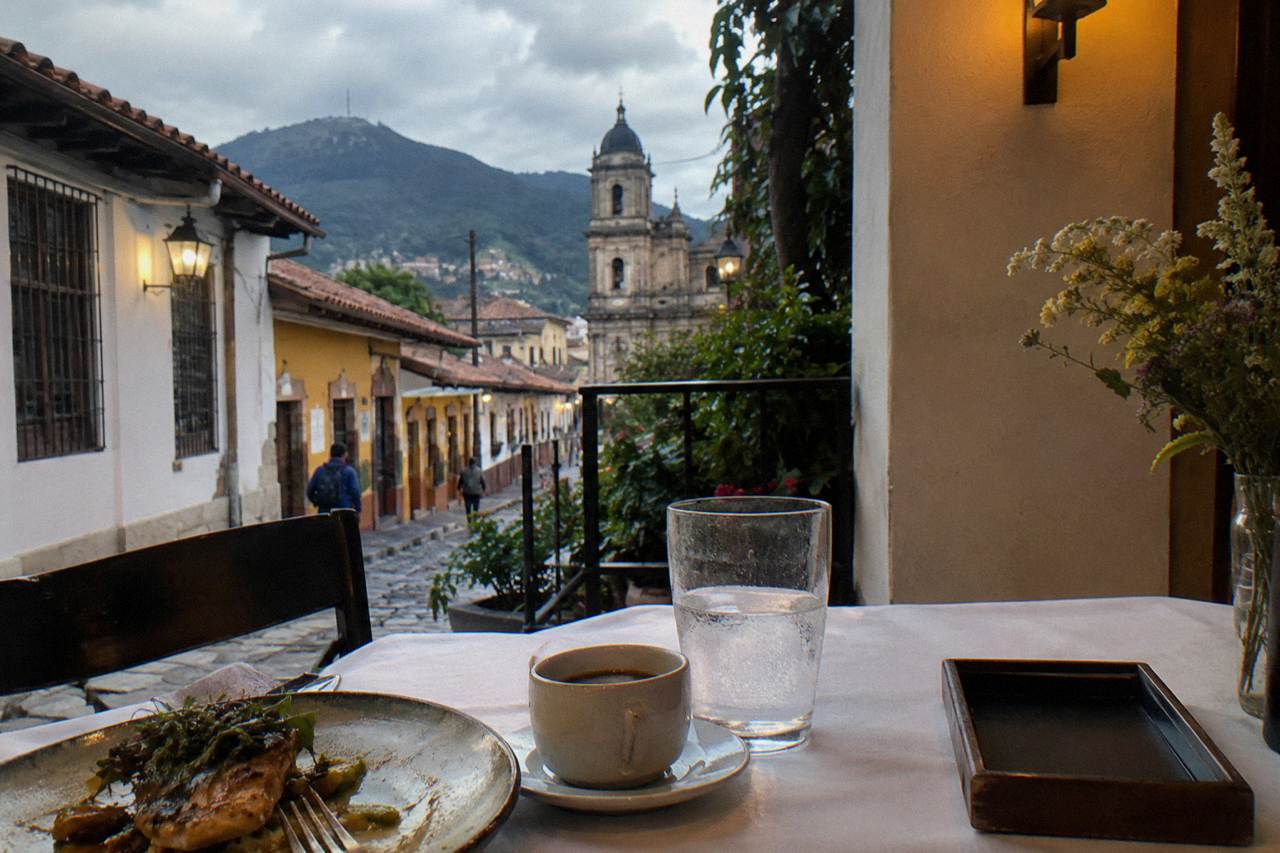
The standard is the propina voluntaria: a voluntary 10 percent service tip that staff ask about directly before charging your card or taking your cash. It is capped by law at 10 percent under Ley 1935 de 2018, so no restaurant can load on more. Most locals accept it when service was good, but you may reduce it or decline it entirely, and nothing about the law forces your hand.
The mechanics matter more than the number. When you ask for the bill, the server typically asks "¿propina?" or "¿acepta el servicio?" before running the total. A yes adds exactly 10 percent. A no, or a request to lower it, is socially normal, not a scene. What you should not do is add a second tip on top of the accepted propina the way you might stack 18 percent plus cash in the United States: the Colombian system treats the 10 percent as the whole tip, pooled for the staff.
Service charge is not automatically included in the bill, but some menus note that a voluntary propina will be offered, and larger groups should check the bill for any stated service line before assuming. If a bill already carries a service charge, an extra tip is genuinely optional and uncommon.
| Situation | Customary amount | Notes |
|---|---|---|
| Sit-down restaurant, good service | 10 percent propina, voluntary | Capped by law at 10 percent; server asks first |
| Sit-down restaurant, poor service | Decline or lower the propina | Socially accepted, state it when paying |
| Bar or brewpub table service | 10 percent if offered the propina | Counter service expects nothing |
| Hotel breakfast room | Follow the restaurant rule if it is table service | Grab-and-go counters, no tip |
| Bill already includes service | No extra required | Check the printed bill |
One exchange-rate note for anyone converting in their head: the peso traded at roughly 3,183 Colombian pesos per US dollar on 2 November 2026, and that figure moves daily, so treat any COP-to-USD math as approximate. A 10 percent tip is easiest computed on the printed total in pesos, in pesos, rather than converting first.
Do You Tip At Cafes, Street Food Stalls And Markets?
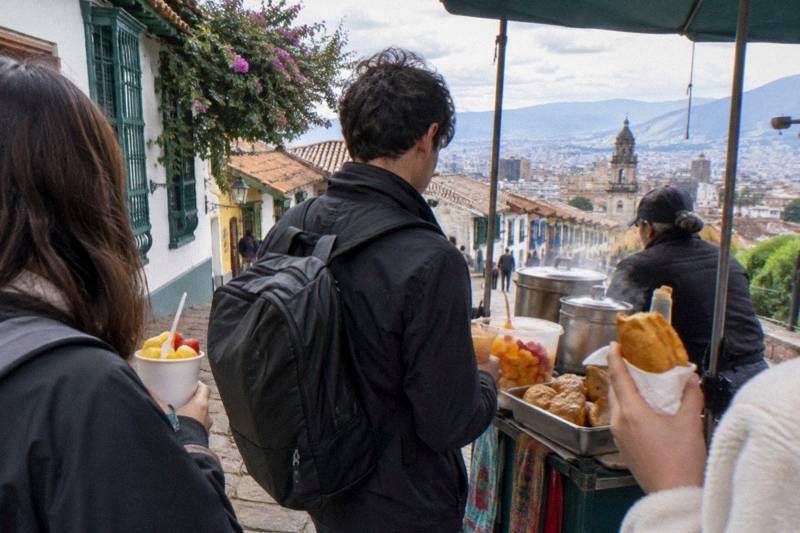
No. Counter service, street food, market stalls, juice carts and bakery counters in Bogotá do not expect a tip, and there is usually no tip jar or line on the screen for one. The propina culture applies to table service. If a vendor hands you change, keeping the small coins or rounding up a few hundred pesos is a friendly gesture, not an obligation, and nobody will blink if you pay exact.
This is good news for a street-food-focused trip, because most of what you will eat in La Candelaria and at the plazas costs very little and carries no service markup. A lulo juice at a fruit cart in La Candelaria runs a reported 4,000 COP, curuba with milk 5,000 COP, an almojábana around 4,700 COP and a pan de bono around 4,300 COP from bakery listings. Tipping on top of a 4,000 peso juice would be unusual; just take your change and say gracias.
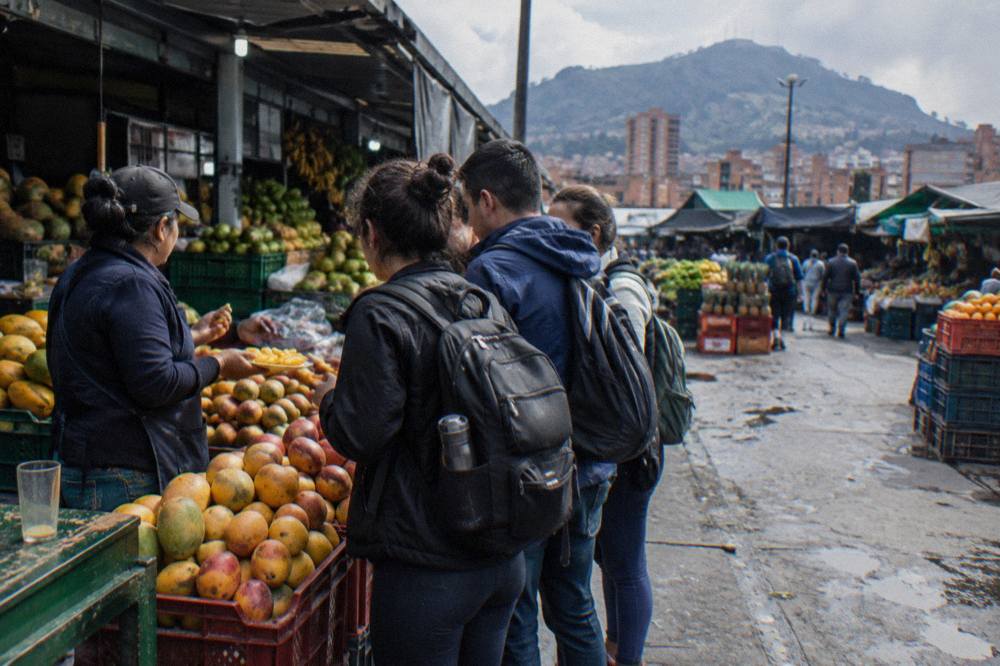
At the big public markets the same rule holds. Browsing Paloquemao, which opens Monday to Saturday from 4:30 a.m. to 4:30 p.m. and Sundays and holidays from 5:00 a.m. to 4:30 p.m., costs nothing to enter, and the fruit, juice and snack stalls operate as counters. If a vendor offers generous free tastes of granadilla, lulo or uchuva, buying something is the real courtesy, and our Paloquemao market food guide covers which stalls and sectors reward that loop. Tips are simply not part of market commerce there.
The distinction to hold onto is table versus counter. A cafe where someone brings your pour-over to the table and takes your order may offer the propina at the bill; a cafe where you order, pay and carry the cup yourself does not. For help telling the formats apart before you go, the what a Bogotá food walk costs page breaks down which eating situations in the city carry service expectations and which never do.
How Much Do You Tip A Food Tour Guide In Bogotá?
Cash is king and roughly USD 10 to 20 per person is the comfortable range for a standard three to four hour group food walk, scaled up for private guides or exceptional service. The tip is separate from the tour price and given at the end, in cash, directly to the guide. If a second person assists or drives, a smaller cash amount for them is a considerate touch.
Why cash and not the card: guides on booked walks are typically paid through the operator, and your tip bypasses all of that. Dollars are accepted and appreciated, but Colombian pesos avoid any exchange hassle for the guide, and small bills matter because a guide cannot easily break a large note on the street.
To size the tip against the ticket, the group walks compared here run from $15 to $64.99 per person before tips: the Shared Gastronomy Tour in the Historic Center lists at $15 as a guide fee with tastings about US$12 extra, the flagship Viejo Bogota Food Tour with 12+ Tastings runs from $55 per person at 4 hours, the Bogotá Food Experience: Cultural & Culinary Tour from $47.15 at 4 hours, and the Food Tour in La Candelaria Bogotá from $63 at 3 hours. On any of these, a tip of 15 to 25 percent of the tour price lands you in the normal zone without arithmetic gymnastics.
The most reviewed walk in the city, rated 5.0 across 714 reviews, is the Viejo Bogota Food Tour with 12+ Tastings, a 4 hour route from $55 per person; Check availability and plan the guide tip as a separate cash line in your day budget. A guide delivering 12 or more tastings across four hours has earned the upper end of the range if the energy held.
| Tour | From price | Duration | Typical cash tip per person |
|---|---|---|---|
| Viejo Bogota Food Tour with 12+ Tastings | $55 | 4 hours | USD 10 to 20 |
| Bogotá Food Experience: Cultural & Culinary Tour | $47.15 | 4 hours | USD 10 to 15 |
| Food Tour in La Candelaria Bogotá | $63 | 3 hours | USD 10 to 15 |
| Shared Gastronomy Tour, Historic Center | $15 guide fee, tastings about $12 extra | 3 hours | USD 10 to 15, tip on the guiding, not the fruit |
That last row deserves a plain-language note. The $15 Shared Gastronomy listing is a guide-fee-only price, with tastings running about US$12 extra on the day. Tip the guide on the guiding, meaning the same USD 10 to 15 you would give any competent three-hour walk leader, not a percentage of a $15 ticket, or the math punishes the person who worked hardest.
What About Private Guides, Drivers And Cooking Classes?
Private guides are tipped more, commonly USD 20 to 40 per person or a share of that if you are a couple, because you have the guide entirely to yourself. Cooking class instructors fall in the same zone as group tour guides, USD 10 to 20 per person in cash. Drivers who stay with you all day earn about USD 10 to 20, while a single taxi or app ride needs no tip at all, just rounded-up fares.
The private formats on the site's comparisons make the gap clear. A Private Colombian Cooking Class and Market Tour in Bogota lists from $95 per person at 4 hours, rated 5.0 across 52 reviews, and the Gastronomy of Colombia Private Tour runs from $259 at 6 hours. On a six-hour private gastronomy day, USD 20 to 40 per person in cash for the guide is the customary thank-you, and if a driver handled the logistics, hand them something separately rather than assuming the guide shares.
Taxis and apps are their own category. Round the fare up a few thousand pesos or tell the driver to keep the change; the reported custom is rounding, not percentages. From El Dorado airport, the authorized yellow taxis run on a meter under the district tariff, with a surcharge on top, and rounding up from the final metered fare is plenty. For everything else about moving around the city cheaply, including the TransMilenio unified fare of COP 3,550 in effect since 14 January 2026, see the official city fare announcement.
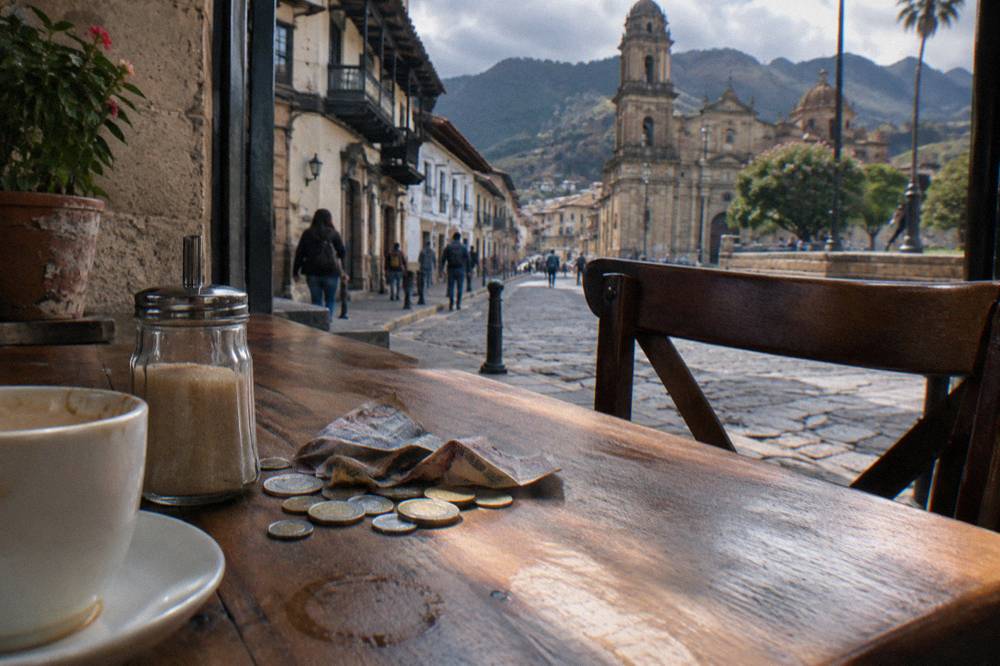
Hotel staff round out the list: reported custom puts small cash amounts at COP 2,000 to 10,000 for porters and for housekeeping, left in the room at the end of a stay. Concierge help beyond the ordinary, such as scoring a table during Bogotá Gourmet's fixed-menu festival season, merits more at your discretion.
Tipping On Pay-What-You-Want Walking Tours
On a free or pay-what-you-want walking tour, the entire business model is the tip: you pay the guide directly at the end, whatever the walk was worth to you. There is no percentage rule and no stated norm, but the honest floor for a decent two to three hour walk is USD 10 per person, with USD 15 to 20 the common thank-you for a strong guide.
The reason there is no percentage guidance here is structural. A tip-based walk has no ticket price to take a percentage of, so the guide's income is set entirely by what the group hands over at the end. Visitors who calculate against "free" and give a dollar or two are, in effect, deciding the guide earned almost nothing for three hours of work. A useful anchor: whatever a booked group food walk would have cost, from $15 upward in this city, a tip in the USD 10 to 20 band puts you squarely in the normal range.
The difference from a booked walk is worth naming once. A paid food walk has its tastings counted and listed, a set route, and a price that covers the operator, the guide's wage and the food; the tip is a bonus on top. A pay-what-you-want walk has none of that scaffolding, which is also its honest gap: no fixed tasting menu, no guaranteed stop list. Our piece on free things to do in Bogotá and eating on a budget covers the tip-based side in detail, including the pay-what-you-want street food walk that meets by the Gold Museum.
Cards, Cash And COP: The Practical Mechanics
The propina at restaurants can go on a card with the bill, but every other tip in this guide, guides, drivers, porters, housekeeping, pay-what-you-want walks, needs physical cash, ideally Colombian pesos in small notes. Withdraw or break bills in advance: a guide cannot make change on a street corner, and handing over the largest note in your wallet is an awkward way to say thank you.
Getting small notes is easier at a market than at an ATM. Buy fruit or a coffee at Paloquemao or a bakery with a large note in the morning and you leave with change plus breakfast. The peso traded at roughly 3,183 COP per USD on 2 November 2026, so a USD 10 tip converts to pesos at that approximate rate; check the day's rate on a live converter such as the daily peso rate page, because it moves.
Two closing mechanics. First, foreign transaction fees can quietly eat a tip added to a card, which is a small argument for cash even at restaurants. Second, never hand the propina question to chance at a group dinner: the server asks the table, and if nobody answers, silence is often taken as a yes, per the tipping customs reference for Colombia, which records the voluntary 10 percent cap and the ask-first ritual.
A Quick Tipping Cheat Sheet For Bogotá
Restaurants: accept or decline the 10 percent propina at the bill, and never stack a second tip on top. Food tour guides: USD 10 to 20 per person in cash, more for private guides. Street food and markets: nothing, ever. Drivers: round up. Pay-what-you-want walks: the tip is the price, so pay like it was a booked tour.
Print this table or keep it in your phone's notes. Every line comes from the reported customs above, and none of them requires mental math beyond a flat 10 percent.
| Who | What to give | How |
|---|---|---|
| Restaurant server | 10 percent propina, optional | Say yes or no when asked; card is fine |
| Group food walk guide | USD 10 to 20 per person | Cash at the end, pesos or dollars |
| Private guide | USD 20 to 40 per person | Cash, separate from the booking |
| Cooking class instructor | USD 10 to 20 per person | Cash at the end |
| Taxi or app driver | Round up the fare | Change, no percentage |
| Porter or housekeeping | COP 2,000 to 10,000 | Small cash |
| Street vendor or market stall | Nothing | Just buy |
| Pay-what-you-want guide | USD 10 to 20, your call | Cash, it is the whole wage |

The pattern underneath all of it: Colombia tips the person, not the register. A screen never prompts you, a jar never stares at you, and the only moment that demands an answer is the server's quiet "¿propina?". Prepare small bills, decide your guide tip before the walk ends, and the whole system runs on courtesy rather than obligation.
A shared fruit-tasting morning at Paloquemao, from $50.17 and rated 4.6 across 32 reviews, is a good example of the mid-range tip math: three hours of guiding, USD 10 to 15 in cash, and no propina anywhere inside the market itself because every stall is a counter.
Common Questions About Tipping In Bogotá
Is Tipping Required In Colombia?
No. The restaurant propina is voluntary by law and capped at 10 percent, and tipping elsewhere is a custom, not a rule. Guides on paid and pay-what-you-want walks do rely on cash tips as a real part of their income, so skipping one there has a face attached.
Is Service Charge Included In Bogotá Restaurants?
Usually not. The default is that the server asks whether to add the voluntary 10 percent propina before you pay. Check the printed bill for any service line, and if one is already there, an extra tip is optional.
How Much Do You Tip A Tour Guide In Bogotá?
About USD 10 to 20 per person in cash for a three to four hour group food walk, and USD 20 to 40 per person for a private guide or a full-day format. Hand it to the guide directly at the end of the tour.
Do You Tip Street Food Vendors In Bogotá?
No. Street food, market stalls, juice carts and bakery counters do not expect tips. Rounding up or leaving the small change is friendly but entirely optional.
Can I Tip With US Dollars In Bogotá?
Guides will usually accept dollars gladly, but Colombian pesos in small notes are easier for everyone and avoid exchange problems. Other tips, like housekeeping and porters, should be in pesos.
Do You Tip Taxi Drivers In Bogotá?
No percentage tip. Round the fare up a few thousand pesos or let the driver keep the change, which is the reported custom for both street taxis and ride apps.