Paloquemao Market Food Guide: What To Eat, Taste And Skip
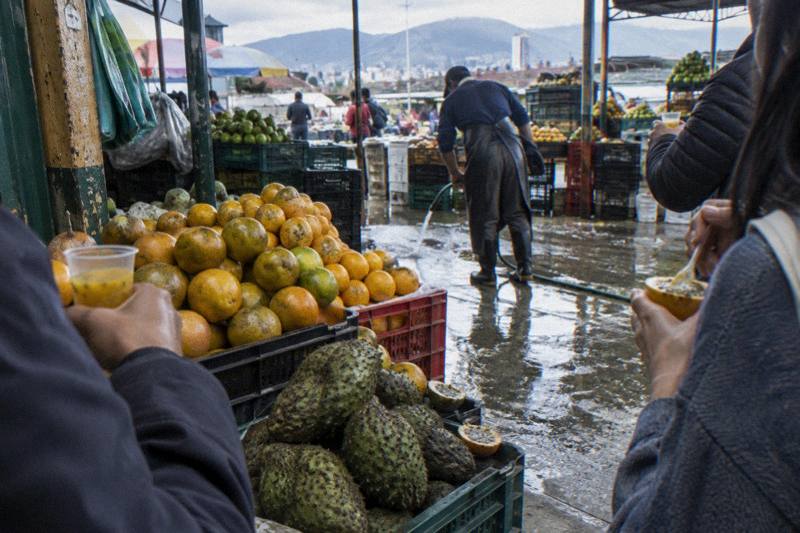
Paloquemao is the plaza de mercado most Bogotá food walks build their first stop around, and for good reason: one hall holds fruit you will not find elsewhere in the city centre, juice stalls, lunch counters and a flower sector that closes by late morning.
Short answer
Paloquemao Market opens Monday to Saturday 4:30 a.m. to 4:30 p.m. and Sundays and holidays 5:00 a.m. to 4:30 p.m., with the flower hall only until 11:00 a.m. Guided tasting walks here run about 3 hours and from $50.17 per person, with private versions from $103. Arrive early: the wholesale energy thins after midday.
Paloquemao has been Bogotá's working wholesale-and-retail food plaza for 54 years, and in October 2026 it hosted the first opera performance in its history, which tells you something about how the city sees this building: not a tourist attraction with vendors inside, but a civic institution that visitors are welcome to wander. That distinction matters for planning. The market runs on a wholesale clock, the fruit vendors shout over each other in the pre-dawn hours, and the flower hall packs up before most tourists have finished breakfast. This guide covers the official hours, the four things worth tasting, and how the guided tasting walks that use Paloquemao as their base actually differ from each other.
What Is Paloquemao Market And Why Food Lovers Go
Paloquemao is one of Bogotá's best-known plazas de mercado, a 54-year-old hall where wholesale produce trading, retail fruit stalls, juice bars, lunch counters and a flower sector all operate under one roof. Vendors offer tastes of exotic fruits like granadilla, lulo and uchuva through the morning, and the early hours carry peak wholesale energy before the market thins after midday. It is the standard first stop of most guided food walks.
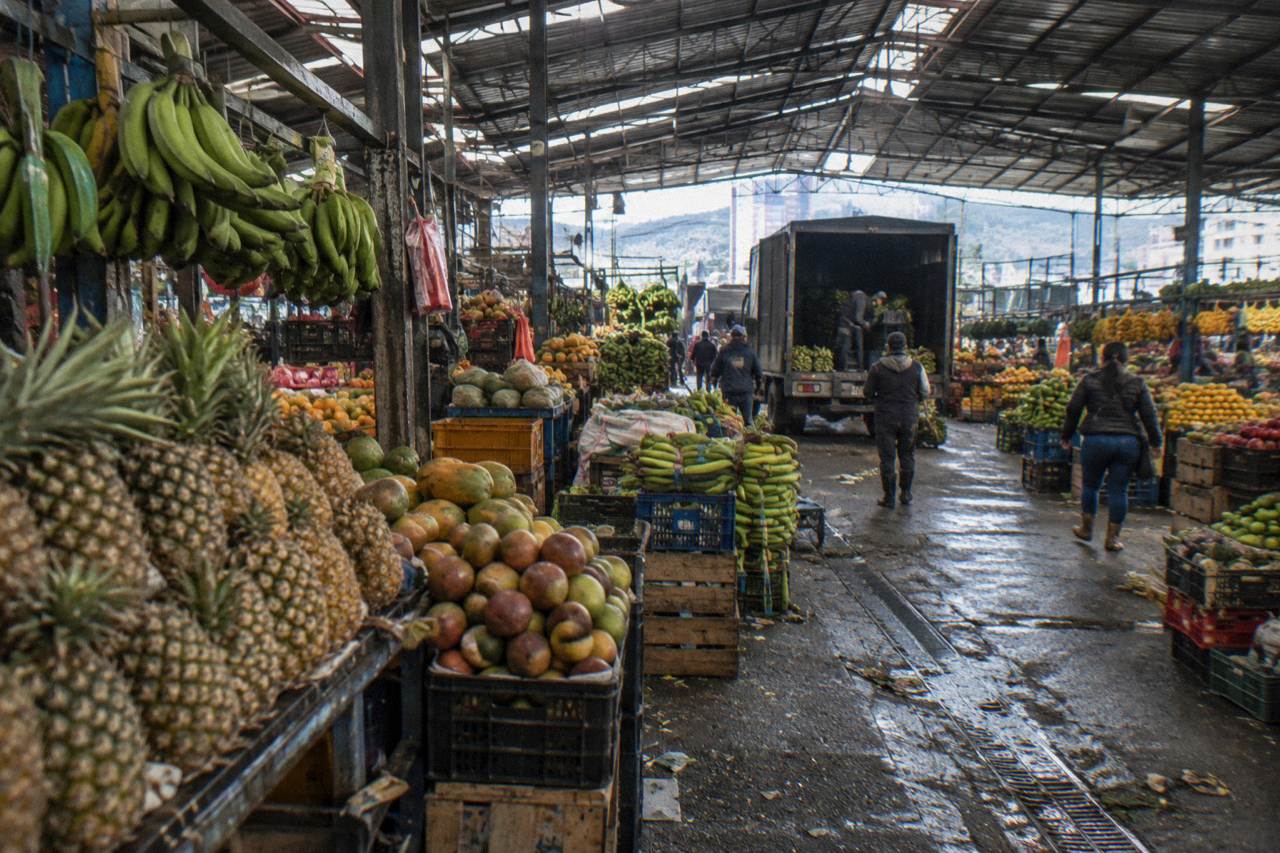
The market occupies a single sprawling site west of the city centre, and its layout rewards knowing where to walk first. The fruit section is the draw for visitors: piles of curuba, granadilla, uchuva, lulo, maracuyá and a dozen fruits with no English name at all, stacked in crates and sold by the unit or the pile. Early morning, roughly pre-dawn to about 10 a.m. on weekdays, is when trucks unload and vendors are most likely to hand over a slice of something unfamiliar, as reported by visitors who go at that hour. After midday the wholesale side quietens and the experience becomes a slower retail wander.
For context, Paloquemao is one of several district market plazas the city has been actively promoting. In October 2026 the district published a tourist route across seven plazas, and Paloquemao sits alongside La Perseverancia, known for ajiaco and lechona from family-run stalls, and Samper Mendoza, the nocturnal herb market that trades Mondays and Thursdays from 9 p.m. If your interest is fruit specifically, Paloquemao is the right plaza; if it is a sit-down traditional lunch, La Perseverancia competes. Our guide to Bogota's markets beyond Paloquemao breaks down the others.
How To Time Your Visit Around The Market Day
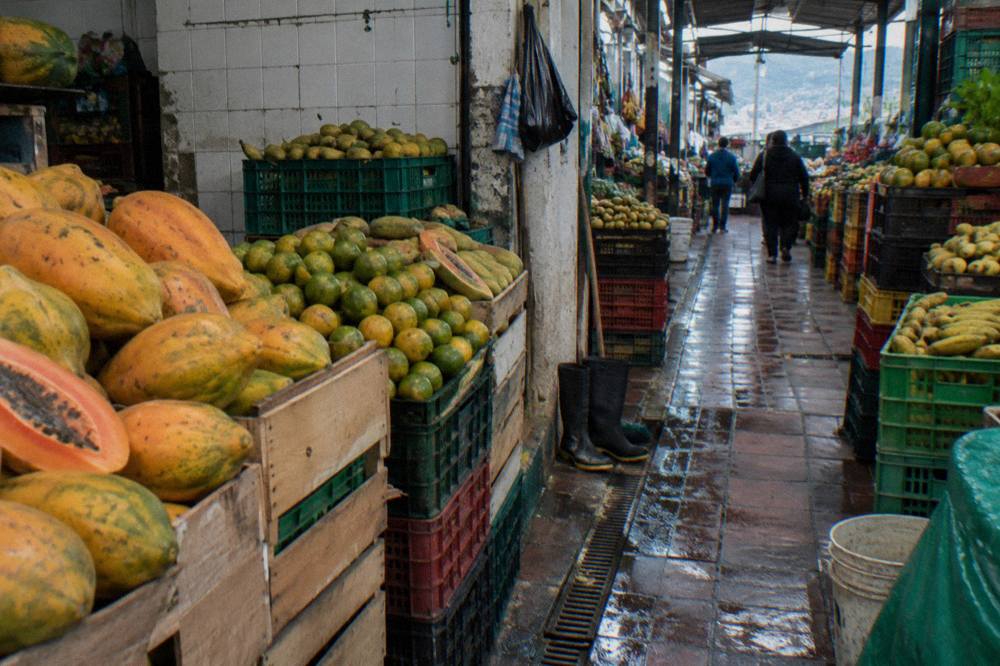
Official hours are Monday to Saturday 4:30 a.m. to 4:30 p.m. and Sundays and festive holidays 5:00 a.m. to 4:30 p.m., with the flower sector only open daily until 11:00 a.m. Weekday mornings before about 10 a.m. carry the wholesale energy most visitors come for, and the market thins noticeably after midday. Go early for flowers, fruit and atmosphere; go at lunch for the counters.
Those hours come from the plaza's own published information, and they shape everything else on this page. The flower hall is the hard deadline: it winds down by 11:00 a.m. daily, so a plan that pairs flowers with lunch does not work. Fruit and juice run all day, but the character of the place changes. Reports from the market describe the pre-dawn-to-10 a.m. window as the peak, with trucks unloading produce and vendors offering tastes of granadilla, lulo and uchuva while they work. If photographs of loaded crates matter to you, that is your window; if tasting without elbowing matters more, late morning is calmer.
Sundays deserve a note. The market opens until 4:30 p.m. on Sundays and festive holidays, but Sunday is also when the Usaquén flea and food market runs 9:00 a.m. to 5:30 p.m. at Carrera 6A between Calles 119 and 120A, with stalls selling arepas, fresh-cut fruit, empanadas and hot chocolate. The two are far apart in the city and offer different things: Paloquemao for fruit and wholesale scale, Usaquén for a lazy outdoor browse. Some visitors do Paloquemao early Sunday and Usaquén after, which the transit times make tight but possible. Our Usaquén Sunday market and food guide covers the northern half of that plan.
| Sector or plaza | Hours | Notes for visitors |
|---|---|---|
| Paloquemao, main halls | Mon to Sat 4:30 a.m. to 4:30 p.m. | Peak wholesale energy before ~10 a.m. on weekdays |
| Paloquemao, Sundays and holidays | 5:00 a.m. to 4:30 p.m. | Shorter day; quieter than Saturday |
| Paloquemao flower sector | Daily until 11:00 a.m. | Closes early; pair with a morning visit |
| Usaquén flea and food market | Sat, Sun and holiday Mondays 9:00 a.m. to 5:30 p.m. | Outdoor stalls: arepas, fruit, empanadas, hot chocolate |
| La Perseverancia | Mon to Fri 8:00 a.m. to 4 p.m., Sat and Sun 6:00 a.m. to 5 p.m. | Traditional dishes: ajiaco, lechona, mondongo |
The plaza's official contact page carries the current hours if you want to double-check before a holiday visit, since festive schedules shift: Paloquemao official information.
Paloquemao Tasting Walks Compared: Shared, Private Or Fruit-Focused
Three guided formats cover Paloquemao: the exotic fruit and local snacks tour, from $82 per person for a 3-hour walk rated 4.9 across 71 reviews with a two-person minimum; a shared fruit-only tasting at $50.17 per person, 3 hours, rated 4.6 across 32 reviews; and a private 3-hour version with 25 or more tastings from $103, rated 5.0 across 19 reviews. All three walk the same halls at different depths.
The trio exists because Paloquemao rewards different visitors differently. The shared options suit travellers who want the fruit explained, the vendor conversations translated and a fixed price, without paying for exclusivity. The private 25-tastings version suits anyone who wants to eat their way through the market at their own pace, with the tasting count written into the title. Meeting points, group sizes and exactly what is tasted vary by listing, so check the booking page for the details that matter to you; operators describe tastings and snacks on each tour's own page.
The featured option on this site, the Paloquemao Market food tour with exotic fruit and local snacks, is the most reviewed of the three at 71 reviews and a 4.9 rating, running 3 hours from $82 per person with a minimum of two guests. A natural alternative is the shared exotic fruit tour, which costs $50.17 per person for the same 3 hours and a 4.6 rating across 32 reviews, and trades the snack stops for a tighter fruit focus. The private version with 25 or more tastings, from $103, rated 5.0 across 19 reviews, is the depth option.
If you are weighing the shared fruit tour against the private one, the honest differences are pace and count. A shared 3-hour walk keeps everyone together through the fruit section with a fixed tasting list; the private tour lets a small group or family linger, and the listing promises 25 or more tastings, which effectively turns the market into a long progressive meal. Neither price includes extras beyond what the listing states, and dietary needs are best raised with the operator before booking, since no listing here is described as vegan or gluten-free.
There are shorter and cheaper ways in, too. A 2.5-hour Paloquemao market tour with fruit tasting runs from $45.91 per person, and a 3-hour Discover 20 Fruits and Coffee walk with a gastronomist runs at $40 per person, though both have review pools too small to quote a rating from with confidence. If budget is the deciding factor, those two belong on your shortlist alongside the table below.
| Tour | Format | Duration | From (USD) | Rating and reviews |
|---|---|---|---|---|
| Paloquemao Market food tour, exotic fruit and local snacks | Shared, min 2 pax | 3 hours | $82 per person | 4.9 across 71 reviews |
| Shared tour of Colombian exotic fruit | Shared | 3 hours | $50.17 per person | 4.6 across 32 reviews |
| Private Paloquemao food and fruit market tour, 25+ tastings | Private | 3 hours | $103 | 5.0 across 19 reviews |
| Paloquemao market tour with fruit tasting | Shared | 2.5 hours | $45.91 per person | Review pool under 15, no rating quoted |
| Discover 20 fruits and coffee with a gastronomist | Shared | 3 hours | $40 per person | Review pool under 15, no rating quoted |

Whichever format you lean toward, the shared band below puts the three main options side by side.
Fruit Alley: The Tastings That Define The Market
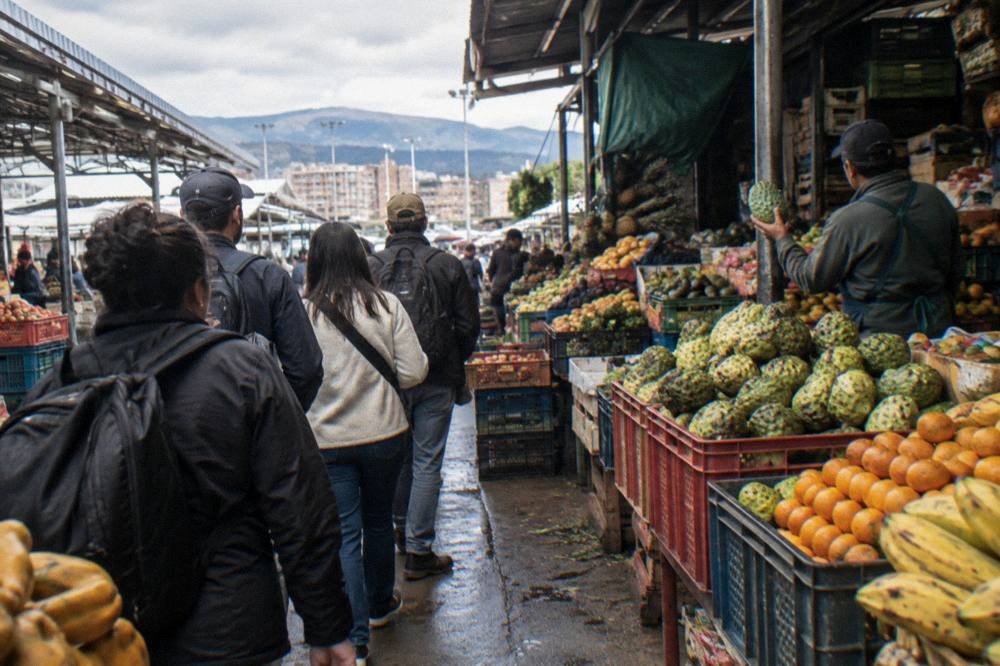
The fruit section is why food travellers come: vendors pile Colombian-grown fruits such as granadilla, lulo, uchuva, curuba and maracuyá in the aisles, and through the morning many offer tastes on the spot. A guided walk adds names, origins and seasons in English, and the 20-fruits format makes the count explicit. Going alone works too, at the cost of translation.
Do not expect a polished tasting room. The fruit alley is a working wholesale row: crates on the floor, price boards in Spanish, vendors who will hand you a spoonful of something if you show genuine interest, especially in the busy morning hours when the wholesale trade is active. What you taste depends on the season and the stall, and no independent ranking of stalls or verified stall prices exists, so treat any specific vendor recommendation from a blog or video as anecdote rather than fact. What is verifiable is the variety: Colombia grows dozens of commercial fruit species, and Paloquemao gathers a very wide range of them under one roof.
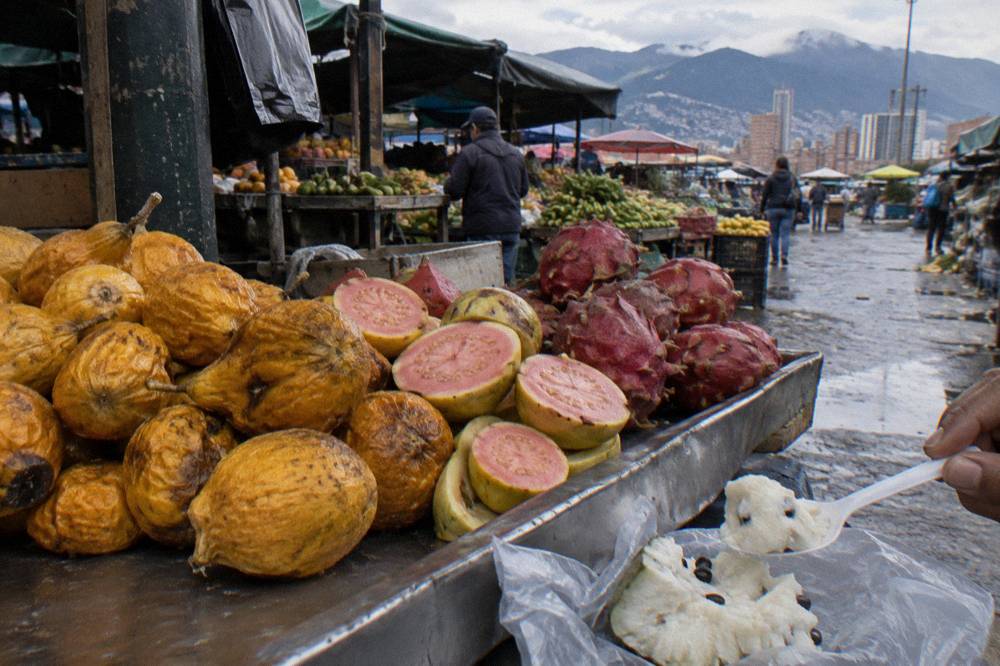
A few fruits reward knowing before you arrive. Granadilla you crack open with your hands and eat with a spoon; lulo is almost never eaten raw but appears everywhere as juice; curuba likewise goes into milk shakes; uchuva is the small orange husk fruit you eat like a berry. That gap between eating fruit and drinking it is why the juice stalls matter as much as the crates, covered next. If you want the full picture before choosing, our Colombian fruits to try in Bogota guide walks through the common ones and the oddities.
| Fruit | How it looks | How locals eat it |
|---|---|---|
| Granadilla | Orange shell, jelly seeds inside | Cracked open by hand, eaten with a spoon |
| Lulo | Green-orange, fuzzy skin | Almost never raw; juiced with water and sugar |
| Curuba | Elongated banana-passionfruit | Blended into milk shakes |
| Uchuva | Small orange berry in a papery husk | Eaten raw like a berry |
| Maracuyá | Dark purple passion fruit | Juiced, or spooned out for desserts |
Juice Stalls And Lunch Counters: What To Eat On Site
Juice stalls are the quiet highlight of Paloquemao: lulo, curuba with milk, maracuyá and mixed juices made to order, at prices far below anything in the tourist centre. La Candelaria street-cart reporting puts lulo juice around 4,000 COP and curuba with milk around 5,000 COP as a street-level reference; expect market-stall juice in a similar spirit. Lunch counters serve set plates through the middle of the day.
The juice reference points come from verified street-cart reporting in La Candelaria, not from named Paloquemao stalls, since no verified per-stall prices for the market exist; treat them as a rough street-level benchmark and expect to pay a little more inside a market hall. What the stalls reliably offer is range. This is the place to drink your way through fruits you cannot buy at home, and a guided walk usually folds several of these stops into the itinerary, with the listing stating which drinks are included.
The lunch counters are the locals' secret. Market plazas across Bogotá run family-run food stalls serving traditional plates, and Paloquemao's counters do steady trade with the people who work the market. Expect set-menu format, generous portions, and food closer to a working canteen than a restaurant. La Perseverancia, by comparison, is the plaza specifically known for ajiaco, lechona, mute santandereano, mondongo and fritanga from family stalls, if a sit-down traditional lunch is the priority. Either way, follow the city health secretariat's standing street-food advice: buy from formal, authorised stalls, and check labels and packaging on anything packaged.
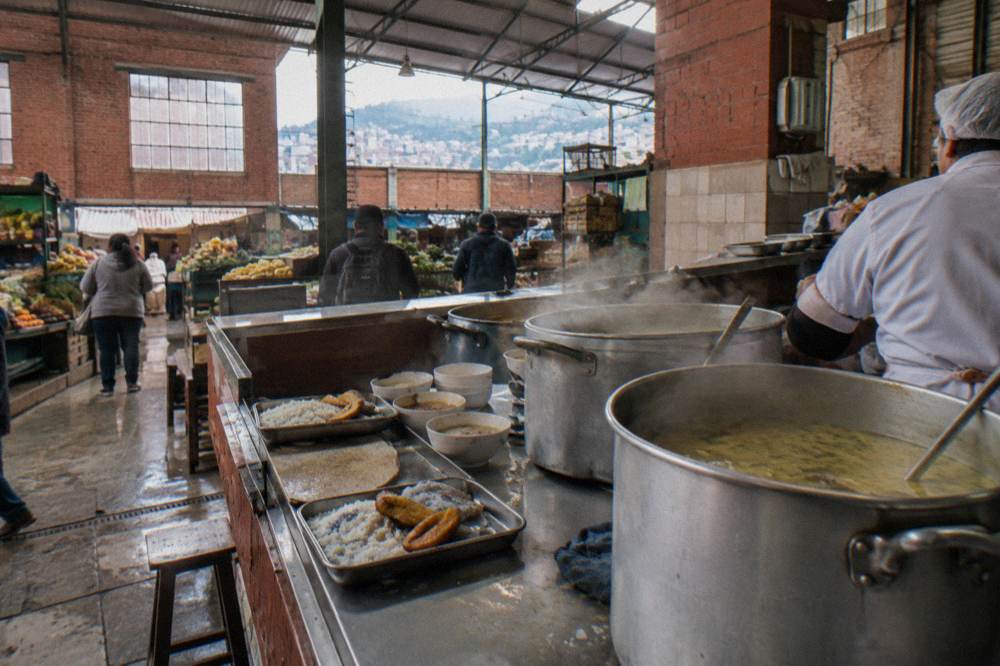
Altitude is worth a thought before a heavy plate. Bogotá sits at about 2,640 m, and the standard guidance recommends light meals, steady hydration and little alcohol in the first day or two while you adapt. A market lunch of soup and juice fits that advice better than a full fritanga plate on day one, and our eating at altitude guide goes deeper if it is your first trip up.
The Flower Hall And The Early Morning Wholesale Hour
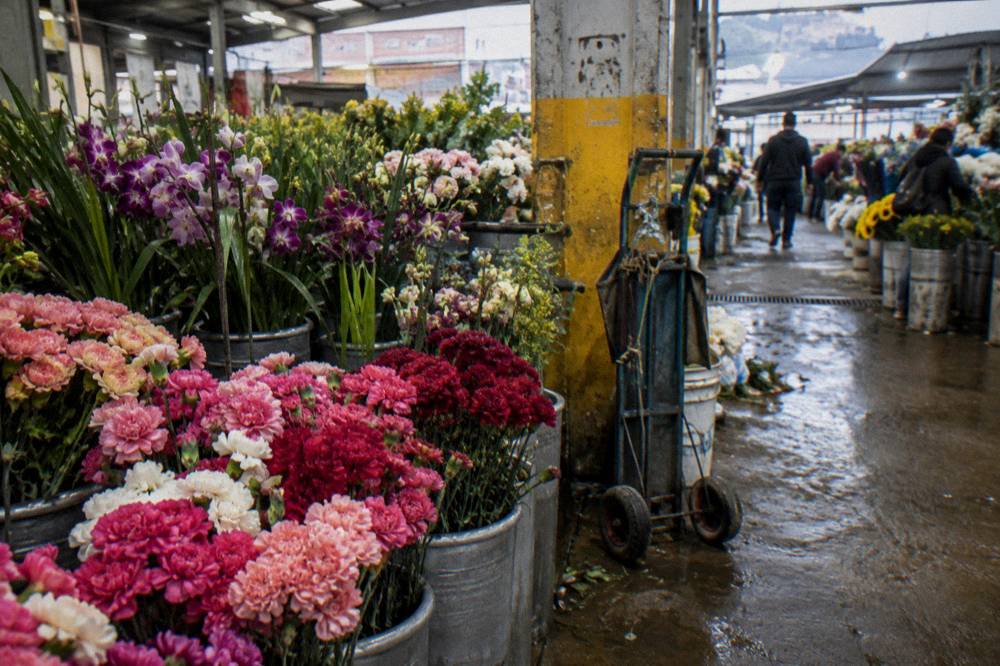
The flower sector trades daily only until 11:00 a.m., which makes it the strictest deadline at Paloquemao and the reason an early start wins. The wholesale hour before about 10 a.m. on weekdays is when trucks unload, vendors shout prices and the market feels most like itself. Both experiences are gone or diminished by early afternoon.
Colombia is one of the world's biggest flower exporters, and Bogotá's market halls carry that trade down to retail scale. At Paloquemao the flower sector operates daily until 11:00 a.m., so a flower visit and a lazy lunch do not combine. Pair flowers with the early fruit hour instead: arrive for the opening hours, walk the flower rows while they are stocked, then drift into the fruit aisles as the wholesale trade peaks. Reports describe that pre-10 a.m. weekday window as the market's most vivid, with produce trucks unloading and vendors offering tastes while they work.
One cultural note that surprises first-time visitors: Paloquemao made news in October 2026 by hosting its first opera performance in 54 years of history, a one-off event that signals how the district is repositioning its plazas as cultural venues as well as food markets. The same month, the plazas participated in an international market gathering that generated sales above $21.5 million. None of that changes your fruit tasting, but it explains why the plazas feel increasingly organised and visitor-facing. The district's own market route write-up is worth a read: seven market plazas to discover Bogotá and its flavours.
Going Alone Or Booking A Guided Tasting Walk
Going alone costs only what you buy, works on any schedule and suits confident travellers who speak Spanish or are happy pointing at fruit. A guided walk, from $40 to $103 per person depending on format, buys translation, a tasting list already negotiated with vendors, and pace through the crowds. The 3-hour shared walks hit the sweet spot for most first-time visitors.
The case for a guide at Paloquemao is specific, not generic. This is a working market where little English is spoken, the fruit has names and seasons no outsider knows, and the best tasting depends on vendors who know and trust the regular guides. A good guide converts a confusing hall into a narrated one, and the listings make the trade explicit: the exotic fruit and snacks tour names its tastings and snacks on the booking page, the 25-tastings private version counts them in the title, and the gastronomist-led walk adds coffee to the fruit. What a walk also handles is pacing: the market's crowds and the 11 a.m. flower deadline are easier with someone who knows the order of the halls.
The case for going alone is real too. If you are staying a week, speak some Spanish, or simply want to buy a kilo of granadilla and a juice and sit and watch the market work, $82 buys a lot of fruit. A middle path many travellers take is the budget shared walk: the 2.5-hour tour from $45.91 covers the fruit section with a guide at a lower price, and its shorter runtime leaves the rest of the day free.
Budget walkers should also read our free things to do and food on a budget guide, which pairs Paloquemao browsing with other no-cost sights. However you enter the market, this site, Bogota Food Tours, exists to help you choose between the tasting formats rather than push one.
Before you decide, here are the three main options one more time, side by side.
Common Questions About Paloquemao Market
What Time Does Paloquemao Market Open And Close?
Monday to Saturday 4:30 a.m. to 4:30 p.m., and Sundays and festive holidays 5:00 a.m. to 4:30 p.m. The flower sector closes earlier, daily at 11:00 a.m. These are the plaza's official published hours; check before visiting on a public holiday.
How Much Does A Paloquemao Market Tour Cost?
Guided tasting walks run from $40 per person for the gastronomist fruit-and-coffee walk up to $103 and above for the private 25-plus-tastings tour. The shared exotic fruit tour costs $50.17 per person and the most reviewed option, with exotic fruit and local snacks, is from $82 per person with a two-guest minimum.
Is Paloquemao Market Worth Visiting Without A Tour?
Yes, if you are happy browsing without translation. The fruit aisles and juice stalls sell to walk-in customers all day, and the early weekday morning is the most atmospheric time. A guide adds fruit names, seasons, vendor relationships and a set tasting list, which matters more if you do not speak Spanish.
What Should I Taste At Paloquemao?
Work through fruits you cannot get at home: granadilla, lulo, uchuva, curuba and maracuyá are the standard starting five. Then drink them: lulo and curuba juices are made to order at the juice stalls. Finish with a set lunch at one of the family-run counters.
When Is The Best Time Of Day To Visit Paloquemao?
Early. Weekday mornings before about 10 a.m. carry the wholesale energy, the fruit tasting and the flower hall, which closes at 11:00 a.m. After midday the market thins and the atmosphere becomes a quieter retail browse.
Can I Combine Paloquemao With Another Market In One Day?
Yes, with planning. La Perseverancia, known for ajiaco and lechona, opens 8 a.m. to 4 p.m. weekdays and 6 a.m. to 5 p.m. weekends, so a morning at Paloquemao and a late lunch there works on any day. On Sundays the Usaquén flea and food market, 9 a.m. to 5:30 p.m., is the classic second stop.