Is Bogotá Worth Visiting For Tourists?
A direct answer to whether Bogotá is worth visiting, with what the city offers tourists, what a food day looks like, costs, timing, and which guided experiences earn their price.
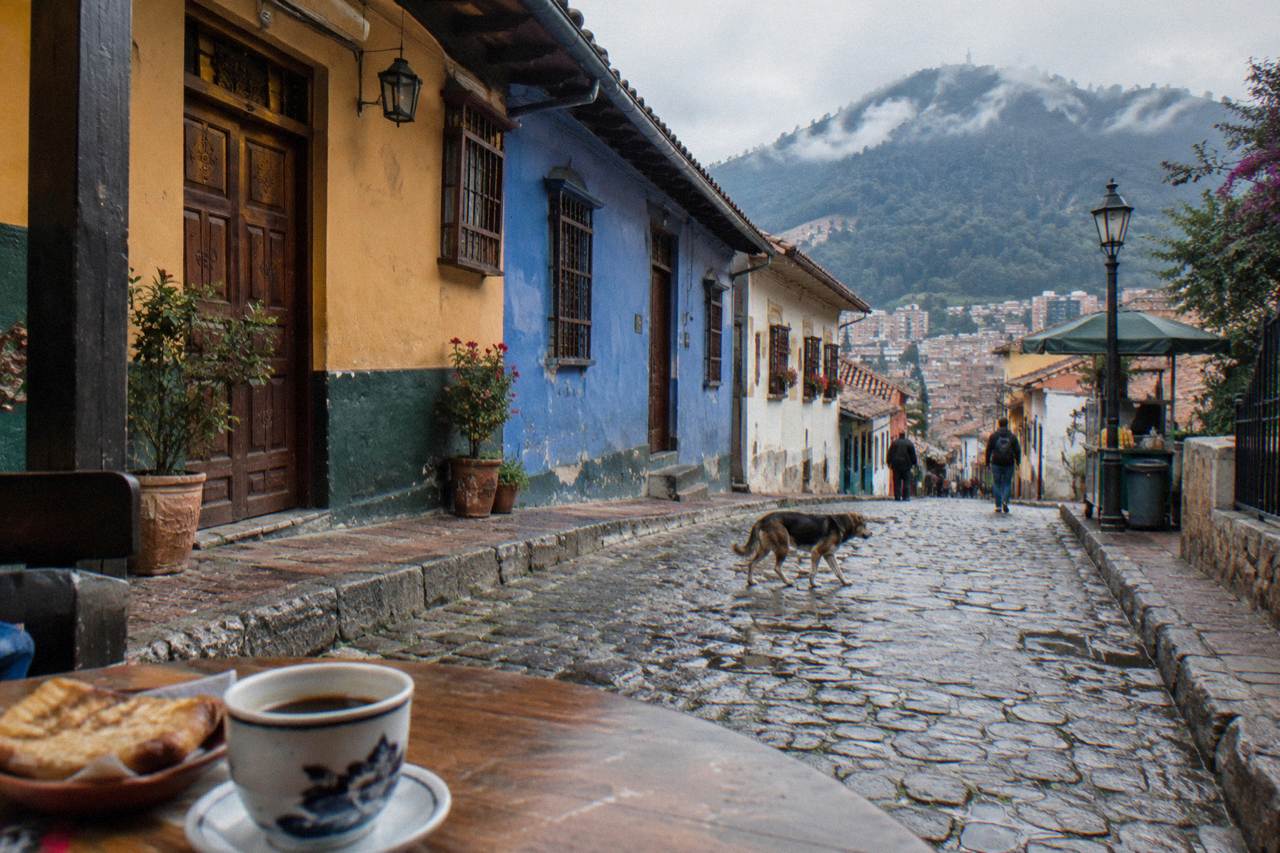
Yes, for most travellers with two or more days, and especially for anyone whose trip is shaped around food. Bogotá has a deep traditional food culture, a walkable historic core in La Candelaria, Paloquemao, the city's largest fruit market, and prices far below comparable experiences in Europe or North America. It is not a relaxation destination and the altitude demands a slow first day, but as a city break built on markets, coffee and traditional cooking, it earns its place on an itinerary ahead of several more famous names.
The honest case starts with what Bogotá is not. It is not warm; daytime temperatures typically sit in the high teens Celsius year round because the city sits at about 2,640 m. It is not a beach or a colonial-cartwheel city like Cartagena. Rain arrives in two seasons, April to May and October to November, usually as afternoon showers rather than all-day soakers. Visitors who arrive expecting Caribbean Colombia are sometimes disappointed, and that mismatch drives most of the negative reviews the city gets.
The case for going is different. Bogotá is the country's cultural and gastronomic capital, and it concentrates things that take weeks to find elsewhere in Colombia. A single morning at Paloquemao can put twenty unfamiliar fruits in front of you, from granadilla to lulo to uchuva. A single evening in La Candelaria can cover hot chocolate with cheese, almojábanas and a tamal. The city's specialty coffee scene is deep enough that Time Out named Chapinero Alto the 7th coolest neighbourhood in the world for 2026, the only Latin American entry in its top ten, citing the local dining scene among the reasons.
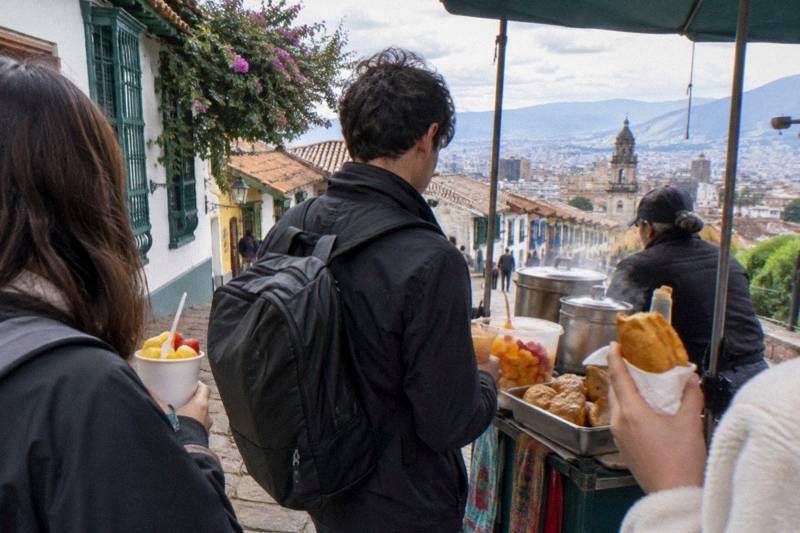
Food is also where guided experiences deliver unusual value. A four-hour tasting walk through the historic centre, from $55 per person, is rated 5.0 across 714 reviews, the most reviewed food walk described on this site. That kind of review depth, at that price, is rare in capital cities anywhere.
For a first decision, three experiences cover the three main ways to eat Bogotá:
What Makes Bogotá Different From Other South American Capitals?
Altitude, authenticity of the everyday food scene, and density. At about 2,640 m the city is higher than Quito, its traditional dishes are Andean rather than coastal, and its markets, coffee roasters and neighbourhood restaurants sit within a compact, rideable core. Where Lima sells itself on fine dining and Buenos Aires on steakhouses, Bogotá's strength is the mid-level: market stalls, bakery counters, juice stands and family-run plazas, the layer of the food culture that a casual visitor actually touches.
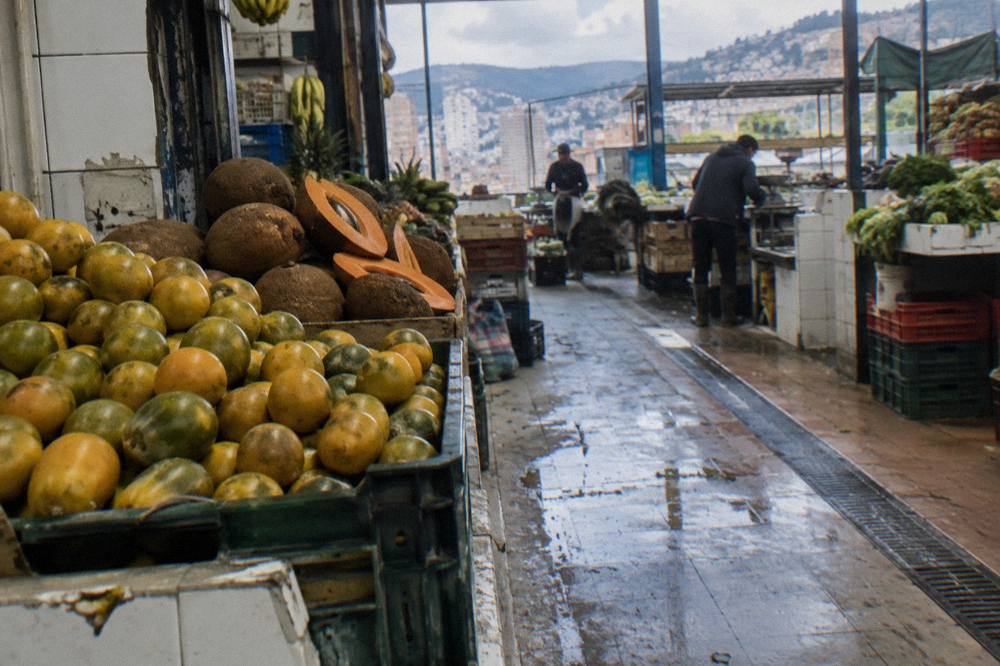
The market layer is the most distinctive part. Bogotá runs a network of public market plazas, and the city government actively promotes them to visitors through a tourist route across seven district markets, each themed to what it does best: traditional cooking at La Perseverancia, aromatic herbs at Samper Mendoza, flowers and exotic fruit at Paloquemao. Samper Mendoza alone has documented 391 plant species, of which 201 are native to Colombia. You do not need to be a food obsessive for that to be interesting; you need only to walk through it once.
The coffee layer surprises people too. Colombia grows the coffee, but historically it exported the best of it, and Bogotá's roasters have spent the last decade correcting that. Roasters like Amor Perfecto, a 1990s pioneer whose baristas have taken seven national championships, Bourbon Coffee Roasters, which finished a second Zona G store in October 2026, and Azahar, which buys directly from more than 420 Colombian farmers, all run public-facing spaces. Varietale, in a former convent in Chapinero, mills its own parchment in house and had been open only a couple of months as of early November 2026.
The event calendar is another marker of a city that takes eating seriously. Bogotá Gourmet 2026, its second edition, ran more than 80 restaurants across Chapinero, Usaquén and other neighbourhoods in fixed two-person menus at three price tiers, from COP 89,000 to COP 199,000 reported. Chocoshow, the national cacao fair, brings more than 175 exhibitors to Corferias on 27 to 29 November 2026. These are local events, not tourist constructs, and a visitor with flexible dates can land inside one.
Still wondering whether the city justifies the flight? The Viejo Bogota Food Tour with 12+ Tastings is a low-commitment way to test the answer: four hours, from $55 per person, with free cancellation on the operator's booking page, Check availability.
What Does A Food Day In Bogotá Actually Look Like?
A realistic first day runs breakfast near your hotel, a morning at a market with tastings, a light Andean lunch such as ajiaco, an afternoon of coffee or chocolate, and an evening tasting walk in La Candelaria. The shape matters more than any individual stop, because the altitude of about 2,640 m rewards light meals and steady pacing over one heavy itinerary. Build the day in that order and the city reveals itself without exhausting you.
Mornings belong to the markets. Paloquemao opens at 4:30 a.m. Monday to Saturday and 5:00 a.m. on Sundays and holidays; the wholesale energy peaks before mid-morning, when trucks unload and vendors hand out tastes of fruit, and the floor thins after midday. A guided market visit turns that chaos into an education: the shared exotic fruit tour at Paloquemao runs 3 hours from $50.17 per person, rated 4.6 across 32 reviews, while the private version with 25 or more tastings starts at $103 per person with the price varying by group size. Between them sits the Paloquemao Market Food Tour focused on exotic fruit and local snacks, from $82 per person, rated 4.9 across 71 reviews, with a two-person minimum.
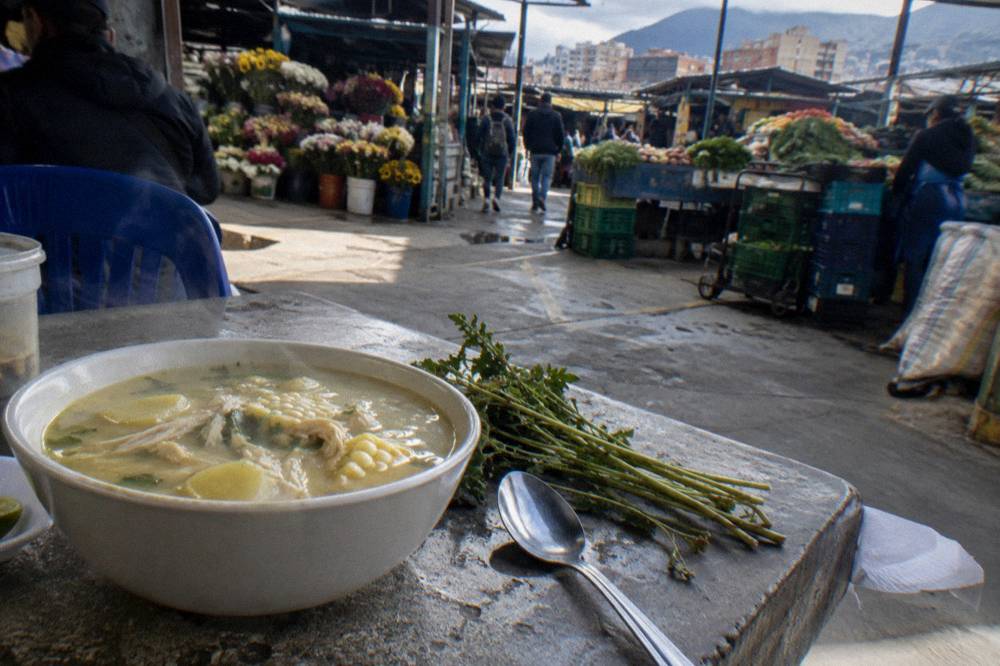
Lunch is the main meal in Colombia, and ajiaco santafereño, the chicken and potato soup thickened with a local herb, is the dish most tied to the city. Family stalls at La Perseverancia plaza serve it alongside lechona and mute santandereano, and the district markets listed on the official market route are the traditional places to eat it. Delivery menus around the city price a medium bowl around 23,700 COP reported, which gives a sense of how inexpensive everyday eating is, though market stall prices vary and are best checked on the spot.
Afternoons split between coffee and chocolate. A combined coffee and chocolate tasting in the city centre runs 2 hours 15 minutes from $49 per person, rated 5.0 across 79 reviews. The traditional end of the spectrum is chocolate santafereño, thick hot chocolate served with cheese to melt into it, a pairing you can find steps from the cathedral at a tiny institution operating since 1816, or learn to prepare in a workshop in La Candelaria. Evenings, a tasting walk through La Candelaria ties the day together. The Bogotá Food Experience cultural and culinary tour runs 4 hours from $47.15 per person, rated 4.9 across 615 reviews, the second most reviewed walk described here.
The table below puts the main guided formats side by side, with prices as the operators state them.
| Experience | Duration | From (USD) | Rating | Reviews |
|---|---|---|---|---|
| Viejo Bogota Food Tour with 12+ Tastings | 4 hours | 55 per person | 5.0 | 714 |
| Bogotá Food Experience: Cultural & Culinary Tour | 4 hours | 47.15 per person | 4.9 | 615 |
| Paloquemao Market Food Tour (exotic fruit, local snacks) | 3 hours | 82 per person, varies by group size | 4.9 | 71 |
| Shared Tour of Colombian Exotic Fruit at Paloquemao | 3 hours | 50.17 per person | 4.6 | 32 |
| Coffee and Chocolate tour in Bogota | 2 hours 15 minutes | 49 per person | 5.0 | 79 |
One price deserves a flag. The Shared Gastronomy Tour in the Historic Center shows from $15, but that is a guide fee only, with tastings costing about US$12 extra as the listing states. Read the basis before comparing. For a deeper look at street eating generally, the Bogotá street food guide covers what to expect stall by stall.
Is Bogotá Safe Enough For A First Visit?
For most visitors using normal city precautions, yes in the areas tourists actually visit, with two honest caveats: the US State Department advisory for Colombia is Level 3, Reconsider Travel, issued 31 March 2026, and pickpocket risk in La Candelaria is real after dark. Neither is a verdict on a food walk; both are facts a traveller should have before booking anything.
The advisory detail matters. Bogotá is not named in the Level 4 departments, which are border and Pacific regions, and the UK foreign office advice likewise targets specific zones rather than the capital. Reports consistently describe Chapinero, Usaquén, Parque 93 and Zona T as the more policed visitor areas, and La Candelaria as fine on main streets and squares by day, with side streets and solo walking after dark best avoided. The full index of guides sits on Bogota Food Tours.
Everyday precautions are the standard ones for any large Latin American city: keep phones off café tables and out of sight on Carrera 7 in the evening, decline unexpected street "document checks", and use app-based or hotel-arranged transport at night. On food specifically, the city health secretariat's standing advice is to buy from formal or authorised establishments and to check packaging and dates, which is the same guidance issued for locals. Tap water in Bogotá is officially potable, the one Colombian city where foreign advice says so plainly; some visitors still choose bottled for taste reasons.
Altitude deserves as much respect as crime. Official city guidance for first-time visitors recommends one to two days of adaptation before anything strenuous, at least three litres of water a day, light meals, limited alcohol and sun protection. Symptoms such as headache and fatigue typically peak in the first 24 to 48 hours. The practical translation for a food trip: schedule the market morning before the long dinner, and go easy on aguardiente on night one. More detail is in is Bogotá safe for tourists.
How Much Does A Trip To Bogotá Cost?
A mid-range food-focused visit costs far less than equivalent days in Europe or North America: guided food experiences run roughly $15 to $100 per person depending on format, everyday eating is a fraction of that, and a TransMilenio ride is a flat COP 3,550 reported. The spread below shows why the top and bottom of the tour range are genuinely different products, not the same thing at different prices.
| Cost item | Typical range | Basis |
|---|---|---|
| Street food walk (shared) | $17.71 to $55 per person | Tour prices as listed; the $15 gastronomy walk adds about $12 in tastings |
| Private food and market tours | $95 to $259 per person | Prices vary by group size as listings state |
| Coffee and chocolate tastings | $20 to $49 per person | One-hour to 2.5-hour formats |
| Market fruit tours | $45.91 to $191 per person | Shared to private formats |
| City transport | COP 3,550 per ride | Unified fare, reported, check locally |
| Restaurant tip | Voluntary 10%, capped by law | Optional and can be declined |
Everyday food spending is where the savings compound. A delivery ajiaco at 23,700 COP, a juice at a La Candelaria cart for 4,000 to 5,000 COP reported, bakery items around 4,000 to 5,000 COP each reported: a full eating day outside any tour can run on pocket change by North American standards. The exchange rate has hovered near 1 USD to 3,183 COP. Tipping is voluntary at sit-down restaurants, capped at 10 percent by law, and not expected at counters or street stalls.
What you get for a booked tour is not the food alone. It is the counted tastings, the market and coffee stops the listing names, the language bridge at stalls with no English menus, and the editing of a 7-million-person city down to four walkable hours. Whether that is worth from $55 depends entirely on how much of your own research you want to do at 2,640 m on day one.
When Is The Best Time To Visit Bogotá?
Any month works, because temperature barely moves year round; the real variables are rain and events. The drier windows are December to February and July to August, while April to May and October to November bring afternoon showers rather than full washouts. Food events cluster in November and December, which tilts the decision firmly toward the year's end if markets and festivals matter to you.
The 2026 weather outlook adds one wrinkle: the national forecast agency gave a strong El Niño more than 90 percent probability for late 2026 into early 2027, potentially the most intense since 1950, which points to drier, sunnier days and colder nights through February 2027. For a visitor, that reads as a better-than-usual odds on clear views from the hills east of the city.
The food calendar is richest at the year's end. Chocoshow brings cacao tastings and competitions to Corferias on 27 to 29 November 2026. The Festival del Tamal runs 5 to 8 December across more than 17 district plazas, with the classic tamal, hot drink and bread combo at 10,000 COP reported at past editions, which sold more than 14,484 tamales. The craft beer festival at Gran Estación has already passed, having run 23 and 24 October 2026. A December trip lands you inside tamal season, which is about as Bogotá as a food calendar gets.
What Should You Actually Eat In Bogotá?
Start with ajiaco, tamales, lechona, arepas, empanadas and pan de bono, then work outward to the fruit stalls, chocolate santafereño and the specialty coffee counters. None of these need a guide to find, but a guide tells you which version is which and where the good ones are, and that knowledge is half the pleasure of eating in a city this size.
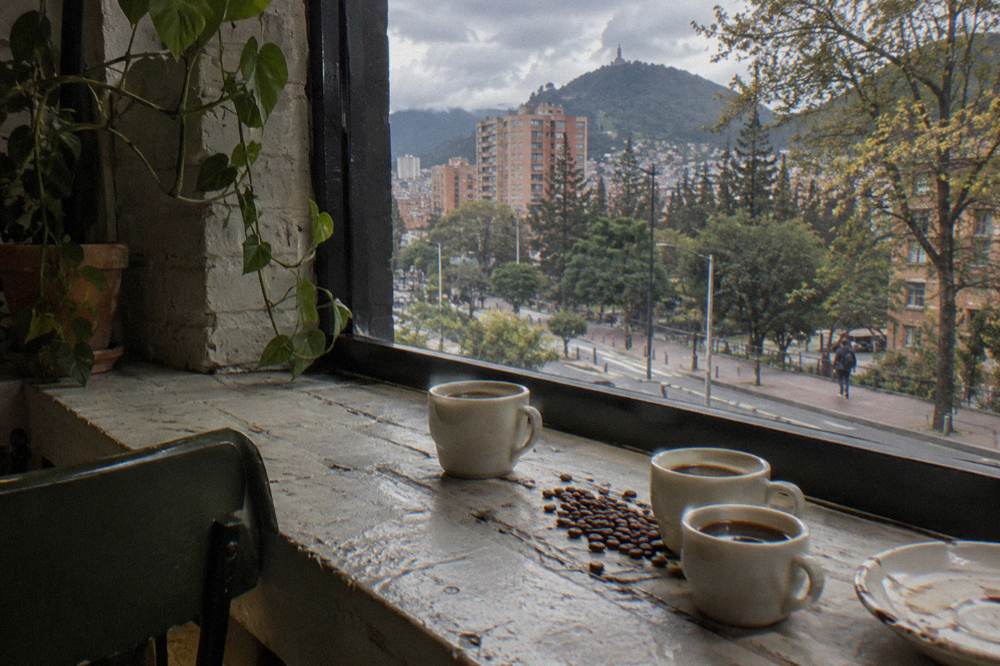
The dishes are general knowledge worth having before you land. Ajiaco is the chicken and three-potato soup that is Bogotá's signature, served with corn, capers and cream. A tamal is corn dough wrapped in banana leaves and steamed, a weekend breakfast institution. Lechona is slow-roast pork stuffed with rice, more of a festive dish from Tolima that Bogotá eats everywhere. Changua is the milk-and-egg breakfast soup of the altiplano. Arepas are grilled corn cakes; obleas are wafer sandwiches filled with arequipe caramel; almojábanas are cheese breads that go with hot chocolate.
Whether any specific dish appears on a specific tour depends on what that tour's listing includes; the four-hour walks described here name their tasting counts, and the Paloquemao tours name their fruit and snack stops, but always check the booking page for the current stop list before assuming a favourite is included. Dietary needs deserve the same caution: message the operator before booking rather than assuming vegetarian or gluten-free versions exist.
Coffee deserves its own afternoon rather than a slot at the end of a meal. A dedicated tasting walk costs from $20 per person for an hour, or from $49 for a coffee and chocolate combination rated 5.0 across 79 reviews, and the better formats walk you through roasting and brewing methods, not just sipping.
Common Questions About Visiting Bogotá
Is Bogotá Worth Visiting For Tourists?
Yes, for most travellers with two or more days, particularly around food. The city offers the region's richest market culture, a walkable historic centre, a deep specialty coffee scene and guided tasting walks from $55 per person rated 5.0 across 714 reviews. Expect cool weather, altitude on day one and normal big-city precautions rather than a resort pace.
How Many Days Does Bogotá Need?
Two full days cover La Candelaria, one market morning and a coffee or chocolate tasting. Three days let you add Chapinero or Usaquén and a longer private tour. The first day should stay light while you adjust to 2,640 m.
Is Bogotá Safe For Tourists?
The US advisory for Colombia is Level 3, Reconsider Travel, issued 31 March 2026, but the named high-risk zones are border and Pacific departments, not Bogotá. Reports describe Chapinero, Usaquén and Parque 93 as the more policed visitor areas and La Candelaria as a daytime district where pickpocketing is the main risk. Conditions change; check current advice before you fly.
What Is The Best Month To Visit Bogotá?
Temperature varies little year round, so rain and events decide. December to February and July to August are the drier windows. November and December bring the cacao fair and the tamal festival, a strong draw for food-first travellers.
Is Bogotá Expensive For Tourists?
No by capital-city standards. Everyday eating runs on a few dollars, city transit is a flat COP 3,550 reported per ride, and guided food experiences run from about $15 plus tastings to $259 for a six-hour private gastronomy tour.
Can You Drink The Tap Water In Bogotá?
Officially yes; the water meets national standards and foreign travel advice names Bogotá as the Colombian city where tap water is considered safe. Some visitors still prefer bottled for taste. Sensitive stomachs can decide for themselves.
If the question was really about whether the food justifies the flight, this is where Bogota Food Tours earns its name: start with the four-hour walk through the old city and let the market morning follow. Three options cover most first trips: