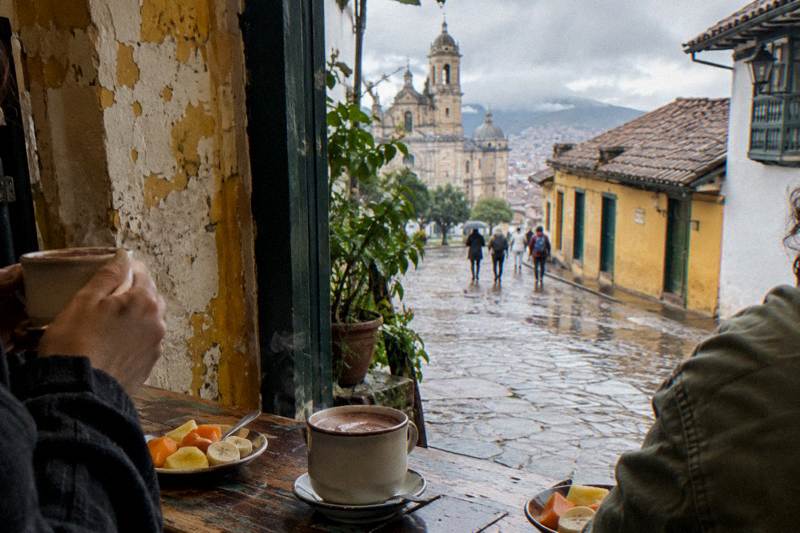
Is Bogotá Safe For Tourists? Neighborhoods, Night And Common Scams
Safety questions shape more Bogotá itineraries than any other factor. Here is what the official 2026 advisory actually says, where visitors walk, what the documented scam patterns look like, and how a small-group walk fits a worried first-timer.
Short answer
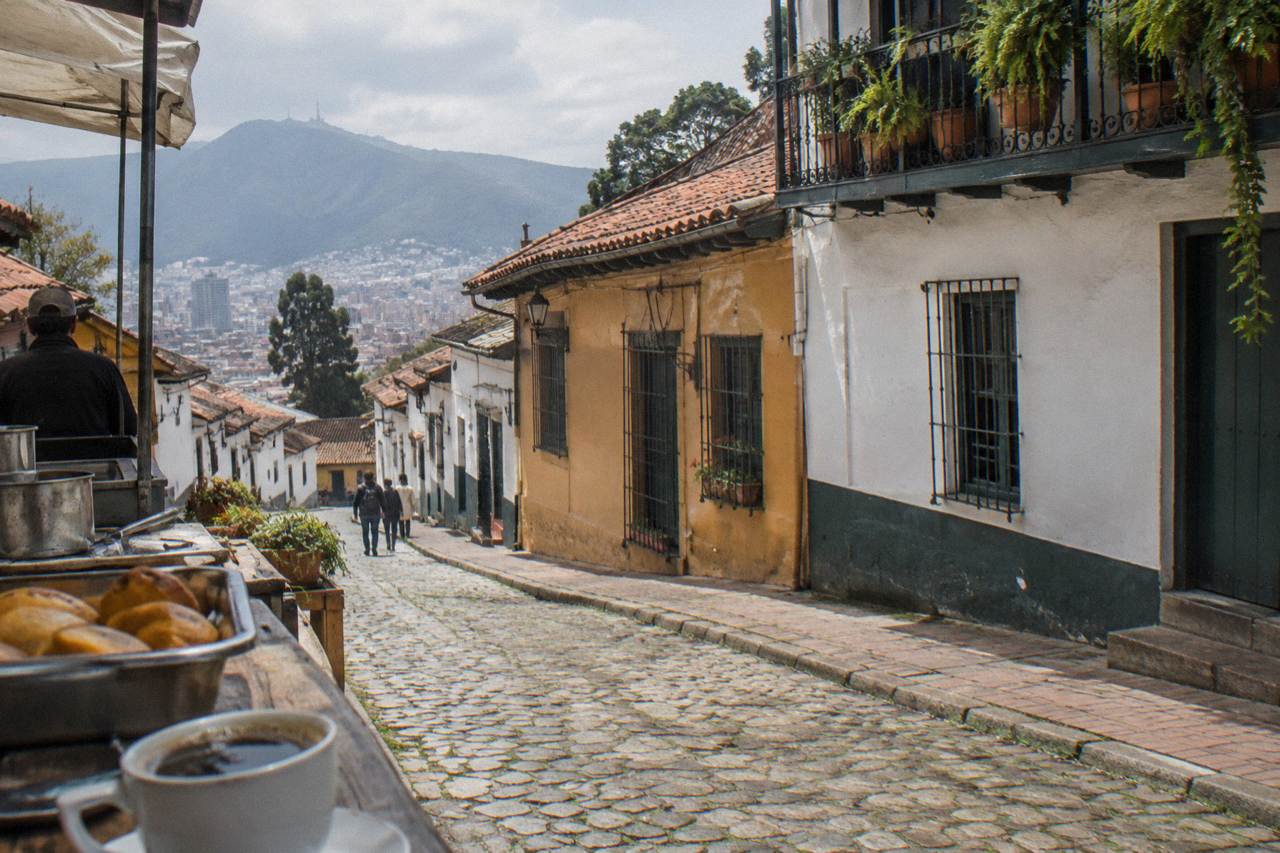
Bogotá is a major capital millions of tourists visit each year. The US State Department's Colombia advisory is reported at Level 3 (Reconsider Travel) since 31 March 2026, though no department at Level 4 includes Bogotá. Visitors commonly walk Chapinero, Usaquén and Parque 93, and La Candelaria in daytime, with normal precautions.
Is Bogotá Safe For Tourists Right Now?
Yes, in the everyday sense that millions of visitors walk its streets each year, with normal big-city precautions. The US State Department's Colombia advisory is reported at Level 3 (Reconsider Travel), issued 31 March 2026, with some departments at Level 4. None of the Level 4 departments is Bogotá, and the city's main visitor areas are described in 2026 reports as walkable with standard care.
That paragraph contains the two things worried travelers usually conflate: a country-level advisory and the lived reality of a capital city. The advisory is issued for Colombia as a whole and driven largely by rural departments far from Bogotá, which is why reading the actual text matters more than the headline number. Conditions change, so check the official advisory page before you travel.
What the advisory does not say is also useful. It does not name Bogotá as a do-not-travel zone, and the UK FCDO advice, which names specific departments and border areas it advises against, likewise points readers to the country page rather than singling out the capital. The practical question for a food-focused visitor is narrower: where do I walk, at what hours, and how do I avoid the handful of documented scam patterns.
This guide reports what official and 2026 sources say, without verdicts. For the food-specific angle, street food hygiene and tap water have their own write-up in is Bogotá street food safe, and the neighborhood-by-neighborhood food map in Bogotá food by neighborhood covers where the eating is.
Two practical notes color everything else. Bogotá sits at about 2,640 m, and altitude, not crime, is the thing most likely to flatten a first day; the city's health secretariat recommends 1 to 2 days of light adaptation, hydration and light meals, as reported. And the tap water is officially potable, though some visitors still choose bottled.
What Does The Reported Travel Advisory Actually Say?
The US State Department advisory for Colombia is reported at Level 3, Reconsider Travel, issued 31 March 2026, citing crime, terrorism, civil unrest, kidnapping and natural disasters. Several departments are at Level 4, Do Not Travel, including Arauca, Norte de Santander and parts of Cauca and Valle del Cauca. Bogotá is not among them.
Level 3 language sounds alarming out of context, so it helps to know how the system works. The State Department grades every country from Level 1 to Level 4, and Level 3 means reconsider whether your trip is necessary, not that travel is prohibited. The departments flagged at Level 4 are rural and border regions, several hours by air or road from the capital. For context on the official UK position, the FCDO publishes its own Colombia advice naming the specific areas it covers, and readers can compare the two directly at the UK government's Colombia travel advice.
What this means for a Bogotá itinerary is that the advisory functions as a background document rather than a daily constraint. The 2026 neighborhood reports summarized later in this guide, not the country advisory, are what shape street-level decisions. Bogotá's own visitor guidance focuses on ordinary urban precautions plus altitude health, and the city publishes first-visit health tips at bogota.gov.co, worth reading before any trip.

| Advisory item | Reported detail (2026) | What it means for Bogotá visitors |
|---|---|---|
| US State Department level | Level 3, Reconsider Travel, issued 31 March 2026 | Read the full advisory; the level applies to Colombia as a whole |
| Level 4 departments | Arauca, Cauca except Popayán, Valle del Cauca except Cali, Norte de Santander, within 10 km of the Venezuela border | None contains Bogotá; all are rural or border regions |
| UK FCDO advice | Advises against all but essential travel to named departments and border zones | Bogotá is covered by general country guidance, not a named zone |
| Altitude guidance | About 2,640 m; 1 to 2 days adaptation, hydration, light meals recommended | The most likely cause of a rough first day, reported as health advice |
| Tap water | Officially potable per city water authority sampling | Some visitors still prefer bottled; no claim either way is needed |
A sensible reading habit: screenshot or bookmark the advisory a week before flying and again a day before, since these notices are updated without fanfare. Travel insurance terms also often reference the advisory level, so check your policy wording if you want cancellation cover that follows the official notice rather than your own judgment.
Which Neighborhoods Do Visitors Walk In?
The 2026 reports describe Chapinero, Usaquén, Parque 93, Zona T, Chicó and Teusaquillo as the more policed visitor areas where people walk day and evening with standard precautions. La Candelaria is described as safe in daytime on main streets and squares, with a higher pickpocket risk and advice against walking alone after dark or into side streets.
That split, daytime historic center versus evening north, is the single most useful planning fact on this page. Visitors typically spend mornings and afternoons in La Candelaria for the museums, the Plaza de Bolívar and the food stops, then head north for dinner, where Chapinero Alto was named the 7th coolest neighborhood in the world by Time Out in September 2026 and the restaurant density around Zona G and Parque 93 keeps sidewalks busy late.
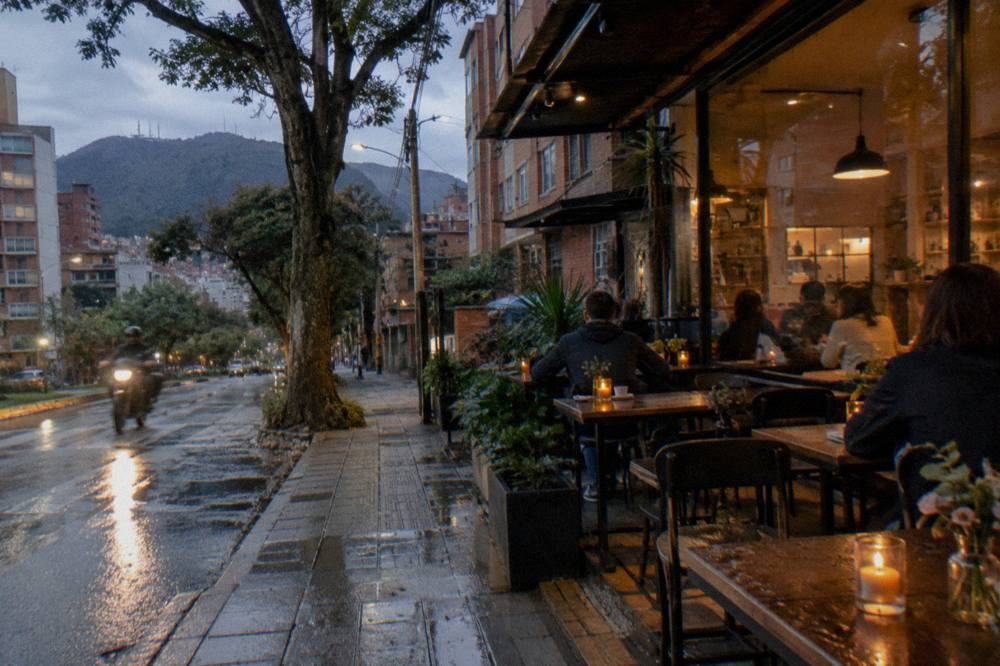
Chapinero rewards a little street sense. The 2026 scam reports note phone snatching along Carrera 7 in the evenings, so keep the phone pocketed while walking and step into a café to navigate. Usaquén, farther north, is calmer still; its Sunday flea and food market runs Saturdays, Sundays and holiday Mondays from 9:00 a.m. to 5:30 p.m. on Carrera 6A between Calles 119 and 120A, per the market's own site, and the daytime crowd makes it an easy first weekend outing, covered in full in the Usaquén Sunday market guide.
For worried first-timers, a guided walk compresses the learning curve: someone who knows which block turns quiet at night, which queue is worth it and how to order.
Getting between these areas is its own question, and the honest answer is that the TransMilenio system is cheap and fast but crowded, with pickpocketing noted in 2026 reports on packed troncal buses. The fare is a reported COP 3,550 as of January 2026. Many visitors use app-based cars in the evening instead; the trade-offs are laid out in getting around Bogotá.
| Area | 2026 report summary | Best hours | Food reason to go |
|---|---|---|---|
| Chapinero and Chapinero Alto | More policed visitor area; evening phone-snatching reports on Carrera 7 | Day and evening, standard precautions | Time Out's 2026 coolest-neighborhood pick; Zona G dining |
| Usaquén | Calm northern district with weekend market | Daytime, weekend | Sunday flea market food stalls: arepas, fruit, hot chocolate |
| Parque 93 and Zona T | Busy, policed nightlife and dining zone | Day and evening | Restaurant density, new 2026 openings |
| La Candelaria | Daytime-safe on main streets; pickpocket risk; avoid walking alone after dark | Daytime | Historic-center food walks, market-adjacent snacks |
| Teusaquillo | Reported as walkable day and evening | Day and evening | Residential cafés, quieter stay option |
None of this is a verdict on any street. Reports describe patterns at a moment in time, conditions change, and the ordinary rule applies everywhere: ask at your hotel or guesthouse about tonight's route, not last year's.
Is La Candelaria Safe After Dark?
The 2026 reports are consistent: La Candelaria is fine in daytime on the main streets and squares, but carries a higher pickpocket risk than the northern districts, and visitors are advised against walking alone after dark or wandering side streets. At night, the standard pattern is to eat early, use an app-based car, or join an organized activity with a guide.
Daytime is when the neighborhood earns its reputation. The Plaza de Bolívar, the museum quarter and the snack-filled side lanes around Calle 11 and Carrera 4 fill with students, office workers and tour groups, and the documented petty-crime pattern here is pickpocketing in crowds, not confrontation. The ordinary defenses work: front pockets, a bag worn across the body, phone away while walking, and valuables you would genuinely miss left in the hotel safe.
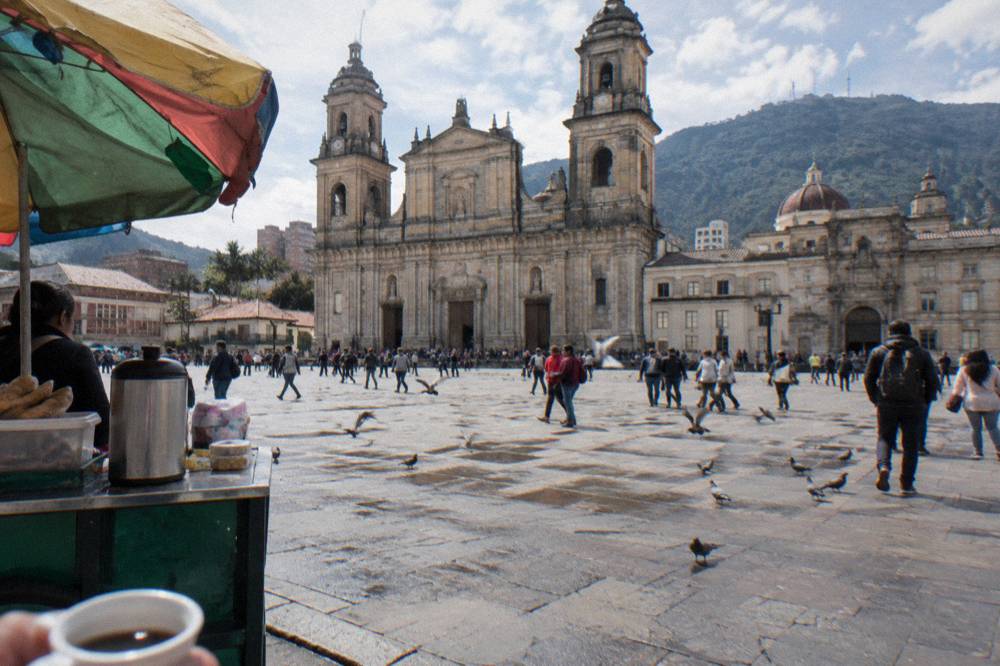
After dark the calculus changes because the neighborhood empties. Government buildings and universities mean the area is populated on business hours, so a 9 p.m. walk back to a hotel through deserted lanes is a different environment from a 3 p.m. stroll. The 2026 guidance is not subtle: take a car, even for a short hop, and if you want a night food experience in the center, do it with a guide and a group.
That is exactly the gap a booked walk fills. The Food Tour in La Candelaria Bogotá, a 3-hour small-group walk rated 4.9 across 72 reviews, from $63 per person with the price varying by group size, keeps the historic center's eating accessible in the company of a local guide; the listing describes the meeting point, the tastings included and the cancellation terms, so check the booking page for the current details. Check availability
A note on framing: a guided walk is not a security detail, and no operator promises one. What it offers is local judgment about timing, routes and stalls, which is the same thing that makes a food walk worthwhile in any big city, from Naples to Mexico City.
What Scams Are Documented In 2026 Reports?
The documented 2026 patterns are phone snatching on busy evening streets, scopolamine drugging through drinks, food, cigarettes or dating-app meetups followed by robbery, fake plainclothes police demanding document or money checks, and pickpocketing around Plaza de Bolívar, Monserrate and crowded transport. Each has a simple, well-known counter.
Phone snatching is opportunistic: a phone held loosely while walking on Carrera 7 in the evening is the classic case. Keep it pocketed, step inside a shop to check a map, and expect to be unremarkable if you do. Pickpocketing works the same everywhere it exists: crowds, distractions and back pockets. More of these guides are collected on Bogota Food Tours.
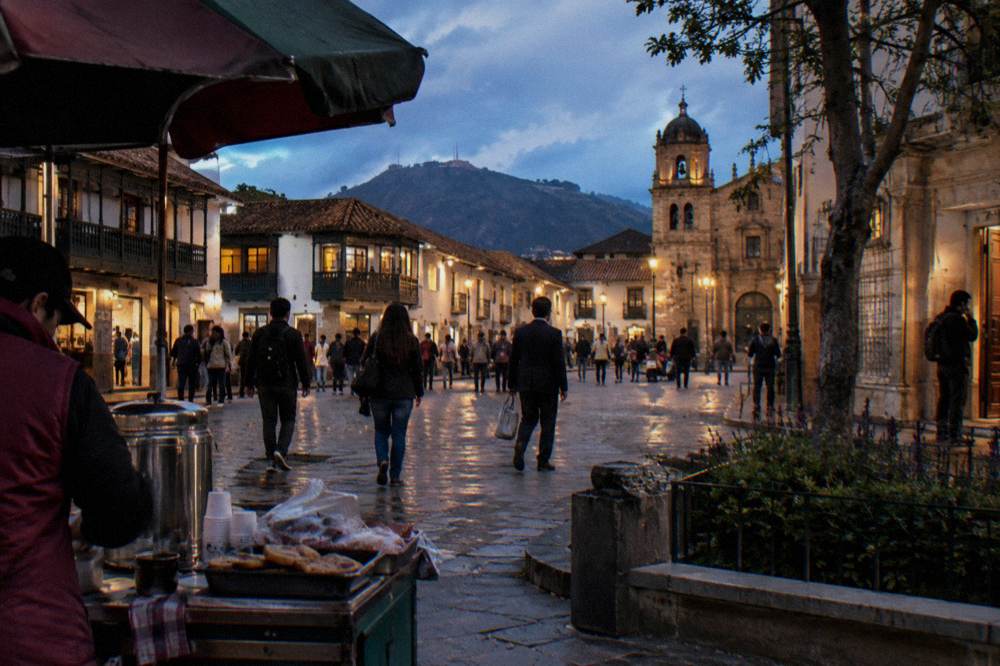
The scopolamine pattern, known locally as burundanga, deserves specific attention because it targets sociability. The documented route is a drink, food item, cigarette or a date arranged through an app, in a scenario where a stranger controls what you consume. The counter is blunt: never leave a drink unattended, decline food and cigarettes from strangers you have just met, and treat a first-date suggestion to go somewhere private with suspicion. This is rare, but it is the pattern with the worst outcomes, so it is the one worth internalizing.
Fake police are the easiest to defeat because real Colombian police do not conduct document or wallet inspections on the street. If someone in plain clothes demands your passport or cash, walk into the nearest shop or hotel and let staff call the uniformed police. Nobody legitimate is offended by that.
| Documented pattern | Typical setting (2026 reports) | Simple counter |
|---|---|---|
| Phone snatching | Carrera 7 in Chapinero, evenings | Pocket the phone while walking; step indoors to navigate |
| Pickpocketing | Plaza de Bolívar, Monserrate, crowded buses | Front pockets, cross-body bag, minimal cash out |
| Scopolamine drugging | Drinks, food or cigarettes from new acquaintances; dating-app meetups | Watch your drink, decline strangers' items, public venues for first meetings |
| Fake police checks | Streets, plainclothes, demands for documents or money | Do not comply on the street; go into a shop and ask staff to call police |
None of these patterns is unique to Bogotá; versions of all four appear in most major capitals. The reason to read them before arrival is that each counter becomes automatic once you have thought about it once.
Is It Safe To Eat Street Food And Drink The Water?
The city's health secretariat advises buying street food from formal, authorized stalls and checking labels, expiry dates and packaging condition, guidance repeated in its 2026 seasonal advisories. Tap water in Bogotá is officially potable per the water authority's sampling, and UK advice singles Bogotá out on this point, though some visitors still choose bottled.
The street-food guidance is ordinary food hygiene translated for stalls: high turnover, visible cooking, and authorized vendors beat an unmarked cart. That is the same judgment a local applies anywhere. For a full treatment of what the advisories say, which dishes are cooked at high heat, and where markets fit in, read the dedicated guide on street food safety and tap water in Bogotá.
On the water: the city's water utility publishes sampling in a low-risk index band, and the FCDO notes Bogotá as the one Colombian city where tap water is considered safe. Some visitors still buy bottled water because of chlorine taste or older building plumbing, and neither choice needs justifying. Ice in established restaurants and cafés follows the potable supply.
If a guided walk is your plan for a first street-food evening, the most reviewed food walk compared here is the Viejo Bogota Food Tour with 12+ Tastings, from $55 per person, rated 5.0 across 714 reviews over 4 hours. The listing details what the tastings cover and where the walk meets.
A guide also answers the "is this stall okay" question with local knowledge rather than guesswork, which is a quiet safety benefit of booked walks that listings never advertise but travelers consistently mention.
How Do Guided Food Walks Fit A Worried First-Timer?
A guided walk puts a local guide between you and the early decisions: which street, which stall, what to order and when to move on. The walks compared here range from a $15 guide fee on a shared walk, with tastings about US$12 extra, to private formats from $63, so the format can match how much structure you want on day one.
The psychology is simple. Most first-day anxiety is not about danger, it is about uncertainty, and a guide removes the uncertainty while you calibrate. After one afternoon walking La Candelaria with someone who knows it, most visitors find the neighborhood reads as navigable rather than intimidating, and the second day is easier whether or not it is guided.
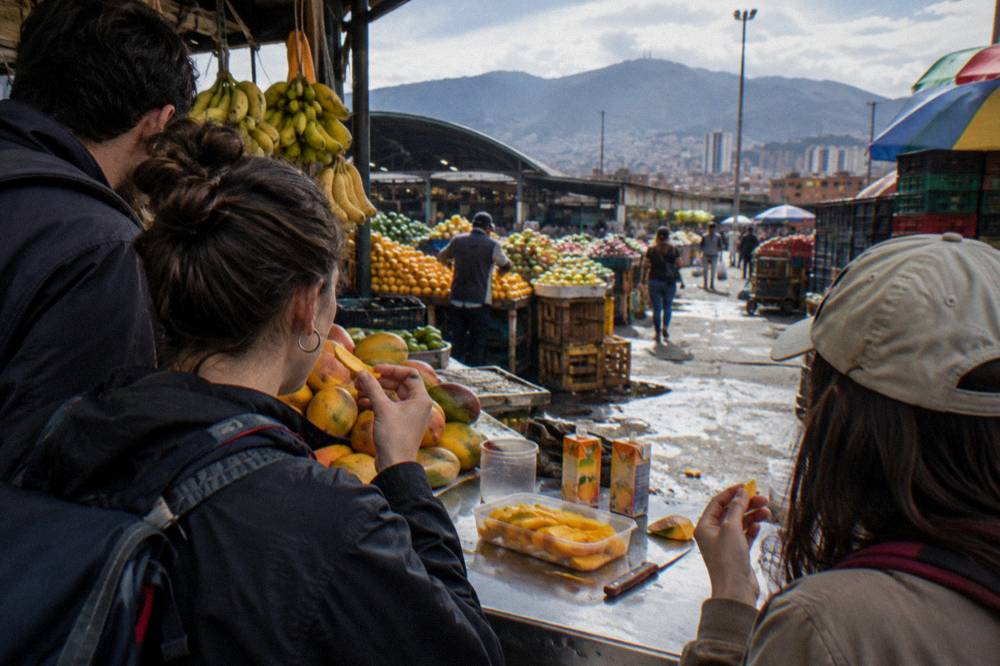
Format matters more than people expect. A shared small-group walk adds companions, which suits solo travelers who would rather not eat their way through a new city alone. A private tour gives you the guide's full attention and the ability to set the pace, useful for families, slow walkers or anyone who wants dietary questions answered in detail; the operator's listing describes what each format includes.
| Walk | Format | Duration | Price basis | Reviews |
|---|---|---|---|---|
| Food Tour in La Candelaria Bogotá | Small group, historic center | 3 hours | From $63 per person, varies by group size | 4.9 across 72 reviews |
| Viejo Bogota Food Tour with 12+ Tastings | Shared walk, most reviewed here | 4 hours | From $55 per person | 5.0 across 714 reviews |
| Bogota Shared Gastronomy Tour in the Historic Center | Shared, guide-fee pricing | 3 hours | Guide fee from $15, tastings about US$12 extra | 4.9 across 291 reviews |
| Street Food Bogotá Private Tour | Private | 4 hours | From $109, varies by group size | 5.0 across 4 reviews |
Note the third row's pricing honestly: the Shared Gastronomy Tour's headline figure is a guide fee only, with tastings costing about US$12 extra on top, so compare it against the others on a total-spend basis, not the sticker. Review counts matter too; a 5.0 from a handful of reviews is a good sign but not a track record, while the 714-review walk's perfect score carries more weight.
For visitors whose worry is less about safety and more about whether the city justifies the flight at all, the answer assembled across this site is a long food-first itinerary, summarized in is Bogotá worth visiting.
What Practical Habits Make A Bogotá Trip Smooth?
Five habits cover most of it: keep the phone pocketed on busy streets, use app-based cars after dark rather than walking far, carry only the cash you need for the day, eat and drink in established places with people you just met, and give yourself an easy first day at 2,640 m altitude before climbing anything.
The altitude habit is the one visitors skip and regret. Bogotá's health guidance recommends 1 to 2 days of adaptation, 3 or more liters of water a day, light meals and little alcohol, with symptoms like headache and fatigue typically peaking in the first 24 to 48 hours. A gentle food walk is a fine day-one activity; the Monserrate climb is not.
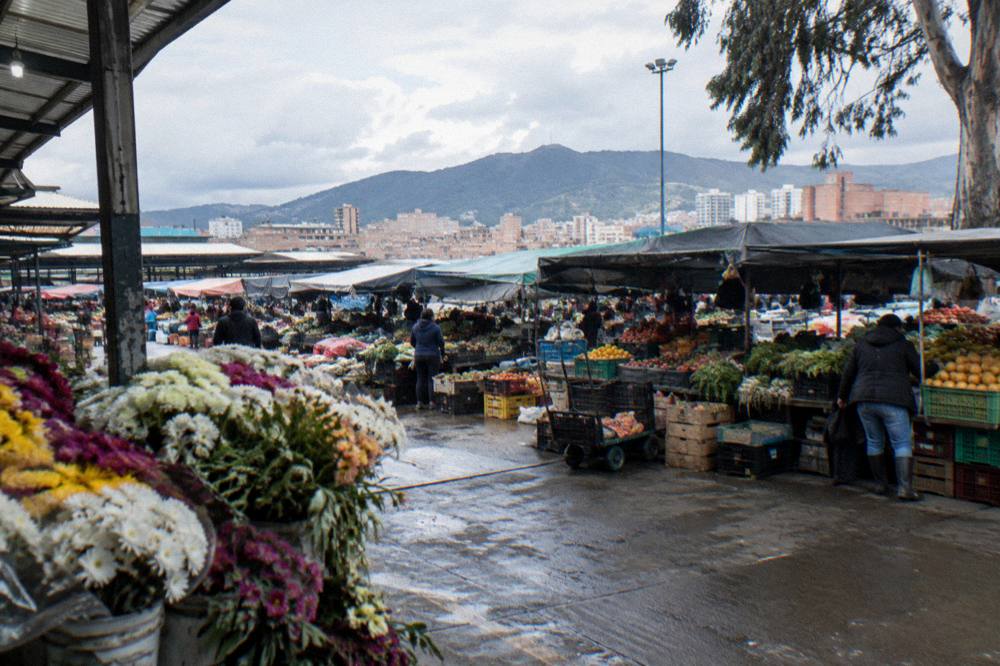
Money habits are the same as in any Latin American capital. Carry a day's cash in small notes, leave the passport in the hotel safe and carry a copy, and use cards in established venues. Tipping is optional and modest: the voluntary 10 percent propina at sit-down restaurants, capped by law, which you can accept, adjust or decline, and small change for porters and housekeeping, as covered in the tipping guide.
Transport habits close the loop. The unified fare is a reported COP 3,550 with a 125-minute transfer window, fine for daytime hops; evenings are when the 2026 reports and common sense both point to an app-based car. Entry formalities are light: US citizens stay visa-free up to 90 days, and the free Check-Mig pre-registration is optional but speeds the airport process, per Migración Colombia at migracioncolombia.gov.co.
For structure on the trip as a whole, the Bogota Food Tours planning pages walk through neighborhoods, markets and itineraries one question at a time, and a private format is one way to fold a guide into the whole first day if that is what buys you peace of mind.
Common Questions About Is Bogotá Safe For Tourists
Is Bogotá Safe For Tourists?
Millions of tourists visit each year and walk the main visitor areas with normal precautions. The reported US advisory is Level 3 for Colombia as a whole, issued 31 March 2026; no department at Level 4 contains Bogotá. Conditions change, so read the official advisory before you travel.
Is La Candelaria Safe At Night?
2026 reports describe La Candelaria as safe in daytime on main streets and squares, with higher pickpocket risk, and advise against walking alone after dark or into side streets. At night, use an app-based car or join an organized activity with a guide rather than walking far.
What Is The Biggest Safety Risk For Tourists In Bogotá?
By frequency, petty theft: pickpocketing in crowded areas like Plaza de Bolívar and packed buses, and phone snatching on busy evening streets. By severity, the documented scopolamine drugging pattern tied to drinks, food or cigarettes from new acquaintances and dating-app meetups.
Should I Join A Guided Walk For Safety Reasons?
A guided walk is not a security service, but it supplies local judgment about streets, stalls and timing, which removes most first-day uncertainty. Formats range from shared walks with snacks from $54.68 per person to private tours from $109; details and cancellation terms are on each booking page.
Can You Drink The Tap Water In Bogotá?
Bogotá's tap water is officially potable per the water authority's sampling, and UK advice names Bogotá as the Colombian city where this applies. Some visitors still choose bottled water for taste or plumbing reasons; either choice is reasonable.
Does The Level 3 Advisory Mean I Should Cancel My Trip?
Level 3, Reconsider Travel, asks you to weigh the decision; it is not a prohibition. The departments flagged at Level 4 are rural and border regions, none of them Bogotá. Read the full advisory text, check your insurance terms, and make your own call with current information.