What To Get At Colombian Restaurants?
A plain-English ordering guide to Colombian restaurant menus: ajiaco, sancocho, lechona, tamales, arepas, obleas, drinks and tipping, plus when a guided tasting beats going alone.
If you only remember one order, make it ajiaco in Bogotá, a bowl of sancocho almost anywhere else, and a tamal or lechona plate when you see them listed. Those four dishes appear on nearly every traditional menu in the country, and each one explains a piece of how Colombians eat: soups as meals, corn as a staple, and slow-cooked pork as weekend celebration food. This guide walks through every section of a typical menu, section by section, so the choices feel familiar before you sit down. It also covers the drinks list, the dessert case, portion sizes, dietary questions and the tip, because those five things trip up first-time diners more often than the food itself.
The restaurant landscape in Bogotá is broader than the classics alone. Roughly 36 percent of restaurants in the city now offer vegan or vegetarian menu options, according to the city's own gastronomic coverage, so plant-based diners are no longer stuck assembling a meal from sides. The city's dining scene has also drawn international attention recently: Time Out named Chapinero Alto the seventh coolest neighbourhood in the world for 2026, the only Latin American entry in the top ten, citing its restaurant density. That means a visitor eating well in Bogotá is not roughing it; the city simply expresses itself through traditional plates first.
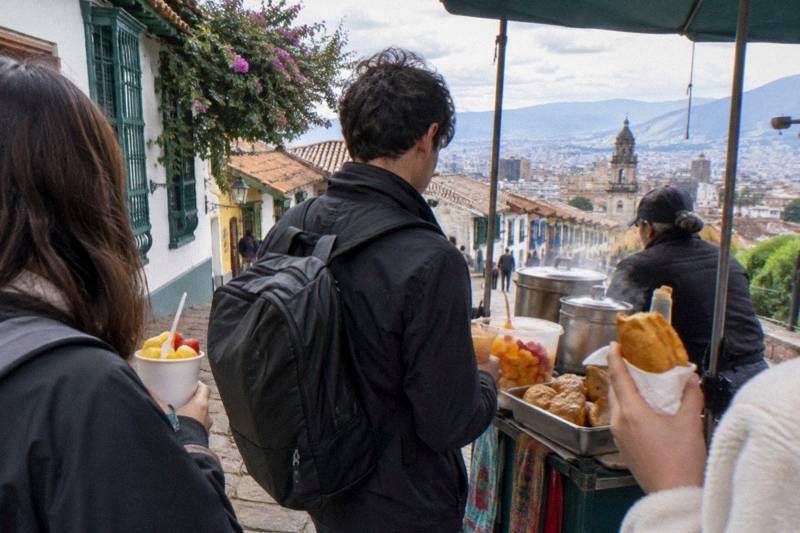
And if you would rather have someone else do the ordering on your first day, a guided walk such as the Viejo Bogota food walk with tastings, from $55 per person and rated 5.0 across 714 reviews, samples more than twelve items across four hours in the historic centre. A walk like that answers this article's question by mouth rather than by reading, and everything it tastes is chosen by a guide who knows which kitchen does which dish best on that street.
Ordering well in Colombia is mostly about knowing which dish belongs to which moment. A steaming soup is a full lunch, not a starter. An arepa can be breakfast, a side or a snack depending on what comes with it. And the sweet finish, from obleas to dulce de leche everything, is rarely optional in local company. The sections below take the menu in the order you will usually meet it, from soups to sweets to the tip.
Start With The Soups: Ajiaco And Sancocho
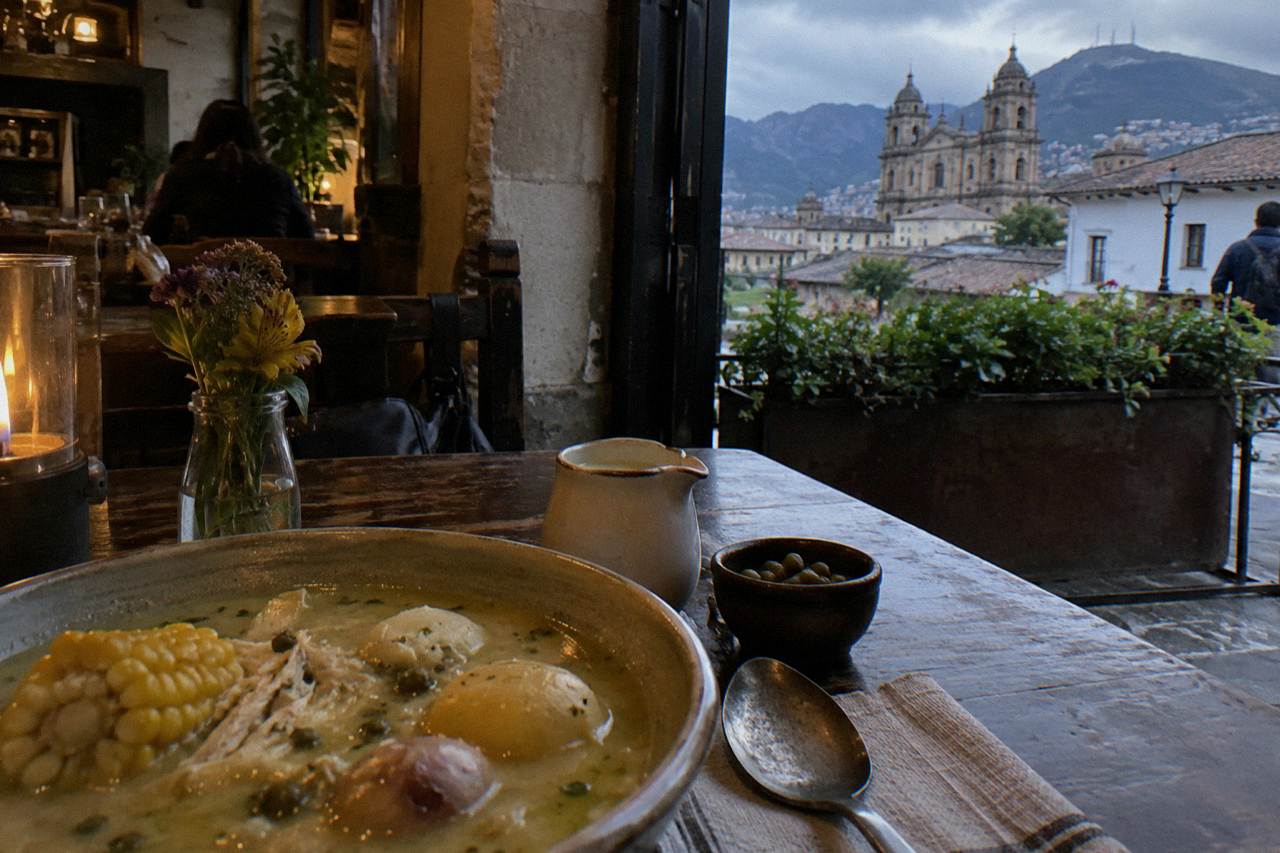
Start with soup, but know what you are ordering: ajiaco is the choice if you are in Bogotá, while sancocho is the one to order anywhere else; both are full meals in themselves rather than starters, and both will arrive at the table looking like far more food than a Western soup course. Ajiaco santafereño is the capital's signature soup: chicken, three kinds of potato, and large kernels of tender corn, served with capers, cream, avocado and guascas herb on the side so you season it yourself. Sancocho is the broader family of hearty soups found across the country, usually built on meat, plantain, yuca and corn, and it varies by region more than any other dish on the menu.
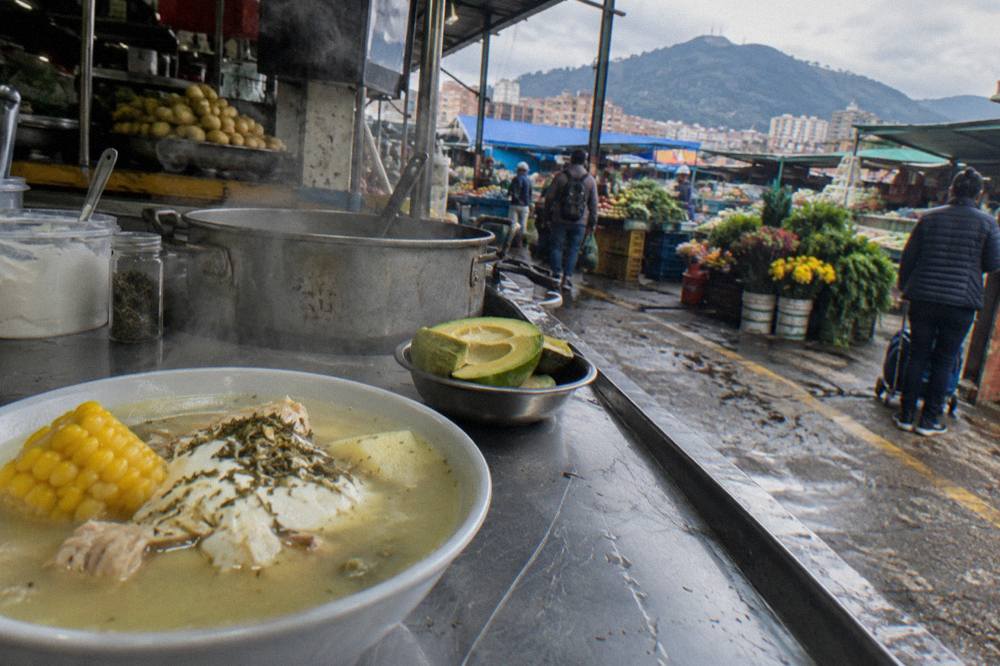
Ajiaco carries enough cultural weight that Bogotá gives it its own festival days, with market plazas and restaurants across the city participating each November, as the Instituto Distrital de Turismo has reported. That is a strong signal that the version you meet on a menu here is the real thing rather than a tourist adaptation. The soup also appears on nearly every traditional market plaza in the city; the family-run stalls at La Perseverancia, for instance, are known for ajiaco alongside lechona and other classics per Visit Bogotá, so a market lunch is a legitimate rival to a restaurant one.
The serving ritual matters as much as the recipe. The cream, capers and avocado arrive on a separate plate, and locals add them progressively, tasting between additions. The corn cob is lifted and eaten by hand. None of this is policed, but doing it the local way slows the meal down, and ajiaco is a dish that rewards slowness. A common first-timer question is whether ajiaco and sancocho are the same dish; they are not, and the differences are worth two minutes before you order, which is why we cover them in detail in is ajiaco the same as sancocho.
The herb that defines ajiaco's flavour is guascas, and you can read more about it in what herb is in ajiaco. If a soup-heavy lunch sounds like the right introduction to the city, the question of which booked walk suits you is covered in which Bogotá food walk to book.
Wondering whether to taste your way through the old town with a guide instead of ordering solo?
Most guided walks in the historic centre can be cancelled free before the start time, so booking ahead costs you flexibility rather than money.
The Big Plates: Lechona, Tamales And Fritanga
Lechona, tamales and fritanga are the celebration dishes of the big plates, and the rule is simple: order them whenever you see them. They are often weekend-only, so a midweek sighting is a good sign, and a restaurant that lists them on a weekday is usually proud of how it makes them. Lechona is whole slow-roasted pork stuffed with rice and peas, served by the portion, crispy skin and all. A tamal is meat and dough steamed in a banana leaf, a weekend and festive tradition in Bogotá; the city's tamal festival runs across more than a dozen market plazas each December. Fritanga is a shared platter of grilled and fried meats, chorizo, potato and plantain, best ordered for a table rather than one diner.
These dishes sit at the centre of Sunday eating in the capital, a pattern we unpack in tamales, lechona and Sunday food in Bogotá. The practical takeaway for a restaurant order: ask what is fresh that day, because the best traditional kitchens cook these plates for the weekend crowd and the quality shows when the pot is full. A tamal ordered on a Sunday morning comes from a kitchen that has been steaming since dawn; the same item on a quiet Tuesday can be a reheated leftover of a different standard.
Lechona deserves a special note because it travels well beyond restaurants. Whole pigs are roasted for family events, and market stalls sell portions by weight. In a restaurant the dish usually arrives as a plate of the rice-pea filling topped with a piece of the crackling skin, sometimes with a small arepa and a mild chilli sauce on the side. The skin is the point of the order; ask for "cuerito" if you want more of it, because that is the word the kitchen uses.
Fritanga works on different arithmetic. It is priced for sharing, arrives on a sizzling plate, and pairs naturally with beer. A solo diner who orders a full fritanga has usually ordered for three without realising it; a half portion or a smaller mixed grill is the fix. If you want to understand these dishes from the inside before you order them, a cooking class with a market visit is the fastest route. The private Colombian cooking class and market tour, from $95 per person and rated 5.0 across 52 reviews, runs four hours and pairs a market shop with hands-on preparation.
Arepas, Empanadas And The Bread Basket
The bread basket here is simple to decode: an arepa comes with many main dishes, empanadas are the standard snack, and pan de bono or almojábanas show up wherever bread is sold. Each of these staples needs less translation than context. An arepa is a grilled corn cake, plain or with cheese, and it turns up beside breakfast, lunch and dinner without being asked. Empanadas are fried pastries filled with meat or potato, eaten with ají, a sharp coriander-and-chilli salsa. Pan de bono is a chewy cheese bread made with yuca flour; almojábanas are its softer, airier cousin, a classic partner to hot chocolate.
The arepa question visitors always ask is why it comes without filling. In the Andean highlands the arepa is a plain accompaniment, its job being to anchor the plate, not to be a taco. Coastal arepas are a different food entirely, fried and egg-stuffed, and if you meet one of those on a menu it is a Caribbean import. Neither version is wrong; they are simply different traditions, and knowing which one a kitchen serves tells you which coast its kitchen comes from. Everything else covered here is indexed on Bogota Food Tours.
Empanada etiquette is minimal but real. They are finger food, sold by the unit, and the ají that comes alongside is spooned into the bite, not poured over the pastry. Potency varies wildly from kitchen to kitchen, so taste a drop first. The same care applies to buying them on the street rather than in a restaurant: the city's health secretariat advises buying from formal, authorised vendors and checking that food is properly packaged, standard advice it repeats each festive season.
You can get the full picture of this corner of the menu in arepas, empanadas and pan de bono. For the bakery counter specifically, almojábanas and pan de bono are the two items worth pointing at, and both go with coffee in a way that makes a mid-morning bakery stop one of the easiest good decisions in the city.
Breakfast And Hot Drinks: Changua, Calentado And Chocolate Santafereño
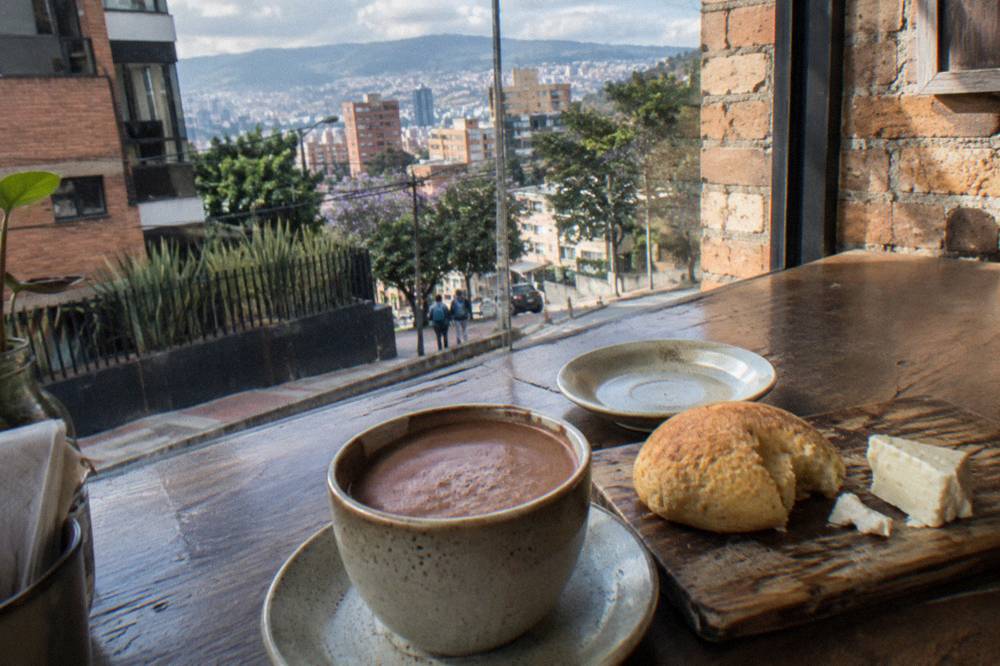
For breakfast in a Colombian restaurant, order changua, calentado, or tamal with a cup of hot chocolate; each of these is a distinct tradition rather than a hotel buffet, and each one tells you something about how the highland day starts. Changua is a milk-and-egg soup with bread, the classic highland start to a cold morning, poached eggs floating in milk and water with cilantro and a stale roll for dunking. Calentado reheats yesterday's rice and beans with egg and arepa, a farm-to-city habit of wasting nothing that has become a restaurant category of its own. Chocolate santafereño is thick hot chocolate served with cheese to melt into the cup, a pairing that surprises visitors and converts most of them.
We go deeper on all of it in the Bogotá breakfast guide and chocolate santafereño explained. The chocolate-and-cheese ritual deserves a sentence here: the cheese is dropped into the hot chocolate in cubes, where it softens without melting fully, and it is fished out with a spoon as the drink goes down. It sounds like a dare. It is genuinely one of the best things on any Colombian menu, and the historic La Puerta Falsa, operating since 1816 beside the cathedral, has built two centuries of reputation partly on serving it.
On coffee: Colombian restaurants typically serve brewed coffee with milk to order, and the specialty scene lives in dedicated cafés, a distinction worth knowing before you judge a restaurant's tinto. A tinto is small, black and sweet; asking for it is asking for the everyday version, not the tasting flight. The city's roasteries, from 1990s pioneer Amor Perfecto with its public cuppings to newer openings like Varietale in Chapinero, are a separate outing entirely, and for that side of the city see Bogotá coffee tasting and cupping experiences.
Desserts And Sweets: Obleas And Beyond
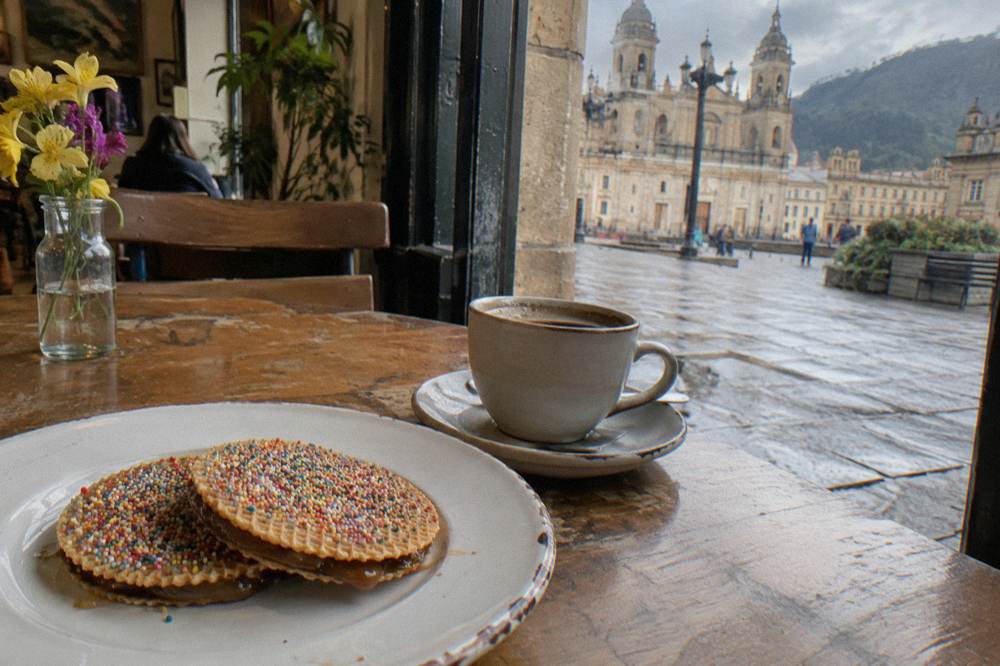
Order obleas if you want the street-classic dessert, or anything with arequipe if it is on the menu; Colombian sweets lean on caramel and milk, not pastry, and the dessert case is usually simpler and more generous than a European one. Obleas are two thin wafers sandwiched around arequipe, the local dulce de leche, sometimes with grated cheese, jam or coconut added. Beyond them look for brevas con arequipe, figs poached in caramel syrup, and cuajada con melao, fresh cheese with cane syrup, a sweet-and-salty combination that works far better than it sounds.
The caramel thread runs through the whole dessert case. Arequipe appears inside cakes, over pancakes, between cookies and stirred into hot drinks. A restaurant that makes its own rather than opening a tin will usually say so on the menu, and that is the version worth ordering. Salpicón, a cold fruit punch, and fresh fruit with cream are the lighter finishes, and both suit the altitude better than a heavy slice after a big soup lunch.
The oblea also raises a question visitors often ask about origins, since Venezuela shares the dessert; we settle it in are obleas Colombian or Venezuelan. For the wider sweet catalogue, from milk candies to coconut panela balls, see Colombian desserts, obleas and sweets in Bogotá.
What To Drink: Juices, Aguardiente And Beer
For most meals, order a fresh fruit juice, because the juice list alone reads like a botanical inventory of the Andes and justifies the trip on its own; pour aguardiente when the table is celebrating; and on ordinary evenings, reach for a local lager or a craft beer. Colombian restaurants press juices to order from fruits you may never have met: lulo, curuba, mora, guanábana, maracuyá, tomate de árbol. They come in water or milk versions, and the milk versions are closer to a smoothie. Aguardiente is an anise spirit drunk in small shots, shared around the table with the same glass refilled. Beer ranges from national lagers to a fast-growing craft scene led by names like 3 Cordilleras.
| Drink | What it is | When to order it |
|---|---|---|
| Jugo natural | Fresh fruit juice in water or milk | Lunch, any day |
| Aguardiente | Anise-flavoured spirit, sipped in shots | Celebrations, shared tables |
| Cerveza artesanal | Local craft beer, IPA to lager styles | Evening, with fritanga or bar food |
| Chocolate santafereño | Thick hot chocolate with cheese | Breakfast or late afternoon |
| Café con leche | Brewed coffee with steamed milk | After meals, mornings |
The juice order deserves a strategy. Ask what is in season rather than defaulting to orange; a lulo in water is the single most recommended first juice in the city, tart and unfamiliar in the best way. The milk versions, made with curuba or mora, are heavier and better as a breakfast than a lunch drink. The fruit side of the drinks menu deserves real attention; a market walk is the fastest education, and Colombian fruits to try in Bogotá lists the ones worth ordering first.
The craft beer scene has real substance behind it. 3 Cordilleras, the country's largest artisanal brewer, holds roughly 48 percent of the national craft market, and the city hosted its artisanal beer festival in late October with sixty local producers. On the national drink, aguardiente and Colombian spirits covers what it is, how it is served, and why the sharing ritual matters; a constitutional ruling in early 2025 also opened regional markets that had been closed to outside brands, so the bottle on the table may be one locals could not buy a few years ago.
How To Order Well: Portions, Diets, Safety And The Tip
Expect generous portions in Colombian restaurants, so order with your real appetite in mind; mention any dietary needs before you order rather than after the food arrives; and know that the 10 percent tip is voluntary by law, not an obligation. Get these three basics right and everything else in this section falls into place. Lunch is the main meal of the day and the corrientazo, the fixed lunch menu, is built around it: soup, a main with rice, protein, plantain and salad, and a juice, at a set price that undercuts anything on the à la carte menu. The propina voluntaria of 10 percent is capped by law and can be declined or adjusted; staff will ask. For dietary needs, message ahead: unless an operator states a vegan or gluten-free option explicitly, assume it needs arranging, and the same rule applies to booked food walks.
A few practical notes finish the picture:
Altitude plays a quiet role in how a meal lands. Bogotá sits at about 2,640 m, and the standard advice for arrivals is a day or two of light meals and steady hydration before any big eating day, a point we expand on in eating at altitude in Bogotá. A ten-tasting walk on your first afternoon at elevation is a mistake; the same walk on day two or three is a highlight. For the money side of a meal out, tipping in Bogotá covers every scenario from the juice counter to the guided tour, and for the broader question of who can eat what, vegetarian, vegan and gluten-free food in Bogotá maps the options.
Safety on the plate is a smaller worry than visitors expect. Street food from busy, formal stalls follows the same hygiene logic as anywhere, and the city's health secretariat advises buying from authorised vendors and checking packaging. Tap water in Bogotá is officially potable per official monitoring, though some visitors still choose bottled. We separate the real risks from the imagined ones in is Bogotá street food safe.
If reading a menu still feels like homework, that is exactly the problem a good guide solves. The Bogotá Food Experience cultural and culinary tour, from $47.15 per person and rated 4.9 across 615 reviews, walks the historic centre for four hours with tastings and context woven together.
The most reviewed food walk on this site, at 714 reviews, is the Viejo Bogota tasting walk with more than twelve tastings, laid out in full in what a Bogotá food walk costs. Between the dishes above and one well-chosen walk, your first restaurant order in Colombia can look like your fifteenth.
Common Questions About Ordering At Colombian Restaurants
What To Get At Colombian Restaurants?
Order ajiaco for the signature soup, lechona or a tamal for a celebration plate, an arepa or empanadas for snacks, chocolate santafereño for a hot drink, and obleas or anything with arequipe for dessert. Portions run large and lunch is the main meal, so plan one big sit-down meal a day.
What Is The Most Famous Colombian Dish To Order?
Ajiaco santafereño is the dish most tied to Bogotá, a chicken and potato soup with tender corn served with avocado, cream and capers. Nationwide, sancocho and bandeja-style platters are the everyday classics, and tamales and lechona anchor weekend menus.
Is Tipping Expected At Colombian Restaurants?
Sit-down restaurants ask whether to add a voluntary 10 percent tip, which is capped by law and can be declined or adjusted. It is not expected at street stalls, counters or markets. For guidance on every scenario, see tipping in Bogotá restaurants, cafes and tours on this site.
Do Colombian Restaurants Have Vegetarian And Vegan Options?
Increasingly, yes. Around 36 percent of restaurants in Bogotá offer vegan or vegetarian menu options, per the city's gastronomic coverage. Still, menus vary, so it is worth asking before ordering, and for booked food walks, message the operator ahead rather than assuming.
What Should I Drink With A Colombian Meal?
A fresh fruit juice pressed to order is the default pairing, with lulo, mora and curuba among the most popular. Beer, from national lagers to craft labels, suits fried and grilled plates, and aguardiente appears when a table is celebrating.