What Herb Is In Ajiaco?
The herb in ajiaco is guascas, a Colombian galinsoga that gives the soup its flavor. What it is, where to taste ajiaco in Bogotá, and how to cook it yourself.
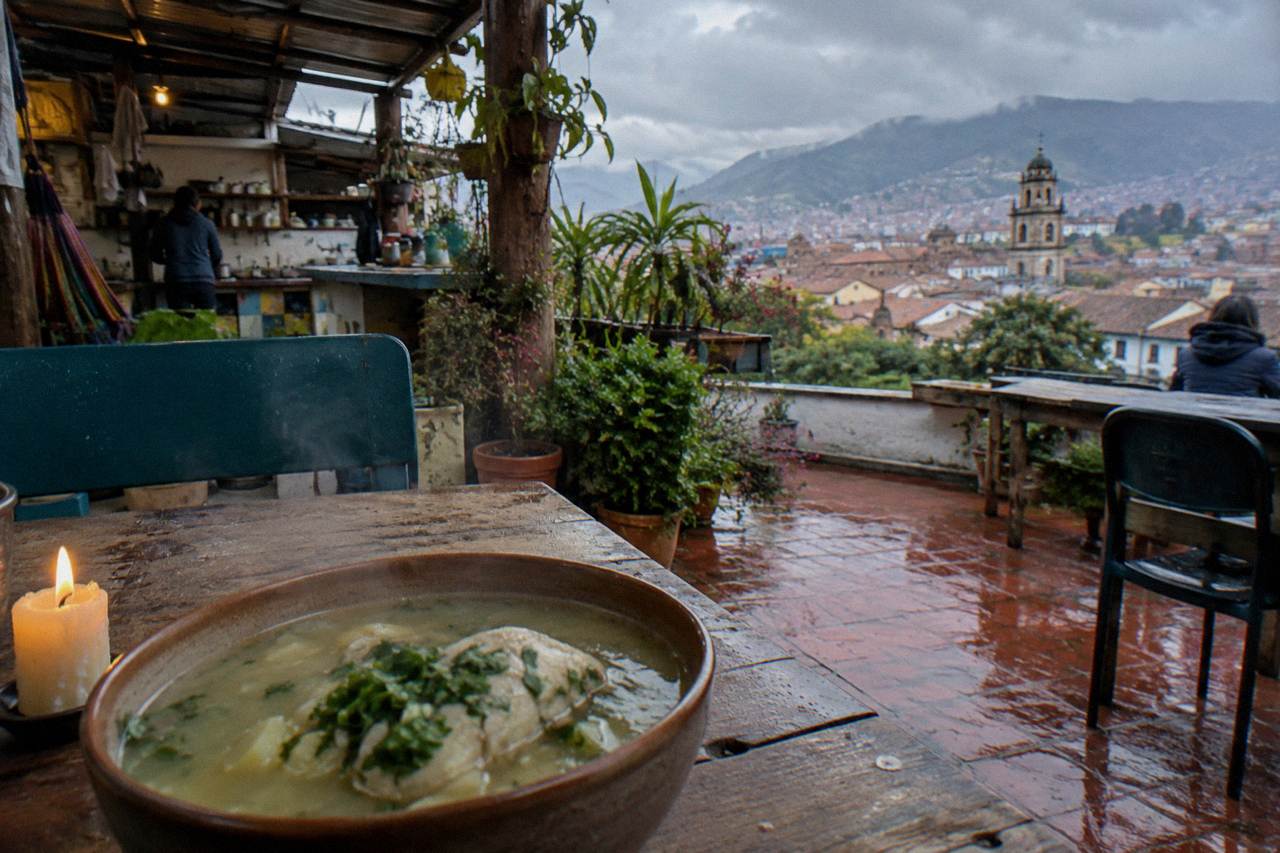
The herb in ajiaco is guascas, the dried leaf of a plant in the galinsoga family that grows across the Colombian Andes. It is the single seasoning that separates a true ajiaco santafereño from any other chicken and potato soup. Without guascas, cooks in Bogotá will tell you, you have soup, but you do not have ajiaco.
Ajiaco santafereño is Bogotá's signature dish: a slow-simmered broth of chicken, three kinds of potato, and corn on the cob, served with capers, cream, avocado and cilantro on the side. The potatoes, especially the papa criolla, a small yellow potato that dissolves and thickens the broth, do much of the textural work. But the flavor that people remember, the one they cannot quite place when they first taste the soup, comes from a handful of dried guascas leaves stirred in during cooking.
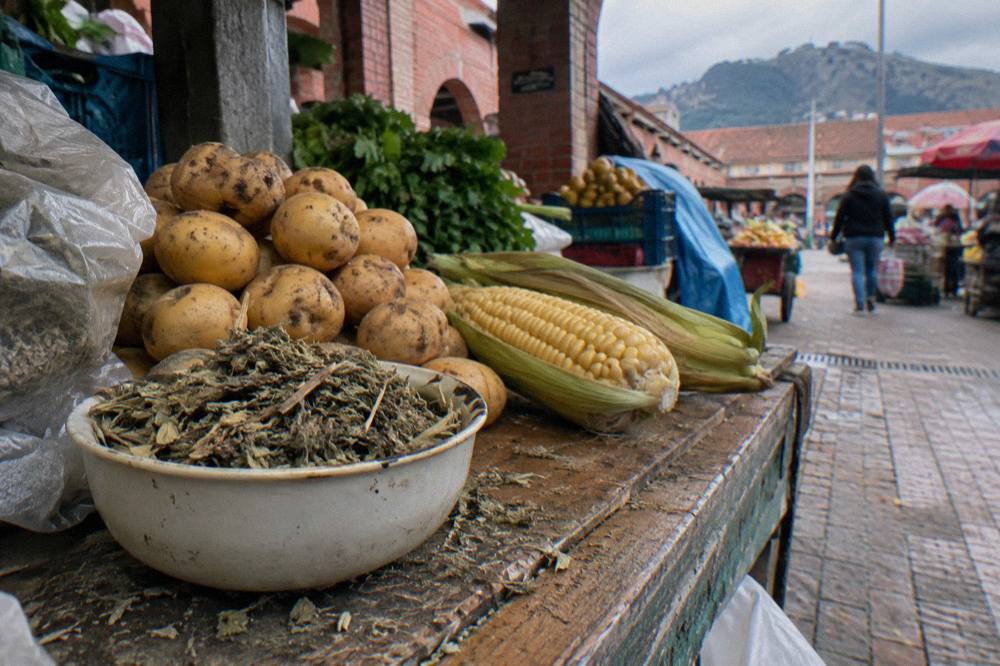
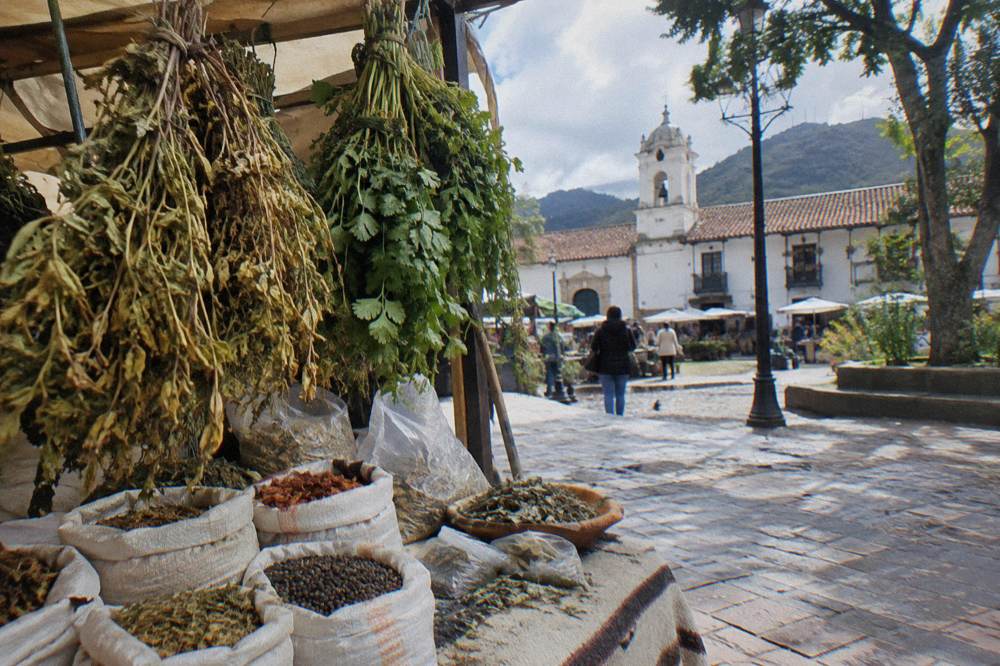
The plant behind the herb has a modest story. Galinsoga parviflora, known in Colombia as guasca, is a small flowering plant in the daisy family that grows wild in the Andean highlands. In much of the world it is considered a garden weed. In Colombia it is harvested, dried and sold in every market, usually in the herb section alongside cilantro and parsley, bundled in small bags for a few thousand pesos. That contrast, a weed elsewhere and a national seasoning here, is the kind of detail that makes the dish worth understanding before you taste it.
The soup itself has deep roots in the region. Families in Bogotá and the surrounding savanna have cooked versions of it for generations, and the city now celebrates it openly: the Instituto Distrital de Turismo ran "Días de Ajiaco Santafereño" from 20 to 23 November 2025, with market plazas and restaurants across the city participating. Local food reporting in October 2026 counted five market plazas in the city where traditional ajiaco santafereño is served, including the Plaza Distrital de Mercado 12 de Octubre in Barrios Unidos.
If you are planning to taste your way through the city rather than cook, a guided walk is the easiest way to meet the dish in context, alongside the arepas, tamales and fruit juices that surround it.
What Is Guascas And Why Does It Matter So Much?
Guascas is a dried Andean herb, the leaf of galinsoga parviflora, that tastes faintly green, resinous and slightly bitter, somewhere between oregano and artichoke. In ajiaco it does two jobs at once: it perfumes the broth and it binds the starchy potato base into something that tastes distinctly of the Bogotá savanna.
Cooks add the dried leaves partway through the long simmer, not at the start, so the flavor infuses without turning harsh. The leaves are usually fished out or left behind in the pot rather than served, the way a bay leaf is treated in other cuisines. Quantities vary by household, but the herb is never optional. Recipes that omit it, including many published abroad, produce a pleasant chicken and potato soup that Colombians will politely decline to call ajiaco.
The plant grows at altitude, which is why it fits so naturally into a soup born at 2,640 meters. Bogotá's highland climate, cool days and frost-free nights, suits both the herb and the potatoes the soup depends on. The dish is a product of its geography in a way few capital-city dishes are: the corn, the potatoes, the herb and even the appetite for a hot, restorative bowl all belong to the altiplano.
There is also a linguistic wrinkle worth knowing before you shop for it. In Colombia the plant is guasca and the seasoning is sold as guascas, and stallholders will understand either. In English-language gardening contexts the same plant appears under the name gallant soldier, a translation traceable to the botanist whose name the genus carries. Nobody in a Bogotá market will recognize that name, so learn the local one.
The city's tourism office has promoted the dish and its markets as part of its gastronomic programming, including a route through the district's market plazas. The official coverage of the Ruta Turística de las Plazas Distritales de Mercado, published in October 2026, names the plazas by specialty, and La Perseverancia is featured there for traditional food. That is the deepest source of ajiaco in the city: not restaurants, but the family-run stalls inside the plazas.
Want a full guide to the soup beyond the herb, including where each version is served? Read the companion piece on where to eat ajiaco in Bogotá.
Where To Taste Real Ajiaco In Bogotá?
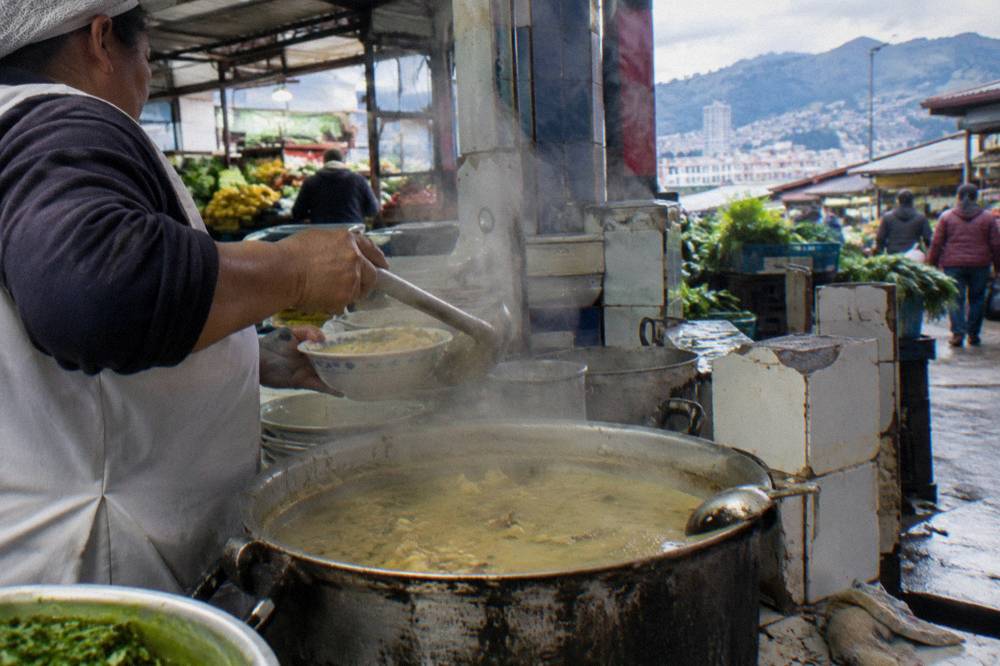
The most traditional ajiaco in Bogotá is served inside the district's market plazas, especially La Perseverancia and the Plaza Distrital de Mercado 12 de Octubre, where family-run stalls cook the soup for locals rather than visitors. Restaurants in La Candelaria and Chapinero serve it too, at higher prices with more polish.
Market plazas are the honest answer. Local food reporting from late October 2026 lists five plazas across the city where traditional ajiaco santafereño is served, with the 12 de Octubre plaza in Barrios Unidos named specifically, open on selected weekdays and Saturdays from morning to mid-afternoon. At a plaza stall you get the working version of the dish: a big bowl, an arepa on the side, and a room full of people eating it as their regular Saturday lunch. Prices at the plazas run well below restaurant levels, and delivery menus around the city give a sense of the going rate, with a 16 oz portion reported around 23,700 COP and a 24 oz portion around 33,900 COP at dedicated ajiaco outlets.
La Perseverancia, the plaza closest to the city center, is the one most tied to the dish's identity. Its stalls are known for traditional plates including ajiaco, lechona and mute santandereano, prepared by family businesses, and the plaza is open Monday to Friday from 8:00 a.m. to 4:00 p.m. and weekends from 6:00 a.m. to 5:00 p.m. It also sits in a neighborhood with its own working-class food history, which becomes obvious the moment you walk in from the street.
Timing matters more than location. Ajiaco is a midday dish in Bogotá, and plazas wind down in the early afternoon. Go between late morning and 2 p.m. and you will find the soup at its freshest; go at 4 p.m. and you may find the stall closed. The plazas' official hours are the reliable guide here, since individual stalls keep their own schedules within them.
If your time in the city is short and you want the plaza experience explained rather than navigated alone, a guided food walk solves that problem. The Viejo Bogota Food Tour with 12+ Tastings is the most reviewed food walk compared here, rated 5.0 across 714 reviews, from $55 per person for 4 hours. A guide who knows the stalls also means someone to explain what guascas is when you taste it in the bowl.
For the market context in general, including hours and the best time of day for each plaza, the Paloquemao market hours guide covers the city's most famous market in detail, and the guide to Bogotá's markets beyond Paloquemao extends the picture to the plazas where ajiaco actually gets cooked.
Can You Cook Ajiaco Yourself In Bogotá?
Yes, and a cooking class is one of the best uses of a food-minded day in the city. Classes that include a market visit let you buy the guascas, the potatoes and the corn yourself, then cook the soup under instruction. The Private Colombian Cooking Class and Market Tour In Bogota runs 4 hours, from $95 per person, with the price varying by group size.
The class is rated 5.0 across 52 reviews, and it pairs the market shop with a hands-on session in which you cook Colombian dishes yourself. The market visit is the part that matters for this question: guascas is cheap and abundant in Bogotá, but it is hard to recognize on your first visit to a plaza, and a guide who points at the correct bundle saves you the guesswork. Once you have the herb in hand, the rest of the shopping list, the papa criolla, the larger potatoes, the corn, the chicken, comes together quickly. Other pages covering the same trip are gathered on Bogota Food Tours.
The value of cooking it rather than only eating it is that you learn where the flavor lives. Most first-time cooks are surprised by how little guascas the pot needs, and by how much the long simmer does with three potatoes dissolving at different rates into the broth. You also learn the serving ritual, which is half the dish: the capers, cream, avocado and extra guascas on the side, each added by the diner to taste.
A shared-class alternative is the Bogotá Colombian Cooking Class with Market Visit, 4 hours, from $90 per person, built around the same market-to-pot structure with Colombian dishes on the menu. Check the booking page for each class to confirm which dishes a given date covers, since menus rotate and only the listing can say what a specific session includes.
One practical note before you book: Bogotá sits at about 2,640 m, and the city's health guidance recommends a day or two of adaptation, plenty of water and lighter meals before strenuous activity. A cooking class is gentle by comparison with a hike, but arriving rested makes everything in the city more enjoyable. Bogota Food Tours covers altitude and eating in more depth elsewhere on this site, and there is a dedicated first-timer's guide to eating at altitude if you want the full picture.
What Else Goes Into Ajiaco Besides Guascas?
A traditional ajiaco santafereño is chicken, three potato varieties, corn on the cob, and guascas, served with capers, table cream, avocado and cilantro added at the table. The potatoes are not interchangeable: papa criolla breaks down and thickens, while pastusa and sabanera hold shape and give body.
The three-potato structure is the technical heart of the dish. Papa criolla, small and yellow, is the thickener; it collapses into the broth and gives ajiaco its characteristic density. The other two potatoes, typically a floury and a waxy variety, hold their shape through the simmer so the finished bowl has actual pieces to eat. Removing any one of the three changes the dish more than most substitutions would.
Corn arrives as large pieces on the cob, usually a soft highland variety, added late enough to cook through without falling apart. The chicken is poached in the same pot and typically shredded before serving, which is why ajiaco reads as a soup but eats like a full lunch. Salt is the only other seasoning besides the guascas, which surprises people who expect a spice-heavy Colombian dish. The flavor comes from time and the herb, not from heat.
The accompaniments are served separately, and each diner builds the final bowl. Cream for richness, capers for acidity and salt, avocado for coolness, and sometimes a pinch of extra dried guascas for those who want the herb forward. Cilantro finishes it. This is also why ajiaco is forgiving in restaurants: even a middling base can be corrected at the table, and a great one needs nothing.
| Component | Role In The Pot | Notes |
|---|---|---|
| Guascas | The defining herbal flavor | Dried leaves, added mid-simmer, fished out before serving |
| Papa criolla | Thickens the broth | Small yellow potato that dissolves almost entirely |
| Pastusa potato | Holds shape, adds body | Floury variety common in Bogotá markets |
| Sabanera potato | Texture contrast | Waxy, stays firm through the simmer |
| Chicken | Protein base | Poached in the pot, shredded before serving |
| Corn on the cob | Sweetness and structure | Large pieces, a highland variety |
| Capers, cream, avocado, cilantro | Table-side additions | Each diner adds to taste |
If you are curious how ajiaco compares with Colombia's other great soup, sancocho, the two get confused often enough that there is a whole explainer on ajiaco versus sancocho. The short version: sancocho is a broader family of stews from many regions, while ajiaco is this specific herb-driven highland soup.
How Do You Buy Guascas And Take It Home?
Guascas is sold dried in nearly every market plaza and many supermarkets in Bogotá, bundled or bagged in the herb section for a few thousand pesos. It is lightweight, dry and travel-stable, which makes it one of the easiest edible souvenirs the city offers. Just verify your home country's rules on bringing dried plant material through customs.
Buy it where cooks buy it. At a plaza like Paloquemao, whose flower and produce sections open early, the herb stalls carry guascas alongside the other dried seasonings, and stallholders will sell you exactly the amount you want. Supermarkets in the city stock it too, usually pre-packaged in the spice aisle. Either way, look for dry, green-gray leaves without stems, and buy a little more than a recipe calls for, since older stock loses strength.
The Paloquemao hours are worth knowing before you plan the trip: the plaza opens Monday to Saturday at 4:30 a.m. and closes at 4:30 p.m., with Sunday and holiday hours from 5:00 a.m. to 4:30 p.m. The pre-dawn to mid-morning stretch is the wholesale energy hours, trucks unloading and vendors at their busiest, after which it thins through the afternoon. For a first visit aimed at shopping rather than spectacle, mid-morning is the friendliest window.
Cooking the soup at home afterward is mostly a sourcing problem. Guascas travels well; the potatoes do not. Outside Colombia, papa criolla is found frozen in Latin American grocery stores, and most recipes written for cooks abroad accept that compromise. The herb, however, is the non-negotiable import, which is exactly why buying it in Bogotá makes sense. Keep the bag sealed and dry and it will hold its character for months, long enough to host an ajiaco dinner once the trip is a memory.
Knowing the plant behind the herb helps you shop for it. Guascas is galinsoga parviflora, a daisy-family species treated as a garden weed in much of the world and harvested as a seasoning in the Colombian Andes. Seen that way, the price gap is striking: reported delivery prices at dedicated ajiaco outlets run around 23,700 COP for a 16 oz portion and 33,900 COP for 24 oz, while the bag of dried herb that flavors the whole pot costs a fraction of that.
Tasting the herb at work before you buy it is easy to arrange. Local reporting in October 2026 named five market plazas in Bogotá serving traditional ajiaco santafereño, among them 12 de Octubre in Barrios Unidos. La Perseverancia, featured in the city's 2026 market route for traditional food, is known for family-run stalls cooking ajiaco, lechona and mute santandereano, so one plaza visit can cover both lunch and the herb purchase.
The Instituto Distrital de Turismo ran the Días de Ajiaco Santafereño from 20 to 23 November 2025, with market plazas and restaurants across the city taking part. Check the IDT site for whether it returns; a shopping trip timed to the festival can double as a tasting tour.
Whether you taste it first and cook it later, or fly home with a bag of guascas and a plan, the herb is the thread that ties the whole dish together. If a guided day fits your trip better than a solo market run, these are the experiences that put ajiaco in reach.
Common Questions About Ajiaco
What Herb Is In Ajiaco?
Guascas, the dried leaf of galinsoga parviflora, a plant in the daisy family that grows across the Colombian Andes. It is added mid-simmer, gives the broth its faintly green, resinous flavor, and is removed before serving like a bay leaf.
Can I Make Ajiaco Without Guascas?
You can make a chicken and potato soup, but Colombian cooks do not consider it ajiaco without the herb. Some cooks abroad substitute a mix of oregano and parsley, which approximates the green note but not the full character. Dried guascas is easy to buy in Bogotá and travels well.
Where Can I Buy Guascas In Bogotá?
Nearly every market plaza and most supermarkets sell it dried, bundled or bagged in the herb section. Paloquemao's herb stalls are a reliable source, and the plaza is open Monday to Saturday from 4:30 a.m. to 4:30 p.m. and Sundays and holidays from 5:00 a.m. to 4:30 p.m.
Is Ajiaco The Same As Sancocho?
No. Sancocho is a broad family of stews cooked across Colombia and Latin America with varying ingredients. Ajiaco santafereño is the specific Bogotá version built on three potato types, corn, chicken and guascas.
Can A Cooking Class In Bogotá Teach Me To Make Ajiaco?
Several classes include a market visit and hands-on cooking of Colombian dishes, including the Private Colombian Cooking Class and Market Tour In Bogota, 4 hours from $95 per person. Check the booking page to confirm which dishes a specific session covers.