Is Ajiaco The Same As Sancocho?
No, ajiaco and sancocho are different soups: ajiaco is Bogotá's chicken and potato soup thickened with three potato types and guascas herb, while sancocho is a chunky broth cooked across Colombia and much of Latin America with different ingredients by region.
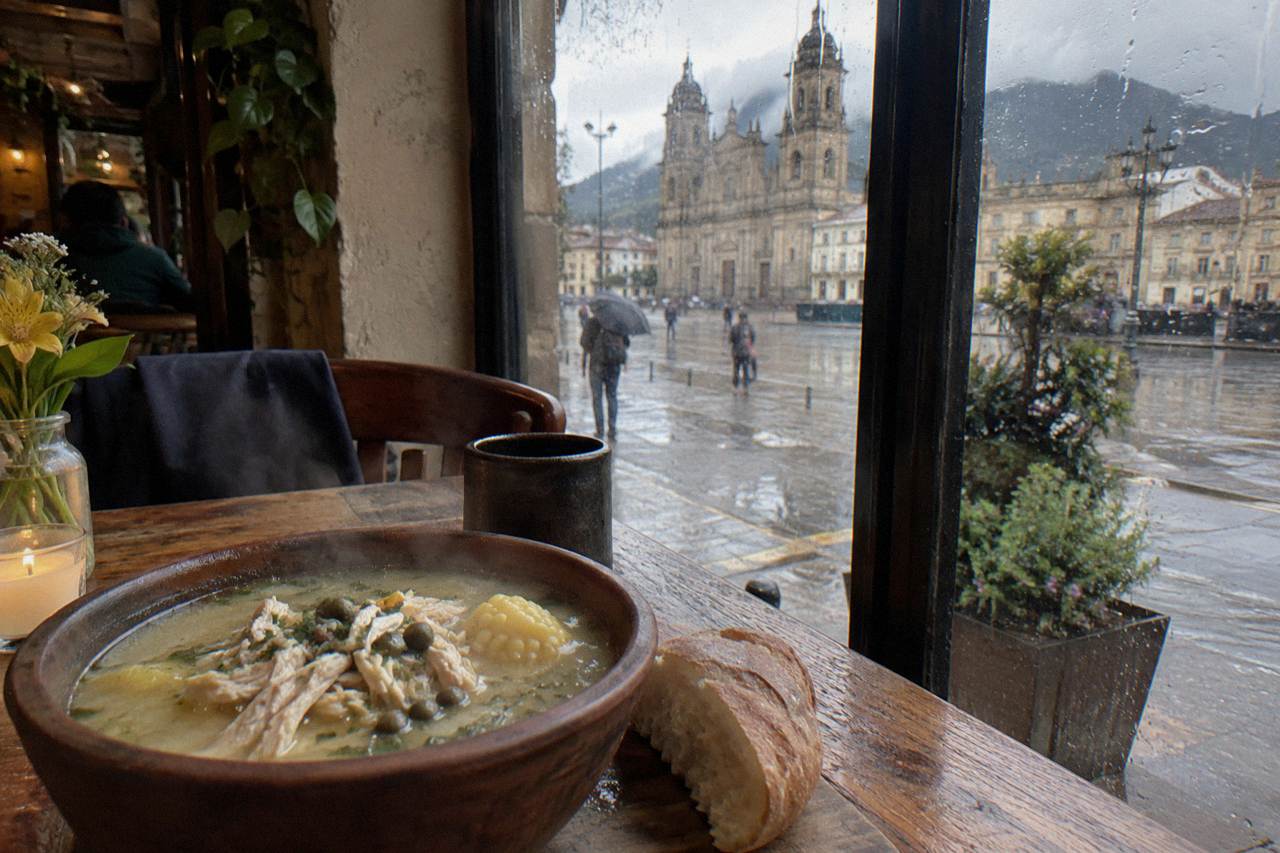
Ajiaco and sancocho are both soups, both proudly Colombian, and both the kind of food that gets served at long family lunches on Sundays. That is roughly where the similarity ends. Ajiaco santafereño is one specific dish from Bogotá and its highland region, built on chicken, corn on the cob and three kinds of potato, and perfumed with a herb called guascas that gives it a flavour found nowhere else in the country's repertoire. Sancocho is not one dish at all. It is a family of chunky, broth-based stews cooked all over Colombia and much of Latin America, with fish on the Caribbean coast, beef and plantain inland, and whatever the region has plenty of everywhere else.
The two also occupy different places in the national imagination. Ask a bogotano what dish represents their city and the answer comes back ajiaco, without hesitation, the way other Colombians might answer bandeja paisa or arepas. Ask the same question about sancocho and you will get a pause, because sancocho belongs to everyone and therefore to no single place. It is the stew of Saturday family lunches, of riverbank cookouts, of grandmothers in every department. That difference in ownership, one city's signature versus a whole country's inheritance, shapes everything else about how the two are cooked, served and argued over.
No, ajiaco and sancocho are two different soups. Ajiaco is a specific Bogotá dish of chicken, three potato varieties and corn, thickened naturally as the potatoes break down and flavoured with the guascas herb. Sancocho is a generic name for a chunky meat, fish or poultry stew cooked across Colombia and beyond, with no fixed ingredient list and no single home city.
The confusion is understandable. Both come to the table in deep bowls, both are eaten with a spoon, and both are considered comfort food of the highest order. In a restaurant in Bogotá you might even find both on the same menu on a cold afternoon. But order ajiaco and you get a creamy, yellow-gold soup with a piece of corn on the cob standing up out of the bowl, capers and cream on the side to add yourself, and a background herb note that locals can identify blindfolded. Order sancocho and you get a clear broth loaded with big pieces of meat or fish on the bone, green plantain, yuca, potato and corn, more a stew than a soup, and eaten with rice and avocado on the side rather than with garnishes.
The word ajiaco itself comes from aji, the indigenous Taíno word for chilli pepper, and versions of the name exist across the Caribbean and Latin America, often with different recipes attached. In Cuba and parts of Spain, an ajiaco is a hearty mixed stew with roots and meats; in Colombia, though, when someone says ajiaco they almost always mean ajiaco santafereño, the Bogotá original, and the city treats it as its own. Sancocho's name traces back to the Spanish verb sancochar, to parboil or cook slowly, which tells you exactly what the dish is: a long, patient simmer of whatever is at hand. The names, in other words, point in opposite directions. One travelled the region and got pinned to a single recipe in one city; the other stayed plain and literal, describing a technique that any cook with a pot and firewood can apply to anything.
A useful rule of thumb for visitors: if the menu says ajiaco, you know what is coming before the bowl lands. If the menu says sancocho, ask what kind, because the answer changes everything, from the protein to the sides to the region the kitchen is channelling that day.
If you want to taste the difference properly, walking the historic centre with a guide who stops at several traditional kitchens in one afternoon is the efficient way to do it.
The Viejo Bogota Food Tour with 12+ Tastings, rated 5.0 across 714 reviews and priced from $55 per person for its 4-hour route, is the most reviewed food walk covered on Bogota Food Tours, and its format, many small stops through the old centre, is built for exactly this kind of comparing and contrasting. A cooking class is the other route to understanding the difference: when you make ajiaco yourself and watch the potatoes collapse into the broth, the distinction from a sancocho simmer stops being abstract.
What Makes Ajiaco Santafereño Different From Other Colombian Soups?
Ajiaco's identity rests on three things: three distinct potato varieties that dissolve at different rates and thicken the broth naturally, the guascas herb that supplies its signature flavour, and the serving style, with corn on the cob in the bowl and cream, capers and avocado added at the table. No other Colombian soup combines all three.
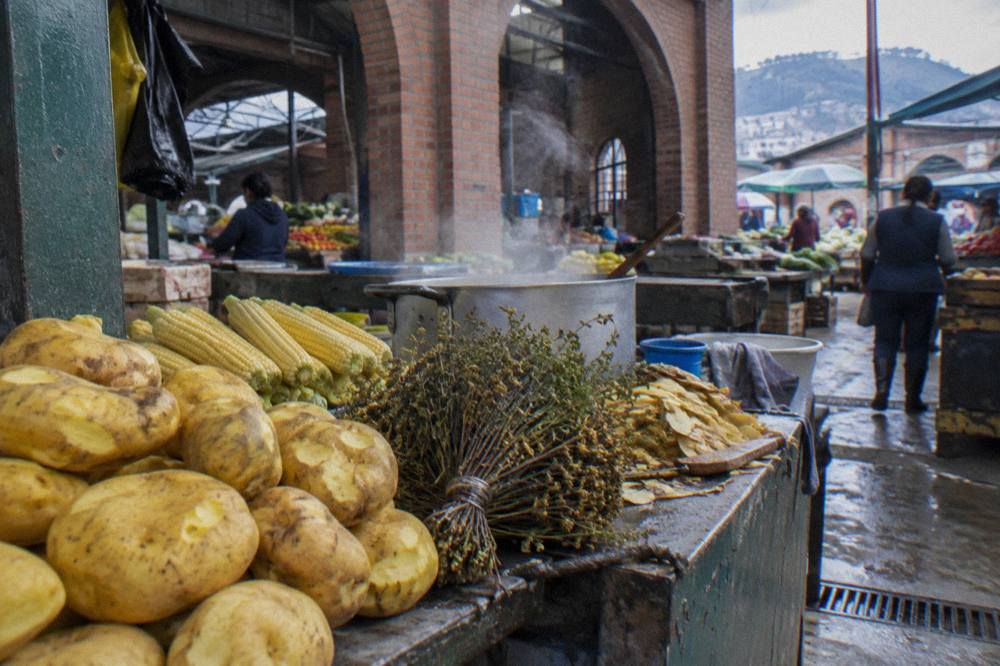
Start with the potatoes, because they do the structural work. Traditional ajiaco uses a starchy variety that breaks down almost completely and thickens the soup, a waxier one that holds its shape, and a small yellow potato, the papa criolla, that partly dissolves and gives the broth its colour and body. The result is a soup that is creamy without any cream in the pot, a texture achieved purely by starch. This is also why ajiaco is tied to the highlands: the papa criolla is a cold-climate crop, and the altiplano around Bogotá is where it grows best. Sancocho, by contrast, uses potato as one chunky ingredient among many; the broth stays thin and clear because nothing in the pot is meant to melt.
Then there is guascas, a dried herb that is close to non-negotiable in ajiaco and close to absent from every other Colombian dish. It has a faint green, tea-like aroma that people either grow up loving or take a few spoonfuls to acquire, and it is the reason ajiaco tastes like ajiaco rather than like a very good chicken soup. You can read more about it in our article on the herb that defines ajiaco. If a bowl of Bogotá chicken-and-potato soup has no guascas in it, it may still be delicious, but it is not the dish the city celebrates.
The serving ritual finishes the distinction. Ajiaco arrives with the corn cob standing in the bowl and small dishes alongside: heavy cream to swirl in, capers for salinity, avocado slices, sometimes a little rice. You season your own bowl, which makes the last third taste different from the first. Sancocho comes as-is, a complete stew, with rice and avocado typically served next to it rather than mixed in. One is a soup you finish composing at the table; the other is a stew that arrives finished. Locals will also tell you that ajiaco reheats beautifully the next day, the potatoes having thickened the broth further overnight, while sancocho is best eaten the day it is made, when the vegetables still hold their shape.
Where Does Sancocho Come From And What Goes In It?
Sancocho is a pan-Latin stew with Spanish and indigenous roots, and in Colombia it changes with the landscape: fish and coconut milk near the Caribbean, beef and plantain in the interior, and hen, pork or tripe variants elsewhere. The constant is technique, a long simmer of starch and protein in one pot, not any fixed ingredient.
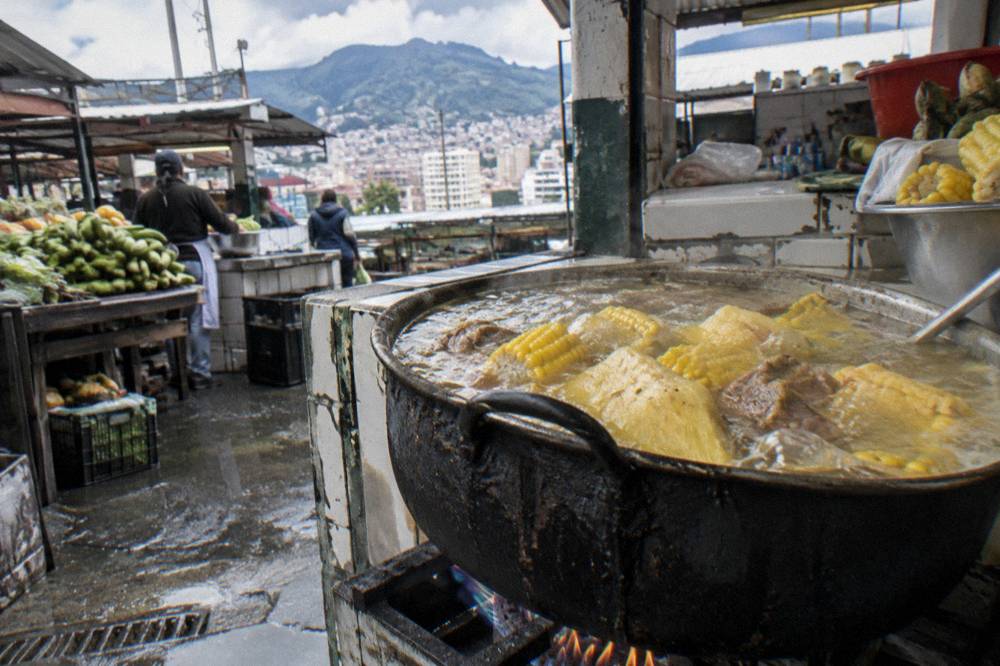
On the Caribbean coast, sancocho de pescado is a fixture, often built around whole fish pieces with yuca, plantain and, in some coastal kitchens, a splash of coconut milk for richness. In the Andean interior and in Bogotá home kitchens, the default is sancocho de res or a mixed meat version, with beef on the bone, green plantain, yuca, potato, corn and sometimes chicken all sharing the pot. Travel to the Santander region and the eastern plains and you find sancocho de gallina, made with tougher, more flavourful hen meat that needs the long cooking. There is even mondongo, a tripe stew that belongs to the same extended family of one-pot simmered dishes, served in Bogotá's traditional market restaurants.
The dish also carries a social meaning that ajiaco does not. Sancocho is the food of gatherings: cooked in enormous pots for birthdays, village festivals and football matches, ladled out to whoever shows up. In many rural towns a community sancocho is how a celebration feeds a crowd. Ajiaco, by contrast, is more often an individual restaurant bowl, portioned and garnished person by person. That contrast, communal cauldron versus personal bowl, mirrors the difference between a recipe that belongs to everyone and one that belongs to a city.
The key structural point, the one that answers this whole question, is that sancocho is defined by method rather than by a shopping list. Say "sancocho" to a cook in Barranquilla and a cook in Bogotá and they will picture different bowls. Say "ajiaco" to anyone in Colombia and they will picture the same one: the Bogotá original. That asymmetry, one precise dish versus one broad category, is the cleanest way to hold the difference in your head.
Which One Should You Order In Bogotá?
Order ajiaco if you want the local signature, Bogotá's own dish, served everywhere from market plazas to hotel restaurants. Order sancocho if you want a heavier, heartier one-bowl meal closer to a stew. In Bogotá's traditional market restaurants both appear side by side, so a soup-focused lunch can cover both in one sitting.
For visitors, ajiaco is the one to prioritise, simply because it does not travel: the papa criolla and the guascas are highland ingredients, and the dish at its best is made where they grow. Bogotá's market plazas are the classic setting. Traditional ajiaco santafereño is served at five of the city's plazas according to 2026 reporting, including the Plaza Distrital de Mercado 12 de Octubre in Barrios Unidos, and La Perseverancia, the plaza closest to the centre, is known for ajiaco alongside lechona, mute santandereano and mondongo from family-run stalls. Our guide to eating ajiaco in Bogotá covers the market-plaza route in detail.
Sancocho in Bogotá is more of a home-and-market dish than a restaurant showpiece, but that is part of its charm. A midday sancocho at a plaza stall, eaten with rice, avocado and a slice of banana on the side, is one of the most filling lunches available in the city for the money. The two soups also suit different weather moments, which matters at 2,640 m: ajiaco's creaminess suits the raw, drizzly afternoons the highland capital specialises in, while sancocho's heavier body suits a day when you will not eat again until late. Bogotá's rainy seasons run roughly April to May and October to November, with afternoon showers common, so a hot bowl of either soup is rarely the wrong call in this climate. Everything else covered here is indexed on Bogota Food Tours.
If your main goal is tasting ajiaco in its home city with context, a guided walk through the historic centre is the lowest-effort option, and a market-visit cooking class is the deepest. The Bogotá Food Experience: Cultural & Culinary Tour, 4 hours, from $47.15 per person and rated 4.9 across 615 reviews, is the mid-priced alternative to the Viejo Bogota walk if your dates or budget point that way.
The Private Colombian Cooking Class and Market Tour takes the idea further: 4 hours, from $95 with the price varying by group size, rated 5.0 across 52 reviews, and structured around a market visit before the cooking. Which dishes the class covers on a given date is stated on the booking page, so check there before counting on a specific soup, but the market-first format is exactly how locals source the potatoes and herbs that make the difference between the two dishes tangible rather than theoretical.
How Do The Two Soups Compare At The Table?
Ajiaco is lighter in texture but richer in finish, thanks to the potatoes that thicken it and the cream added at the table; sancocho is heavier and more rustic, with big pieces on the bone and starches served whole. Ajiaco is a first course or a light main; sancocho is almost always the whole meal.
Here is the practical side-by-side:
| Aspect | Ajiaco Santafereño | Sancocho |
|---|---|---|
| Origin | Bogotá and the highland region | Pan-Colombian and pan-Latin, varies by region |
| Base protein | Chicken | Beef, hen, fish, pork or mixed |
| Key thickener | Three potato varieties, one of which dissolves | None; broth stays clear |
| Signature herb | Guascas | None universal; coriander or seasoning varies |
| Corn | Corn on the cob in the bowl | Corn pieces in the pot |
| Served with | Cream, capers, avocado added at the table | Rice and avocado on the side |
| Texture | Creamy without cream in the pot | Clear broth, chunky stew |
| Typical role | Lighter main or hearty starter | Complete one-pot meal |
One more contrast worth knowing: ajiaco is the dish the city actively celebrates. Bogotá has run dedicated ajiaco festivals, with plazas and restaurants across the city participating in organised Días de Ajiaco Santafereño, an initiative documented by the Institute of District Tourism. Sancocho gets no equivalent single-city festival in the capital, because it is nobody's local dish alone; every region would need to bring its own recipe to the party.
Can You Taste Both Dishes In One Day In Bogotá?
Yes, easily, and the market-plaza route is the way to do it: start with an early ajiaco lunch at a traditional plaza like 12 de Octubre or La Perseverancia, then look for a sancocho or mondongo later at another stall or a traditional restaurant. A guided food walk through the historic centre compresses the same comparison into one afternoon.
Timing matters more than location. Market plazas run on daytime hours, and the reporting on Bogotá's plazas shows most traditional hot-food stalls serve the midday meal rather than dinner, so a soup-focused day should start early. La Perseverancia, for example, opens 8 a.m. to 4 p.m. on weekdays and from 6 a.m. on weekends, and Paloquemao, the city's flagship produce market, runs Monday to Saturday 4:30 a.m. to 4:30 p.m. and Sundays and holidays from 5 a.m. to 4:30 p.m. Its early-morning hours are when the wholesale energy peaks, trucks unloading and vendors offering tastes of fruit like lulo, granadilla and uchuva, which makes a pre-lunch market visit a natural warm-up for a soup lunch.
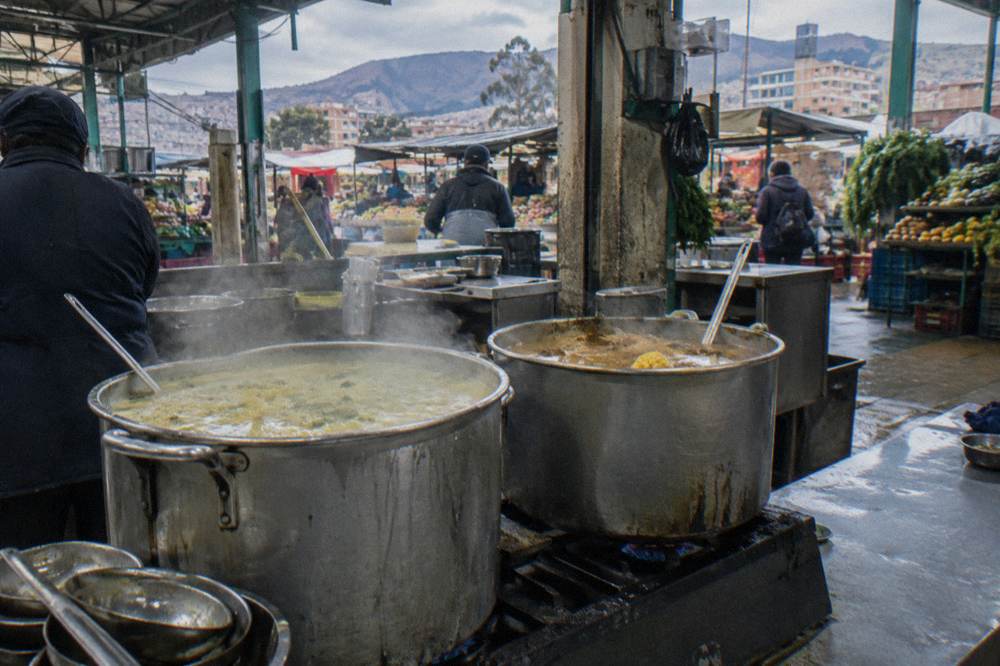
Altitude is a real factor in planning that day. Bogotá sits at about 2,640 m, and the standard local advice for visitors is a day or two of adaptation, steady hydration, lighter meals early on and not much alcohol, especially in the first 48 hours. Two soup lunches in one afternoon at altitude is ambitious; two soup lunches across two days, with a market walk between them, is a plan. Our tips for eating at altitude in Bogotá go into the practical detail.
For travellers who would rather have someone else sequence the stops, the guided options stand up well against independent planning. A walk covers more dishes in less time, a class teaches the technique, and a private format lets you steer the day toward whichever of the two soups you decide matters more once you have tasted both. Whichever you choose, the comparison is the point: most visitors arrive thinking Colombia has one famous soup and leave knowing it has at least two, with a herb, a potato and a coast-to-plains geography of difference between them.
Common Questions About Ajiaco And Sancocho
Is Ajiaco The Same As Sancocho?
No. Ajiaco is one specific Bogotá soup of chicken, three potato varieties, corn and the guascas herb, thickened naturally by the potatoes. Sancocho is a broader family of chunky stews cooked across Colombia and Latin America, with regional recipes based on fish, beef, hen or pork, and no single fixed ingredient list.
What Herb Makes Ajiaco Taste Different?
Guascas, a dried herb used in Colombian cooking almost exclusively for ajiaco. It gives the soup its faint green, tea-like background note. Without guascas, the dish is a good chicken and potato soup, but not the ajiaco santafereño Bogotá claims as its own.
Is Sancocho Eaten In Bogotá Too?
Yes. Sancocho is cooked in home kitchens and market restaurants across the capital, usually a beef or mixed version with plantain, yuca, potato and corn. It is a national one-pot tradition rather than a coastal or regional import, so you will find it next to ajiaco on traditional menus in the city.
Which Soup Is More Filling?
Sancocho, generally. It arrives as a complete stew with meat on the bone and multiple starches, eaten with rice on the side. Ajiaco feels lighter in the bowl, though the potatoes and the table-side cream make it more substantial than it looks.
Where Can You Try Ajiaco In Bogotá?
Traditional ajiaco santafereño is served at five of the city's market plazas, including 12 de Octubre and La Perseverancia, and at traditional restaurants across the centre. The city has also staged dedicated ajiaco festival days with plazas and restaurants participating. Guided food walks through the historic centre are another route to tasting it with context.