Are Obleas Colombian Or Venezuelan?
A direct answer to whether obleas are Colombian or Venezuelan, where the arequipe-filled wafer snack comes from, how the two countries serve it differently, and where to try it in Bogotá.
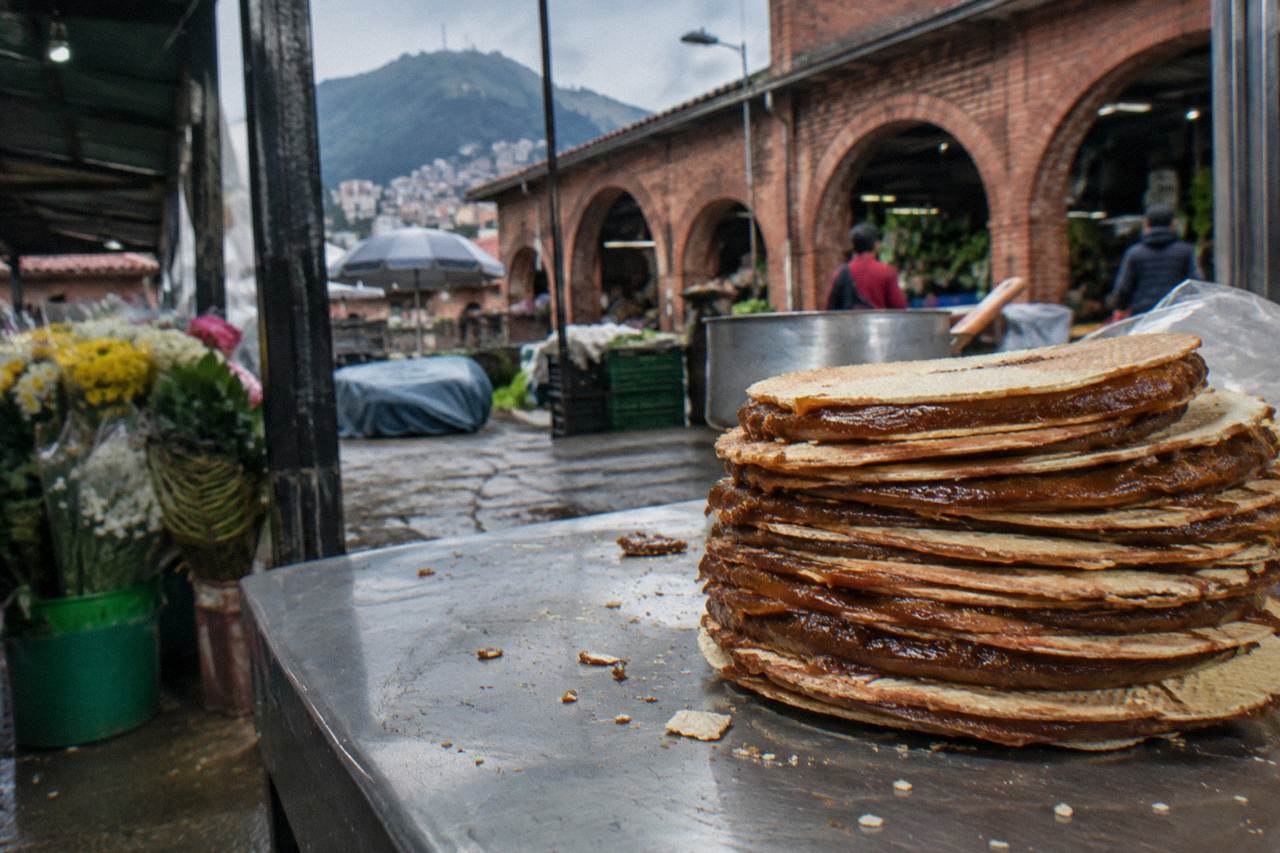
Obleas are one of those snacks that travel well and get adopted fast. Two thin, round wafers pressed around a thick layer of arequipe, sometimes with jam, cheese, or sprinkles added, sold from street carts and market stalls across at least half a dozen countries. Ask a Colombian and a Venezuelan where it comes from, though, and you will usually get two confident, contradictory answers. The honest version is more interesting than either.
Both countries eat obleas and both have a real claim, but the snack as street food is shared heritage rather than the property of one nation. The wafer itself descends from European communion-style wafers brought by colonists, and the arequipe or dulce de leche filling is common across Latin America. In practice, obleas are a daily street snack in both Colombia and Venezuela, with Colombia's version most often paired with arequipe and Venezuela's often loaded with more toppings.
The word itself gives the game away. "Oblea" comes from the same root as the English "oblation", the thin wheat wafer used in church, and the snack is essentially a secularized version of that wafer turned into dessert. Spain brought the wafer; Latin America supplied the milk caramel. Nearly every country that was once Spanish has some version: Mexico, Peru, Ecuador, Argentina, and the Central American republics all eat wafer-and-dulce-de-leche sweets under one name or another.
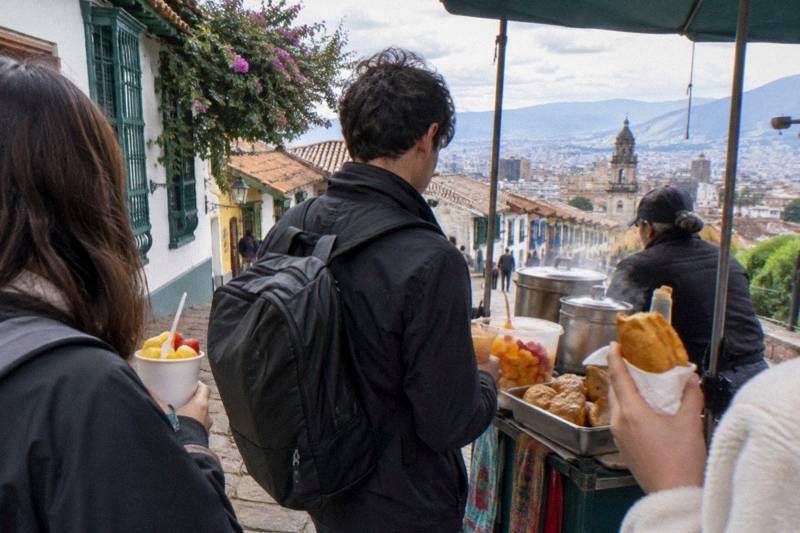
What makes the question feel urgent to travelers is that obleas are everywhere in Bogotá, and a first-time visitor reasonably wants to know whether they are eating something Colombian or something imported. The fair answer is that the oblea you buy from a cart in La Candelaria is a Colombian street snack in the fullest sense, sold by Colombian vendors, filled with Colombian arequipe, and eaten by Colombians every day, while belonging to a family of sweets that ignores borders entirely.
The comparison is a bit like asking whether a hot dog is German or American. The ancestral form traveled, the local version became its own thing, and both claims are true at different layers. Colombian food writers and Venezuelan home cooks have argued this one for decades without a referee, and the fact that the argument exists at all is part of the fun of eating your way through the region.
If the question is really "should I try one in Bogotá", the answer is simply yes. It is one of the cheapest, most widely available sweets in the city, and it appears on nearly every street food walk worth the name, including the tasting walks compared below.
Those three walks cover the same historic-centre territory where most visitors first meet an oblea cart, at three price points and group styles. The details of each listing, including what is tasted and where the group meets, are on the operator's booking page.
What Exactly Is An Oblea?
An oblea is a dessert sandwich: two thin, crisp, round wafers about the size of a saucer, pressed together around a filling, almost always arequipe, which is Colombia's name for slow-cooked milk caramel known elsewhere as dulce de leche or Cajeta. Vendors commonly add extras on top or inside, including strawberry jam, grated white cheese, shredded coconut, chocolate sauce, or colored sprinkles, and the whole thing is eaten by hand like a very fragile cookie.
The wafer is the defining part. It is made from a simple batter of flour, water, and a little sugar, cooked in a flat iron that produces something closer to a communion wafer or an ice cream cone than a cookie: bland, dry, and structurally pointless on its own. Its job is to be a crisp, neutral vehicle. All the flavor comes from the filling.
Arequipe, the standard filling in Colombia, is milk and sugar cooked down for hours until it turns golden and thick enough to spread. Colombia calls it arequipe, Venezuela and much of the rest of the continent call it dulce de leche, Argentina says dulce de leche as well, and Mexico largely uses cajeta, made from goat's milk. The naming difference trips up travelers constantly, but the substance is a shared Latin American inheritance with regional twists.
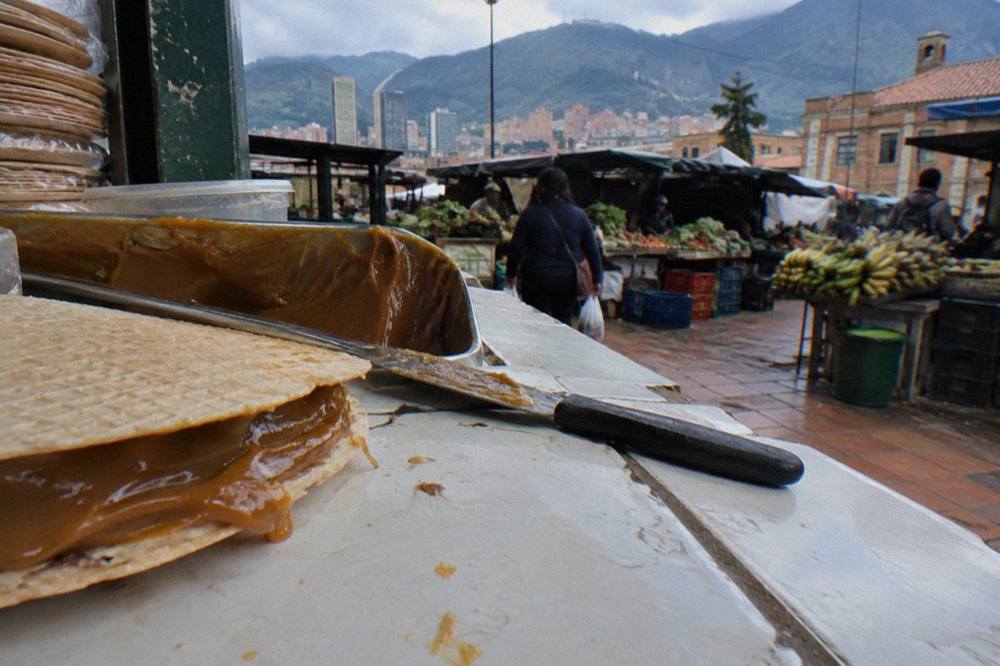
Street vendors usually assemble the oblea in front of you, which is half the pleasure. The wafers are stored in stacks, the arequipe in a large tub, and the toppings in jars. You point at what you want, the vendor spreads, presses, and hands it over wrapped in a napkin. The first bite usually squeezes caramel out the sides, which is normal and part of the experience.
Because the components are so simple, the quality of an oblea depends almost entirely on the arequipe. Homemade or artisanal caramel, cooked long and dark, is a different product from the industrial version in a squeeze bottle. Market stalls that make their own generally win over convenience-store versions, though individual stalls vary and there is no verified ranking of Bogotá oblea vendors to point you at.
One practical note for visitors with dietary questions: none of the standard ingredients is vegan, since arequipe is dairy, and the wafers contain wheat flour. A vendor can sometimes make a jam-only version, but gluten-free wafers are not a standard item. Ask before ordering rather than assuming.
Where Did The Wafer-And-Caramel Combination Come From?
The oblea's wafer is European in origin, descended from the thin wheat wafers used in Catholic religious practice and in Spanish convent sweets, while the milk-caramel filling developed across Latin America during the colonial period. Neither Colombia nor Venezuela invented either component; both inherited the pairing and turned it into affordable street food, which is why the origin argument has never been settled.
The historical record is genuinely murky, and anyone who tells you a specific country, city, or year of invention is telling you a story rather than a documented fact. Food historians generally treat dulce de leche-type sweets as colonial-era creations with parallel versions across the continent, each country's tradition claiming independence from the others. The oblea follows the same pattern: the wafer technology arrived with the Spanish, the caramel was already being made locally, and the combination became street food in multiple places at roughly the same time.
What is documented is how thoroughly both countries absorbed it. In Colombia, obleas are standard at market plazas, festival stalls, and street carts, and the classic pairing is arequipe with a slice of fresh white cheese, a sweet-salty combination that appears in other Colombian desserts too. In Venezuela, obleas are equally ordinary street food, typically stacked with more toppings, jam, chocolate, cream, and often bigger and more elaborate than the Colombian version.
The shared border region around Cúcuta and San Cristóbal, where the two countries meet, has its own strong oblea culture, and the snack crosses that border as freely as any dish can. That frontier zone makes the either-or framing even harder to sustain: families, recipes, and vendors moved back and forth for generations, carrying the sweet with them in both directions.
For a Bogotá visitor, the useful takeaway is not a verdict but a piece of eating advice. Treat the oblea as a shared regional classic, order it wherever you see a busy cart, and pay attention to the filling. Whether the person handing it to you learned the recipe from a grandmother in Cúcuta or Caracas or Bogotá, the wafer will taste the same, and the caramel will tell you everything.
Want a guide to lead you to the good carts? The Bogotá Food Tour: 7 Tastings Through the Heart of La Candelaria covers the historic centre's snack stalls in a small group, and most bookings on this kind of walk can be cancelled for free up to 24 hours ahead. Check availability on the operator's page before you lock in a day.
How Do Colombian And Venezuelan Obleas Differ?
Colombian obleas are usually simpler and smaller: two wafers, a generous layer of arequipe, and often a single classic addition such as cheese or strawberry jam. Venezuelan obleas tend to be larger and more maximal, with more toppings layered in, chocolate, cream, fruit, and sprinkles, closer to an open dessert than a quick street snack. The wafer and the core caramel filling are essentially the same in both.
None of these differences is a hard rule. You will find overloaded obleas in Colombia and plain ones in Venezuela, and vendors improvise constantly. The pattern, though, is real enough that travelers who cross the border notice it. The rest of the planning pages sit on Bogota Food Tours.
| Aspect | Colombian version | Venezuelan version |
|---|---|---|
| Typical size | Saucer-sized, two thin wafers | Often larger, sometimes a single wafer base |
| Standard filling | Arequipe | Dulce de leche (same substance, different name) |
| Classic additions | White cheese, strawberry jam, coconut | Chocolate sauce, cream, sprinkles, fruit, multiple layers |
| Where sold | Market plazas, street carts, festival stalls | Street carts, beach vendors, bakeries |
| Eating style | Handheld, quick snack | Often messier, dessert-like |
| Attitude | Minimal and traditional | Maximal and customizable |
The cheese pairing deserves a special mention because it confuses foreigners more than anything else on the cart. Sweet milk caramel plus salty fresh cheese sounds wrong until you remember that Colombians put cheese in their hot chocolate too, a tradition covered in the chocolate santafereño guide. The sweet-salty instinct runs deep in the country's dessert culture, and the oblea con queso is its most portable expression.
Venezuela's maximalist streak reflects a broader street food culture that loves loaded, customizable snacks, and the oblea fits that mold better than it fits Colombia's more austere traditional-sweets lineup. Where a Colombian cart might offer three additions, a Venezuelan cart can offer ten, and building your own combination is part of the point.
If you are eating in Bogotá, you are eating the Colombian style, so the practical question is which addition to pick. First-time visitors usually start with plain arequipe, then graduate to the jam version, and the cheese version is the one that divides the room. All three cost very little by any standard; exact prices vary by cart and are not published centrally, so expect to pay pocket change and check at the stall.
Where Should You Try Obleas In Bogotá?
The easiest places to find obleas in Bogotá are the market plazas and the historic centre, especially La Candelaria, where street carts serve sweets alongside fruit juices and empanadas, and the Sunday market at Usaquén, whose food stalls sell arepas, fresh-cut fruit, empanadas, and hot chocolate on weekends from 9 a.m. to 5:30 p.m. Paloquemao's fruit and snack stalls are another reliable option on its Monday-to-Saturday schedule.
La Candelaria is where most visitors end up, and it delivers. The neighbourhood's street stalls are documented in local guides as a legitimate eating scene in their own right, with reported juice prices like 4,000 COP for lulo and 5,000 COP for curuba with milk at named carts, giving a sense of just how cheap a street snack afternoon can be. Obleas sit in the same price universe: a sweet that costs less than a coffee. Current prices at any individual stall should be checked on the spot, since they shift.
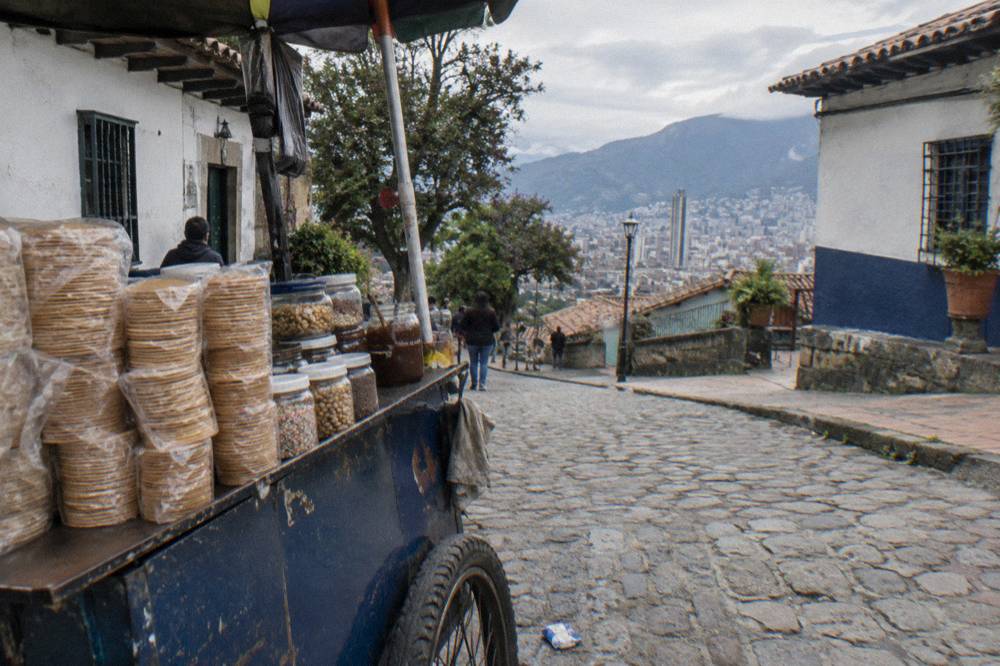
A local guide from 2026 covers exactly this kind of cart among La Candelaria's non-tourist-trap stalls, documenting seven street food stalls in La Candelaria, with examples like a lulo juice at 4,000 COP. It is worth a read before you wander, though individual stalls open and close, so treat it as a map of the scene rather than a fixed list.
If you would rather have someone else navigate the carts, a guided walk does the work for you. The most reviewed food walk described on this site is the Viejo Bogota Food Tour with 12+ Tastings, from $55 per person, 4 hours, rated 5.0 across 714 reviews, the largest review pool of any walk compared here. The True Colombian Walking Tour + Local Snacks is the shorter option at 2 to 3 hours, from $54.68, rated 4.9 across 130 reviews.
Neither listing promises obleas specifically; what a walk includes is stated on its booking page, and stops change. What a walk does promise is that someone who knows the neighbourhood decides where you stop, which on a sweets-heavy route usually means at least one cart with arequipe in a tub.
The dedicated sweet tooth can also plan a self-guided dessert day using the site's own pages: the Colombian desserts and sweets guide covers obleas alongside their competition, and the street food guide maps the savoury side of the same carts. Obleas do not exist in isolation; they are the dessert course of a street snack culture that runs from empanadas to grilled arepas.
How Do Obleas Fit Into Colombia's Sweet Tooth?
Obleas sit at the cheap, everyday end of a Colombian dessert culture that runs from market-stall sweets to festival specialties, sharing shelf space with arequipe-based treats like brevas con arequipe and coconut candies. They appear in force at the city's plaza festivals, including the December tamal festival circuit, where a tamal, hot drink, and arepa or bread combo was reported at 10,000 COP. Dessert in Colombia is often a street purchase, not a restaurant course.
The December festival season is the clearest demonstration. The Festival del Tamal, running 5 to 8 December 2026 across more than 17 of the city's market plazas, pairs savory tamales with hot chocolate and bread, and the plaza festivals generally bring sweet stalls along with them. Prior editions moved more than 14,484 tamales, and the sweet side of those events is where oblea carts do their best business.
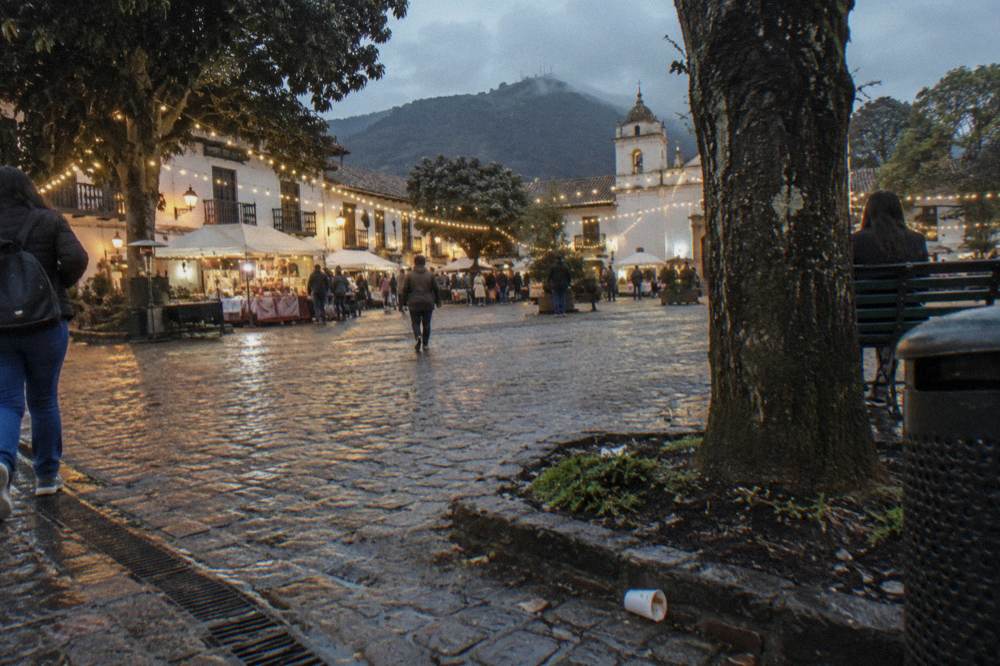
For visitors timing a trip, this matters: the weeks from late November through December stack the calendar. Chocoshow, the national cacao and chocolate fair, runs 27 to 29 November 2026 at Corferias with more than 175 exhibitors, and Vino al Parque follows on 27 to 29 November as well. A sweet-focused itinerary in that window moves from street obleas to bean-to-bar chocolate tastings within a single week, and the best time to visit guide covers the full calendar.
The oblea's role in all this is humble but fixed. It is the sweet that needs no occasion. No festival, no weekend, no season: just a cart, a stack of wafers, and a tub of caramel, available in the rain, which in Bogotá is saying something during the October-to-November wet season.
Its nearest rival for the everyday-sweet title is the oblea's richer cousin, breva con arequipe, a fig poached in syrup and split open around caramel, which appears on dessert menus and in deli counters rather than street carts. The two sweets share the same soul, milk caramel in a neutral vehicle, and liking one reliably predicts liking the other.
Tasting your way through this culture one cart at a time is rewarding but slow. A compact alternative is the Bogotá Food Tour: 7 Tastings Through the Heart of La Candelaria, 3 hours, from $64.99 per person, a small-group walk through the historic centre's snack stops. As with every walk, the exact lineup of tastings is on the booking page rather than fixed in stone, so check what the current route includes.
Which Walk Should You Book For A Sweets-First Visit?
For a sweets-first visit, book the 3-hour Bogotá Food Tour: 7 Tastings Through the Heart of La Candelaria, from $64.99 per person, because its route runs through the neighbourhood where the oblea carts cluster. If you want more coverage, the Viejo Bogota Food Tour with 12+ Tastings lasts 4 hours, costs from $55, and holds a 5.0 rating across 714 reviews.
The three walks are not rivals so much as formats. A 12-tasting walk maximizes quantity and variety, which suits travelers who want one big food afternoon. A 7-tasting walk trades volume for pace, leaving room to linger at stops rather than marching between them. A 2-to-3-hour snack walk fits a day that also includes museums or Monserrate.
| Walk | Duration | From (USD) | Reviews | Best for |
|---|---|---|---|---|
| Bogotá Food Tour: 7 Tastings Through the Heart of La Candelaria | 3 hours | $64.99 | 5.0 from 3 reviews | A paced first walk in the historic centre |
| Viejo Bogota Food Tour with 12+ Tastings | 4 hours | $55 | 5.0 across 714 reviews | Maximum tastings, most reviewed walk |
| True Colombian Walking Tour + Local Snacks | 2 to 3 hours | $54.68 | 4.9 across 130 reviews | A short outing paired with sightseeing |
One honest note on that middle row: the 7 Tastings listing currently shows only 3 reviews, so its perfect score comes from a very small pool and should not be read as broad consensus. The walk's appeal is its route and format, not a proven track record, and travelers who weight review depth heavily may prefer the 714-review option.
Prices and inclusions shift, and what each walk tastes on a given day is decided by the operator, not by any article. Before booking any of them, read the current listing for its meeting point, inclusion list, and cancellation terms, and message the operator about dietary needs, since no walk described here is listed as vegan or gluten-free.
Common Questions About Obleas
Are Obleas Colombian Or Venezuelan?
Both. The wafer descends from European religious and convent wafers, the caramel filling is a shared Latin American tradition, and both Colombia and Venezuela turned the combination into everyday street food. Colombian obleas are usually simpler, with arequipe and maybe cheese or jam; Venezuelan ones tend to be bigger and more loaded. Neither country has a documented sole invention claim.
What Is The Filling Inside An Oblea?
Almost always arequipe in Colombia, a thick milk caramel made by slowly cooking milk and sugar. The same substance is called dulce de leche in Venezuela and much of Latin America. Common additions include white cheese, strawberry jam, coconut, and chocolate sauce.
Are Obleas The Same As Dulce De Leche Wafers Elsewhere?
Essentially yes. Wafer-and-milk-caramel sweets exist across the former Spanish colonies under various names. The oblea is the Colombian and Venezuelan street version, defined by its large, thin, round wafer and its assembly to order at the cart.
Where Can I Buy Obleas In Bogotá?
Street carts in La Candelaria, stalls at market plazas like Paloquemao and La Perseverancia, and the Usaquén Sunday market's food stalls are the most reliable spots. Plaza schedules vary; Paloquemao runs Monday to Saturday and Usaquén's market operates weekends and holiday Mondays from 9 a.m. to 5:30 p.m.
Are Obleas Vegan Or Gluten-Free?
Neither, as standard. The wafers contain wheat flour and the arequipe is dairy. A vendor can sometimes make a jam-only version, but vegan or gluten-free obleas are not a standard item, so ask at the cart or check with a tour operator before booking around dietary needs.