Chocolate Santafereño: Bogotá's Hot Chocolate With Cheese
Chocolate santafereño is Bogotá's oldest drink surprise: thick hot chocolate served with cheese you drop into the cup. Here is where the custom comes from, where to try it, and which guided tastings build a whole afternoon around it.
Short answer
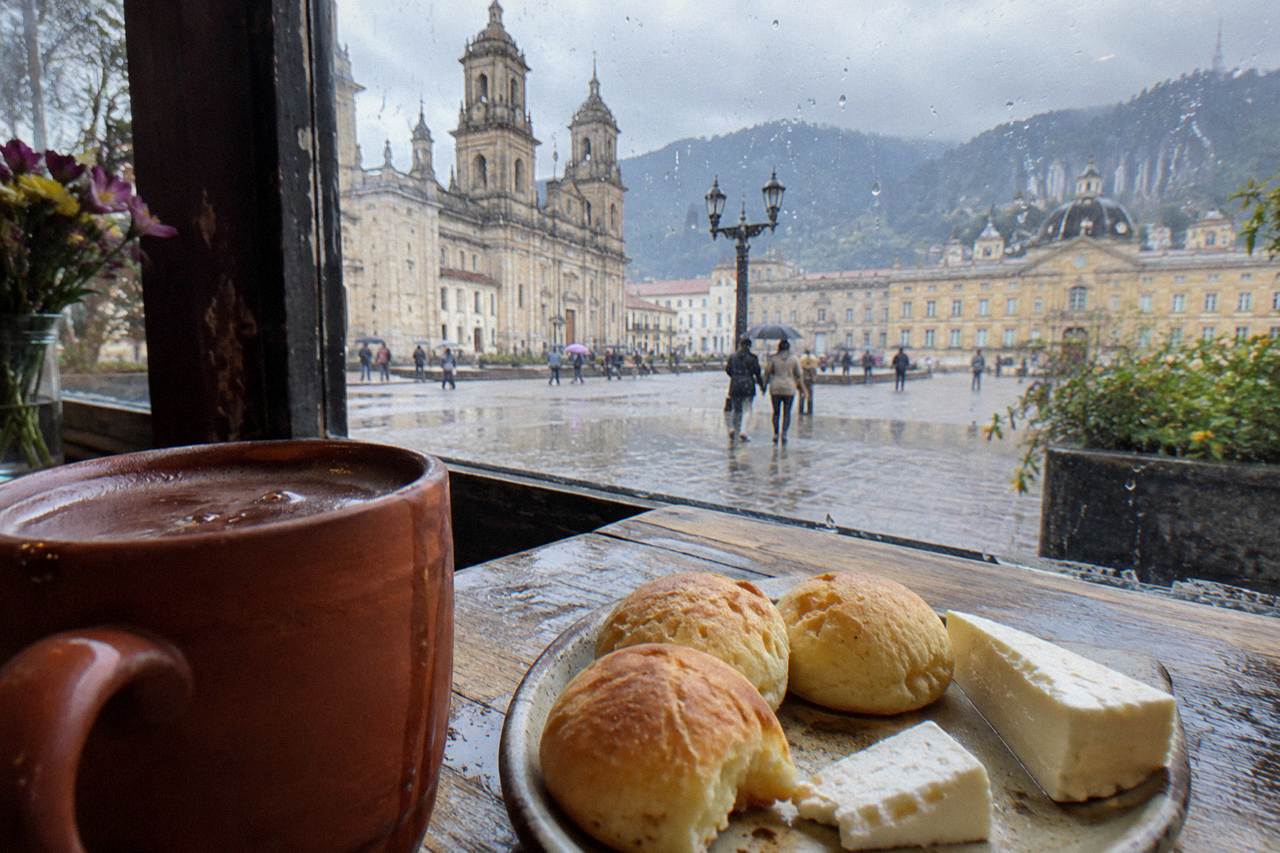
Chocolate santafereño is Colombian hot chocolate made with water or milk, beaten thick, and served with a slab of fresh cheese and an almojábana. You drop the cheese into the hot cup, let it soften, and drink or spoon the mix. La Puerta Falsa in La Candelaria, operating since 1816, is the historic address, and guided coffee and chocolate walks from $49 per person cover the tradition too.
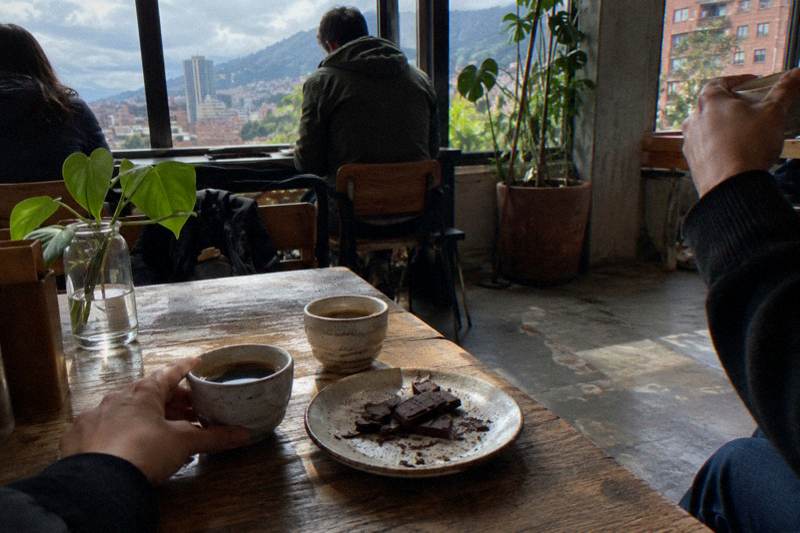
Bogotá has been dropping cheese into hot chocolate for longer than most countries have existed. The custom, called chocolate santafereño, is the city's signature drink ritual: a thick, barely sweet chocolate served in a clay or metal chocolate pot, poured into a mug, and accompanied by fresh white cheese and a warm almojábana bread. The move that surprises every first-timer is simple. You put the cheese in the cup, wait a few seconds, and eat the softened cheese with a spoon as you drink.
This guide covers what the drink is, why the cheese goes in, where to try it in the historic centre, and which guided tastings and workshops in Bogotá build an entire experience around chocolate and cacao. It draws on 2026 reporting from the city's food press and on the tour details published on each operator's booking page.
What Is Chocolate Santafereño?
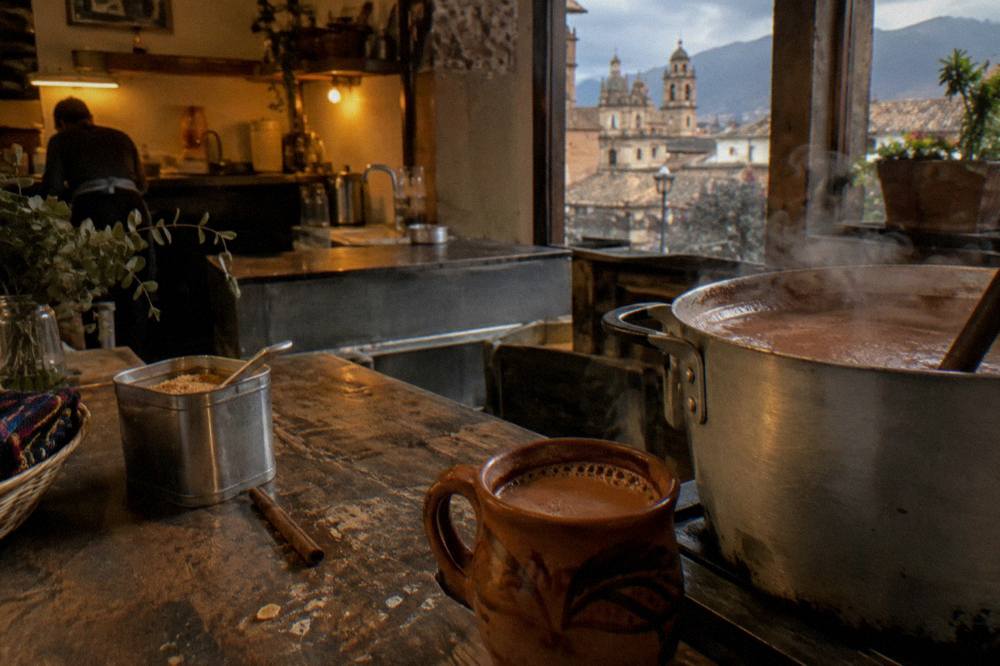
Chocolate santafereño is Bogotá's traditional hot chocolate service: dark Colombian chocolate beaten with water or milk into a frothy, thick drink, served with fresh cheese to melt into the cup and bread such as almojábana or achira on the side. It is a breakfast and late-afternoon ritual rather than a dessert, rooted in the cold Andean climate. Bogotá sits at about 2,640 m, and the city's damp, chilly mornings made a hot, filling drink with bread and protein a working meal rather than a treat. The name comes from Santa Fe de Bogotá, the colonial capital's original name.
The chocolate itself is different from a European drinking chocolate. Colombian chocolate de mesa comes as a solid block or discs, sweetened lightly and often flavoured with cinnamon and sometimes cloves, then melted and beaten with a wooden molinillo until it froths. The result is rustic and grainy in a way that mass-market powder never is. The cheese is the other half of the equation: a mild, salty fresh cheese, sometimes called queso doble crema or queso fresco, that holds its shape long enough to soften without fully dissolving.
The drink belongs to a family of Colombian hot drinks built around aguapanela, the raw cane sugar dissolved in hot water that anchors breakfast tables nationwide. Chocolate santafereño is the festive, capital-city version of that instinct. If you want the wider context of what Colombians eat to start the day, the Bogotá breakfast guide: changua, calentado and tamal covers changua, the milk and egg soup that shares the same morning slot.
Why Do Bogotá Locals Put Cheese In Hot Chocolate?
The cheese is there for texture and contrast: as it sits in the hot chocolate it softens into something stretchy and mild, and the salt of the cheese against the bitter, cinnamoned chocolate is the whole point of the pairing. There is no single documented origin story, but the logic is practical. A hot drink at 2,640 m of altitude needed to be a meal, and cheese plus bread made it one. Every Colombian child learns the two techniques: some fish the cheese out with a spoon when it is half melted, others leave it until the last of the chocolate has turned into a sweet, cheesy sludge to scrape from the bottom.
The pairing also reflects what the countryside around Bogotá produced. The sabana, the high plateau the city sits on, was dairy and grain country, while chocolate and panela arrived through trade. Put together in one cup, they made use of both. Locals treat the question "do you actually put the cheese in?" as a friendly shibboleth. Visitors who hesitantly dip, then commit, are usually converted by the third mouthful.
The serving set matters as much as the ingredients. A proper santafereño service arrives with the chocolate pot, a mug, the cheese and the bread, and often a small pot of aguapanela alongside so you can adjust sweetness yourself. The components stack up like this.
| Component | What it is | Role in the cup |
|---|---|---|
| Chocolate de mesa | Sweetened block or discs, often with cinnamon | The drink itself, melted and beaten |
| Queso fresco or doble crema | Mild, salty fresh cheese | Dropped in to soften and stretch |
| Almojábana | Cheese bread made with cuajada | Warm companion, dipped or eaten alongside |
| Achira | Starch biscuit from the Huila region | Alternate companion in traditional service |
| Aguapanela | Hot raw cane sugar water | Sweetness adjuster, served alongside |
If you are planning to taste your way through the tradition rather than one cup, a guided walk bundles several stops into a single afternoon. These are the three chocolate-focused experiences worth comparing first.
Where To Try It In La Candelaria?
La Puerta Falsa, on Calle 11 beside the Catedral Primada, is the historic address: operating since 1816, it serves thick, aromatic chocolate santafereño with cheese to melt in, almojábanas and bread, in a tiny room that fits only a handful of tables. The 2026 reporting on the house describes it as the corner that has guarded the santafereño chocolate secret since the era of independence, and as a spot many tourists now seek out by name. A block away, the historic centre offers a second, more instructional option.
Cacaote, at Carrera 4 #12B-13, runs guided chocolate santafereño preparation workshops: you make the drink rather than just drink it, and the session finishes with a tasting served with almojábana, queso and achira, as its late-October 2026 listing describes. That workshop format suits travellers who want to recreate the ritual at home. The official tourism board listing for the Cacaote workshop carries the current details and booking route, and the price should be read there rather than guessed here.
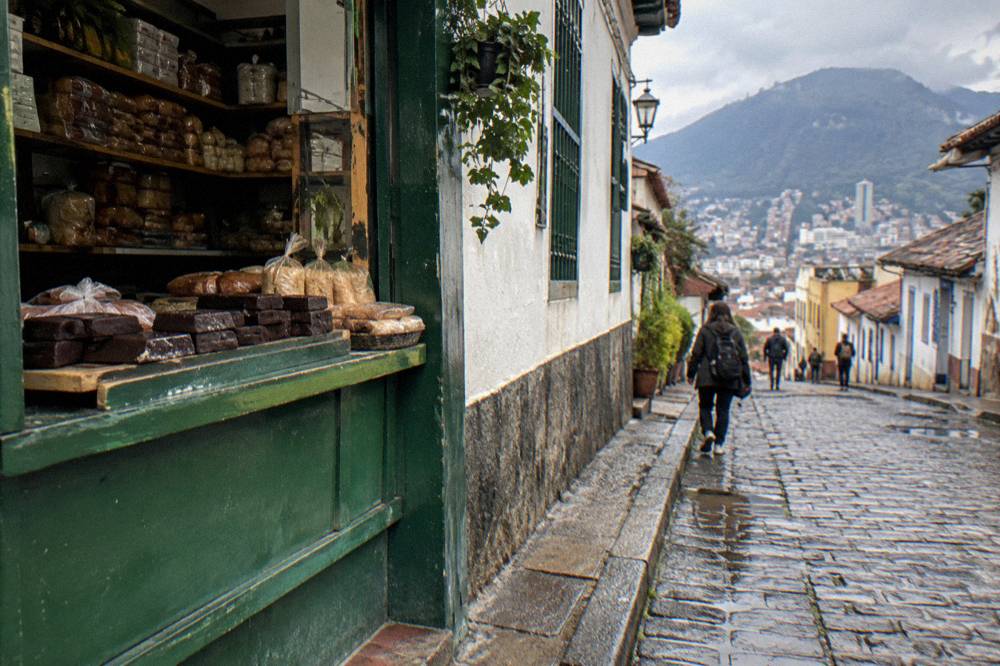
New for late 2026, Casa Orígenes opened on 5 October in a restored republican house in La Candelaria, dedicated to Colombian chocolate: bean-to-bar and tree-to-bar tastings, author pastries, specialty coffee and a curated gastronomic library, with the International Chocolate Awards in Colombia hosted there in late October. For a wider sweep of the neighbourhood's sweet side, the Colombian desserts: obleas and sweets in Bogotá guide covers the rest of the sugar cabinet.
Which Tours Include Chocolate Tastings In Bogotá?
The Coffee and Chocolate tour in Bogotá is the most reviewed chocolate-focused option at 5.0 across 79 reviews, from $49 per person for 2 hours 15 minutes; the Chapinero coffee and fine chocolate tasting tour runs from $49 for 1.5 to 2.5 hours, and the 4-hour private coffee and chocolate walk in La Candelaria starts at $112 with the price varying by group size. Each pairs the santafereño tradition with Colombia's other flagship drink, which is the natural pairing: coffee and cacao grow in the same regions and share the tasting vocabulary of origin, altitude and process. The table below compares what is on the booking pages.
| Tour | Duration | From (USD) | Rating and reviews | Format |
|---|---|---|---|---|
| Coffee and Chocolate tour in Bogotá | 2 hours 15 minutes | $49 per person | 5.0 across 79 reviews | Shared tasting walk |
| Bogotá: Coffee and Fine Chocolate Tasting Tour in Chapinero | 1.5 to 2.5 hours | $49 per person | 5.0 across 5 reviews | Shared tasting walk |
| Bogotá Private Coffee and Chocolate Tour in La Candelaria | 4 hours | from $112, varies by group size | 5.0 across 20 reviews | Private walk |
| Colombian Chocolate Workshop Bogotá | 1 hour | $159.58 per person | 4.8 across 49 reviews | Hands-on workshop |
| Specialty Coffee Workshops in Bogotá | 2 hours | $49.95 per person | 5.0 across 149 reviews | Hands-on workshop |
Read the inclusion list on each booking page before choosing. Some tastings cover both coffee and chocolate stops, others focus on one; the workshop formats put a finished drink or bar in your own hands. Full details for the featured walk are on the Coffee and Chocolate tour page, with Coffee and Chocolate Tasting Walk beside it for live times and dates.
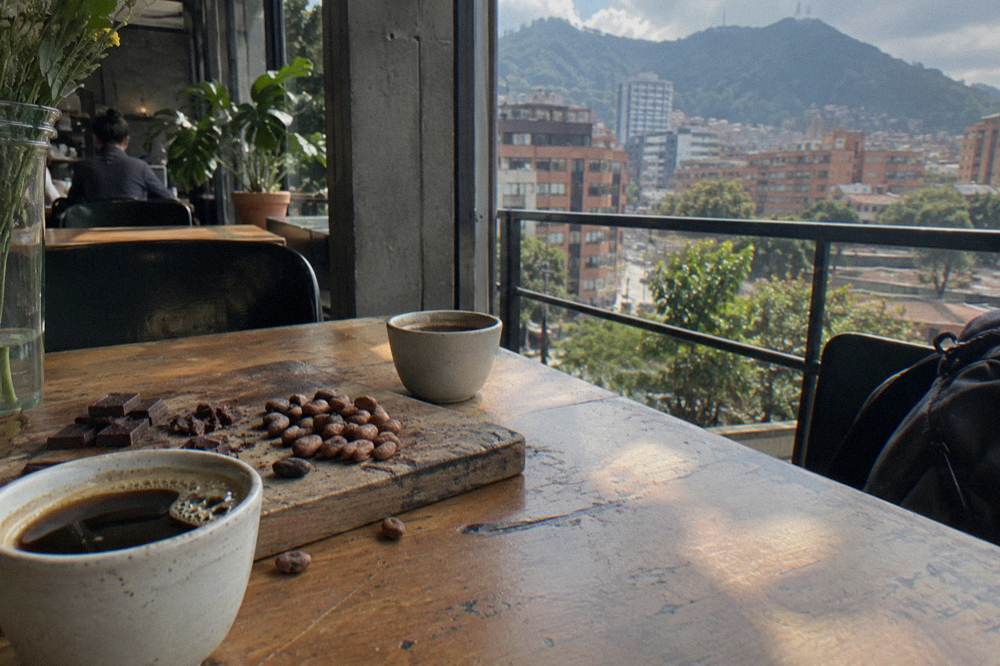
The 4-hour private option is the one to pick if you want the santafereño tradition explained at your pace, since a private guide can linger at the chocolate stop. Its listing shows a from-price that varies by group size, so the per-person figure for your party appears on the booking page. The Chapinero tasting tour is the quick version: 90 minutes to 2.5 hours, coffee and fine chocolate in the neighbourhood that Time Out named the 7th coolest in the world for 2026, the only Latin American entry in its top 10.

What Does A Chocolate Workshop Teach You?
The Colombian Chocolate Workshop Bogotá, 1 hour and from $159.58 per person, rated 4.8 across 49 reviews, is a hands-on session rather than a walk: you work with cacao and chocolate directly, which suits travellers who want to make something rather than taste in passing. Workshop listings in the city cover bonbon-making, regional cacao tasting and santafereño-style service. Cacaote's preparation workshop, described above, is the santafereño-specific version. The difference matters: a walk shows you the city and its chocolate counters, a workshop gives you a technique to take home.
The wider cacao context is worth knowing before you book either. Colombia exported US$413.1 million of cacao and derivatives in 2025, 49,044 tons and a 16.4 percent rise in volume, which is why single-origin Colombian bars now appear on tasting menus abroad. Chocoshow 2026, at Corferias from 27 to 29 November with more than 175 exhibitors, cacao tastings, Cacao Talks and competitions, is the trade and public face of that industry, and it lands in Bogotá on the dates above. The trade press announcement of Chocoshow 2026 carries the programme detail.
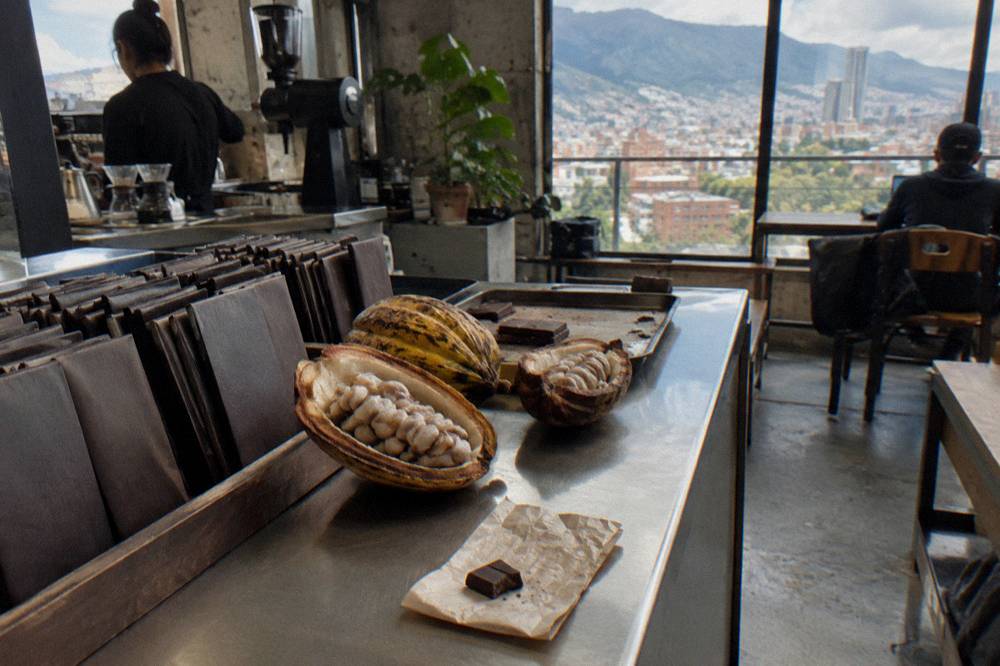
For the coffee half of the pairing, the coffee tasting and cupping experiences guide covers the city's cupping labs and brew workshops, including public cuppings led by certified Q graders featuring 80-plus point coffees from 12 Colombian farms.
How Do You Make Chocolate Santafereño At Home?
Melt Colombian chocolate de mesa, the sweetened block sold in every supermarket, in hot water or milk with a cinnamon stick, beat it with a molinillo or whisk until frothy and thick, then pour and drop in cubes of mild fresh cheese, serving almojábana or bread alongside. The drink survives translation badly only when the cheese is skipped: any mild, salty fresh cheese that softens without fully melting will do the job, and the chocolate block is the one ingredient worth bringing home, since it weighs nothing and keeps for months.
The technique is forgiving. Use roughly one block or two discs per two cups of liquid, heat gently, and never boil hard. The molinillo, the carved wooden whisk rolled between your palms, is the traditional tool and a cheap souvenir; a regular whisk froths nearly as well. Purists argue over water versus milk; Cacaote's workshop teaches the preparation, and its late-October 2026 listing notes the tasting includes almojábana, queso and achira, the three classic companions.
Timing at home mirrors timing in Bogotá: late afternoon, when the temperature drops, or a weekend morning. If you want to taste the drink in its home setting first, the historic address above is the reference point, and the 2026 report on La Puerta Falsa's chocolate tradition gives the fuller history of the house.
What Should You Check Before Booking A Tasting?
Check the meeting point, the inclusion list and the cancellation window on the booking page: the shared walks meet in central Bogotá and include the tastings stated in their listings, while private tours' prices vary by group size and the per-person figure only appears once your party size is entered. Dietary needs deserve a message to the operator before booking rather than an assumption, since no listing here is described as vegan or gluten-free. Chocolate blocks contain milk solids in most cases, and the santafereño service is built around cheese, so dairy-free travellers should ask directly.
| Check before booking | Where to look | Why it matters |
|---|---|---|
| Price basis | Booking page | Several private tours show from-prices that vary by group size |
| Tastings included | Listing inclusions | Some prices cover tastings, others list them separately |
| Meeting point | Listing details | Shared walks meet in central locations; private tours may offer hotel pickup |
| Cancellation terms | Booking page | Terms vary by operator; most allow changes up to 24 hours before |
| Dietary needs | Message operator | No listing here is marked vegan or gluten-free |
| Duration | Listing details | Ranges from 1 hour to 4 hours across chocolate options |
Altitude is the other practical factor. Bogotá sits at about 2,640 m, and the standard guidance recommends one to two days of adaptation, hydration, light meals and little alcohol before strenuous activity; a chocolate walk is gentle, but pace yourself on the uphill streets of La Candelaria. The eating at altitude guide covers the full set of first-timer adjustments, from meal timing to why the first 24 to 48 hours feel the heaviest.
Weather plays into the plan too. Bogotá's rainy seasons run April to May and October to November, with afternoon showers common, though a strong El Niño pattern forecast for late 2026 into early 2027 is expected to bring drier, sunnier days and colder nights through February 2027. A late-afternoon chocolate stop doubles as shelter either way, which is one reason the ritual has survived two centuries of Bogotá weather. A hot cup at 4 p.m., when the temperature drops and the mist rolls in, is when the tradition makes the most sense; you will understand the custom better in one sitting than in any amount of reading.
The Chapinero tasting tour deserves a final look for anyone short on time. It runs 1.5 to 2.5 hours from $49 per person, 5.0 across 5 reviews, a small pool so treat the rating as a signal rather than a verdict, and pairs coffee and fine chocolate in one neighbourhood. Details are on the Chapinero coffee and chocolate tasting tour page, with Check availability for current slots. Beyond tastings, the city's wider drink culture, from fruit juices to aguapanela, is covered in the Colombian drinks, juices and aguapanela guide.
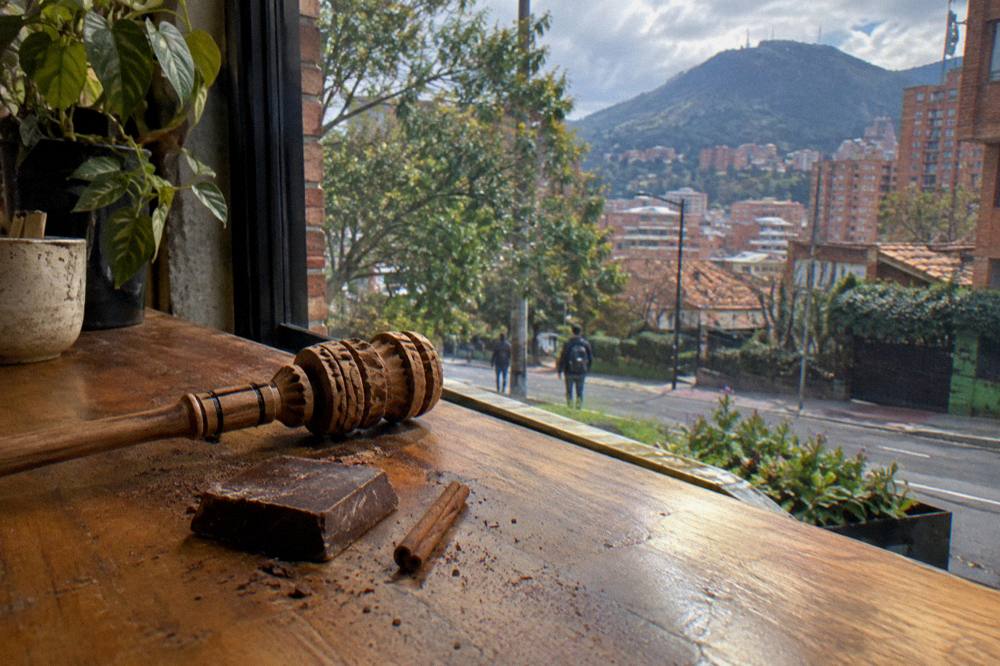
The hands-on route rounds out the options. The chocolate workshop above suits makers; the specialty coffee workshops, 2 hours from $49.95 per person and 5.0 across 149 reviews, suit anyone who wants the brewing side taught properly. Whichever format you lean toward, the tradition itself costs almost nothing to try: one cup, one slab of cheese, and the small decision to actually put the cheese in the chocolate, which is where every visitor's story begins. For the full sweep of what else the city eats, start with Bogota Food Tours and its guides to markets, dishes and neighbourhoods.
If chocolate is only one stop on a longer food plan, the choice is between a quick shared tasting, a private walk with time to linger, or a workshop that sends you home with a technique.
Common Questions About Chocolate Santafereño
What Is Chocolate Santafereño?
Colombian hot chocolate made from sweetened chocolate de mesa, beaten thick and frothy, served with fresh cheese to drop into the cup and bread such as almojábana or achira on the side. It is a breakfast and late-afternoon ritual in Bogotá, tied to the city's cold highland climate at about 2,640 m.
Do You Really Put The Cheese In The Hot Chocolate?
Yes. The mild, salty fresh cheese softens in the hot drink into something stretchy, and the salt against the bitter, cinnamoned chocolate is the point of the pairing. Some people fish the cheese out half melted; others leave it until the chocolate turns into a sweet, cheesy mix at the bottom of the cup.
Where Is The Best-Known Place To Try It In Bogotá?
La Puerta Falsa, on Calle 11 beside the Catedral Primada in La Candelaria, has operated since 1816 and serves thick chocolate santafereño with cheese, almojábanas and bread. Cacaote, also in La Candelaria, runs a guided preparation workshop that ends with a tasting served with almojábana, queso and achira.
Can I Make Chocolate Santafereño At Home?
Yes. Melt a block of Colombian chocolate de mesa in hot water or milk with a cinnamon stick, beat it with a molinillo or whisk until frothy, pour, and add cubes of mild fresh cheese. The chocolate block travels well and is sold in every Colombian supermarket.
Are There Guided Chocolate Tastings In Bogotá?
Yes. Shared coffee and chocolate walks run from $49 per person, a 4-hour private version starts at $112 with the price varying by group size, and a 1-hour hands-on chocolate workshop costs from $159.58 per person. Check the inclusion list and cancellation terms on each booking page before choosing.
Is Chocolate Santafereño Vegetarian?
The traditional drink is made with chocolate, water or milk, and fresh cheese, so it is vegetarian but not vegan. No chocolate tasting listed here is described as vegan or gluten-free; message the operator before booking if you have a dietary restriction.