Colombian Desserts, Obleas And Sweets In Bogotá
Bogotá's dessert vocabulary is short, cheap and deeply traditional: wafers stuck together with caramel, figs in syrup, hot chocolate with cheese melted into it. Here is what each sweet actually is, where the city serves it, and how a tasting walk folds it into a route.
Short answer
Colombian desserts centre on arequipe, the milk caramel that fills obleas wafers, tops brevas con arequipe figs and finishes many market snacks. In Bogotá you find them at market plazas, La Candelaria stalls and historic spots like La Puerta Falsa, operating since 1816. A tasting walk from $55 per person ties the sweets into a guided route.
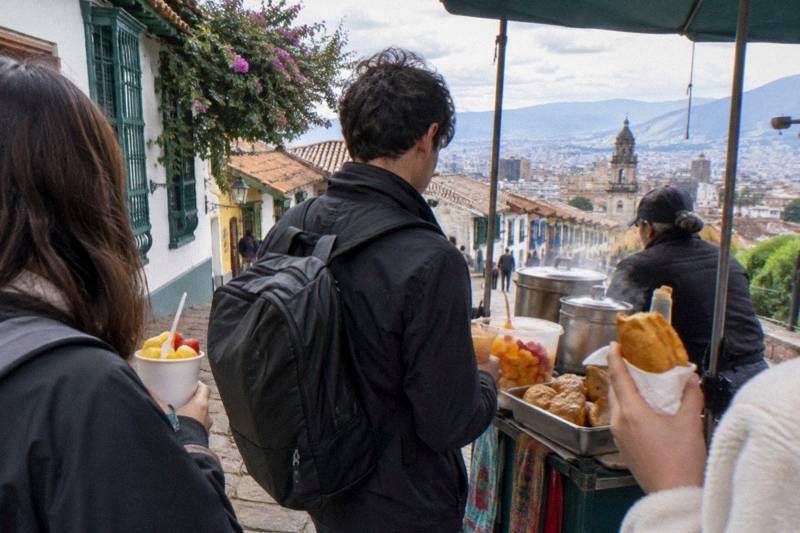
Bogotá does not really do dessert-first culture. Sweets here arrive as part of something else: the mid-afternoon obleas bought at a market stall, the breva con arequipe that closes a big lunch, the cup of hot chocolate with cheese that anchors a Bogotá breakfast or an evening merienda. That is good news for a visitor, because the desserts sit exactly where the rest of the food culture sits, in the plazas de mercado, the colonial lanes of La Candelaria and a handful of places old enough to have served them for two centuries.
This guide walks through the sweets you will actually encounter in Bogotá, what they are made of, roughly what they cost at stalls and delivery prices where reported, and how they show up on guided tasting walks. Dishes and ingredients below are general knowledge; prices for tours come from the operators' listings, and anything a specific walk includes is stated only where the listing says so.
What Exactly Are Obleas?
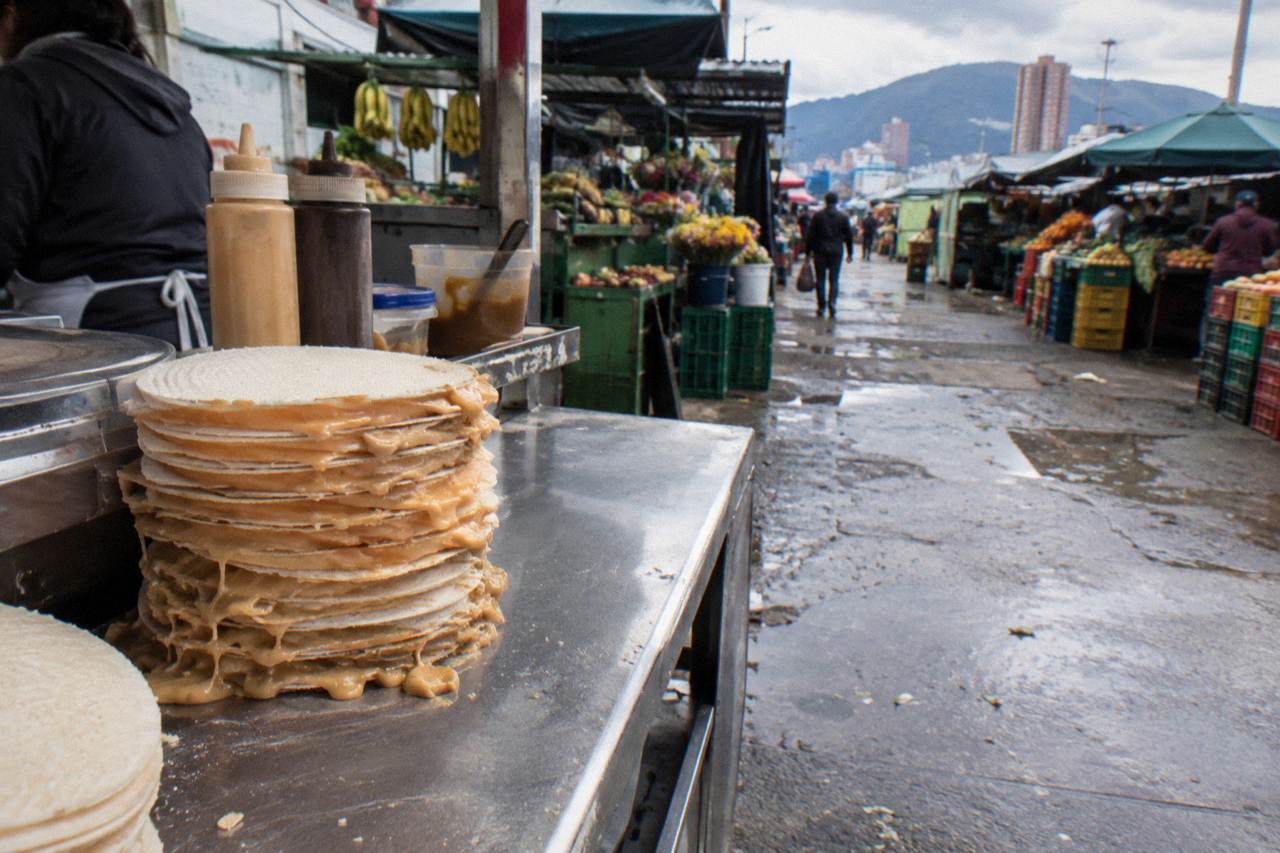
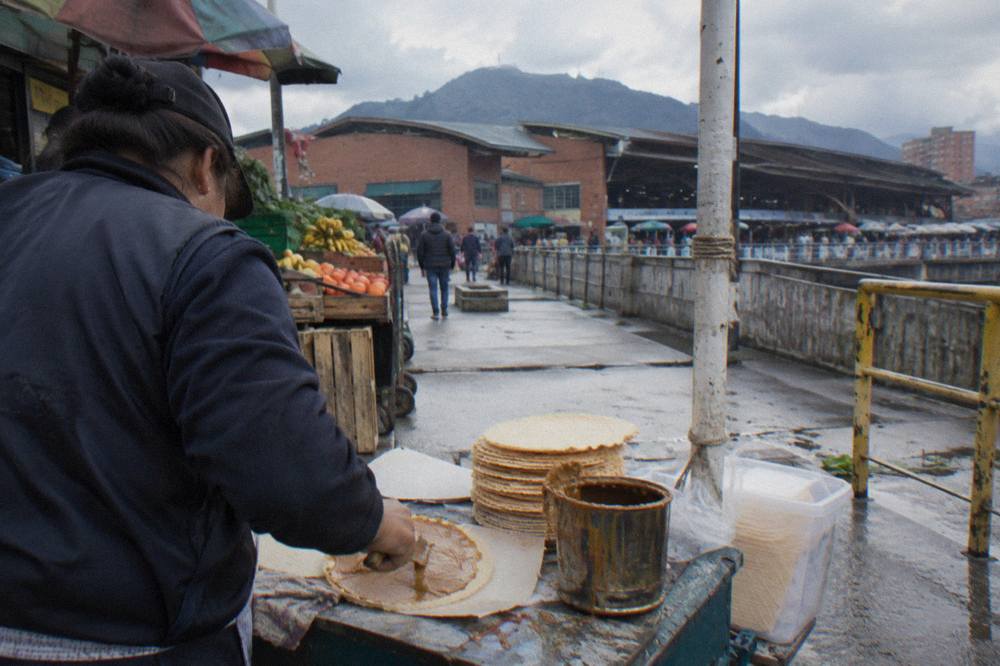
Obleas are two thin, round, communion-style wafers pressed together around a thick filling, almost always arequipe, a slow-cooked milk caramel. Stalls commonly add shredded cheese, jam or whipped cream on request, and vendors at markets, parks and weekend fairs sell them wrapped in a napkin, making them Colombia's most portable dessert and one of the cheapest street sweets available.
The word and the wafer trace back to Spanish convent baking, but the filled oblea as Colombians eat it today is a local habit. You will see them most often around market entrances, school zones and Sunday fairs, including the Usaquén weekend market, whose food stalls also sell arepas, fresh-cut fruit and hot chocolate. Nothing about an oblea is seasonal; it is a year-round, any-weather snack that suits Bogotá's cold evenings well.
If you are building a dessert afternoon, treat obleas as the cheap anchor. One or two per person is plenty, because arequipe is dense and very sweet. Order the plain version first to taste the caramel itself before you let a stall build the loaded version.
| Sweet | What it is | Typical filling or pairing | Where you find it |
|---|---|---|---|
| Obleas | Two thin round wafers pressed together | Arequipe, cheese, jam, cream | Market stalls, parks, weekend fairs |
| Brevas con arequipe | Figs poached in syrup, split open | Arequipe, sometimes cream | Traditional restaurants, market food stalls |
| Postre de nata | Milk-skin custard cooked with panela | Eaten warm or cold | Market plazas, traditional kitchens |
| Oblea con queso | The loaded oblea | Arequipe plus shredded fresh cheese | Street carts, plaza entrances |
What Is Arequipe And Why Is It In Everything?
Arequipe is a caramel made by slowly reducing milk with sugar until it thickens and browns, and it is the single most important ingredient in Colombian desserts, filling obleas, crowding into brevas, topping cakes and standing alone in small supermarket pots eaten by the spoonful. It is a close cousin of dulce de leche, though the Colombian version is traditionally stirred for hours and tastes slightly less intensely sweet than some of its neighbours.
The reason it is everywhere is historical and practical. Milk was abundant in the sabana around Bogotá, refrigeration was not, and reducing milk into a shelf-stable caramel solved that problem deliciously. Panela, the unrefined cane sugar that anchors so much Colombian cooking, gives many versions a faint toffee depth. You will also meet bocadillo, a firm guava paste that plays the same role in the cheese-and-sweet pairings of the region.
The classic pairing to know is sweet with salty fresh cheese. Queso fresco or the stretchy doble crema cheese slipped into hot chocolate, or served beside bocadillo, is the logic that also puts cheese inside an oblea. If that combination sounds odd, try it once at a market before deciding; it is one of the most genuinely local tastes in the city.

Where Do You Find Desserts Around Bogotá?
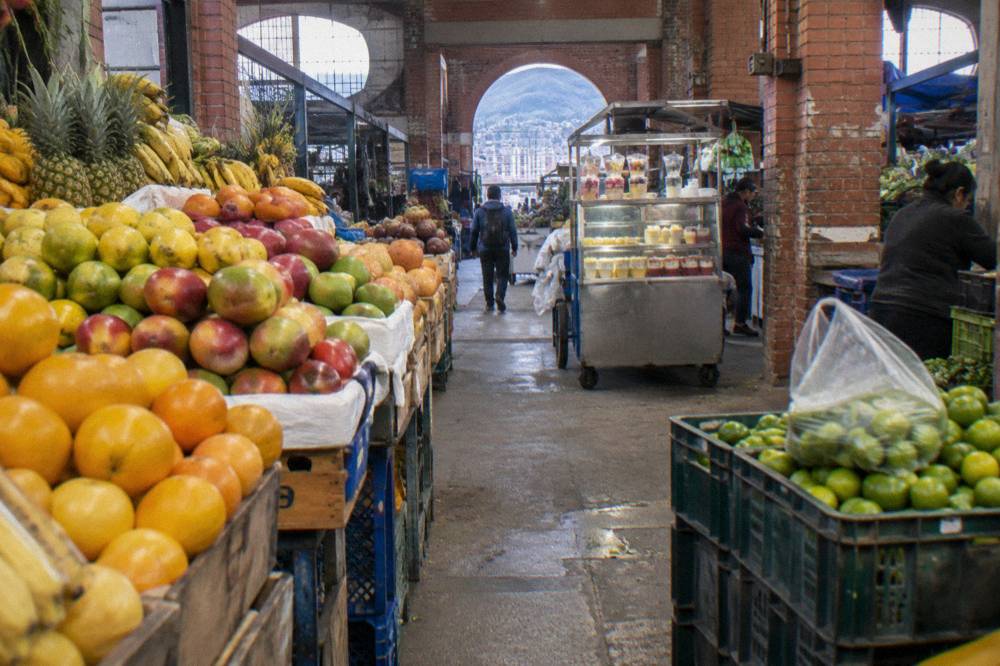
You will find desserts around Bogotá in its market plazas: Paloquemao, La Perseverancia and the weekend Usaquén flea market all carry sweet stalls alongside their savoury food, while La Candelaria adds historic destinations like La Puerta Falsa, open since 1816. Paloquemao runs Monday to Saturday from 4:30 a.m. to 4:30 p.m. and Sundays and holidays from 5:00 a.m. to 4:30 p.m., so an early fruit-and-sweets visit fits before midday.
La Perseverancia, known for ajiaco and lechona at family-run stalls, runs weekdays 8:00 a.m. to 4:00 p.m. and weekends 6:00 a.m. to 5:00 p.m. La Candelaria is the other pole. La Puerta Falsa, next to the Catedral Primada on Calle 11 with Carrera 6A, serves thick chocolate santafereño with cheese to melt into it, alongside almojábanas and bread. A few blocks away, the dessert and chocolate scene has grown upmarket: Casa Orígenes opened in October 2026 in a restored republican house, focused on Colombian bean-to-bar chocolate, author pastries and tastings.
Guided walks compress this geography. The Viejo Bogota Food Tour with 12+ Tastings, from $55 per person and rated 5.0 across 714 reviews, runs four hours through the historic centre with dessert-type stops folded into a longer savoury route; check the booking page for exactly what the current itinerary tastes. For a market-first alternative, a Paloquemao market guide covers the stalls in depth.
If you would rather walk toward dessert on your own, start at Paloquemao early, when vendors offer tastes of exotic fruits like granadilla, lulo and uchuva, then finish with obleas near the entrance. A weekend version starts at the Usaquén flea market, which runs Saturdays, Sundays and holiday Mondays from 9:00 a.m. to 5:30 p.m. on Carrera 6A between Calles 119 and 120A.
What Is Chocolate Santafereño With Cheese?
Chocolate santafereño is Bogotá's signature hot drink: thick, aromatic hot chocolate served with a piece of soft cheese dropped into the cup to melt, plus almojábanas or bread on the side, and it is the city's own contribution to the sweet course. The cheese step is not optional theatre; you drop it in, let it soften, and fish it out with a spoon while drinking the chocolate around it, the salt against the bitter-sweet drink.
It is a dessert only in the loosest sense, but no list of Bogotá sweets can skip it, because it is the reason La Puerta Falsa is famous. The Semana report of October 2026 calls that 1816 institution the preferred spot of many tourists for exactly this dish. The pairing logic is the same as cheese in an oblea, and it turns a drink into something substantial enough to count as merienda, the afternoon meal.
You can also learn to make it rather than just drink it. Cacaote, on Carrera 4 in La Candelaria, runs guided chocolate santafereño preparation workshops that include tasting with almojábana, cheese and achira, according to its late-October 2026 listing. For a broader chocolate education, the chocolate santafereño guide covers the drink's history and where else to try it.
One caution on timing: chocolate santafereño is a morning and late-afternoon dish at traditional places, and the famous tiny spots fill at peak hours. Arrive off-peak or be ready to wait on the sidewalk with the rest of the queue.
What Other Traditional Sweets Should You Try?
Beyond obleas and arequipe, try brevas con arequipe, postre de nata, dulce de papayuela, cocadas, and bocadillo with cheese, all of them cheap at street level: brevas are poached figs stuffed with caramel, postre de nata is a milk custard cooked with panela, and papayuela is a small candied fruit in heavy syrup, more common in the highlands around Bogotá than on the coast.
Cocadas, chewy coconut sweets, and alfandoques of panela and peanuts round out the market-stall tier. Bocadillo, the firm guava paste from Valle del Cauca, usually appears beside a slab of fresh cheese rather than alone. Meringue-like suspiros and spongey tortas show up at bakery counters, where the everyday panadería items live: an almojábana runs around 4,700 COP and a pan de bono around 4,300 COP at one current delivery listing, reported prices worth treating as a rough floor for bakery counters citywide. The wider set of guides lives on Bogota Food Tours.
Local reporting also gives the sweet-toothed visitor a sense of scale: a fruit cart in La Candelaria sells lulo juice for 4,000 COP and curuba juice with milk for 5,000 COP. Desserts in Bogotá are genuinely inexpensive at street level; the expensive versions are the sit-down restaurant desserts and the guided experiences that bundle them.
| Sweet | Style | Rough street presence | Notes for visitors |
|---|---|---|---|
| Brevas con arequipe | Restaurant or market-stall dessert | Common at traditional lunch spots | Order after ajiaco |
| Postre de nata | Home-style milk custard | Market plazas | Panela flavour, mild sweetness |
| Dulce de papayuela | Candied fruit in syrup | Highland-region stalls | Very sweet, small portions |
| Cocadas | Coconut chew | Street carts | Compare with coastal versions |
| Bocadillo con queso | Guava paste with cheese | Markets, cheese stalls | The definitive sweet-salty pairing |
How Do Desserts Fit Into A Guided Tasting Walk?
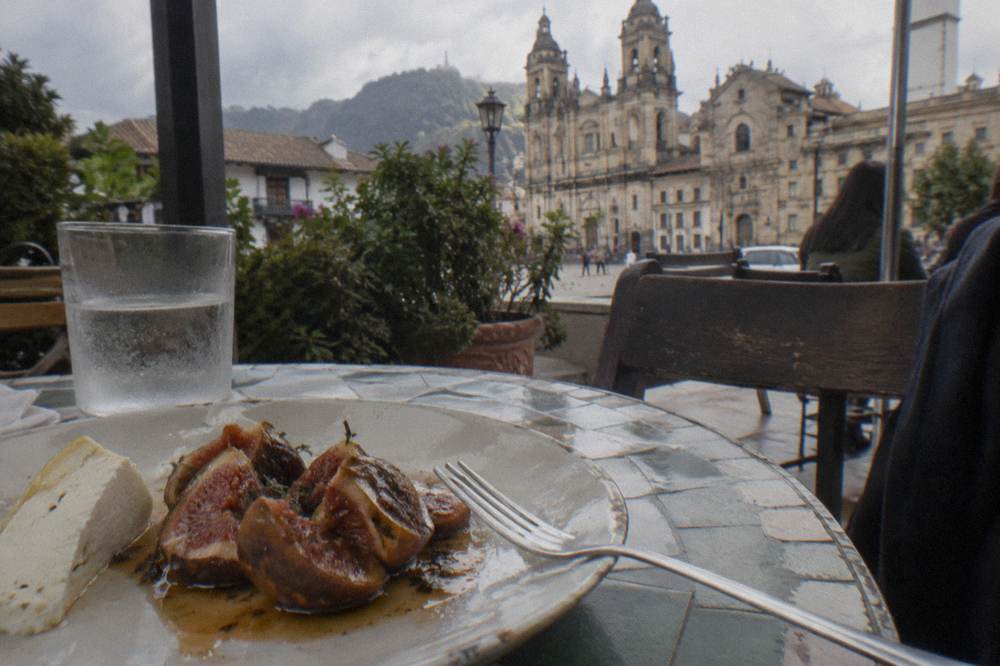
Most food walks end sweet, and the listings here confirm it: the seven-tasting La Candelaria walk names breva con arequipe in its stop list alongside tamal tolimense, arepa and ajiaco, and the coffee-and-chocolate tour dedicates its final act to chocolate. That matters because a walk is the one way to taste sweets with context attached, why arequipe is stirred for hours, why cheese goes in the chocolate, which market stall keeps the best brevas. The Bogota Food Tour: 7 Tastings Through the Heart of La Candelaria runs 3 hours from $64.99 per person, though with only 3 reviews so far it is too early to call it proven.
The coffee-and-chocolate pairing deserves its own mention. The Coffee and Chocolate tour in Bogota, from $49 per person and rated 5.0 across 79 reviews, runs 2 hours 15 minutes and ends, as its name suggests, on the sweet side of Colombian produce. It is a good pick for travellers who want the dessert story but not a full meal.
For visitors with dietary limits, message the operator before booking; no listing in the range is described as vegan or gluten-free, and traditional desserts lean hard on milk, wheat and condensed caramel. The site's vegetarian and vegan guide covers the wider picture, including the city's growing plant-based scene.
A private format changes the dessert arithmetic. Private walks let you weight the route toward sweets, and the Street Food Bogotá Private Tour, 4 hours from $109 per person with the price varying by group size, is the flexible option if obleas and brevas matter more to you than ajiaco. Check the operator's page for what the current private itinerary includes.
What Dessert Events Happen In Late 2026?
The biggest sweet-toothed date on the calendar is Chocoshow 2026, running 27 to 29 November at Corferias with more than 175 exhibitors, cacao tastings, live demos and competitions, and it lands at a moment when Colombian cacao is riding export growth. Reported figures put 2025 cacao and derivatives exports at US$413.1 million across 49,044 tons, up 16.4 percent in volume, a run rate the fair's organizers are happy to celebrate.
Casa Orígenes in La Candelaria adds another reason to visit that neighbourhood for dessert: it hosted the International Chocolate Awards in Colombia in late October 2026, alongside its bean-to-bar tastings and pastry counter. For a broader festival vibe, Vino al Parque runs 27 to 29 November with more than 1,100 wine references and over 15 gastronomic proposals, and Bogotá Gourmet 2026 runs through 22 November with fixed two-person menus in three price tiers from COP 89,000 to COP 199,000.
Plant-based visitors have their own date worth knowing: the VegUp! Plant Based Fest ran in September and October 2026 with fixed bowls at 21,000 COP across participating Bogotá restaurants. Even the tamal festival, 5 to 8 December across more than 17 plazas, includes hot drinks and pan in its 10,000 COP combos, which is dessert-adjacent enough for most travellers.
What Does A Dessert Afternoon Cost?
At street level, very little: reported stall prices run from about 4,000 COP for a juice to around 5,000 COP for a curuba juice with milk, while guided experiences range from $17.71 per person for a shared street-food walk to $159.58 for a chocolate workshop. Those tour figures come from the operators' listings, with per-person from-prices that can vary by group size on several of them. The Shared Bogotá Street Food Tour, $17.71 per person and rated 4.6 across 30 reviews, is the budget entry; the Colombian Chocolate Workshop, $159.58 and rated 4.8 across 49 reviews, is the deep-dive at the other end.
The middle of the range is where most travellers land. A three-hour guided walk sits in this band: the seven-tasting La Candelaria route is $64.99 per person and the four-hour Viejo Bogota walk is $55 per person, both buying a counted set of tastings with a guide translating both language and context. At those prices the dessert stops are effectively free additions to a route you would otherwise assemble yourself, badly, in a city where the best stalls do not post menus in English.
Do the arithmetic honestly on the DIY version: with the exchange rate near 3,183 COP to the dollar in early November 2026, even a generous stall-hopping afternoon of juices, obleas, a chocolate con queso and a bakery bag lands in single-digit dollars. The case for a paid walk is not savings, it is the counted, explained route and the stops you would never find. The site's breakdown of what a Bogotá food walk costs works through the comparison in detail.
| Experience | From price (USD) | Duration | Rating and reviews | Dessert angle |
|---|---|---|---|---|
| Shared Bogotá Street Food Tour | $17.71 per person | 3 hours | 4.6 across 30 reviews | Street snacks in the historic centre |
| Coffee and Chocolate tour in Bogota | $49 per person | 2 hours 15 minutes | 5.0 across 79 reviews | Chocolate tasting finale |
| Bogota Food Tour: 7 Tastings | $64.99 per person | 3 hours | 3 reviews, too few to judge | Breva con arequipe named among stops |
| Colombian Chocolate Workshop | $159.58 per person | 1 hour | 4.8 across 49 reviews | Hands-on chocolate making |
What Should You Bring Home?
Bring home bocadillo, panela, chocolate santafereño, and jars of arequipe, all of which travel well, but fine Colombian chocolate bars are the country's best edible souvenir, with bean-to-bar makers now easy to find in the capital. Skip the industrial brands at airport shops and head to specialty stores like Casa Orígenes in La Candelaria, checking your home country's customs rules on dairy before you pack arequipe.
Coffee is the natural companion purchase, and it pairs with dessert culture rather than competing with it: the same shops that pour good cups sell the beans. The site's guide to Colombian coffee regions, grades and what to buy covers labels, grades and what a fair price looks like, which is knowledge worth having before you buy gifts.
Pack sweets in your checked bag, not cabin luggage, if you are carrying jars or blocks of panela, and expect bocadillo to be sold by the box. A final practical note: buy from formal, established stalls rather than unmarked street sellers, the same common-sense advice the city's health secretariat repeats in its seasonal guidance, and check packaging condition on anything pre-wrapped.
Whatever you carry home, taste the fresh versions first. An oblea eaten standing at a Paloquemao stall within minutes of assembly, or a chocolate con queso at a counter that has poured it since 1816, is the benchmark the packaged versions are measured against, and the reason dessert in Bogotá is worth planning around.
Whether you self-guide the markets or let a walk count the stops for you, the sweet half of Bogotá rewards an early start and a healthy appetite, as Bogota Food Tours covers across its neighbourhood and market guides.
Common Questions About Colombian Desserts In Bogotá
What Are Obleas Made Of?
Two thin round wafers, similar to communion wafers, pressed together with arequipe, a slow-cooked milk caramel. Stalls often add shredded cheese, jam or whipped cream on top of the caramel.
What Is Arequipe?
Arequipe is Colombia's milk caramel, made by reducing milk with sugar for hours until it thickens and browns. It is a close relative of dulce de leche and is sold by the jar in every supermarket.
Where Can I Try Chocolate Santafereño In Bogotá?
La Puerta Falsa, operating since 1816 next to the Catedral Primada, is the historic reference point. Cacaote in La Candelaria also runs preparation workshops that include tasting with almojábana, cheese and achira.
Do Food Tours In Bogotá Include Desserts?
Several do. The listing for the Bogota Food Tour: 7 Tastings Through the Heart of La Candelaria names breva con arequipe among its stops, and the Coffee and Chocolate tour ends on the sweet side. Check each booking page for the current itinerary.
What Is The Best Month For Dessert Events In Bogotá?
November is strong: Chocoshow 2026 runs 27 to 29 November at Corferias with more than 175 exhibitors, and Vino al Parque falls the same weekend. The tamal festival, with hot drinks and pan in its combos, runs 5 to 8 December.
Are Colombian Desserts Suitable For Vegans?
Traditional versions mostly are not: arequipe, obleas, postre de nata and chocolate con queso all depend on dairy. Message the tour operator before booking about substitutions, and see the site's vegetarian and vegan guide for plant-based options.