How Many Days In Bogotá Is Enough?
A day-by-day answer to how many days in Bogota is enough, built around markets, food walks and coffee, with altitude and safety timing factored in.
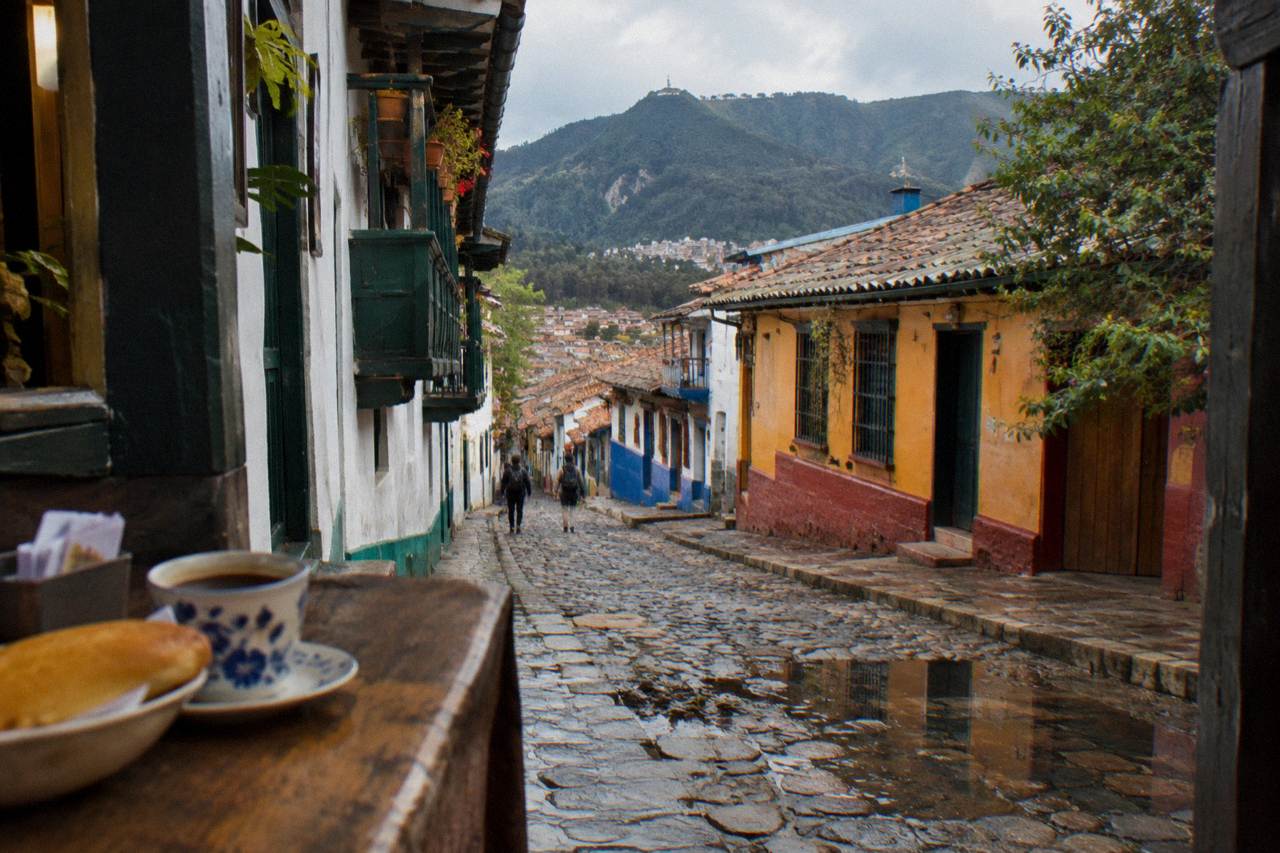
Three days is enough for most travellers, and two is enough for a tight stopover built around La Candelaria and one market visit. Bogotá sits at about 2,640 m, and acclimatisation advice recommends one to two easy days before anything strenuous, which argues against a rushed single day. Four days suits food lovers who want markets, coffee and day trips without hurrying.
That is the short version. The longer version depends on what you came for. Bogotá rewards slow mornings: the city's food culture runs from changua, the milk-and-egg breakfast soup, through market plazas at midday, to hot chocolate with cheese in the late afternoon. Squeeze that into 36 hours and you will leave with a museum ticked and a headache from the altitude. Give it three days and the city opens up.
The altitude point matters more than most first-time visitors expect. Bogotá stands roughly 2,640 m above sea level, and official health guidance for visitors recommends one to two days of adaptation, heavy hydration, light meals and little alcohol before demanding activity. Symptoms such as headache and fatigue typically peak in the first 24 to 48 hours and ease over three to five days as the body adjusts. Translation: day one should be gentle, which is a good argument for three days rather than two.
Food is also the most efficient way to see the city. A guided tasting walk compresses a neighbourhood, a handful of dishes and some history into a single block of time, which is exactly what a short trip needs.
If you only have one full day, spend it in La Candelaria, eat at a market plaza at midday and keep the evening light. Two days is the practical minimum, three is comfortable, and four or five lets you add Usaquén, Chapinero's coffee shops and a coffee farm day trip. The rest of this article breaks each option down.
There is also a budget angle to trip length that surprises people. Street-level eating is genuinely cheap: reported cart prices in La Candelaria put lulo juice at 4,000 COP and curuba juice with milk at 5,000 COP, and bakery staples like almojábanas and pan de bono run around 4,700 and 4,300 COP respectively in current delivery listings. With the exchange rate near 1 USD to 3,183 COP, a longer stay does not blow up a food budget the way it would in many capitals. What limits a Bogotá trip is energy and altitude, not money.
What Can You Realistically See In Two Days?
Two days covers La Candelaria's museums and squares, one market visit, and a food walk through the historic centre, with energy left for dinner in Chapinero. It does not comfortably cover Paloquemao's early-morning peak, a coffee farm day trip, or Usaquén's weekend market. Plan a two-day trip around one neighbourhood per half-day.
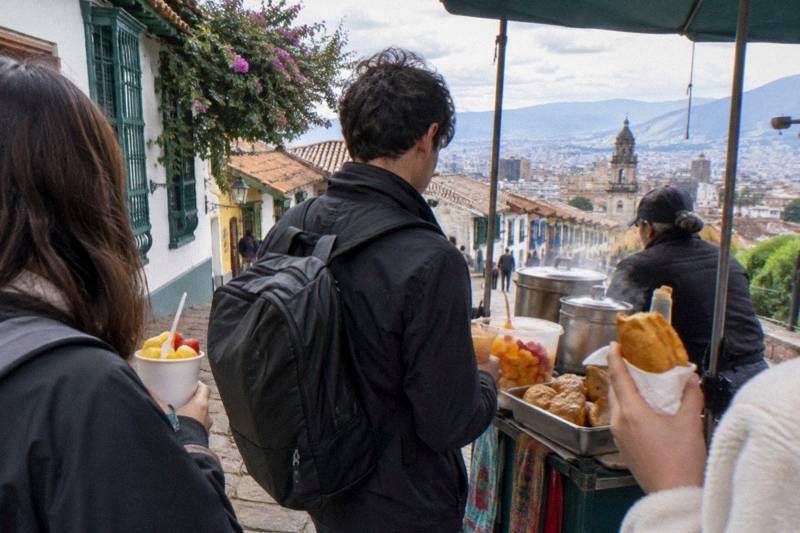
Day one belongs to the historic centre. La Candelaria holds the Plaza de Bolívar, the Gold Museum and a dense strip of colonial streets where street vendors sell arepas, fresh-cut fruit and juices. Reported prices at a fruit cart near Carrera 2a with Calle 13 put lulo juice at 4,000 COP and curuba juice with milk at 5,000 COP, a fair gauge of street-level costs. Neighbourhood reports for 2026 describe La Candelaria as fine on main streets and squares in daytime, with pickpocket risk and advice against walking side streets alone after dark, so keep evenings elsewhere.
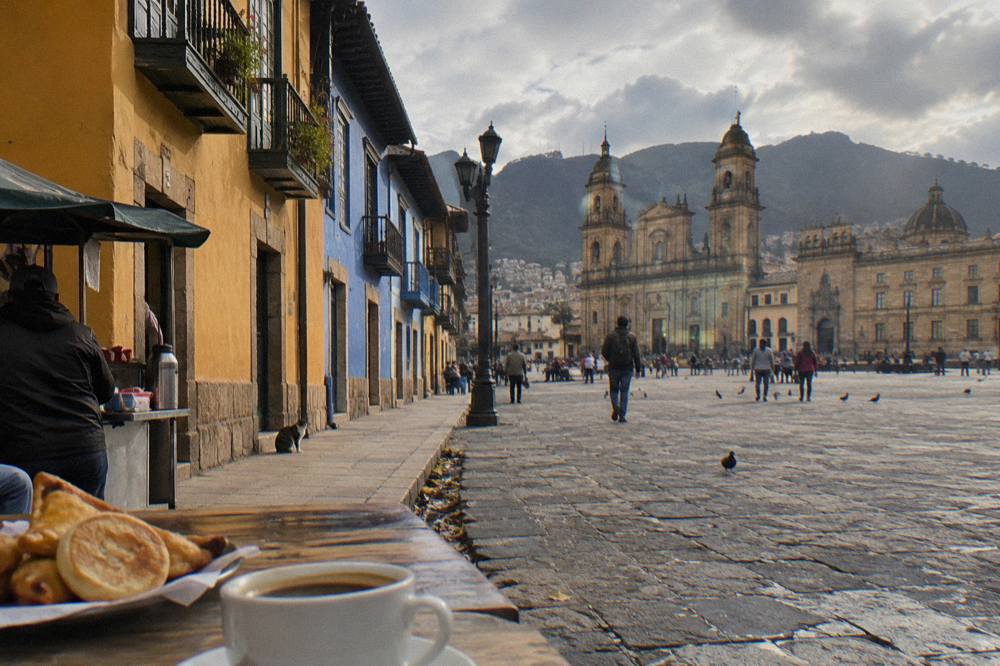
The same streets hide one of the city's oldest food institutions. La Puerta Falsa, a tiny spot next to the cathedral that has operated since 1816, is famous for chocolate santafereño, the thick hot chocolate served with cheese to melt into the cup, alongside almojábanas and bread. It is a five-minute stop that most walking routes pass, and it explains why the late-afternoon merienda matters as much as lunch in Bogotá's food clock.
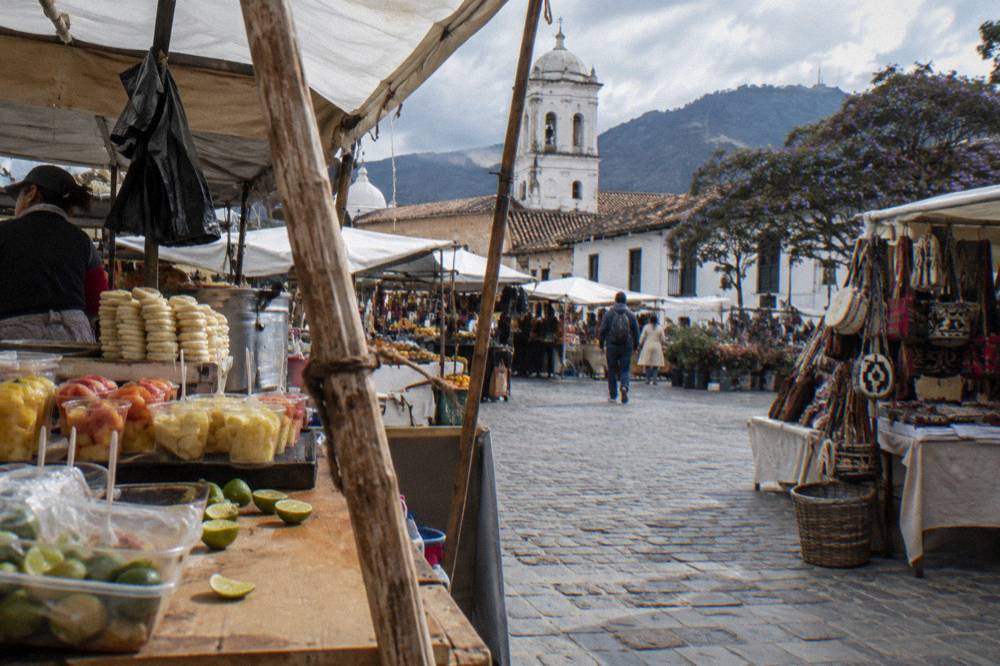
Day two is the market day. Paloquemao, the city's major food market, opens Monday to Saturday from 4:30 a.m. to 4:30 p.m. and Sundays and holidays from 5:00 a.m. to 4:30 p.m. according to its official contact information. The pre-dawn to mid-morning window is when wholesale energy peaks, trucks unload and vendors offer tastes of fruits like granadilla, lulo and uchuva. A shared exotic-fruit tour at Paloquemao, 3 hours and rated 4.6 across 32 reviews, from $50.17 per person, is one way to turn that into a structured morning.
A two-day trip also justifies a guided walk on day one or two, because it front-loads context you would otherwise miss. The Viejo Bogota Food Tour with 12+ Tastings, 4 hours from $55 per person and rated 5.0 across 714 reviews, the deepest review pool of any walk compared here, moves through the historic centre with more than twelve tastings. On a two-day trip, that single block does the work of a day of self-guided grazing. If two days is all you have, book it for the first afternoon and let the second day's market visit build on what the guide introduced.
One honest limitation of the two-day plan: it skips the city's north almost entirely. Chapinero's restaurant strip, Zona G and Usaquén would each need a half-day of their own, and the cable car or funicular up Monserrate, a classic viewpoint at 3,152 m, is demanding enough that altitude advice recommends saving it for after a day of adjustment. Two-day travellers should accept a south-of-the-city trip and plan a return.
Is Three Days The Sweet Spot For Food Lovers?
Three days is the sweet spot: one day for La Candelaria and a historic-centre food walk, one early morning for Paloquemao and its fruit stalls, and one day for coffee, chocolate and a calmer neighbourhood like Chapinero or Usaquén. It also matches the altitude advice, giving your body two easy nights to adjust.
Day three is where Bogotá's coffee culture comes in. The city has a genuine specialty scene: Amor Perfecto in Chapinero Alto is a 1990s pioneer with in-house roasting and public cuppings, Catación Pública in Usaquén runs an SCA-certified cupping lab, and Varietale, a former convent in Chapinero, opened only months before November 2026 and mills its own regional single origins. A guided session stitches these threads together faster than café-hopping alone.
A coffee and chocolate tour in Bogotá, 2 hours 15 minutes and rated 5.0 across 79 reviews from $49 per person, pairs the two products Colombia is most famous for in a single short block, which suits a third day that also wants a long lunch and an afternoon stroll. For a deeper dive, the site's guide to coffee tasting and cupping experiences in Bogotá lists the formats side by side.
The third day is also when a booked food walk earns its keep on a longer trip, because by then you know the dishes by name. Ajiaco, the chicken-and-potato soup that defines the city, tamales steamed in banana leaves, lechona, the stuffed roasted pork of festive tables, and changua are all general Bogotá staples, but a guide places them in context. For what each dish actually is, the site's traditional dishes overview covers them one by one.
Three days also lets you eat like the city eats across a full week's rhythm. Sunday is tamal and hot chocolate territory, with family tables and market stalls serving the combo that the December festival celebrates; weekday mornings belong to calentado, the reheated rice-and-beans breakfast born of leftovers; and Saturday midday is when plazas like La Perseverancia serve ajiaco and fritanga to families doing the weekly shop. Arrive on a Friday and a three-day trip samples all three moods.
When Are Four Days Or More Worth It?
Four days or more is worth it if you want a coffee farm day trip, the Usaquén weekend market, Chapinero's restaurant scene, or side trips like the salt cathedral at Zipaquirá. An 8-hour Coffee Farm Experience Day Tour, from $94 and rated 4.8 across 87 reviews, consumes a full day by itself and pairs well with a fourth day in the city.
The coffee farm question is the classic reason to add a day. Colombia's coffee country is far away, but a day-tour farm experience from Bogotá shows the process, from cherry to cup, in a single outing. Weigh it against your pace: an 8-hour day at altitude, on day four rather than day one, sits much better with the acclimatisation advice above. It also connects to what you tasted in the city, since 2026 has been a lean coffee year in Colombia, with Asoexport reporting January to September exports down 13.8 percent year on year, a reminder that every cup has an agricultural story behind it. More of these guides are collected on Bogota Food Tours.
A fourth day can also be a neighbourhood day. Usaquén, in the city's north, runs its flea and food market on Saturdays, Sundays and holiday Mondays from 9:00 a.m. to 5:30 p.m., with stalls selling arepas, fresh-cut fruit with salt and lime, empanadas and hot chocolate. Chapinero Alto, with its Time Out ranking and dense restaurant strip, is the other obvious fourth-day pick, and the city food-by-neighbourhood guide breaks both down.
There is also a seasonal case for four days. The Festival del Tamal falls on 5 to 8 December 2026 across more than 17 plazas, and Vino al Parque, a wine and food festival with more than 1,100 wine references and more than 120 by-the-glass options, runs 27 to 29 November 2026. Chocoholics have their own date: Chocoshow 2026, at Corferias from 27 to 29 November, gathers more than 175 exhibitors around Colombian cacao. If your visit brushes any of these, an extra day converts festival logistics from a rush into a plan.
How Should You Split Each Day?
Split days by Bogotá's rhythm: markets and plazas in the morning, a museum or guided walk before lunch, the main meal between noon and 3 p.m., and a light early evening, because altitude makes heavy late dinners punishing. Keep one block of each day unbooked, since rainy-season afternoons often arrive as showers.
The city's food clock rewards early starts. Paloquemao is at its wholesale best before mid-morning, La Candelaria's museums fill from late morning, and the traditional big meal of the day is lunch. Ajiaco at a market plaza is a midday dish, not a dinner one, and the plazas that serve it, like La Perseverancia in Macarena, keep short hours: Monday to Friday 8:00 a.m. to 4:00 p.m., weekends 6:00 a.m. to 5:00 p.m. per Visit Bogotá.
Delivery menus give a sense of what a midday ajiaco costs in the city: reported prices at Ajiaco Típico Santafereño locations run 23,700 COP for a 16-ounce bowl and 33,900 COP for the large. At a market plaza stall the price is usually lower still. Either way, lunch is the meal to invest in; breakfasts are quick and dinners stay light, in keeping with the altitude advice.
Here is how the daily rhythm looks across trip lengths, using the timing facts above:
| Trip length | Day 1 | Day 2 | Day 3 | Day 4 (if taken) |
|---|---|---|---|---|
| Two days | La Candelaria museums, historic-centre food walk, early dinner in Chapinero | Early Paloquemao visit, market-plaza lunch, Gold Museum or Monserrate by transport | Not applicable | Not applicable |
| Three days | Gentle arrival, La Candelaria, light dinner | Early market morning and historic-centre walk | Coffee and chocolate session, Chapinero Alto stroll | Not applicable |
| Four days | Gentle arrival, La Candelaria | Paloquemao morning, plaza lunch | Coffee tour and Chapinero | Usaquén weekend market or coffee farm day trip |
Note the pattern: the earlier days stay light and central, and the more demanding blocks, a farm day trip or a long walking day, come after your body has had two nights at 2,640 m. Rainy seasons run April to May and October to November, so an indoor fallback, a museum, a chocolate workshop or a long lunch, belongs on any day plan in those months. Tipping sits lightly on the budget: at sit-down restaurants staff ask whether to add the voluntary 10 percent propina, capped by law, which you can decline; street food and market stalls expect nothing.
What About Altitude, Safety And Getting Around?
Altitude, not distance, is what sizes a Bogotá itinerary: plan one to two gentle days first, drink plenty of water, eat light and go easy on alcohol. Safety reports point to normal precautions in La Candelaria by day and more policed visitor areas like Chapinero and Usaquén, while TransMilenio costs a reported COP 3,550 per ride, so transport never justifies extra days.
The altitude advice deserves repeating because it decides trip length more than any sight list. Official guidance recommends one to two days of adaptation, three or more litres of water a day, light meals, limited alcohol and proper sleep, with symptoms peaking in the first day or two. First-timers can read the full picture in the site's guide to eating at altitude in Bogotá. Tying one on with aguardiente on arrival night is the classic way to lose day two.
On safety, report the reports plainly: the US State Department advisory for Colombia stands at Level 3, Reconsider Travel, issued 31 March 2026, with some departments at Level 4, none of them Bogotá, and 2026 neighbourhood reports describe Chapinero, Usaquén, Parque 93 and Teusaquillo as walkable with standard precautions, La Candelaria as a daytime main-street place. Conditions change, so check current advisories before you fly. Documented scams to avoid include phone snatching on busy pedestrian stretches, fake plainclothes police demanding document checks and drink-spiking in nightlife settings.
Entry formalities are light, which helps short trips. US citizens visit visa-free for up to 90 days, and Migración Colombia's Check-Mig pre-registration is free and optional, completable from 72 hours to 1 hour before flying. Tap water in Bogotá is officially potable, with the city's utility scoring in the no-risk band on the IRCA index, though some visitors still choose bottled water for taste.
Transport barely affects the day count. The unified TransMilenio fare is a reported COP 3,550 since 14 January 2026, ride apps operate widely, and the airport-to-centre trip by authorized taxi or app is short by big-city standards. Getting around is not the reason to add days; appetite is.
Where Does A Food Walk Fit Into Your Days?
Slot a guided food walk into day one or two, because it teaches the city's food vocabulary early and the rest of your trip orders from it with confidence. The 4-hour, 12-plus-tasting Viejo Bogota format is the anchor, a Paloquemao fruit tour takes the morning slot, and a coffee-and-chocolate session fills a third-day afternoon without exhausting anyone.
A tasting walk is a map, a menu and a history lesson in one block, which is why short trips benefit most. The Viejo Bogota Food Tour with 12+ Tastings, from $55 per person and rated 5.0 across 714 reviews, is the most reviewed walk compared on Bogota Food Tours and gives day one a spine. The exact tasting list and meeting point are on the booking page, since inclusions are set by the operator and can change.
Slot the market and coffee blocks around it. The Paloquemao exotic-fruit format, from $82 per person with a two-person minimum and tastings included, turns the market's early hours into a guided tasting of fruits most visitors cannot name. The 2-hour-15-minute coffee-and-chocolate session covers the other half of the Colombian plate, cacao and coffee, in time for a late lunch afterwards.
Whatever your length, book the walk before you arrive. Morning slots at markets and weekend dates fill first, dietary needs should go to the operator before booking, and free-cancellation terms on the booking page let you shift the block if the altitude slows your first day. Three days remains the answer for most appetites; two works if the walk does the heavy lifting.
Common Questions About Days In Bogotá
How Many Days In Bogotá Is Enough?
Three days is enough for most travellers: one for La Candelaria and a historic-centre food walk, one for an early Paloquemao market morning, and one for coffee, chocolate and Chapinero. Two days works for a stopover built around the historic centre, and four or more suits travellers adding a coffee farm day trip or the Usaquén weekend market.
Is Two Days Enough In Bogotá?
Yes, for the historic centre. Two days covers La Candelaria's museums and squares, one market visit and a guided food walk, with dinner in Chapinero. It does not comfortably fit a coffee farm day trip, Usaquén's weekend market, or an unhurried third day of coffee shops, so it suits a stopover rather than a food-first trip.
Does The Altitude Change How Many Days You Need?
It does. Bogotá sits at about 2,640 m and official visitor guidance recommends one to two days of adaptation with hydration, light meals and little alcohol before strenuous activity. That argues for three days over two and for placing demanding activities, like an 8-hour farm day trip, late in the trip rather than on day one.
What Is The Best Month To Visit Bogotá For Food?
Rainy seasons run April to May and October to November, so drier months are easier for market mornings and walking tours. December is special for food: the Festival del Tamal runs 5 to 8 December 2026 across more than 17 plazas. Late November brings Vino al Parque and Chocoshow, so festival fans may add a day.
Which Food Tour Should You Book On A Short Trip?
On a two-day trip, book the 4-hour Viejo Bogota Food Tour with 12+ Tastings, from $55 per person and rated 5.0 across 714 reviews, because one long walk covers the most ground. On three days or more, add a Paloquemao fruit morning and a coffee-and-chocolate session on separate days.
Is Bogotá Expensive Enough That Fewer Days Makes Sense?
Not really. Street food and market meals are cheap by any standard, with reported juice prices around 4,000 to 5,000 COP and a tamal festival combo at 10,000 COP, and the exchange rate near 1 USD to 3,183 COP favours most visitors. Trip length should follow appetite and altitude, not budget.