What To Eat In Bogotá: Traditional Dishes And Where To Try Them
Bogotá's food is mountain food: thick soups, corn dough, slow pork and hot chocolate with cheese. Here is what each traditional dish actually is, and where to start.
Short answer
Start with ajiaco santafereño, the chicken and potato soup that is Bogotá's signature dish, then a tamal with hot chocolate for breakfast, and arepas or empanadas from a market stall. A guided tasting walk such as the Viejo Bogota Food Tour with 12+ Tastings, from $55 per person, rated 5.0 across 714 reviews, covers most of these in one four-hour walk.
Bogotá sits at about 2,640 m, and the food shows it. This is highland cooking built for cold evenings: soups that take hours, corn dough steamed in leaves, pork roasted whole, and a hot chocolate you are expected to drop cheese into. None of it is spicy by default, and almost all of it is cheap by the standards visitors arrive with. If you have landed knowing only the word "arepa," this page explains the traditional dishes in plain terms, what to order first, and where each one is eaten locally.
The short answer for most first visits: order ajiaco first, because it is the dish the city claims as its own. Then work outward through breakfast dishes like tamal and changua, snacks like empanadas and pan de bono, and celebration foods like lechona. A guided tasting walk stitches several of these into a single afternoon, which is one reason they book well, but every dish below can also be found alone at a market plaza.
What To Eat In Bogotá: The Short List
If you only have one or two meals in Bogotá, order ajiaco santafereño first, then a tamal with hot chocolate, then arepas or empanadas from a market stall, and finish with obleas for dessert. Those five cover the city's signature soup, its breakfast tradition, its corn snacks and its sweets. Lechona and changua fill in the edges on a longer stay.
The order matters less than the understanding. Ajiaco is a soup, tamal is a steamed corn-and-meat parcel, changua is a milk soup served for breakfast, lechona is roast pork stuffed with rice and peas, arepas are griddled corn cakes, and obleas are large wafers filled with arequipe, Colombia's dulce de leche. None of these is a rarity hunted down in specialist restaurants. They are everyday food, sold at market plazas, bakeries and street stalls across the city.
| Dish | What it is | When locals eat it | Where to find it easily |
|---|---|---|---|
| Ajiaco santafereño | Chicken soup with three potato types, corn on the cob, guascas herb | Lunch, weekends especially | Market plazas, traditional restaurants |
| Tamal | Corn dough with chicken or pork, steamed in banana leaves | Breakfast or weekend lunch | Bakeries, market plazas |
| Changua | Milk and egg soup with bread | Breakfast | Traditional breakfast spots |
| Lechona | Whole roast pig stuffed with rice and peas | Celebrations, weekend plazas | Market stalls, festival stands |
| Arepas | Griddled or fried corn cakes, plain or filled | Any time | Street stalls, markets |
| Obleas | Thin wafers with arequipe and toppings | Snack or dessert | Street carts, plazas |
Where the dishes live matters as much as what they are. The plazas de mercado, the city's district market halls, are where ajiaco, lechona and tamales are eaten by people who live nearby, and the 2026 Ruta Turística de las Plazas Distritales de Mercado even routes visitors through them by specialty, with La Perseverancia flagged for traditional cooking. Our Bogota Food Tours homepage lays out the tasting walks and market visits that cover several of these dishes in one go, if you would rather not map them yourself.
For deeper background on individual dishes, the ajiaco and Bogotá's signature soup guide and the traditional dishes overview for first-time visitors both go further than this page can.
Ajiaco Santafereño, The Dish Bogotá Calls Its Own
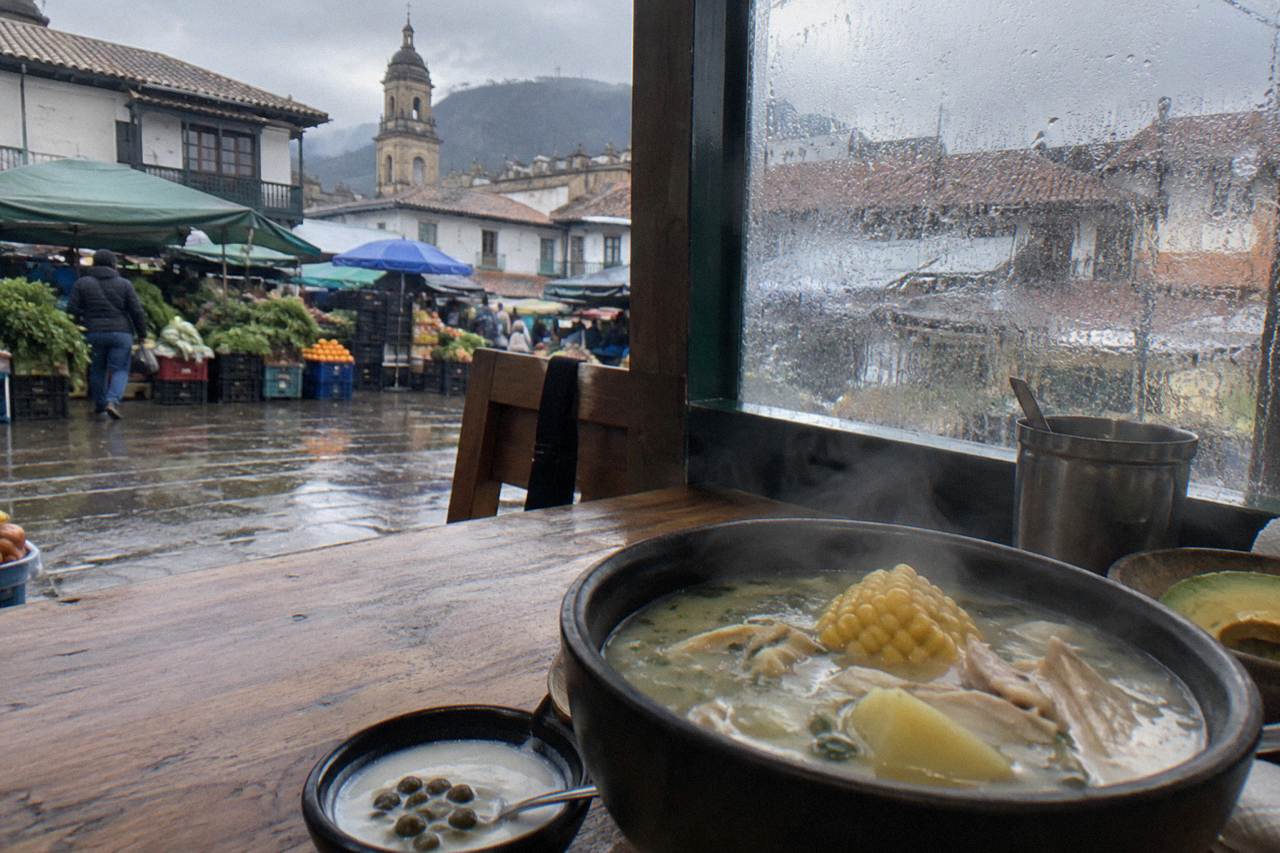
Ajiaco santafereño is a chicken soup built on three kinds of potato that break down at different rates, giving the broth its thickness, plus a section of corn on the cob and the guascas herb that gives the soup its particular flavor. It is served with capers, cream and avocado on the side, added at the table. Bogotá treats it as the city's own dish, and you should order it first.
The three-potato structure is the technical heart of the dish. One potato type nearly dissolves and thickens the broth, another holds partly together, a third stays in firm pieces, so a well-made ajiaco is soup and stew at once. The herb guascas is what makes it taste like Bogotá rather than like a generic chicken soup; there is more on that herb in what herb is in ajiaco. Capers and table cream are the traditional condiments, and locals shred the corn off the cob into the bowl.
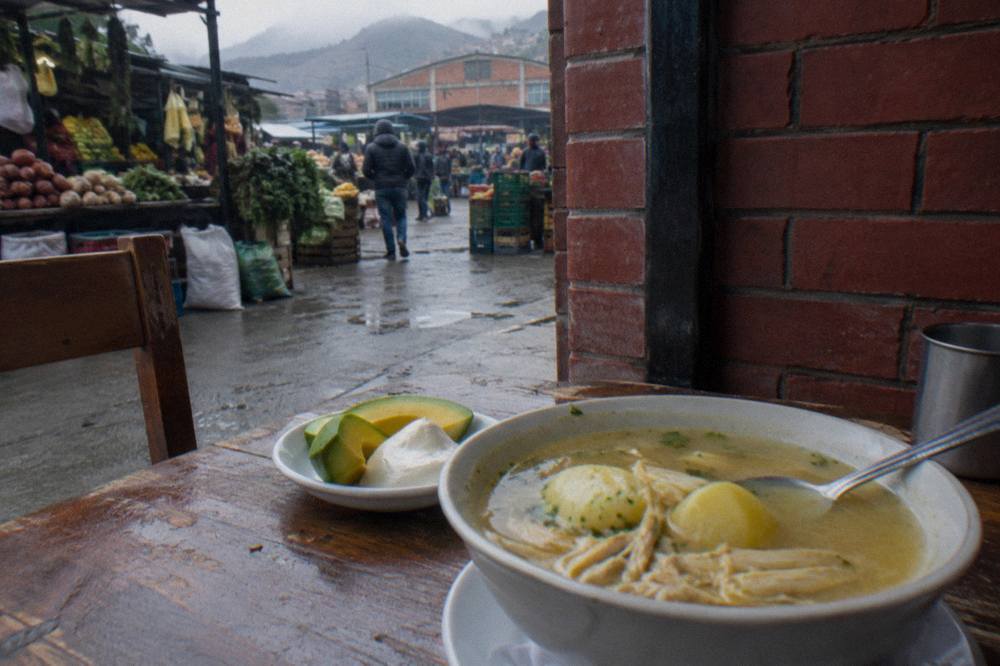
Where to eat it without guessing: local food media count five market plazas around Bogotá where traditional ajiaco santafereño is served, including Plaza Distrital de Mercado 12 de Octubre in Barrios Unidos, reported in late October 2026 as serving it on days including Monday, Tuesday, Friday and Saturday. La Perseverancia, the plaza nearest the city centre on this list, is known for ajiaco and lechona from family-run stalls, per the official tourism site's market plaza guide. The city's tourism institute also runs ajiaco festival days each November, with plazas and restaurants participating.
Delivery menu listings in 2026 put a medium 16 oz ajiaco at 23,700 COP and a large 24 oz at 33,900 COP, reported figures from app menus that give a fair sense of the price band; restaurant prices vary and sit-down places charge more. Check the menu before you sit.
The three walks above cover the traditional dishes on this page. The Viejo Bogota Food Tour with 12+ Tastings, from $55 per person and rated 5.0 across 714 reviews, is the most reviewed food walk of the group and runs four hours. The Bogotá Food Experience, from $47.15 per person and rated 4.9 across 615 reviews, runs the same length with a cultural framing, and the True Colombian Walking Tour + Local Snacks, from $54.68 per person and rated 4.9 across 130 reviews, runs two to three hours with snacks rather than a full meal arc. Whether any specific dish is tasted depends on the day's route; the booking page lists what each walk includes.
Tamal, Changua, And A Bogotá Breakfast
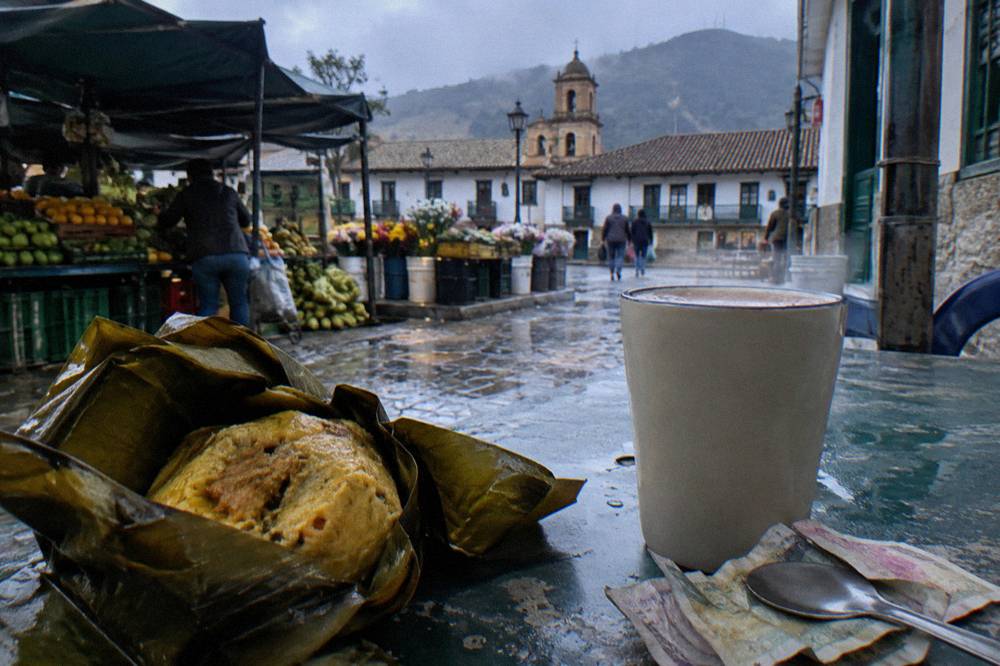
Bogotá's breakfast table is its own category: tamal, a parcel of seasoned corn dough with chicken or pork steamed in banana leaves; changua, a warm milk soup with a poached egg, scallions and stale bread dropped in; and hot chocolate with cheese. Order the tamal with the chocolate, and treat changua as the thing locals actually eat on a cold morning before you judge it.
The tamal tolimense is the version most eaten in Bogotá, though the city has its own styles, and December is tamal season: the Festival del Tamal runs 5 to 8 December 2026 across more than 17 plazas, with a reported festival combo of tamal, a hot drink and bread or arepa at 10,000 COP. Outside festival weeks, tamales are everyday bakery and plaza food, unwrapped at the table and eaten with the chocolate poured alongside. Past editions have sold more than 14,484 tamales over their run, which tells you how central the dish is.
Changua is the one that surprises visitors, and honesty is the best framing: it is milk and water heated with scallions, an egg poached in it, and a piece of bread calld pan mogolla soaked at the bottom. It sounds like a cooking accident and it is beloved anyway. The fuller story, including calentado, the rice-and-beans breakfast fry-up, is in the Bogotá breakfast guide covering changua, calentado and tamal.
The hot chocolate deserves its own sentence because it is not a metaphor here. Chocolate santafereño is thick, aromatic hot chocolate served with cheese that you drop into the cup to melt, alongside almojábanas, a cheese bread. La Puerta Falsa, operating since 1816 next to the cathedral in the centre, is the historic address for it, and the tradition is explained in the hot chocolate with cheese guide.
| Breakfast item | What it is | Reported price signals (2026) |
|---|---|---|
| Tamal with hot drink combo | Festival combo at participating plazas | 10,000 COP reported at festival stalls |
| Almojábana | Cheese bread, eaten with chocolate | Around 4,700 COP per unit, delivery listings |
| Pan de bono | Cheese and yuca bread | Around 4,300 COP per unit, delivery listings |
| Changua | Milk and egg breakfast soup | Market and traditional spot pricing varies |
Bakery prices above are reported from current delivery listings and change often; treat them as orientation, not quotes.
Arepas, Empanadas, And Pan De Bono
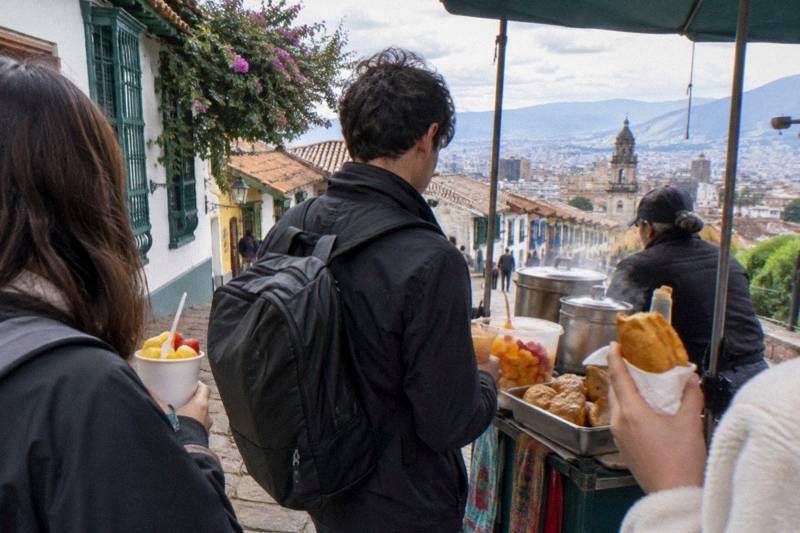
Arepas are griddled corn cakes, served plain with butter and cheese or split and filled; empanadas are fried pastries with meat or potato filling, eaten with ají sauce; and pan de bono is a small cheese and yuca bread sold warm at every bakery. All three are hand food, cost very little, and are the fastest way to eat like a local between meals.
Bogotá's arepa is thinner and simpler than the stuffed Arepa Rellena of other regions, often just griddled and buttered. That plainness is the point: it is the accompaniment to everything, including soup and hot chocolate. Empanadas are the street-corner item, fried crisp and eaten with a spoonful of ají, a sharp salsa that is usually the only heat in a Bogotá meal. Empanada vendors sell in packs, with buy-five-get-six style offers common on delivery listings.
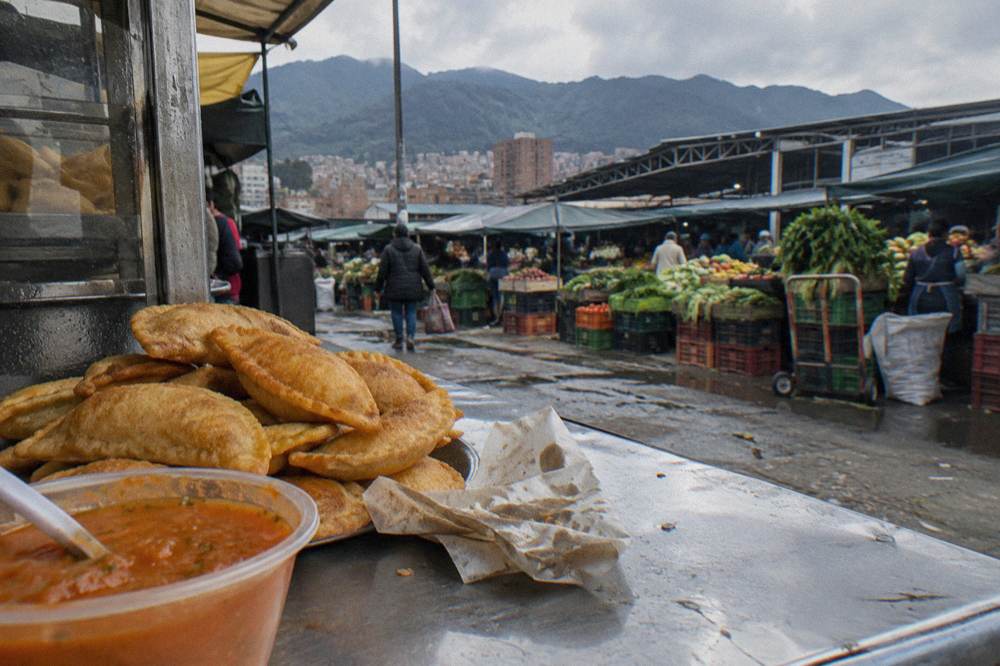
If you are building a self-guided snack crawl in the historic centre, the street food guide covers stalls and safety basics, and the city's own health advice applies year round: buy from formal or authorized vendors and check packaging condition, guidance the Secretaría de Salud repeated in its Halloween 2026 advisory. More on that in is Bogotá street food safe, and the full rundown of formats lives in the arepas, empanadas and pan de bono guide.
A guided version does the same crawl with a local deciding where to stop. The Shared Bogotá Street Food Tour, from $17.71 per person and rated 4.6 across 30 reviews, is a three-hour shared format, while the Food Tour in La Candelaria Bogotá, from $63 per person and rated 4.9 across 72 reviews, runs three hours through the historic quarter. What either walk tastes on a given day depends on the operator's route; check the booking page for the current stop list.
Between the two, the difference is mostly depth and price: the shared street food walk is a light, cheap introduction, and the La Candelaria walk is a fuller tasting structure. Neither promises a specific dish from this page unless its listing names it.
Lechona, Obleas, And The Sweet Finish
Lechona is a whole pig stuffed with rice and peas, roasted for most of a day and served by the scoopful, skin included; obleas are thin round wafers sandwiched with arequipe and toppings; and they bracket a Colombian meal at both ends, one as plaza celebration food and one as street dessert. Both appear constantly at Bogotá's market plazas and weekend fairs.
Lechona comes from Tolima but Bogotá eats it widely, especially on Sundays, when family stalls at plazas like La Perseverancia serve it alongside mute and mondongo, per the official plaza descriptions. It is dense, savory and unapologetically fatty, served with a portion of the crisp skin called the cuerito. The tamales, lechona and Sunday food guide covers the full weekend spread.
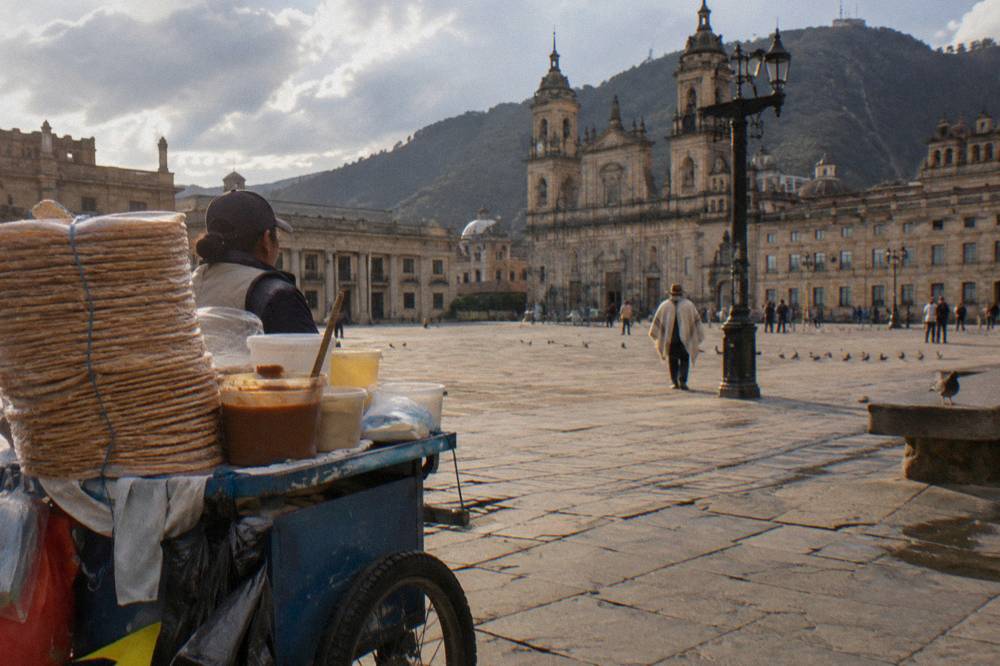
Obleas are the dessert answer: a soft wafer the size of your palm, filled with arequipe and optionally jam, cheese or condensed milk, sold from carts. Specific street prices for obleas are not reliably published, so expect a few thousand pesos and check the cart. There is a whole history question around them, settled in are obleas Colombian or Venezuelan, and the wider sweet catalogue, from brevas con arequipe to coconut candies, sits in the Colombian desserts and obleas guide.
For drinks alongside any of this: fresh fruit juices are the default. Local reporting from La Candelaria in August 2026 noted a lulo juice at 4,000 COP and a curuba juice with milk at 5,000 COP from one established fruit cart, prices that show the band street juice sits in. The Colombian drinks, juices and aguapanela guide maps the rest.

How A Tasting Walk Fits The Whole List Together
A four-hour guided tasting walk lets you try five or six of these dishes in one afternoon without working out plazas, delivery apps or Spanish-language menus on your own. The Viejo Bogota Food Tour with 12+ Tastings, from $55 per person, rated 5.0 across 714 reviews, is the most reviewed walk of this group and the one most first-time visitors choose for exactly this job.
The trade is simple. Alone, you can eat everything on this page for the cost of the food, but each dish sits in a different part of the day and often a different neighborhood: ajiaco at a plaza at lunch, tamal in the morning, obleas from an afternoon cart. A walk compresses that into a single block of hours and adds the explanations, what guascas is, why the cheese goes in the chocolate, why the tamal is unwrapped at the table. For the mechanics of choosing one, which Bogotá food walk to book compares formats, and what a Bogotá food walk costs covers price structure, including the fact that at least one historic-centre walk quotes a guide fee only with tastings at about US$12 extra, so read the inclusions line before booking anything.
That shared gastronomy walk, from $15 per person and rated 4.9 across 291 reviews, is the one just described: the quoted price is the guide fee, and tastings run about US$12 extra. It is the cheapest entry point among the well-reviewed walks and the one most often misread on price, so factor the full number in when comparing.
If your interest runs more to fruit than to cooked dishes, the market side of the city deserves its own block of time. The Shared Tour of Colombian Exotic Fruit at Paloquemao Market, from $50.17 per person and rated 4.6 across 32 reviews, spends three hours in the plaza locals actually shop in, which is a different education from a historic-centre walk. Paloquemao opens Monday to Saturday from 4:30 a.m. and Sundays from 5:00 a.m., with the flower section best before late morning; hours are on the Paloquemao hours and best time guide.
| Walk or tour | Format | Length | From (USD) | Rating and reviews |
|---|---|---|---|---|
| Viejo Bogota Food Tour with 12+ Tastings | Guided walk, 12+ tastings | 4 hours | $55 per person | 5.0 across 714 reviews |
| Bogotá Food Experience: Cultural & Culinary | Guided walk | 4 hours | $47.15 per person | 4.9 across 615 reviews |
| True Colombian Walking Tour + Local Snacks | Walking tour with snacks | 2 to 3 hours | $54.68 per person | 4.9 across 130 reviews |
| Shared Gastronomy Tour, Historic Center | Guide fee only, tastings extra | 3 hours | $15, tastings about $12 extra | 4.9 across 291 reviews |
| Shared Street Food Tour | Shared walk | 3 hours | $17.71 per person | 4.6 across 30 reviews |
Prices are per person from the operators' listings and vary by date and group size. If you would rather taste with a full day of margin around it, the Bogotá in 3 days food-first itinerary sequences all of these dishes into a realistic schedule, including altitude pacing, since at 2,640 m the standard advice is a light first day, plenty of water and little alcohol while you adjust.
Common Questions About What To Eat In Bogotá
What Is The Most Famous Dish In Bogotá?
Ajiaco santafereño, the chicken and three-potato soup with corn and the guascas herb. It is the dish the city identifies as its own and the one to order first.
What Should I Eat For Breakfast In Bogotá?
A tamal with hot chocolate, or changua if you want the traditional milk-and-egg soup locals eat on cold mornings. Calentado, the fried rice and beans breakfast, is the other classic, and bakeries supply almojábanas and pan de bono all day.
Is Colombian Food Spicy?
Generally no. Bogotá's traditional dishes rely on herbs like guascas rather than chili, and heat usually arrives as ají sauce on the side, which you add yourself.
Why Do Colombians Put Cheese In Hot Chocolate?
Chocolate santafereño is traditionally served with a soft cheese dropped into the hot cup so it melts slightly. It is a long-standing highland custom, and it turns the drink into something closer to a light course than a beverage.
Can I Try All These Dishes On A Food Tour?
A guided walk covers several in one outing, but the exact dishes depend on each operator's route and stop list, which changes. Check the booking page for what a specific walk includes before assuming a particular dish is on it.
Where Do Locals Eat Ajiaco In Bogotá?
At the district market plazas. Local food media count five plazas serving traditional ajiaco santafereño, including 12 de Octubre and La Perseverancia, the latter known for family-run stalls cooking ajiaco and lechona.