Eating At Altitude In Bogotá: What First-Timers Should Know
Bogotá sits at about 2,640 metres, high enough that your first day of eating and drinking needs a little planning. Here is what changes, and how to pace a food walk when you have just landed.
Short answer
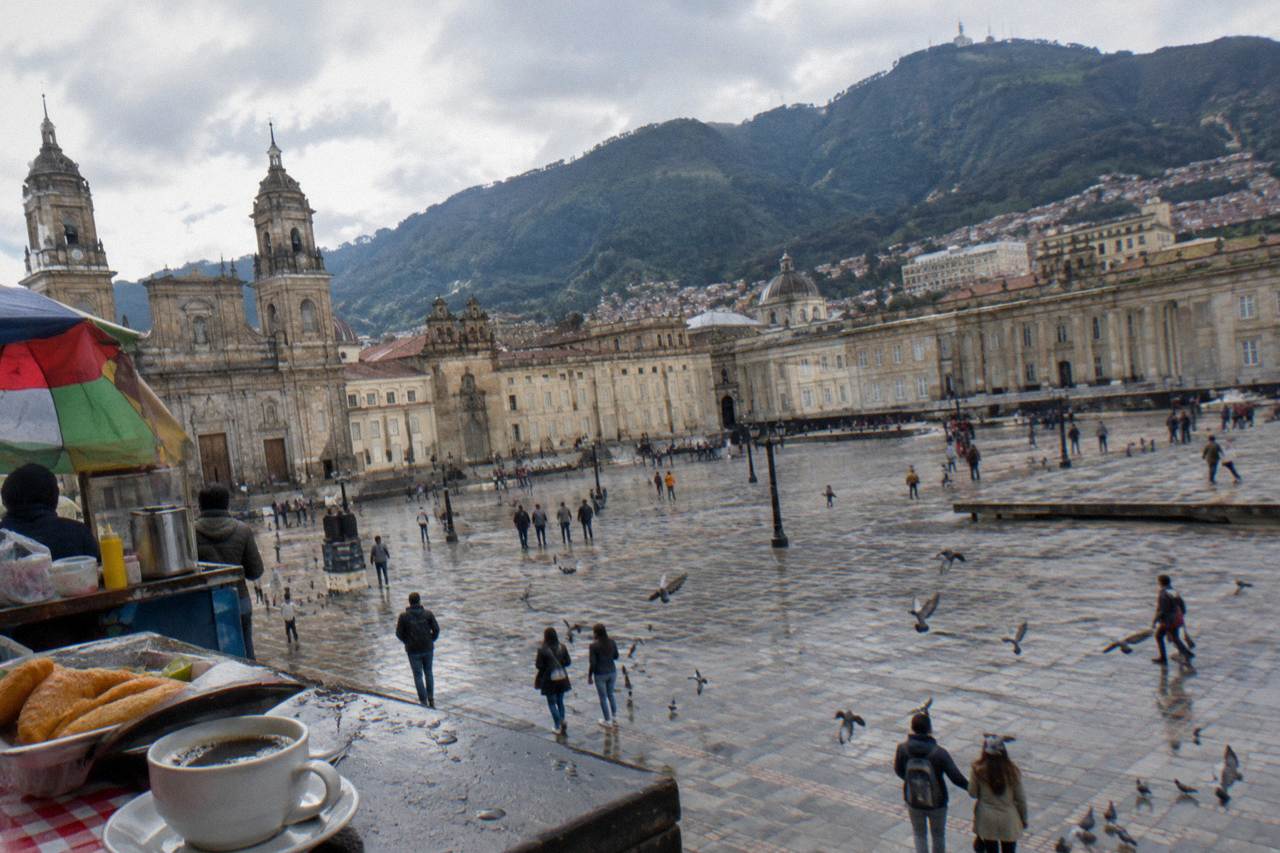
Bogotá sits at about 2,640 metres, and official city health guidance suggests 1 to 2 days of adaptation: heavy hydration, light meals and little alcohol while symptoms such as headache and fatigue peak in the first 24 to 48 hours. A gentle 3 to 4 hour guided food walk is realistic on day one; an 8 hour coffee farm day trip is better saved for later.
Bogotá is one of the highest capital cities food travellers actually plan trips around. At about 2,640 metres the air is thinner, the nights are colder than newcomers expect, and the body spends its first day or two quietly renegotiating how much food and drink it wants. None of this is a reason to change your plans. It is a reason to sequence them. The city's Bogota Food Tours site was built around exactly this question: what to eat first, and how fast. If you are booking a food walk for your first afternoon, altitude is the single factor most likely to decide whether it is a highlight or a slog. This guide covers what changes at 2,640 metres, what official guidance actually says, and how to pace the eating itself.
How High Is Bogotá And Why Does Altitude Change How You Eat?
Bogotá sits at about 2,640 metres, roughly 8,660 feet, on a high plateau in the Eastern Andes, and that elevation changes digestion, appetite, hydration and alcohol tolerance in ways most sea-level visitors notice within hours of arriving. The city's own health secretariat guidance for first-time visitors recommends 1 to 2 days of adaptation before strenuous activity, at least 3 litres of water a day, light meals, limited alcohol and tobacco, 6 to 8 hours of sleep, and sunscreen, because the thinner atmosphere filters less UV. None of that is exotic advice. It is ordinary acclimatisation guidance, and food is where most visitors feel it first, because a big plate of ajiaco or a couple of beers lands differently at 2,640 metres than it does in Cartagena.
The reason is straightforward physiology, reported consistently across the official guidance: less oxygen per breath means the body works a bit harder on everything, including digestion, and fluid loss through breathing and urination increases at altitude even before you feel thirsty. Appetite often dips on day one, then returns. Some visitors feel hungry in an odd, nibbly way rather than ready for a full meal. That is normal adaptation, not a reason to worry, and it is precisely why the traditional Bogotá pattern of smaller breakfasts and steady snacks through the day suits first-timers so well.
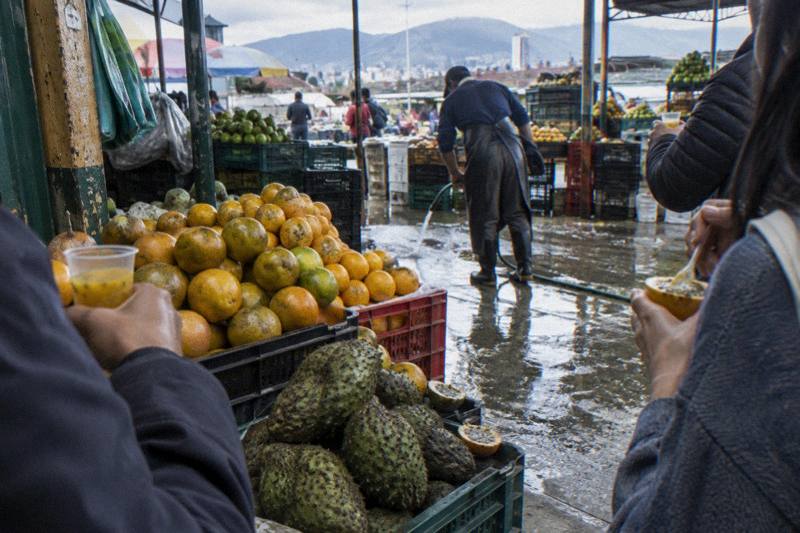
What the guidance does not say is that you should skip the food. Bogotá's classic first-day foods, a bowl of changua, a warm almojábana, fruit from a market stall, a slow cup of chocolate santafereño, are exactly the light, warm, liquid-forward foods that sit comfortably while the body adjusts. The Bogotá breakfast guide to changua, calentado and tamal covers that end of the day in detail. The trap is the opposite end: booking a marathon eating schedule, or a heavy steak dinner with wine and aguardiente, for the evening you land.
What Does Altitude Discomfort Feel Like On Day One In Bogotá?
Official guidance says symptoms such as headache and fatigue typically peak in the first 24 to 48 hours and resolve with acclimatisation over 3 to 5 days, and that the response is hydration, rest, light meals and time, not a change of itinerary. The city health secretariat's visitor tips, aligned with CDC-style altitude advice, frame these as ordinary adjustment effects for most people, not an emergency. What visitors tend to report is a mild headache in the afternoon of day one, unusual tiredness after ordinary walking, breathlessness on the hills of La Candelaria, and a shorter fuse for alcohol. Anyone with a heart or lung condition, or anyone uncertain about their own risk, should ask a doctor before travelling; no general travel article can substitute for that.
| What Visitors Commonly Report | When It Usually Appears | What Official Guidance Suggests |
|---|---|---|
| Mild headache | First afternoon, peaks 24 to 48 hours | Hydrate, rest, avoid strenuous walking |
| Unusual fatigue after normal activity | Day one to day two | 6 to 8 hours sleep, light meals |
| Shortness of breath on hills and stairs | Immediately, easing over days | Pace yourself, take breaks |
| Reduced appetite | First day or two | Small light meals, warm liquids |
| Stronger effect from alcohol | Immediately | Little or no alcohol while adapting |
The planning implication for eaters is simple: day one is a day for grazing, not feasting. A two-block stroll between a bakery and a fruit juice cart is a better altitude strategy than a single sitting at a fritanga counter. Bogotá's street food culture actually makes this easy, since so much of it is portioned as snacks rather than meals; the Bogotá street food guide maps which stalls and dishes suit a slow first afternoon. Symptoms that worsen instead of easing, or breathing trouble at rest, are a reason to seek medical care promptly, and that sentence is the only medical advice this article will attempt.
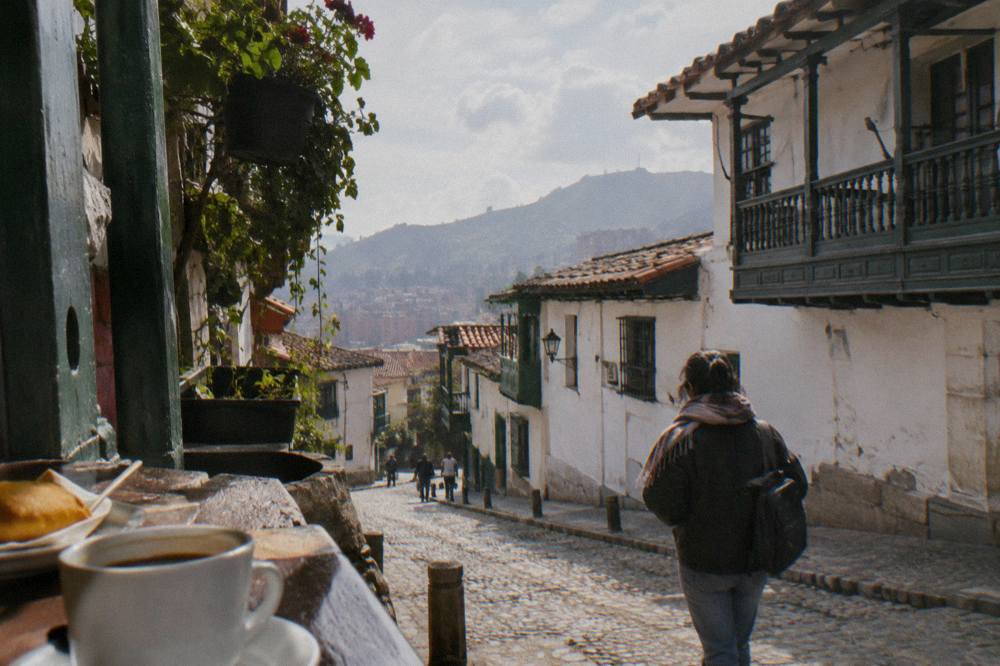
A gentle guided walk is one of the better day-one formats precisely because a guide sets the pace.

How Should You Pace A Food Walk On Day One?
A 3 to 4 hour guided tasting walk is a realistic day-one activity if it starts after a light breakfast, includes water between stops, and leaves the evening free; the longer 6 and 8 hour food experiences are better moved to day two or three. The most reviewed food walk compared on this site, the Viejo Bogota Food Tour with 12+ Tastings, runs 4 hours from $55 per person and is rated 5.0 across 714 reviews, and its historic-centre route suits a first day because it is walkable, stop-and-start, and paced by a guide. Spread across 4 hours, a dozen small tastings behave very differently from one large meal; that is the format's quiet advantage at altitude.
If even 4 hours sounds ambitious, the shorter options are real. The Bogotá: True Colombian Walking Tour + Local Snacks runs 2 to 3 hours from $54.68 per person, rated 4.9 across 130 reviews, and pairs gentle sightseeing with local snacks rather than a full eating schedule. For a first afternoon, a coffee stop every hour and a half is not indulgence, it is pacing. And if your day one is actually your arrival evening, flip the plan: a bowl of soup, an early night, and the food walk on the following morning when the headache window is already closing.
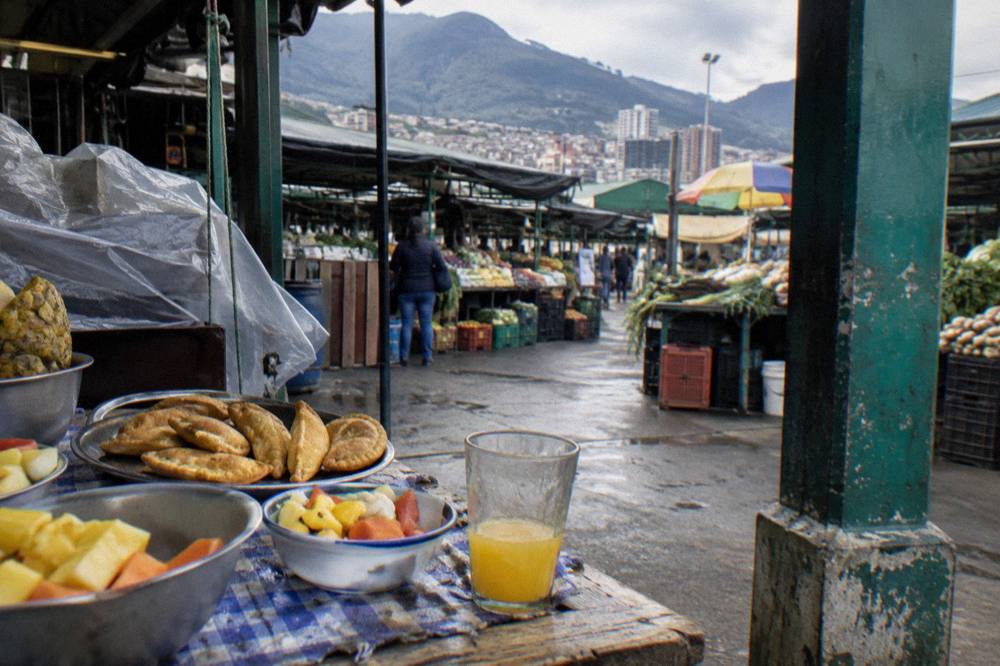
Budget-wise, pacing does not change what a walk costs. The guide to what a Bogotá food walk costs breaks down the price families, including one budget trap worth knowing here: the Bogota Shared Gastronomy Tour in the Historic Center is listed as a $15 guide fee with tastings about $12 extra, so its real day-out cost is the two figures together, printed separately, never added into an invented total. At altitude, that walk's short 3 hour span is actually a feature, because a shorter route through the historic centre keeps the hills optional and the stops frequent.
What Should You Eat, And Skip, In Your First 24 Hours?
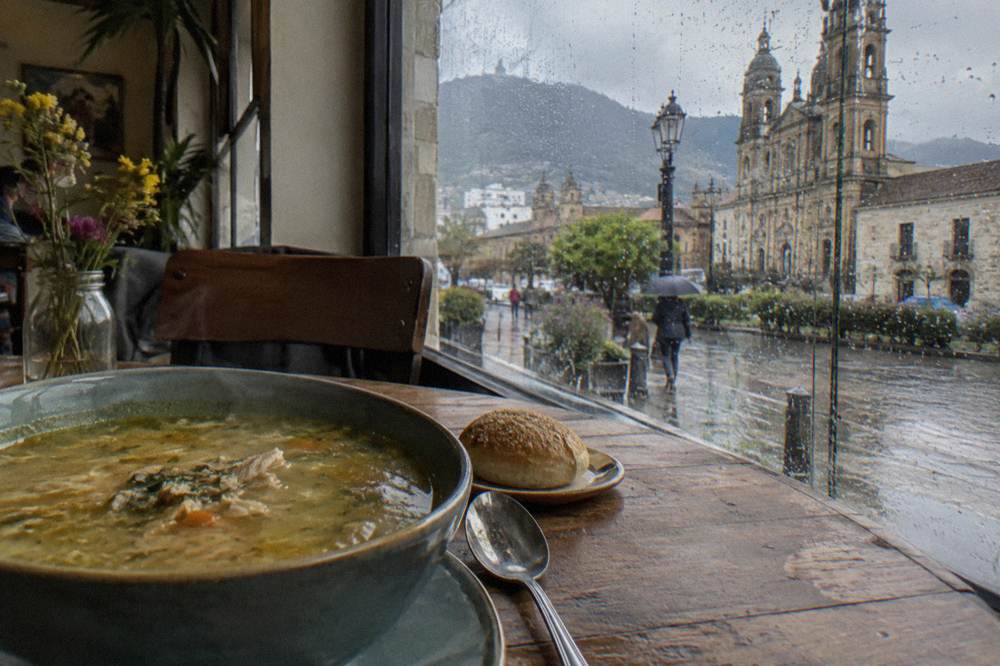
Light, warm and liquid-forward is the day-one rule: changua or calentado for breakfast, market fruit and juices through the morning, a moderate soup such as ajiaco at lunch, and no feast-sized plate until your appetite is clearly back. Traditional eating in Bogotá already leans this way, which helps enormously. A cup of chocolate santafereño with an almojábana is warm, wet and small. A glass of fresh lulo or curuba juice contributes fluid at a moment when plain water has become a chore; at one La Candelaria fruit cart reported in August 2026, lulo juice was 4,000 COP and curuba with milk 5,000 COP. Those are reported street prices, so check the board on the day.
What to skip on day one is shorter and blunter: the giant mixed grills, a lechona plate the size of a hubcap, and anything raced. Bogotá's hearty plates are worth eating, just not in the first 24 hours, and not standing up in a hurry between two museums. Fatty, very large meals are harder work for a body already spending effort on oxygen, and the payoff of a slow lunch is a better evening.
| Meal Or Snack | Day-One Suitability | Why |
|---|---|---|
| Changua (milk and egg soup) | Excellent | Warm, light, liquid, traditional |
| Fresh fruit and juices | Excellent | Fluid plus gentle sugars, small portions |
| Ajiaco (moderate bowl) | Good | Broth-based, nourishing, easy to eat slowly |
| Almojábana or pan de bono | Good | Small warm bakery snacks, easy to graze |
| Empanadas, one or two | Fine in moderation | Fried, so keep the count low on day one |
| Large fritanga or lechona plate | Save for day two or three | Heavy, fatty, demanding at altitude |
Dietary needs do not disappear just because you are acclimatising, and no operator's listing here is described as vegan or gluten-free across the board; the standing advice is to message the operator before booking about any restriction. The vegetarian, vegan and gluten-free eating in Bogotá guide covers the city-level picture, including the city's own reporting that roughly 36% of Bogotá restaurants now offer vegan or vegetarian options.
Can You Drink The Tap Water, And Does Coffee Help Or Hurt At Altitude?
Bogotá's tap water is officially potable, the UK FCDO notes Bogotá as the one Colombian city where tap water is considered safe, and some visitors still choose bottled for taste; coffee in normal amounts is fine, but it is not a substitute for the 3-plus litres of water a day the city guidance recommends. The water question matters at altitude because fluid loss is higher and thirst is a lagging signal. Ordering a jug of aqua, or accepting tap water at a restaurant in Bogotá, is consistent with the official position; carrying a bottle you refill through the day is the practical version.
Coffee deserves its own sentence because Colombia tempts everyone toward a fourth cup. Caffeine in ordinary amounts is not against any of the official altitude guidance summarised here, and a slow tasting session is actually one of the least strenuous food formats in the city. The Coffee and Chocolate tour in Bogotá runs just 2 hours 15 minutes from $49 per person, rated 5.0 across 79 reviews, and much of it is seated tasting rather than walking, which is exactly the day-one shape. If you want to go deeper on the city's scene, the Bogotá coffee tasting and cupping experiences guide maps the tasting rooms, and the best coffee shops in Bogotá guide lists the roasters, several of which run public cuppings.
One habit worth stealing from locals: alternate. A coffee, then a water, then another coffee. It sounds trivial, and it is the difference between ending an afternoon tasting sharp and ending it dehydrated with a headache you will blame on the altitude rather than the espresso. Everything else covered here is indexed on Bogota Food Tours.
How Hard Does Alcohol Hit You At 2,640 Metres?
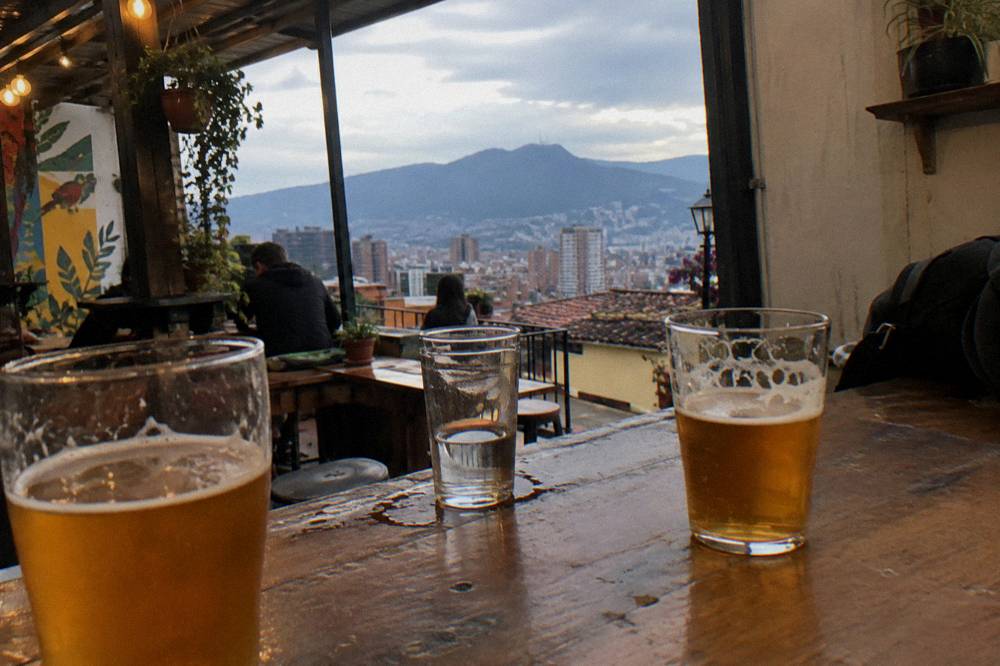
Alcohol hits faster and harder at altitude, official visitor guidance recommends little or none during the 1 to 2 day adaptation window, and the classic first-night mistake in Bogotá is craft beer and aguardiente before the body has adjusted. The physiology reported in the guidance is that adaptation already taxes the body, and alcohol adds dehydration and disrupted sleep on top of it. The practical rule visitors converge on: day one, one drink with dinner at most, matched with water; day two onward, normal caution; the craft beer crawl whenever you like, but not in your first 24 hours.
This stings a little, because Bogotá's drinking culture is genuinely good and easy to reach on foot in the evening. 3 Cordilleras, the country's largest craft brewery, held about 48% of the national artisanal market as reported in October 2026, and the Bogotá Beer Company's pubs pour pints reviewed at around 80,000 COP. The city's craft beer festival ran 23 and 24 October 2026 at Gran Estación with 60 local producers. All of that is waiting for you on day three, and it will taste better then. The Bogotá craft beer guide and the aguardiente and Colombian spirits guide plan those evenings properly.
One more note from the practical side: Colombian restaurant tipping is a voluntary 10% propina, capped by law, offered at the end of sit-down meals and decline-able. It has nothing to do with altitude, but it arrives at exactly the tired, slightly headachy moment on day one when you least want to negotiate, so knowing it in advance removes one small friction.
Which Guided Food Experiences Fit Which Acclimatisation Day?
Match the tour's length and exertion to your day count: seated 1 to 2 hour tastings on day one, 3 to 4 hour walks from day one or two, the 6 hour private gastronomy tour and the 8 hour coffee farm day trip once symptoms have passed, typically day three onward. The table below matches each experience to an acclimatisation day in Bogotá. Note the Paloquemao market options start early and involve standing and walking on flat ground, which many first-day visitors find easier than a hilly historic-centre route.
| Experience | Duration | From (USD) | Rating And Reviews | Best Fit |
|---|---|---|---|---|
| Coffee and Chocolate tour in Bogotá | 2 h 15 m | $49 | 5.0 across 79 reviews | Day one, seated |
| Bogotá: True Colombian Walking Tour + Local Snacks | 2 to 3 h | $54.68 | 4.9 across 130 reviews | Day one, gentle |
| Viejo Bogota Food Tour with 12+ Tastings | 4 h | $55 | 5.0 across 714 reviews | Day one or two |
| PALOQUEMAO MARKET FOOD TOUR, exotic fruit, local snacks | 3 h | $82, price varies by group size | 4.9 across 71 reviews | Day one or two, morning |
| Gastronomy of Colombia Private Tour | 6 h | $259, price varies by group size | 4.5 across 15 reviews | Day three onward |
| Coffee Farm Experience Day Tour | 8 h | $94 | 4.8 across 87 reviews | Day three onward |
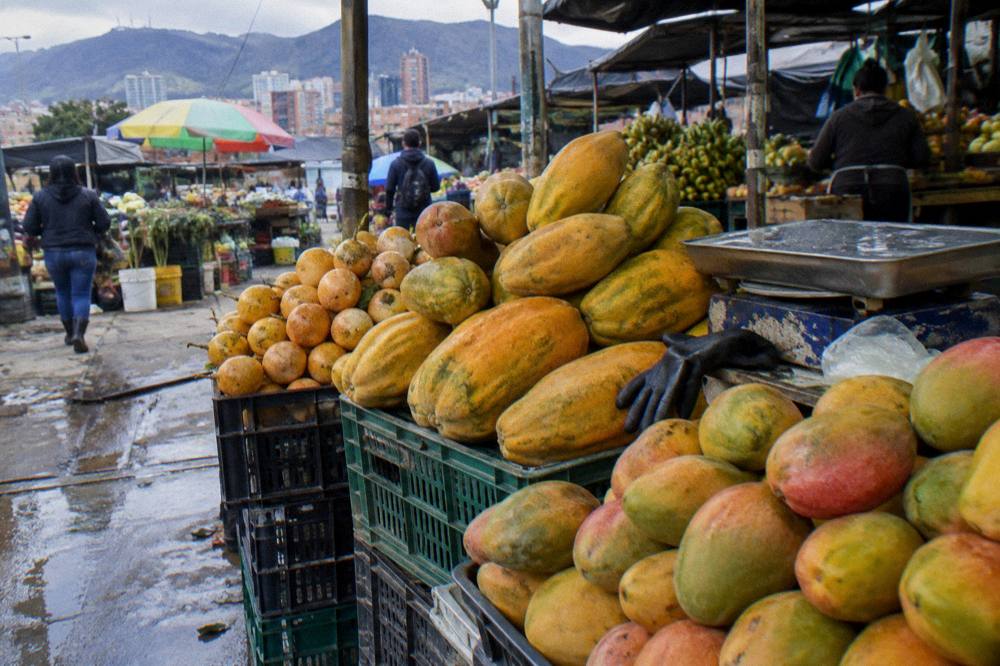
The market option deserves its plug here. Paloquemao's official hours run Monday to Saturday 4:30 a.m. to 4:30 p.m., with the flowers sector only until 11 a.m., and the early weekday hours are when the wholesale energy peaks before it thins after midday. A guided fruit-focused morning there is flat walking, constant small tastes, and hydration by juice glass. The Paloquemao market food guide and the guide to Paloquemao hours and the best time to go cover the timing in depth.
The coffee farm day trip is the one to be honest with yourself about. Eight hours from the city, at farm elevations, with travel on either end, on the same day your headache is peaking, is the classic overreach. The same tour on day three or four is one of the best food days available from Bogotá. If your trip is short and day one is your only full day, choose the seated tasting or the short walk and save the farm for a return visit.
Is It Safe To Walk And Eat In Bogotá While Acclimatising?
Walking in Bogotá's visitor areas with standard precautions is consistent with 2026 neighbourhood reports, and the altitude question is separate from the safety question: pace yourself on hills, keep your phone secure, and use the same judgment you would in any large city. 2026 neighbourhood reports describe Chapinero, Usaquén, Parque 93 and Teusaquillo as comfortable day and evening walking areas with normal care, and La Candelaria as fine on main streets by day but with higher pickpocket risk and a standing recommendation against walking side streets alone after dark. The US State Department's Colombia advisory stands at Level 3, Reconsider Travel, issued 31 March 2026, with certain departments at Level 4, none of which is Bogotá; the UK FCDO names specific areas rather than the capital. Conditions change, so check the advisories before you travel.
Altitude interacts with safety in one practical way: tired visitors make worse decisions. The snatch-and-grab and drink-spiking patterns documented in 2026 reporting cluster around late evenings and informal drink situations, which is one more reason the day-one plan in this guide is soup, water and an early night rather than a pub crawl. For the full picture, including the tap water detail and the street food hygiene guidance from the city's health secretariat, see is Bogotá street food safe and can you drink the tap water. Its core advice matches the health secretariat's: buy from formal or authorised stalls, check packaging, and skip unlabeled or damaged items.
Common Questions About Eating At Altitude In Bogotá
How High Is Bogotá, Really?
About 2,640 metres, roughly 8,660 feet, on the Bogotá savannah in the Eastern Andes. It is one of the highest capital cities in the world, high enough that most sea-level visitors notice a difference in breathing, appetite and alcohol tolerance within hours of landing.
Will I Get Bogotá Altitude Sickness?
You may feel mild symptoms such as headache, fatigue and breathlessness on hills, which official guidance says typically peak in the first 24 to 48 hours and resolve over 3 to 5 days. Hydration, rest, light meals and little alcohol are the recommended response. Anyone with a health condition should ask a doctor before travelling.
Can I Do A Food Tour On My First Day In Bogotá?
Yes, with pacing. A 3 to 4 hour guided walk such as the Viejo Bogota Food Tour with 12+ Tastings, 4 hours from $55, rated 5.0 across 714 reviews, is realistic on day one because a guide sets the pace and tastings are small and spread out. Save the 8 hour coffee farm day trip for day three or later.
What Should I Eat On Day One At Altitude?
Light, warm, liquid-forward foods: changua or calentado at breakfast, fresh fruit and juices through the morning, and a moderate bowl of ajiaco at lunch. Skip feast-sized grilled or fried plates until your appetite is clearly back, usually day two.
Does Alcohol Affect You More In Bogotá?
Yes. It hits faster and harder at 2,640 metres, and the city's visitor guidance recommends little or no alcohol during the 1 to 2 day adaptation window. One drink with dinner, matched with water, is the sensible day-one limit; the craft beer scene will still be there on day three.
Can I Drink The Tap Water In Bogotá?
Officially yes. Bogotá's tap water is potable and the UK FCDO names Bogotá as the one Colombian city where tap water is considered safe. Some visitors still choose bottled for taste reasons, which is a preference, not a safety verdict.
If your first day in Bogotá is a Tuesday, the best version of it looks like this: a late light breakfast, water in hand, a flat, guide-paced market or tasting morning, a moderate soup at lunch, and an early night while the headache window closes. By day three you will be eating lechona and drinking 3 Cordilleras with the rest of us, and the altitude will be just a number on a sign at the airport. These three walks are the ones to have open in a tab when you plan that first afternoon.