Is Colombian Food Like Mexican Food?
A direct comparison of Colombian and Mexican food for visitors to Bogotá: spice, staple dishes, breakfast, drinks, and how a tasting walk settles the question.
No, and expecting tacos with salsa will leave you hungry in the wrong way. Both cuisines rest on corn and both feed you from market stalls at all hours, but Colombian cooking leans on soups, potatoes, plantains and slow-cooked meats with almost no chili heat, while Mexican cooking is built on tortillas, moles, salsas and fresh chiles. A visitor who arrives in Bogotá wanting Mexican flavors needs a quick recalibration, and this page gives it.
The fastest way to explain the gap is the pepper. Mexican cuisine is one of the world's great chili cultures, with dozens of fresh and dried chiles doing flavor work that ranges from bright and fruity to deep and smoky. Colombian home cooking barely uses them. Ají, the Colombian table sauce, exists, but you usually have to ask for it, and it arrives as a loose, oniony salsa rather than a roaring puree. Heat is an optional garnish in Bogotá, not a structural element.
The second difference is geography doing its quiet work. Mexico spans tropical coasts and high deserts with a huge pre-Hispanic culinary archive, while Bogotá sits at about 2,640 m on a cold high plain, the altiplano. That climate produced a kitchen of warming soups, boiled potatoes, corn doughs and roasted meats: food engineered for altitude and drizzle, closer in spirit to an Andean market town than to a Oaxacan comedor. If you want the full background on eating at this altitude, the Bogota Food Tours guide to eating at altitude in Bogotá covers it in detail.
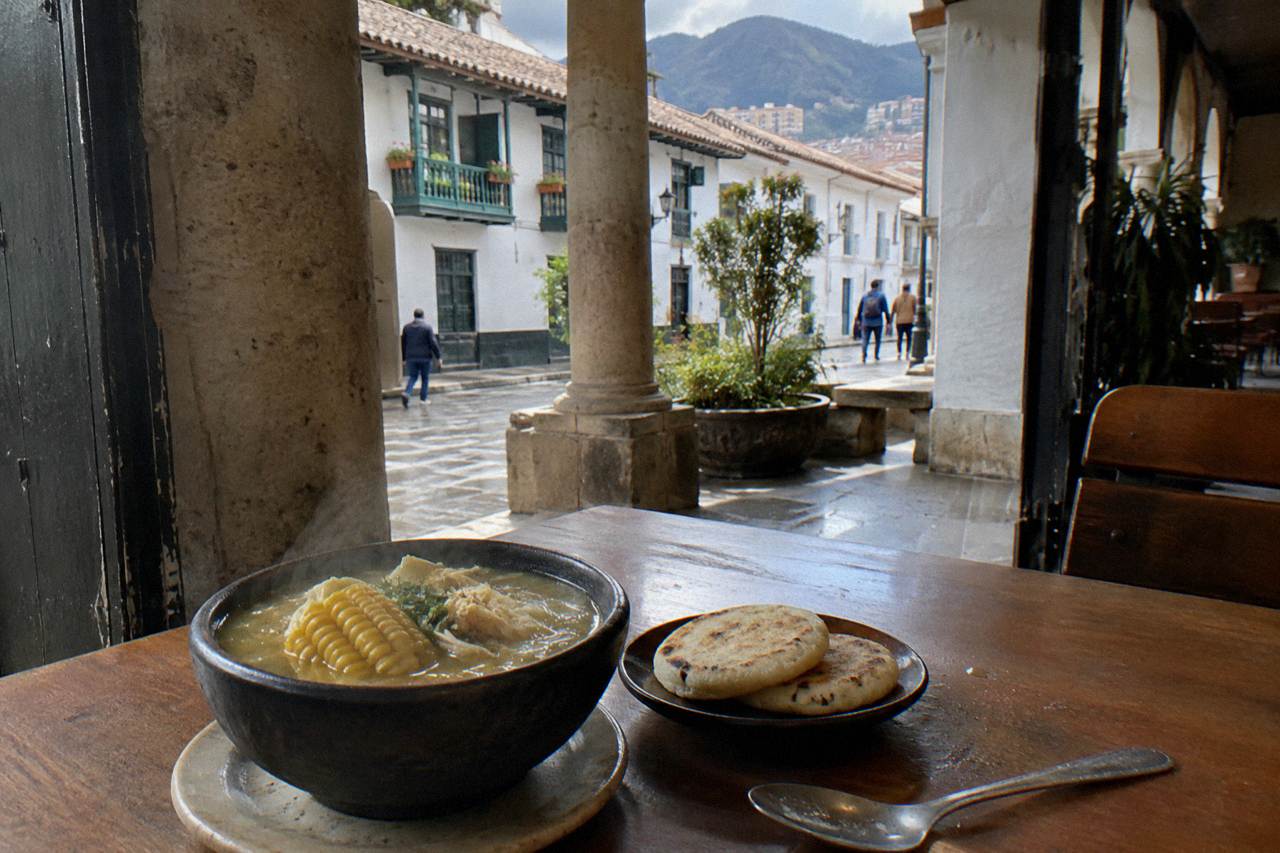
The two countries do overlap on one thing worth naming: corn masa. Arepas are Colombia's answer to the tortilla, a griddle cake that can be split, stuffed, topped with cheese or served plain beside soup. Mexico folds and wraps its masa into tacos, enchiladas and tamales; Colombia mostly eats its masa as a solid disc or steams it into a tamal. Same ancestor, very different grandchildren.
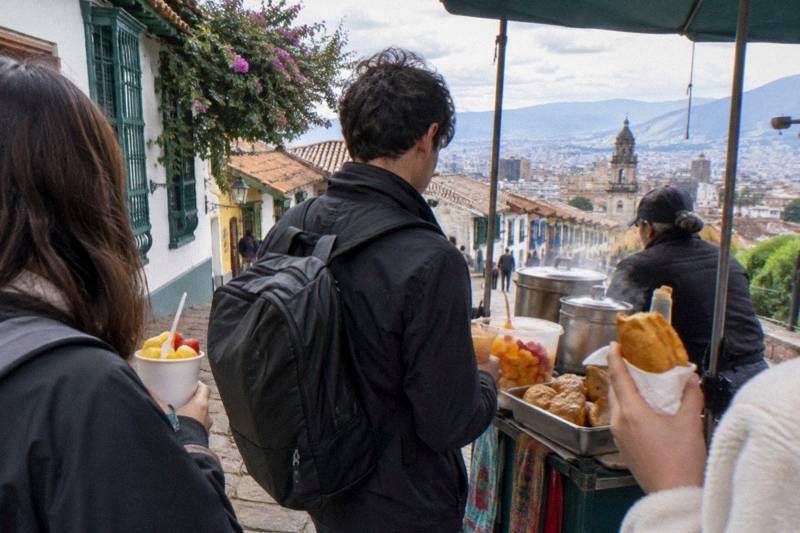
The most efficient way to settle the comparison is to taste Colombian food properly in one afternoon, with a guide who can name each dish as it lands. Three walks suit this question well: the Bogotá Food Experience cultural culinary tour (4 hours, from $47.15 per person, rated 4.9 across 615 reviews), the Viejo Bogota walk with 12+ tastings, the most reviewed food walk compared here (4 hours, from $55, rated 5.0 across 714 reviews), and the shorter True Colombian Walking Tour with local snacks (2 to 3 hours, from $54.68, rated 4.9 across 130 reviews).
What Are The Biggest Differences Between Colombian And Mexican Food?
Colombian and Mexican food differ most in four ways: the role of heat, the staple starch at the center of the meal, the place of soup in daily eating, and the amount of fat in the cooking. Those four axes explain most of what separates the two cuisines on the plate. Colombian food is mild, potato-and-rice based, soup-forward and leans on boiled and roasted preparations, while Mexican food is chili-driven, tortilla-based, salsa-forward and leans on griddles, moles and frying. Both cuisines are corn-rooted and market-fed, which is exactly why travelers confuse them before the first meal.
Heat comes first because it is the difference you taste within seconds. A Mexican kitchen treats the chile as a building block: poblanos, jalapeños, chipotles and habaneros are ingredients, not condiments. In Colombia the default plate carries no heat at all, and if you want fire you ask for ají, a vinegar-onion-chili relish that ranges from tame to genuinely sharp depending on the hand that made it. Mexicans say "sin chile no hay sabor"; Colombians say the ingredient should speak, with salsa available on request.
Then the starch. Mexico runs on the tortilla, pressed fresh and used as plate, spoon and wrapper. Colombia runs on the arepa, a thicker griddle cake, plus a great deal of white rice and boiled potato, often on the same plate. The arepa does not wrap anything; it accompanies, absorbs, or gets filled with cheese and egg at breakfast. You can trace the whole personality difference in that single fact: one cuisine folds, the other piles.
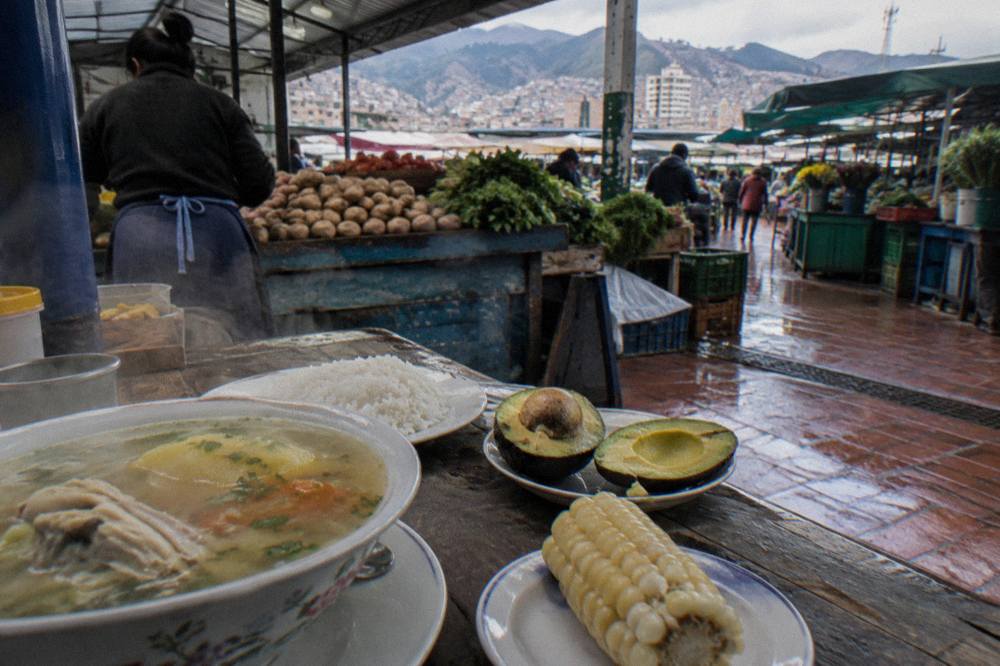
Soup is where Colombia quietly wins the comparison. Ajiaco, the signature Bogotá dish, is a chicken and potato soup thickened with three potato types and perfumed with guascas, a weedy herb that has no real Mexican equivalent. The official tourism institute even runs ajiaco festival days across the city's market plazas, which tells you how central the pot is to local identity. Mexico has magnificent soups too, pozole above all, but in Colombia soup is a daily institution rather than a regional specialty. For the soup question in depth, see what makes ajiaco different from sancocho.
The table below puts the two kitchens side by side on the points travelers actually notice:
| Point of comparison | Colombian food (Bogotá) | Mexican food |
|---|---|---|
| Default heat | Mild; ají sauce on request | Chili is structural, salsas standard |
| Staple starch | Arepa, rice, boiled potato | Corn tortilla |
| Signature dish | Ajiaco soup with guascas | Mole, tacos, pozole by region |
| Soup culture | Daily institution, breakfast included | Strong but regionally specific |
| Fat and method | Boiled, roasted, slow-stewed | Griddle, fry, mole and lard traditions |
| Sweet street snack | Obleas with arequipe | Churros, cajeta candies |
What Dishes Should You Expect In Bogotá?
Expect ajiaco, tamales, lechona, changua, empanadas and obleas, plus a wall of unfamiliar fruit you will meet along the way. These are the dishes that define eating in Bogotá, so it pays to know their names before you sit down at your first table. Ajiaco is the chicken-and-potato soup with guascas; a Colombian tamal is a large corn-and-meat parcel steamed in banana leaves; lechona is whole roast pig stuffed with rice and peas; changua is a milk-and-egg breakfast soup; and obleas are thin wafers sandwiched with arequipe, the local dulce de leche. None of it resembles a Mexican menu.
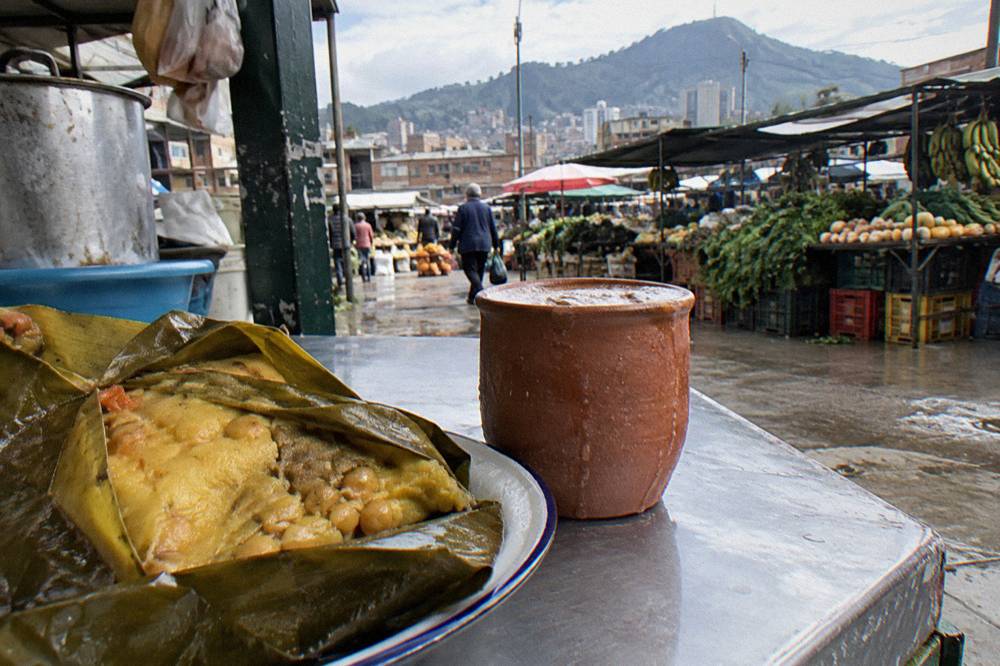
Start with the tamal, because it is the dish most often confused across the border. Both countries steam corn dough in wrappers, but a Mexican tamal is a compact, fist-sized roll, while the Bogotá version is a meal: a big banana-leaf parcel of dough, chicken, pork, rice and chickpeas, traditionally eaten on Sundays and at breakfast with hot chocolate. The December tamal festival, running 5 to 8 December 2026 across the city's plazas, exists because the dish is a weekly ritual, not a street snack. The Sunday food traditions around it are covered in the tamales, lechona and Sunday food guide.
Then the bakery tier, which Mexico does not really match. Almojábanas and pan de bono are cheesy breads sold by weight in every panadería, with delivery-app listings showing an almojábana at around 4,700 COP and a pan de bono around 4,300 COP as reported prices, though bakery counters vary. Empanadas exist in both countries, and this is one honest point of resemblance: Colombia's are usually smaller, often made with yellow pre-cooked corn flour and filled with potato and meat, fried crisp and eaten with ají.
The fruit wall is the part that surprises Mexican visitors most, because Mexico's tropical repertoire is smaller. Lulo, curuba, granadilla, uchuva, soursop and a dozen cousins appear as juices everywhere; at one documented corner cart in La Candelaria, a lulo juice was reported at 4,000 COP and a curuba-with-milk at 5,000 COP. The full palette is mapped in the guide to Colombian fruits to try in Bogotá. And for dessert, obleas: two communion-style wafers with arequipe, sometimes with cheese, a street sweet whose origins get their own debate in are obleas Colombian or Venezuelan.
If reading dish names only gets you halfway, the Bogotá Food Experience: Cultural & Culinary Tour settles it in four hours: from $47.15 per person, rated 4.9 across 615 reviews, meeting in the historic centre. What a listing actually includes, from stops to tastings, is stated on the booking page, so check it there for the current lineup. Check availability
Is Colombian Food Spicy?
No, Colombian food is not spicy. It is one of the mildest national cuisines in Latin America, and chili almost never enters the cooking pot, so travelers expecting fiery dishes may be surprised by how gentle and mild the everyday flavors actually are. Heat lives in ají, a loose table sauce of chili, onion, scallion and vinegar that you add yourself, and even that is absent from many counters. Travelers who want spice should bring their expectation down several notches, or carry their own small bottle of hot sauce.
This is worth stressing because it inverts the mental model many North American visitors carry. In Mexico, asking "how spicy is it?" is a real question with a spectrum of answers. In Bogotá the honest answer is almost always "not at all", and the kitchen will not be offended if you want it spicier, because the ají bowl is sitting right there.
There are regional exceptions inside Colombia, mostly on the coast and in Santander, where dishes pack more punch, and the city's own scotch-bonnet-adjacent ajiés can be fierce in the right hands. But a first-time visitor eating in Bogotá will meet gentle food. The one drink to approach with respect is aguardiente, which is fiery only in the alcoholic sense; the aguardiente and Colombian spirits guide explains the customs around it.
How Do Colombian And Mexican Breakfasts Compare?
Colombian and Mexican breakfasts compare as two distinct traditions: the Colombian table runs hotter, soupier, and sweeter, built on changua, calentado, tamal, and hot chocolate with cheese, while the Mexican standard rests on eggs, beans, and tortillas, so where Colombia reaches for soup and sweetness, Mexico turns to its classic savory staples. Changua, a milk broth with egg, cilantro and stale bread, has no Mexican counterpart at all, and chocolate santafereño, hot chocolate with cheese melted into it, usually stops first-time visitors mid-sip. Both countries take breakfast seriously, but they reach for different comfort.
Changua is the dividing line. A milk-and-water broth poached with an egg, dropped with a piece of calao bread and finished with cilantro and scallion, it is a working-class highland breakfast engineered for cold mornings. Mexico's huevos rancheros or machaca are plate breakfasts built on tortillas and salsa. Neither is "better", but they come from opposite instincts: broth versus griddle, soothe versus wake. Everything else covered here is indexed on Bogota Food Tours.
The sweet side is where Colombia goes genuinely strange to outsiders, in the best way. Chocolate santafereño, thick hot chocolate served with a slab of fresh cheese you drop into the cup, plus almojábanas or bread, has been served at La Puerta Falsa, the tiny spot next to the cathedral, since 1816, and workshops in La Candelaria now teach visitors to prepare the full ritual with almojábana, cheese and achira. Mexico hot-chocolate tradition is older and spicier, flavored with cinnamon and sometimes chile, but it never met the cheese. The full morning landscape is in the Bogotá breakfast guide.
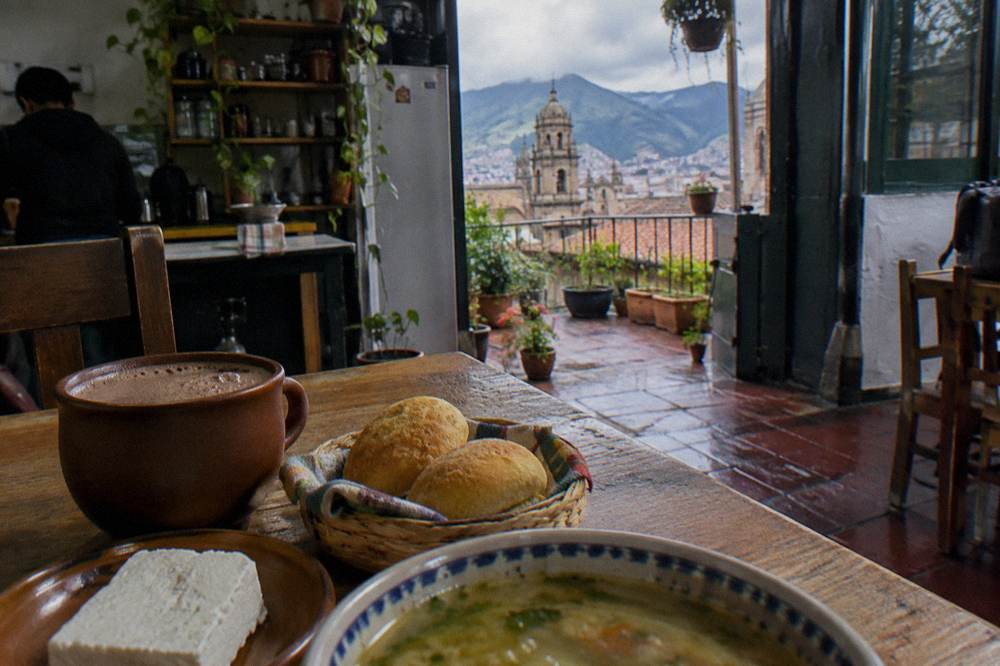
Calentado, yesterday's rice and beans reheated with egg and chorizo, is the closest Colombian cousin to a Mexican breakfast, and it exists for the same frugal reason: never waste the pot. Tamal con chocolate is the weekend version. None of this will taste like a desayuno in Guadalajara, and that is precisely the pleasure of ordering it.
What About Coffee, Chocolate And Drinks?
Both countries grow world-class coffee, but they treat it very differently. Mexico drinks much of its own at home, often alongside pan dulce, while Colombia historically exported its best beans and drank the rest; Bogotá's specialty coffee scene has closed that gap only recently. Chocolate is the same story in reverse: Mexico gave cacao to the world as a drink of ceremony, while Colombia, a rising fine-flavor origin, now melts it into santafereño cups and bean-to-bar tastings. Aguardiente, anise-flavored and sipped neat, does the social work that tequila and mezcal do in Mexico, but without the shot-slamming ritual.
Coffee deserves a real paragraph because it is the comparison visitors get most wrong. Colombian beans, mostly washed arabica from the central cordilleras, are famous for balance and clean acidity, and the export machinery has long shipped the top grades abroad. Mexico's smaller, often organic and shade-grown crop, strong in Chiapas and Oaxaca, drinks well at home in cafés de olla with cinnamon and piloncillo. In Bogotá, the 2026 specialty wave means you can now drink local micro-lots at roasteries that mill their own parchment, and public cuppings with certified Q-graders exist in the city. The Bogotá coffee tasting and cupping guide maps the options, and the coffee-farm day tour (8 hours, from $94, rated 4.8 across 87 reviews) takes the question to the source.
Chocolate runs the opposite direction historically. Cacao is Mexican in origin, a sacred drink long before the Spanish arrived, and Mexico still treats it that way in Oaxacan drinking-chocolate traditions. Colombia's cacao industry is younger in prestige but climbing fast: the country's cacao and derivative exports reached US$413.1 million in 2025 on 49,044 tons, up 16.4 percent in volume, and Bogotá hosts Chocoshow, the national cacao fair with 175+ exhibitors, at Corferias on 27 to 29 November 2026. A tasting walk that covers both coffee and chocolate in the historic centre, the Coffee and Chocolate tour (2 hours 15 minutes, from $49, rated 5.0 across 79 reviews), is the efficient way to compare the two cups side by side.
Beer and spirits split the cultures neatly. Colombia's craft leader, 3 Cordilleras, now holds roughly 48 percent of the national artisanal market after 18 years, while tejo, the exploding-target throwing game played with beer in hand, is a social ritual with no Mexican parallel; one Chapinero tejo club advertises an hour of tejo with two beers from 45,000 COP per person. Mezcal's ceremonial sipping culture meets its match in aguardiente, which Colombians drink neat, cold and fast.
Can You Find Mexican Food In Bogotá?
Yes, you can find Mexican food in Bogotá, and it is increasingly good, though you will mostly encounter it in sit-down restaurants rather than at street stalls. A taco here remains an import rather than a native species, so expect to sit down for your fix of Mexican flavors rather than grab it on the go. The city's dining scene is in an expansion phase, with new openings announced weekly in Chapinero, Zona T and Parque 93, and Mexican concepts are part of that wave; one large Mexican venue with capacity for 500 opened a new Zona T location in late October 2026. The street-food tier, though, remains Colombian: arepas, empanadas, obleas and fruit.
That asymmetry is the honest answer to this whole page's question in miniature. A Mexican visitor in Bogotá will find their cuisine represented as a restaurant category, respectable and priced accordingly, while a Colombian visitor in Mexico City finds theirs almost absent, because Colombian food travels poorly in taco-land's shadow. Neither direction of travel means anything is missing; the kitchens simply evolved for different altitudes, histories and pantry bases.
The practical advice follows from all of the above. Do not come to Bogotá screening the city for Mexican flavors; come for ajiaco, tamal, fruit you cannot name and chocolate with cheese in it. Then, if the craving for heat gets loud, order the ají, or book a table at one of the new Mexican rooms in the north of the city. The two cuisines are cousins by continent and strangers by kitchen, and the trip is better for it.
For tasting the Colombian side of the comparison in one organized pass, the three walks below cover the ground: a four-hour cultural culinary tour of the historic centre, the twelve-tasting Viejo Bogota walk, and a shorter Colombian walk with local snacks. Prices and inclusions are stated on each booking page, and checking availability there takes a minute.
Common Questions About Colombian And Mexican Food
Is Colombian Food Like Mexican Food?
No. Both use corn heavily and both are market cultures, but Colombian food is mild, soup-and-potato based and built on arepas, while Mexican food is chili-driven, tortilla-based and salsa-forward. Expecting Mexican flavors in Bogotá leads to disappointment; expecting ajiaco, tamales and exotic fruit does not.
Is Colombian Food Spicy?
Generally no. Heat is an optional table condiment called ají, a vinegar-onion-chili relish you add yourself. The cooking itself is mild, with flavor coming from herbs, hogao sofrito and long simmering rather than chiles.
Do Colombians Eat Tacos?
Not as a native dish. Tacos in Bogotá are an imported restaurant category, found in sit-down Mexican venues, especially in the north of the city. The local equivalents are arepas, empanadas and tamales.
What Is The Colombian Version Of A Tortilla?
The arepa: a griddle-cooked corn cake that accompanies meals or gets filled with cheese and egg at breakfast. Unlike a tortilla it is thicker and rarely used to wrap other food.
Which Cuisine Uses More Chilies?
Mexican, by a wide margin. Mexican cooking treats chiles as core ingredients; Colombian cooking uses chili mainly in the ají sauce served on the side.
Is Colombian Chocolate Like Mexican Chocolate?
They share cacao but differ in ritual. Mexican drinking chocolate is spiced with cinnamon and sometimes chile; Colombia's chocolate santafereño is thick hot chocolate served with cheese melted into the cup, with almojábana bread on the side.