Tamales, Lechona And Sunday Food In Bogotá
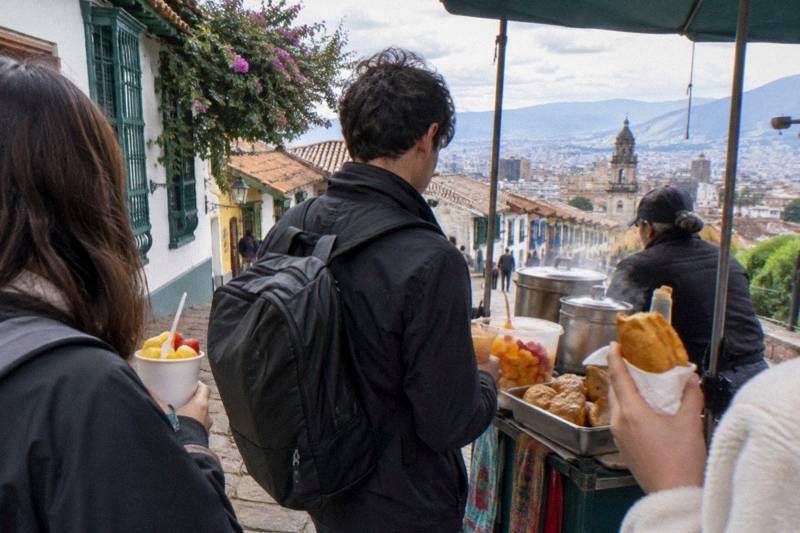
Sunday in Bogotá is the day of the big family lunch, and two dishes carry that tradition harder than any others: the tamal and the lechona. Here is what they are, why Sunday matters, and how a visitor can actually get a plate.
Short answer
Tamal tolimense is a banana-leaf parcel of rice, peas, egg, pork and chicken, while lechona is whole roast pig stuffed with rice and peas, sliced from markets and festival stalls. Sunday lunch is the family meal of the week. The city's Festival del Tamal runs 5 to 8 December 2026 across 17 plazas, with combo plates reported at 10,000 COP.
Sunday lunch in Bogotá is not a casual meal. It is the anchor of the week, the moment when families gather for long, heavy plates, and the dishes that dominate the table, tamal and lechona, are the ones visitors most often photograph and least often finish. Both are filling, both are regional in origin, and both taste best when someone explains what you are eating. This guide covers what each dish is, why Sunday is the day for them, where to find them as a visitor, and how a tasting walk lets you sample them without ordering three full mains.
What Is Lechona And Why Is It A Sunday Dish?
Lechona is a whole pig slow-roasted for many hours, stuffed with rice, peas and spices, then chopped and served by the portion, crispy skin and all, and it belongs to Sunday because Sunday is the day Bogotá eats celebration food together. It comes to the capital from the Tolima region, roughly 150 km west of the city, and it is built for a crowd: the kind of dish ordered by the plate for a family table, never cooked for one person alone. In Bogotá you find it at market plazas, at family-run stalls, and at festivals, where a slab of crackling over seasoned rice is the entire point of the order.
The dish works as celebration food for a practical reason. A whole roast pig feeds dozens, and in Tolima families traditionally prepared lechona for baptisms, birthdays and saint's days. That logic travels well. A market stall in Bogotá can serve plate after plate from a single animal through the whole morning, and the skin, the cuero, is the part regulars ask for by name. First-timers usually make the mistake of leaving it on the plate.
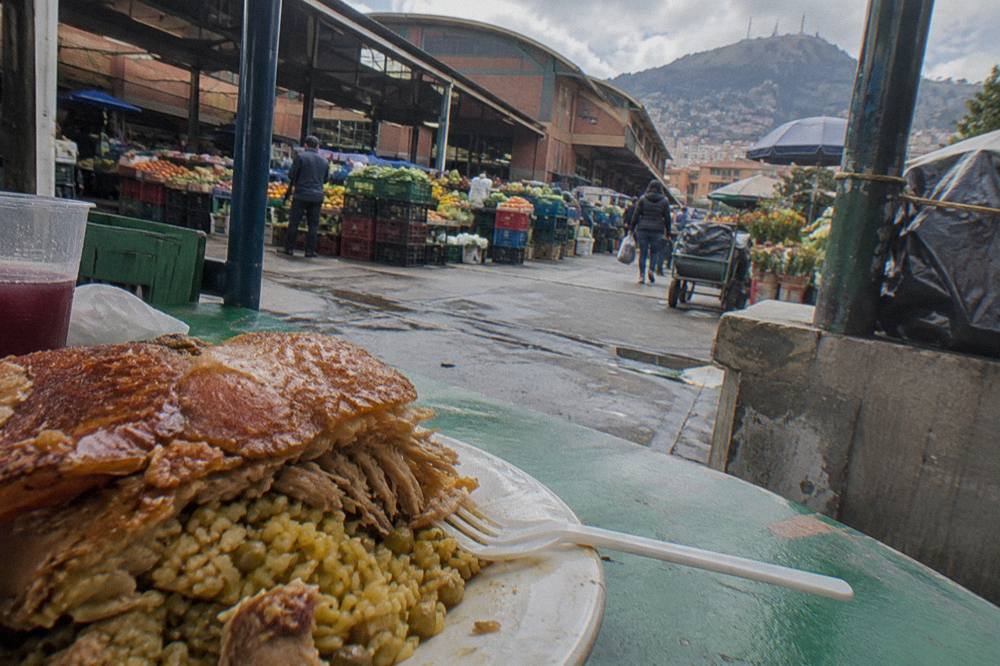
Lechona rarely travels alone. Arepas and insulso, a corn and panela dessert, often appear alongside it, and a mug of hot chocolate is the traditional drink poured through the meal. Visitors eating it for the first time should know there is no dainty version: it is a plate of rice and pork built for someone about to sit at a table for two hours, which is exactly the tempo a Sunday lunch runs at in this city.
If you want the deeper background on what gets poured alongside plates like this, the guide to Colombian drinks, juices and aguapanela covers the pairings. And since the city's markets are the easiest place to find lechona honestly made, the market sections below are worth reading before you set out.
Tamal Tolimense Versus Bogotano: What You Are Actually Eating
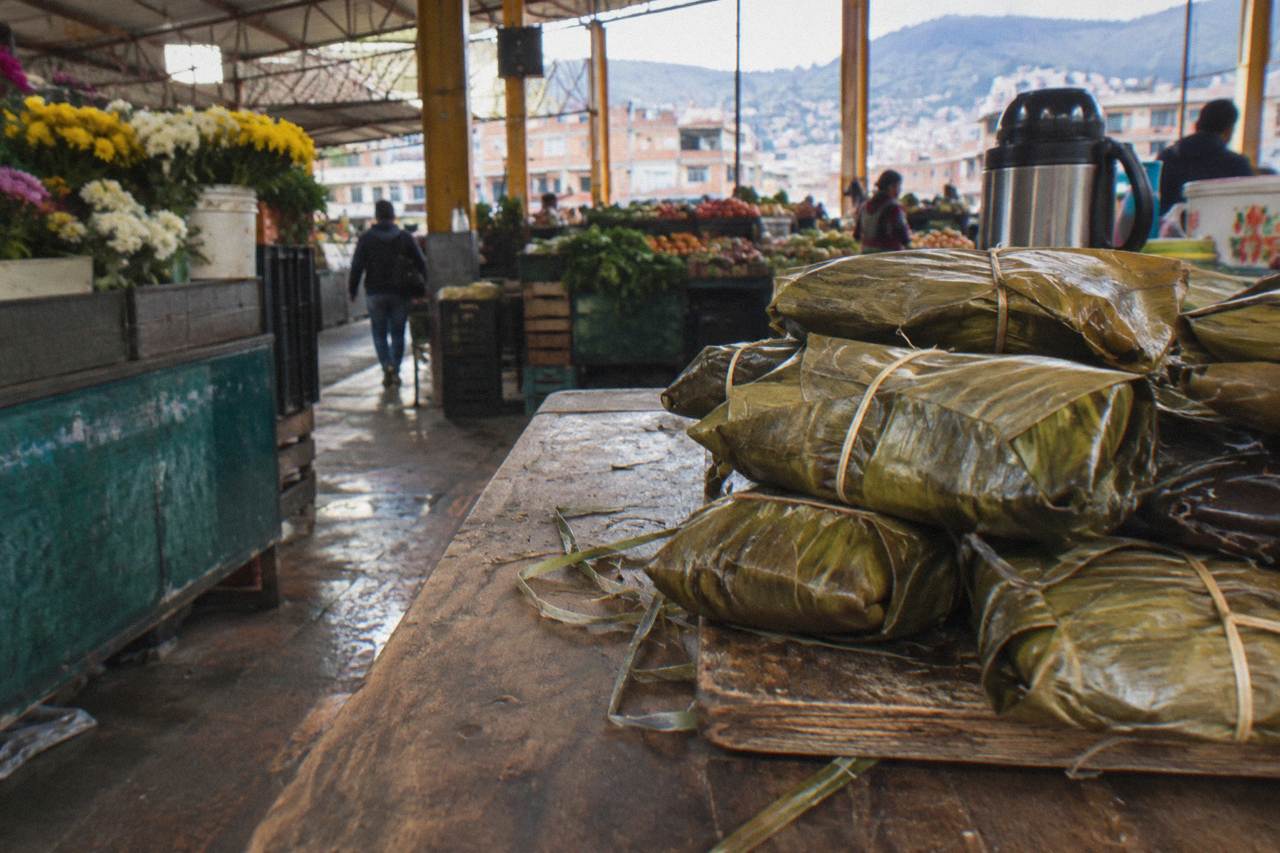
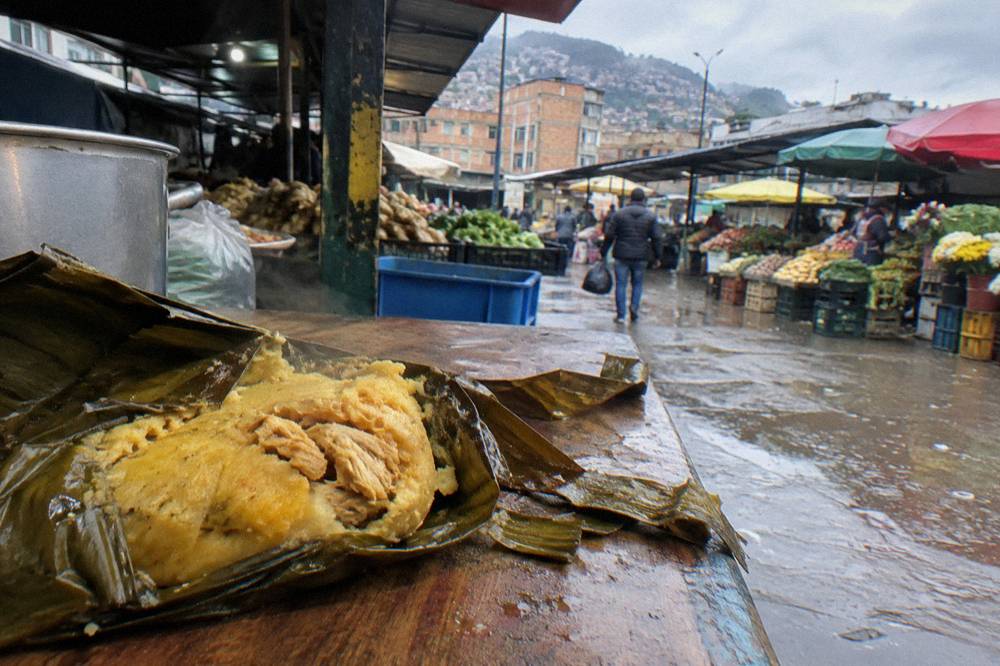
A tamal tolimense is a banana-leaf parcel of rice, peas, egg, pork and chicken, steamed until the flavours merge, while the Bogotá version swaps the rice for ground-corn dough and arrives denser, often in achira leaves, and both come with an arepa, bread and a mug of hot chocolate. The two look similar on a stall and taste quite different. The tolimense is looser and rice-forward, closer to a very dense risotto inside a leaf. The Bogotá tamal is built on masa, the corn dough that anchors much of Colombian cooking, which makes it thicker and more pudding-like on the fork.
The banana leaf is not decoration. It seals the steam in, keeps the filling moist through hours of cooking, and gives the whole parcel a faint herbal edge. Unwrapping one is part of the ritual, and first-timers usually need the instruction repeated: the leaf is the packaging, not the food. Everything inside it goes on the plate.
Bogotá's own tamal tradition leans on the breakfast and Sunday table rather than the market stall, which is why it belongs to the same circuit as changua and calentado. The background on that morning spread is in the Bogotá breakfast guide: changua, calentado and tamal. The tolimense, meanwhile, has become the city's festival dish, sold by the thousand in December.
| Dish | Base | Wrapper | Usual Companions | When It Is Eaten |
|---|---|---|---|---|
| Tamal tolimense | Rice, peas, egg, pork, chicken | Banana leaf | Arepa, bread, hot chocolate | Sunday lunch, festivals |
| Tamal bogotano | Ground-corn masa | Achira or plantain leaf | Arepa, bread, hot chocolate | Breakfast, Sunday table |
| Lechona | Rice and peas roasted inside a whole pig | None, served by the portion | Arepas, insulso, hot chocolate | Sunday lunch, celebrations |
For visitors the practical difference is portion and timing. A Bogotá tamal is a full breakfast. A tolimense slice at a festival is a manageable taste, which is exactly the format the city's December tamal festival uses to move more than fourteen thousand parcels in a single long weekend.
Three guided food walks above cover the territory where these dishes live, and the tasting format suits them: heavy regional food is easier to appreciate in small portions, with a guide naming each parcel before you commit to it. The most reviewed food walk in the city's centre, the Viejo Bogota Food Tour with 12+ Tastings, runs 4 hours from $55 per person and is rated 5.0 across 714 reviews, and reviewers mention tamales among its tastings.
Why Sunday Is The Big Family-Lunch Day In Bogotá
Sunday lunch in Bogotá is the week's main social meal, a long afternoon of soup, rice dishes and dessert that keeps families at the table after morning mass or a walk in the park, and the whole city's food economy, from market plazas to neighbourhood restaurants, organises itself around it. The pattern runs back generations. Restaurants fill from midday, plazas do their busiest trade of the week, and dishes built for sharing, ajiaco, tamal, lechona, fritanga, take over the tables. A visitor who plans around this rhythm eats better than one who fights it.
The logic is partly altitude and partly habit. Bogotá sits at about 2,640 m, where evenings are cool year-round and a hot, substantial plate in the early afternoon fits the climate. The city's own health guidance on acclimatising to altitude recommends light meals and steady hydration during the first day or two, so a newly arrived visitor may want to treat a Sunday spread as the day's single big meal rather than one of three.
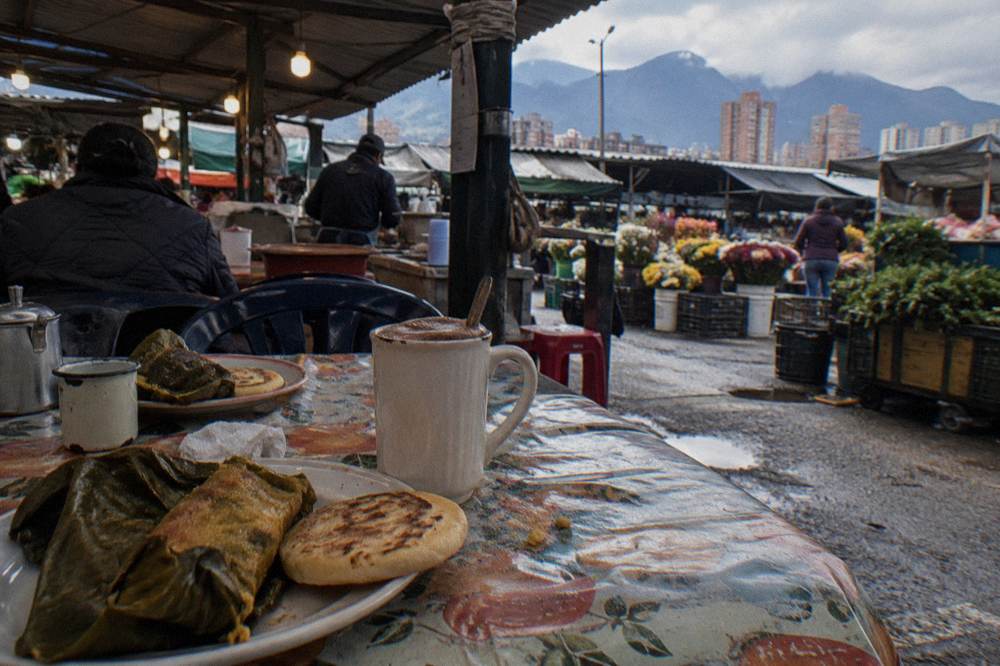
Sunday also drives the city's event calendar. The Festival del Tamal runs 5 to 8 December 2026 across more than 17 market plazas, with a tamal, hot drink and arepa or bread combo reported at 10,000 COP, according to the city government's festival page. Previous editions sold more than 14,484 tamales, so arrive hungry and arrive early.
The market plazas are the heart of all this. The 2026 Ruta Turística de las Plazas Distritales de Mercado, covered by Bogotá's economic development secretariat, promotes la Perseverancia for traditional food and other plazas for their own specialities, which makes a Sunday plaza hop a realistic plan for a visitor with a free afternoon.
Not in town on a Sunday? The same dishes appear through the week in smaller formats, and a morning walk through La Candelaria is the most reliable way to meet them. Booking pages confirm times and inclusions before you commit, and free cancellation on the featured walks means a plan change costs nothing if your schedule shifts.
Where To Try Tamales And Lechona As A Visitor
Market plazas are the visitor's easiest entry point: la Perseverancia serves lechona, ajiaco and fritanga from long-standing family stalls, Usaquén's weekend market sells tamales, arepas and hot chocolate beside its handicraft stalls, and in December the Festival del Tamal spreads the same food across more than 17 plazas citywide. La Perseverancia, in the neighbourhood of the same name near the city centre, opens Monday to Friday 8 a.m. to 4 p.m. and weekends 6 a.m. to 5 p.m., with stalls known for ajiaco, lechona, mute santandereano, mondongo and fritanga. It is a working market, so go with an appetite and low expectations for signage in English.
Usaquén, in the north, turns into a Sunday destination twice over: the flea and food market at Carrera 6A between Calles 119 and 120A runs Saturdays, Sundays and holiday Mondays from 9 a.m. to 5:30 p.m., with food stalls selling arepas, fresh-cut fruit, empanadas and hot chocolate. After eating, the colonial square and the streets around it turn the trip into a half-day plan. The fuller picture of that neighbourhood's food is in the Usaquén Sunday market and food guide.
| Place | Best For | Reported Hours | Sunday Notes |
|---|---|---|---|
| La Perseverancia plaza | Lechona, ajiaco, fritanga from family stalls | Mon-Fri 8 a.m.-4 p.m., Sat-Sun 6 a.m.-5 p.m. | Busiest lunch trade of the week |
| Usaquén weekend market | Arepas, empanadas, hot chocolate, fruit | Sat, Sun, holiday Mon 9 a.m.-5:30 p.m. | Combined with the flea market |
| Festival del Tamal (Dec) | Tamal combos across 17+ plazas | 5-8 December 2026 | Combo reported at 10,000 COP |
| Paloquemao plaza | Fruit, juice and snacks near the flower section | Mon-Sat from 4:30 a.m., Sun from 5 a.m. | Fuller background in the Paloquemao guide |
For the December festival specifically, check which plazas near you are participating before setting out, since the 17 venues are spread across the city and each runs its own stall schedule. The market background in the guide to Bogotá's markets beyond Paloquemao helps with picking a district.
A guided walk compresses the same discovery into one afternoon. The Bogotá Food Experience: Cultural & Culinary Tour runs 4 hours from $47.15 per person, rated 4.9 across 615 reviews, and its booking page lists which tastings and stops are included. The Food Tour in La Candelaria Bogotá, 3 hours from $63 per person and rated 4.9 across 72 reviews, covers the historic centre on foot. Inclusions vary by listing, so check the booking page for the current stop list rather than assuming a specific dish will appear. Everything else covered here is indexed on Bogota Food Tours.
How Much Sunday Food Costs In Bogotá
At the city's own festival, a tamal with a hot drink and arepa or bread is reported at 10,000 COP, a few dollars at prevailing exchange rates, while guided food walks that include tastings run from $15 to $122 per person depending on format, length and whether the quoted price covers food or only the guide. Local plaza plates and festival prices are set in Colombian pesos; tour prices are quoted in USD per person. The two scales should not be collapsed into one comparison, because a festival tamal is a snack-priced taste of a single dish while a tour is a guided afternoon with a dozen of them.
| Item | Reported Price | Basis |
|---|---|---|
| Tamal festival combo (tamal, hot drink, arepa or bread) | 10,000 COP | Reported, Festival del Tamal 2026 |
| Shared Bogotá Street Food Tour | From $17.71 per person | Operator listing, 3 hours |
| Bogota Shared Gastronomy Tour, Historic Center | From $15, tastings about US$12 extra | Operator listing, guide fee only |
| Bogotá: True Colombian Walking Tour + Local Snacks | From $54.68 per person | Operator listing, 2 to 3 hours |
| Viejo Bogota Food Tour with 12+ Tastings | From $55 per person | Operator listing, 4 hours |
| Bogotá's Gastronomic Wonders | From $122 per person | Operator listing, 4 hours |

Two cautions on reading those numbers. The Shared Gastronomy Tour's $15 is a guide fee only, with tastings costing about US$12 extra, so the real total sits well above the headline figure. And several listings, including the Gastronomic Wonders walk, are priced by group size, meaning the per-person figure moves with your party. The habits around paying in Colombia, including the voluntary 10 percent propina at sit-down places, are covered in the guide to tipping in Bogotá, worth reading before a long Sunday lunch rather than after.
Should You Try These Dishes On A Guided Walk?
Yes, if your goal is breadth: a tasting walk serves small portions of many dishes across one afternoon, where ordering lechona, tamal and ajiaco individually would mean three full mains and an early end to your day, and a guide adds the regional history that turns each parcel from a snack into a story. That is the honest pitch for the format on this specific food. Tamal and lechona are dense, and a Sunday attempting both unguided tends to finish after two plates. A walk distributes the same food across a route and leaves room for the fruit and coffee courses in between.
The format matters more than any single operator. Shared walks in the historic centre run 3 to 4 hours and suit solo travellers and couples who are happy to meet others at the meeting point. Private versions, like the Street Food Bogotá Private Tour at 4 hours from $109, and the Gastronomy of Colombia Private Tour at 6 hours from $259, suit groups who want the pace and the stops to themselves, and the longer private format can stretch into a full day of eating across neighbourhoods.
Check the booking page for what each listing actually includes. Only the operator's own stop and inclusion lists can say whether a specific dish appears on a specific walk, and those lists change. Where a listing names tamal or a market visit, the tasting is part of the price; where it does not, assume it is not, and message the operator before booking if a dish matters to you, the same advice that applies to any dietary need.
For planning a full eating day around one of these walks, the Bogotá in 3 days food-first itinerary sequences the markets, neighbourhoods and walks into a workable order, and this site, Bogota Food Tours, exists precisely to make those pairings easy to plan.
The Gastronomic Wonders experience above is the traditional-food specialist of the three featured walks, 4 hours from $122 per person and rated 4.7 across 32 reviews, aimed at visitors who want the classic regional dishes served as a fuller experience rather than a street crawl.
The Viejo Bogota walk remains the reference point for this food: the most reviewed food walk in the centre, 4 hours from $55 per person, rated 5.0 across 714 reviews, with tamal among its listed stops and a route through the streets where Sunday lunch has been served for generations.
Common Questions About Sunday Food In Bogotá
What Is Lechona?
Lechona is a dish from the Tolima region of Colombia: a whole pig stuffed with rice, peas and spices and slow-roasted for many hours, then chopped and served by the portion with crispy skin and seasoned rice. It is a celebration and family-gathering dish, which is why it appears most prominently at weekend lunches and festivals.
Where Can I Try Lechona In Bogotá?
Market plazas are the most reliable places, especially la Perseverancia, whose family-run stalls are known for lechona, ajiaco and other traditional dishes. Festival stalls also serve it. For a guided introduction, several food walks in the historic centre include market stops; check each booking page for the current stop list.
What Is The Difference Between Tamal Tolimense And Bogotá Tamal?
The tolimense is a banana-leaf parcel of rice, peas, egg, pork and chicken, loose and rice-forward. The Bogotá version uses corn dough, masa, making it denser and more pudding-like, and it is traditionally a breakfast and Sunday dish. Both are served with arepa, bread and hot chocolate.
Why Is Sunday Lunch Such A Big Deal In Bogotá?
Sunday lunch is the week's main family meal, a long afternoon of soup, rice dishes and dessert after church or a park walk. Restaurants and market plazas do their biggest trade of the week, and sharing dishes like ajiaco, tamal and lechona dominate the table.
When Is The Festival Del Tamal In Bogotá?
The Festival del Tamal runs 5 to 8 December 2026 across more than 17 market plazas in the city, with a combo of a tamal, a hot drink and an arepa or bread reported at 10,000 COP. Earlier editions sold more than 14,484 tamales, so stalls are busy; going early in the day is the usual advice.
Can I Try These Dishes On A Food Tour Instead Of Ordering Full Portions?
Yes, and that is the format's main advantage with heavy food. Tasting walks serve small portions of many dishes in one afternoon; the most reviewed food walk in the centre, from $55 per person, lists tamal among its stops. Check each booking page for the current inclusions before booking.