What Are The Must-Try Foods In Bogotá?
A practical list of the must-try foods in Bogotá, from ajiaco and tamales to exotic fruit juices and chocolate santafereño, with reported prices and how a tasting walk covers them.
The must-try foods in Bogotá are ajiaco santafereño, tamales, lechona, changua, calentado, arepas, empanadas, almojábanas and pan de bono, obleas, exotic fruits and fresh juices, chocolate santafereño with cheese, and Colombian coffee. Most of them are market and street foods that cost a few thousand pesos at reported prices, and the full list can be covered in one long weekend of eating.
Bogotá's food identity is highland food. The city sits at about 2,640 m, and its classic dishes are built for that climate: thick soups, slow-cooked corn doughs, hot drinks and filling breakfasts. That makes the eating here distinctly different from the coastal and Antioquian cooking most visitors picture when they think of Colombia. Ajiaco is not sancocho, a Bogotá tamal is not a Christmas-only dish, and hot chocolate with cheese is a normal breakfast, not a dare.
This page goes dish by dish: what each food is, roughly what it costs at market stalls and street carts at reported 2026 prices, and how the pieces fit together if you want to try everything without planning a research project. If you would rather have a guide walk you through the classics in a single afternoon, the cultural and culinary walks compared below do exactly that.
Where To Try Ajiaco, The City's Signature Soup
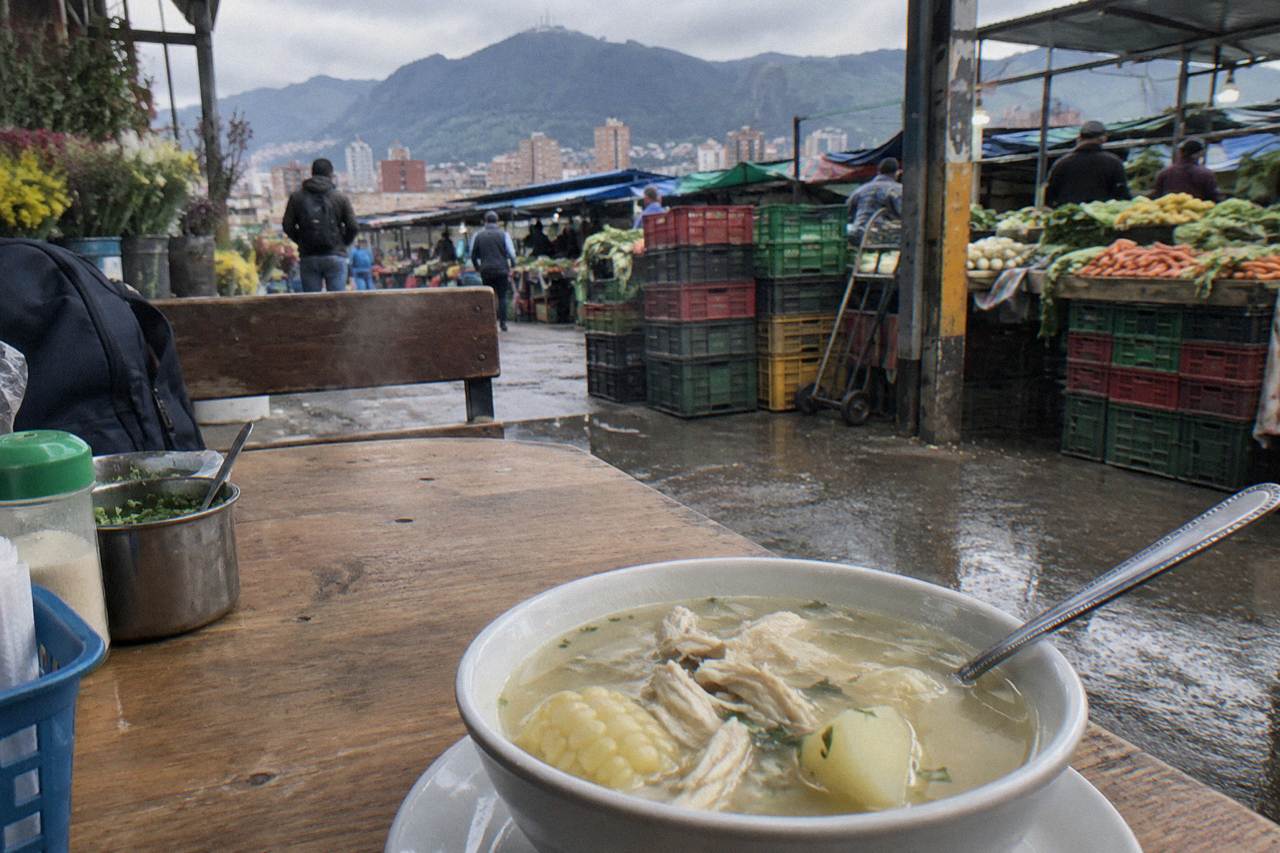
Ajiaco santafereño is the one dish Bogotá claims as its own: a chicken and potato soup thickened with three potato types and whole ears of guascas-flavoured corn, served with cream, capers and avocado on the side. At market delivery listings it runs around 23,700 COP for a 16-ounce portion and 33,900 COP for a large, reported prices worth checking on the day.
The soup works because of the potatoes. Local varieties collapse into the broth and give it body without cream, while one firmer type holds its shape, and the herb guascas gives the whole pot its grassy, unmistakable note. If you want to know why the herb matters before you order, the guide to what herb is in ajiaco breaks down guascas in detail, and the comparison of ajiaco and sancocho explains why the two soups keep getting confused.
Where you eat it matters less than that you eat it somewhere that cooks it slowly. In October 2026 the city's own tourism institute was still promoting ajiaco as the anchor of its market-plaza dining, and five district market plazas, including Plaza Distrital de Mercado 12 de Octubre in Barrios Unidos, were named as places serving traditional versions. A dedicated "Días de Ajiaco Santafereño" festival has run in November in past editions, which tells you how seriously the city takes the dish. The official Instituto Distrital de Turismo coverage of the festival is the primary source on that.
A practical ordering note for first-timers: the accompaniments are not optional decoration. The cream, the capers and the avocado are added at the table, each softening or sharpening the broth, and a server will usually bring them separately and let you build the bowl yourself. Locals tend to work the corn off the cob straight into the soup. Pair it with an avocado juice if the stall makes one, a common highland companion, and treat the whole plate as a full lunch rather than a starter.
| Dish | What it is | Reported price signal | Where it fits |
|---|---|---|---|
| Ajiaco santafereño | Chicken and three-potato soup with corn, guascas, cream and avocado | 23,700 COP medium, 33,900 COP large at delivery listings | Lunch, any market plaza |
| Tamal bogotano | Corn dough with chicken, pork and peas steamed in banana leaves | 10,000 COP as a festival combo with a hot drink and bread | Weekend breakfast or brunch |
| Lechona | Whole roast pig stuffed with rice and peas, served by the slice | Sold by portion at markets and festivals; prices vary, check the stall | Weekend family eating |
Tamales, Lechona, And Sunday Eating In Bogotá
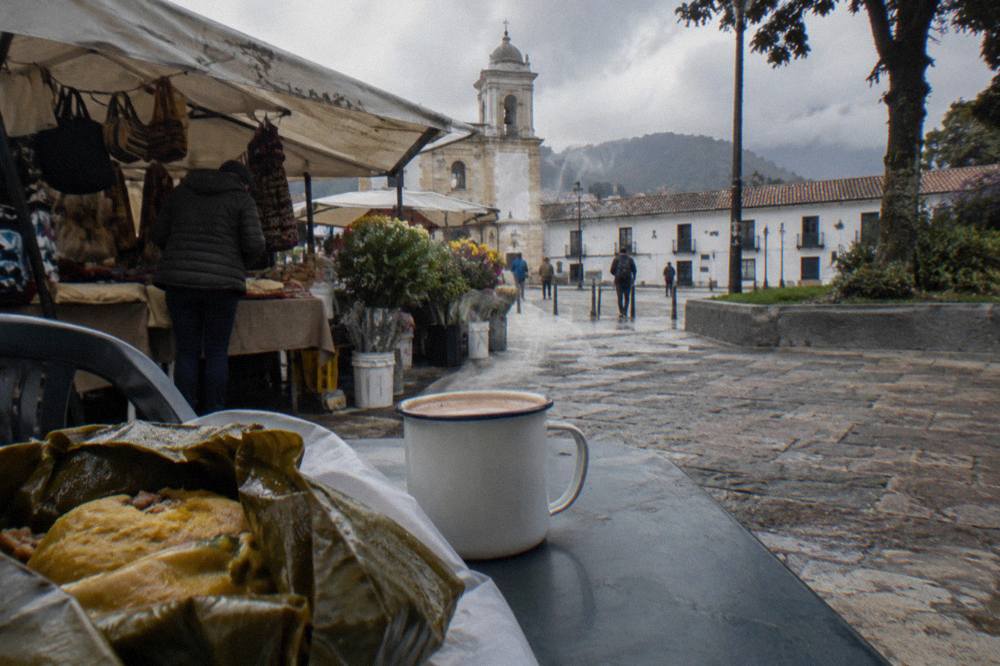
The tamal bogotano is the city's weekend dish: a soft corn dough studded with chicken, pork and peas, wrapped and steamed in banana leaves, and almost always eaten with a hot chocolate on the side. Lechona, roast pig with rice from Tolima, is its festive cousin. At past Festival del Tamal editions a combo of tamal, hot drink and bread sold at 10,000 COP across more than 17 plazas, a reported price.
Sunday is when this food peaks. The Festival del Tamal that has run in early December across the city's market plazas sold more than 14,484 tamales in a single edition, and the pattern it celebrates, tamales plus chocolate plus family, holds the rest of the year too. The city hall page on the festival is the source for those figures. This edition, scheduled for 5 to 8 December 2026, is still ahead as of early November.
You do not need to wait for a festival. La Perseverancia, the market plaza in the neighbourhood named for it, is known through 2026 city listings for family-run stalls serving ajiaco, lechona, mute santandereano, mondongo and fritanga, and it is open weekdays 8 a.m. to 4 p.m. and weekends 6 a.m. to 5 p.m. The deeper guide to tamales, lechona and Sunday food in Bogotá maps the plazas and the calendar.
A note on how the tamal arrives: it comes still wrapped, and the leaf is the plate. You unfold it partway, eat from the opening, and drink the accompanying chocolate between bites. The dough should be soft enough to spoon, faintly yellow from the corn and the fat it was cooked with. Lechona works differently again, served as a scoop of rice that was roasted inside the pig, with crisp skin on top, and it is heavy, so a shared portion between two people is a normal order.
Breakfast In Bogotá: Changua, Calentado, And Almojábanas
A Bogotá breakfast means changua, a warm milk-and-egg soup with bread dropped in, or calentado, yesterday's rice and beans fried back to life with an egg on top, or simply bakery: almojábanas and pan de bono. Reported bakery prices run around 4,700 COP for an almojábana and 4,300 COP for a pan de bono at current delivery listings, cheap enough to try all of them.
Changua divides visitors the way few dishes do. It is milk, water, scallion and coriander brought to a simmer with an egg cracked in, served with a piece of stale bread and sometimes a slab of cheese, and it is exactly what a cold highland morning calls for. Calentado is the no-waste answer, and it usually arrives with arepa, rice, beans, chorizo and egg, closer to a full English in ambition. The breakfast guide to changua, calentado and tamal covers where each is served before 9 a.m.
The bakery counter is the quiet third pillar. Almojábanas are cheesy rice-flour rolls, pan de bono is its yuca-flour sibling, and both show up in the chocolate santafereño ritual, where the bread is as much a part of the meal as the drink. Bogotá has been baking both for centuries; the nearly 300-year-old bakery tradition around the Catedral Primada, where La Puerta Falsa has operated since 1816, still serves them alongside the city's most famous hot chocolate.
Breakfast is also where you notice the altitude advice in practice. The city's own health guidance for visitors recommends light meals and steady hydration in the first day or two, and a bowl of changua with bread fits that brief better than a plate of fried everything. Cafés open early in the centre, market plazas open earlier still on weekends, and the breakfast hour is one of the few times La Candelaria feels local rather than touristic.
Arepas, Empanadas, And Street Snacks
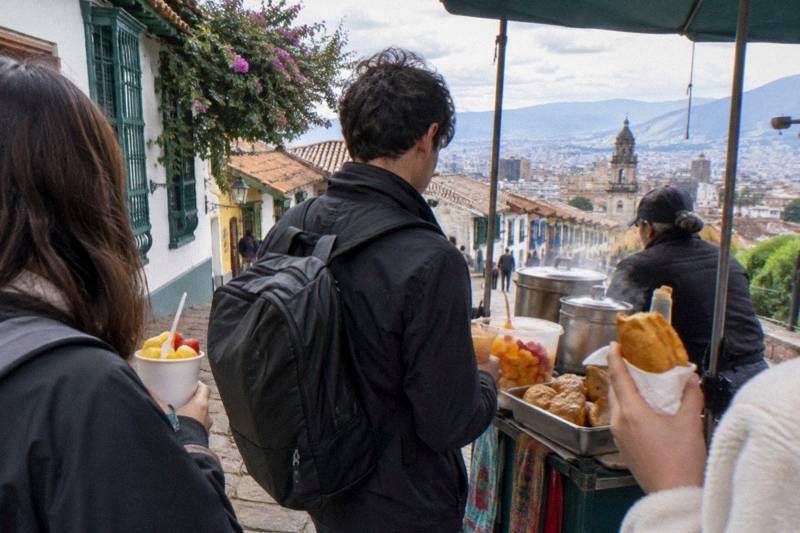
Arepas are grilled corn cakes eaten with everything, and empanadas are fried meat-filled pastries eaten on the move; both are the everyday street layer of the must-try list. Street-cart juices cost a few thousand pesos at reported prices, with lulo at 4,000 COP and curuba with milk at 5,000 COP at a documented La Candelaria cart. Together they are the cheapest entries on this list.
The arepa is the constant. It arrives beside calentado at breakfast, with cheese at tea, and as a base for hogao, the tomato-and-scallion sauce, at lunch stalls. Empanadas are the deep-fried version of fast food here, usually filled with shredded meat or potato, and sold in combos and buy-five-get-six packs at delivery bakeries, a reported pattern. The dedicated guide to arepas, empanadas and pan de bono sorts the regional versions, because the Coastal arepa and the Bogotá one barely share a recipe.
If you eat your way through La Candelaria on foot, this is the layer you will meet most. The street-food guide to Bogotá street snacks lists what to look for and the safety habits the city's own health secretariat recommends: buy from formal stalls, check packaging on sealed items, and skip anything unlabelled or damaged.
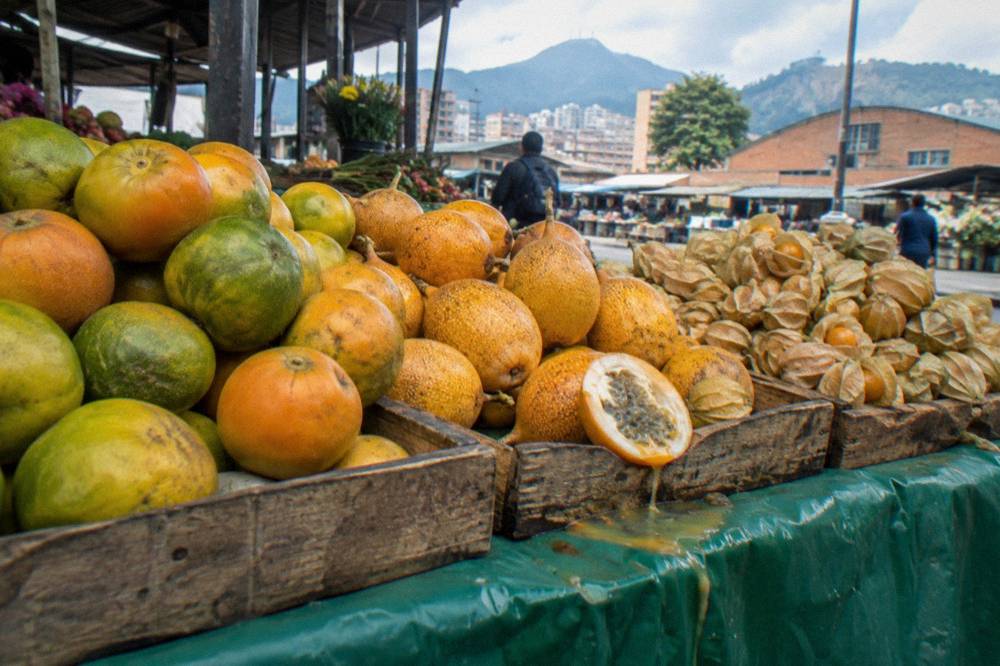
The juice cart deserves its own line on the list. Lulo, the orange-and-green Andean fruit, makes a sharp, almost citrus juice that most visitors have never tasted; curuba, a banana-passionfruit relative, blends into something closer to a smoothie when mixed with milk. Ask for either without sugar first if you want the true flavour, since carts often sweeten by default.
Exotic Fruits And Fresh Juices You Cannot Get At Home
Bogotá's markets carry fruits that simply do not travel: lulo, granadilla, uchuva, curuba, feijoa, soursop and dozens more, most sold whole or blended into juices on the spot. Vendors at Paloquemao offer tastes of granadilla, lulo and uchuva through the morning wholesale hours, and a juice at a street cart runs 4,000 to 5,000 COP at reported prices.
Paloquemao is the place to meet them. The plaza is open Monday to Saturday from 4:30 a.m. to 4:30 p.m. and Sundays and holidays 5 a.m. to 4:30 p.m., with the flower section only until 11 a.m., per the plaza's own published hours. The early hours are the spectacle: trucks unload, vendors call out, and the produce stalls are at their fullest before midday thins everything out. The full Paloquemao market food guide and the guide to Colombian fruits to try in Bogotá cover what to buy and how to eat it.
The fruit layer is also where guided tours earn their keep, because a stranger at a stall rarely gets offered the same range of tastes that a guide with vendor relationships does. Several of the market tours compared on this site are built around exactly this, and their tasting counts and stops are stated on each operator's booking page, so check there for what the current run includes. The wider set of guides lives on Bogota Food Tours.
Chocolate Santafereño, Obleas, And Colombian Sweets
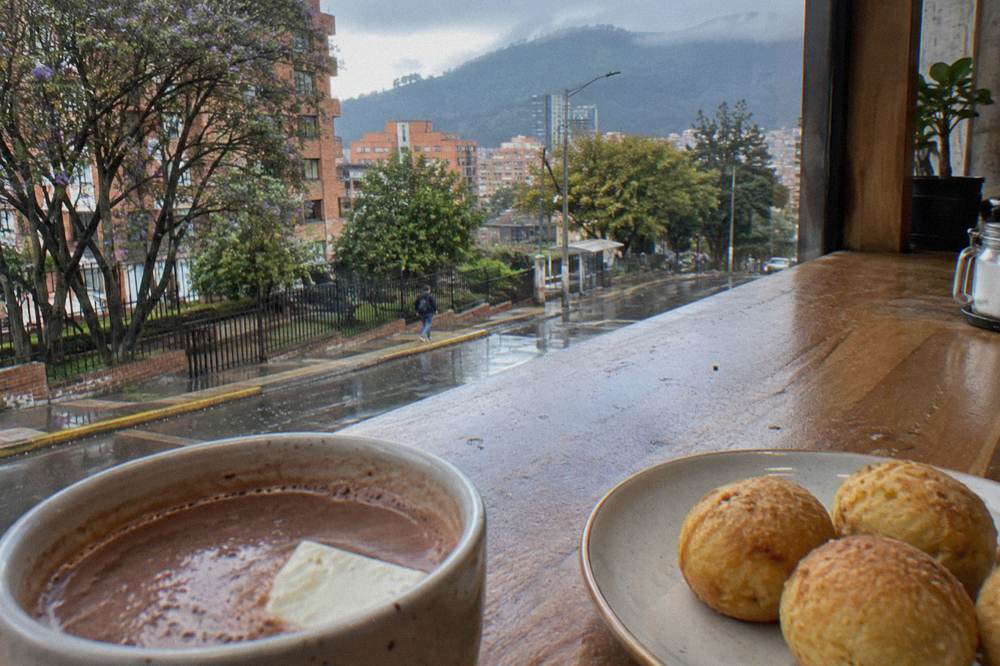
Chocolate santafereño is hot chocolate served with a slab of fresh cheese that you drop into the cup and fish out melted, alongside almojábanas or bread; obleas are large crisp wafers filled with arequipe dulce de leche. Together they close out the must-try list on the sweet side, and both cost market-café money rather than restaurant money.
The chocolate-and-cheese habit is older than the republic and still a weekend ritual. The most storied place to try it is a tiny shop next to the Catedral Primada that has been operating since 1816, serving thick, aromatic chocolate with cheese to melt in, almojábanas and bread, as 2026 coverage of the city's historic corners keeps noting. In La Candelaria, the newer Casa Orígenes, opened in October 2026 in a restored republican house, builds a whole tasting room around Colombian bean-to-bar chocolate, and a nearby cultural centre runs guided workshops on preparing the drink itself with almojábana, cheese and achira.
Obleas are the street version of dessert, sold from carts and market stalls, filled with arequipe and sometimes jam or cream. The dedicated guides to obleas and Colombian sweets and to hot chocolate with cheese cover both traditions in full, including where the oblea debate with Venezuela lands.
The technique, if the drink is new to you: stir the chocolate, drop in a piece of the fresh white cheese, let it soften for a few seconds, then lift it out with the spoon. The cheese does not melt away entirely; it turns stretchy and mild against the bitter chocolate. Nobody will watch how you do it, but this is the way the table beside you is doing it.
Coffee And Craft Beer To Finish The List
Colombian coffee in Bogotá now means a specialty scene with in-house roasters, public cuppings and direct-trade sourcing, and the beer side is led by 3 Cordilleras, which holds about 48 percent of the national craft market. A cupping session or a brewery visit is the natural end of a must-try food trip, and the city's roasters make it easy.
The coffee layer runs deeper than most visitors expect. Amor Perfecto, a 1990s pioneer whose baristas have taken national champion titles, runs public cuppings at its Chapinero flagship; Azahar buys directly from more than 420 Colombian farming families; and Catación Pública operates an SCA-certified cupping lab in Usaquén with sessions led by a certified Q-grader featuring 80-plus point coffees from a dozen farms. New names keep arriving: Varietale, opened in a former convent in Chapinero, mills its own parchment in-house and was only a couple of months old in early November 2026. The coffee tasting and cupping guide and the guide to Bogotá's coffee shops map the scene.
Beer is the other late-evening entry. 3 Cordilleras turned 18 in 2026 with seven competition medals and roughly half the national craft market, and Bogotá Beer Company pours across the city, with pints reviewed around 80,000 COP at its Chapinero locations, a reported figure. The city's craft beer festival at Gran Estación in late October 2026 brought 60 local producers, and the craft beer guide tracks where to drink after that.
One framing worth knowing before you order: much of what Colombia grows is exported, and 2026 was a thin year for it, with Asoexport reporting January to September exports of 8.45 million 60-kg sacks, down 13.8 percent from the same stretch of 2025. The good news for a visitor is the reverse effect, since Bogotá's roasters compete for the best lots for their own counters, and a pour-over in Chapinero is often the most careful cup of Colombian coffee you will ever be handed.
How A Tasting Walk Covers The Whole Must-Try List
A guided tasting walk is the efficient answer to this list, because it compresses six or more dishes into a single afternoon with a local explaining each one. The walks compared here run 3 to 4 hours, from $47.15 per person for the Bogotá Food Experience, rated 4.9 across 615 reviews, to $55 for the Viejo Bogota walk with its 12-plus tastings, the most reviewed food walk on this site at 714 reviews.
The economics are simple. Twelve tastings bought separately, at market prices in the ranges above, would cost less in pesos but take two days of working from stall to stall across different plazas, and you would miss the reasoning behind each dish. A walk also solves the language layer, since market vendors and bakery counters do not always operate in English, and the guide is the bridge between you and the stallholder. The tasting-count figures come from each listing itself, so treat the operator's booking page as the source for exactly what the current run includes, and remember that menus shift with the season and the market.
Which walk suits you depends on your style. The cultural and culinary tour suits first-time visitors who want context with their calories; the tasting-heavy Viejo Bogota walk suits eaters who want volume; the shorter La Candelaria format suits anyone with a half-day. The comparison guide to which Bogotá food walk to book works through the choice in detail, and Bogota Food Tours keeps the full set of tasting walks side by side for exactly this decision.
The last practical notes: Bogotá sits at altitude, so the standard advice is a light day of eating and drinking on arrival, heavy hydration, and modest alcohol while you adjust, a recommendation echoed by the city's own health guidance for visitors. Tap water is officially potable, though some travellers still prefer bottled. And if any dish on this list matters to you for dietary reasons, message the tour operator before booking rather than assuming; the listings describe what they serve, and the operator can confirm what can be adapted.
Common Questions About Must-Try Foods In Bogotá
What Are The Must-Try Foods In Bogotá?
Ajiaco santafereño, tamales, lechona, changua, calentado, arepas, empanadas, almojábanas, pan de bono, obleas, exotic fruits and juices, chocolate santafereño with cheese, Colombian coffee, and a local craft beer. Most are market and street foods, so a weekend of eating around the plazas covers nearly the whole list.
What Is Bogotá's Most Famous Dish?
Ajiaco santafereño, the chicken and three-potato soup flavoured with guascas and served with corn, cream, capers and avocado. It is the dish the city's tourism institute itself promotes through market-plaza dining and a dedicated festival.
How Much Does Street Food Cost In Bogotá?
At reported prices: around 4,700 COP for an almojábana, 4,300 COP for a pan de bono, 4,000 to 5,000 COP for a street-cart juice, and 10,000 COP for a tamal festival combo. Prices move, so treat these as planning ranges and check the stall.
Is Hot Chocolate With Cheese Really A Thing?
Yes. Chocolate santafereño comes with a slab of fresh cheese you drop into the cup, plus almojábanas or bread on the side. It is a standard weekend breakfast, not a tourist invention, and the most famous place serving it has operated since 1816.
Can You Try All These Foods On A Tour?
A tasting walk is built for exactly that. The walks compared here run 3 to 4 hours with tasting counts stated in their titles, from $47.15 per person for the Bogotá Food Experience, rated 4.9 across 615 reviews, upward. Check each operator's booking page for the current tasting list, since stops and dishes vary with the season.
What Should First-Timers Eat On Day One?
Keep it light: the city sits at about 2,640 m and health guidance recommends light meals and plenty of water while you adjust. A bowl of ajiaco, a fruit juice, and a coffee walk are gentler first-day choices than a full fritanga plate and beers.