What Do Colombians Eat For Breakfast?
From changua soup and calentado to tamales and hot chocolate with cheese, a plain answer to what Colombians eat for breakfast, with real prices and how to taste it in Bogotá.
A typical Colombian breakfast is hot, savoury and built for cool highland mornings: changua, a milk and egg soup with bread; calentado, yesterday's rice and beans reheated with egg and arepa; tamales on weekends; arepas, almojábanas and pan de bono from the corner bakery; and hot chocolate with cheese, often alongside coffee. In Bogotá much of this costs less than a dollar or two at a market stall.
That is the short version. The long version is that breakfast in Colombia is regional, and the answer changes depending on whether you are in Bogotá at 2,640 m, on the Caribbean coast, or in the coffee region. What stays constant is the shape of the meal: something hot, something bready, and usually something that was already in the kitchen yesterday. Nothing is cold, little is sweet by North American standards, and almost none of it is rushed.
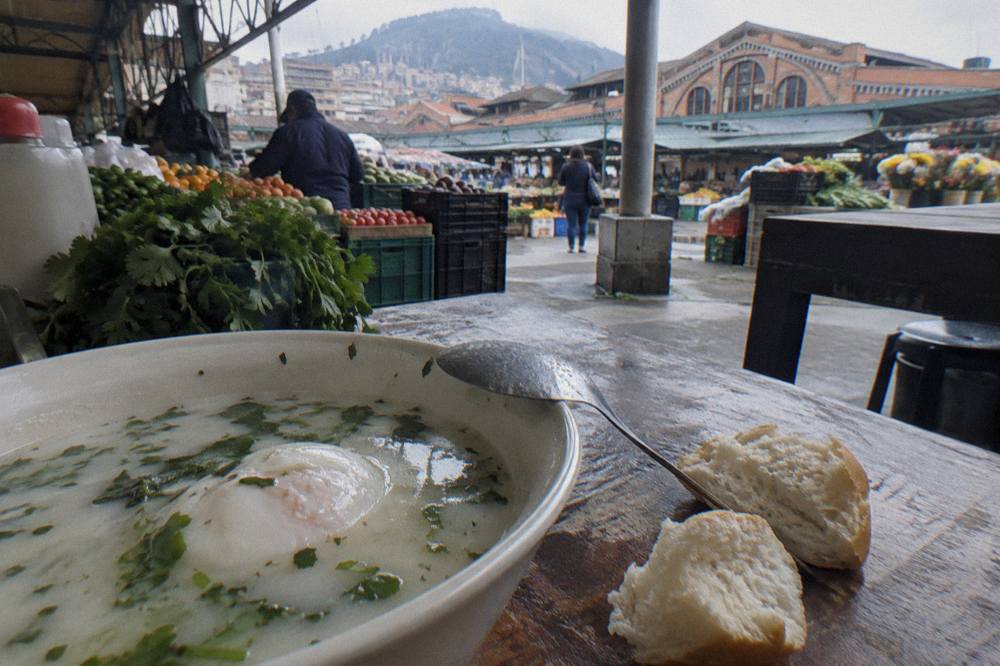
The country's most distinctive breakfast is arguably changua, a soup of milk, water, scallions, coriander and a whole egg poached in the broth, served with a piece of stale bread or calao dropped in to soften. It reads strange on paper. In practice it is exactly what a damp 10 degree Celsius morning in the highlands calls for, and Bogotá families have eaten it for generations. Calentado is the other pillar: literally "heated up", it is last night's rice and beans fried together with a fried egg, chorizo or hogao sauce on top, and an arepa on the side. It started as a way to not waste food and became a beloved dish in its own right.
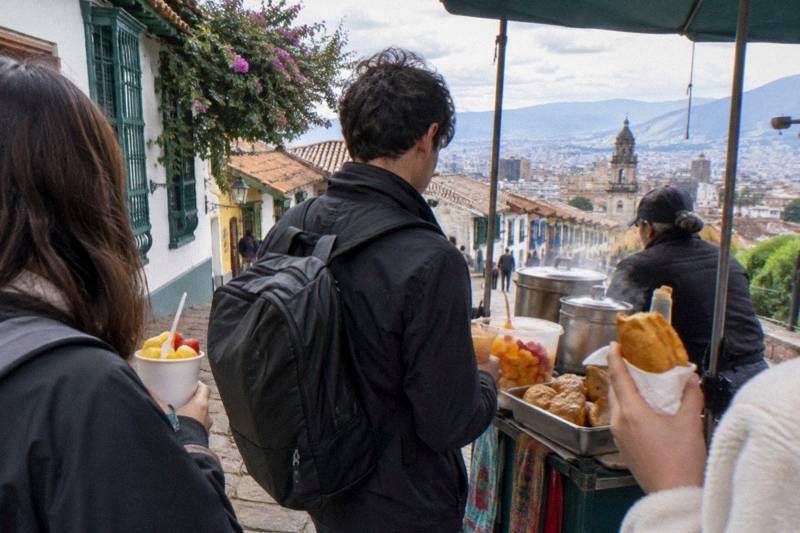
If you are visiting and want to taste your way through this rather than read about it, the most reviewed guided option is the Viejo Bogota Food Tour with 12+ Tastings, rated 5.0 across 714 reviews, from $55 per person for 4 hours.
The rest of this article walks through each breakfast, dish by dish, with the reported prices you might actually pay, plus where the traditions come from and how they fit into a visit. For a deeper city-specific treatment, the Bogotá breakfast guide to changua and tamal covers opening hours and neighbourhoods in more detail.
What Is Changua And Why Do Bogotanos Drink Soup For Breakfast?
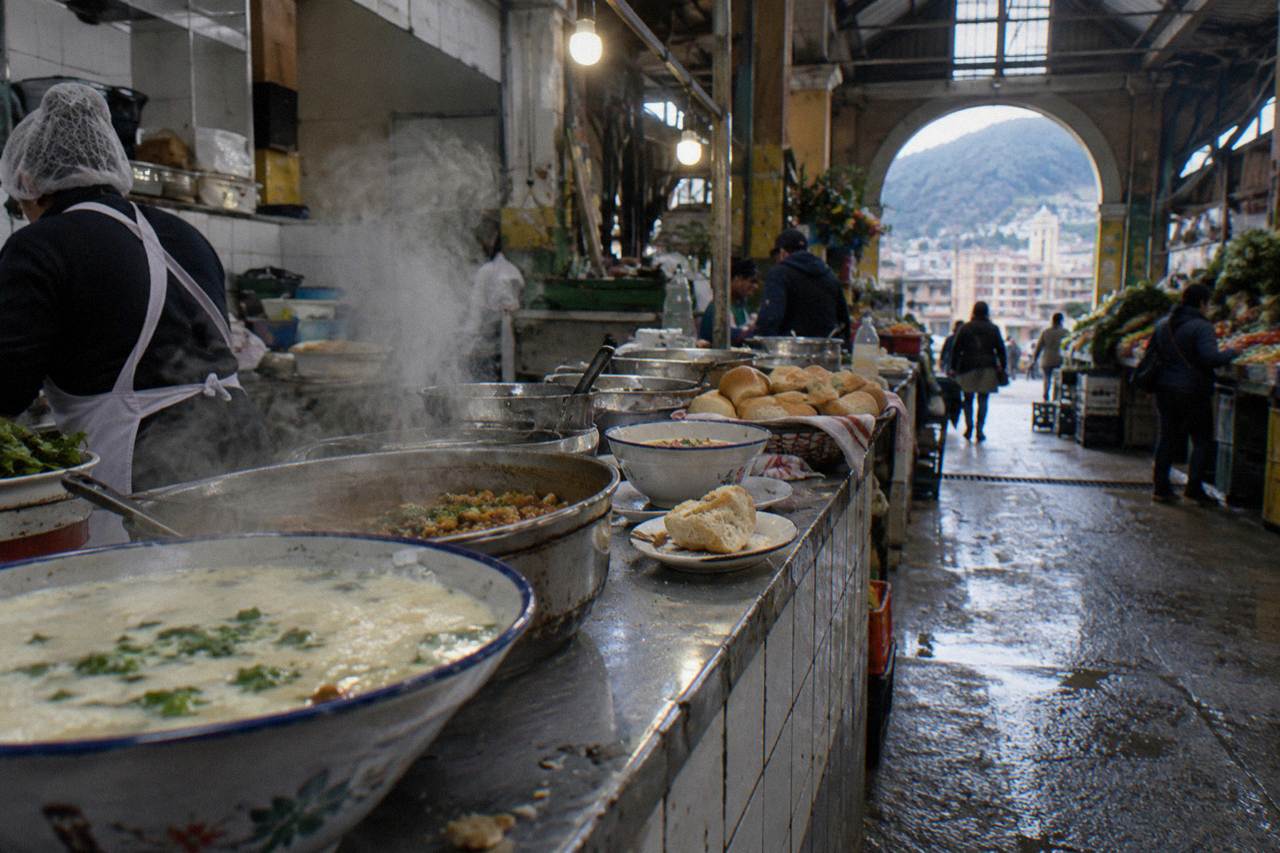
Changua is a milk-based soup from the Bogotá savannah: milk and water simmered with scallion and coriander, a raw egg cracked in to poach, and a piece of day-old bread or calao submerged to soak it up. It costs almost nothing to make, takes ten minutes, and is the definitive breakfast of the capital's highland culture.
The dish belongs to the Altiplano, the high plateau around Bogotá, and it exists precisely because of the climate. Mornings in the capital sit at single-digit temperatures for much of the year, and a bowl of hot milk with a poached egg in it is an efficient way to warm up before walking anywhere. Visitors sometimes find the texture of the barely set egg and soggy bread off-putting on first contact; locals find it the definition of comfort. Cilantro and long onion, a thin scallion variant, go in at the end for freshness.
Changua is a home dish more than a restaurant dish, though you will find it at traditional restaurants and market stalls, especially in and around La Candelaria and the city's plazas de mercado. It is usually eaten with almojábana, a cheese bread made with cuajada, or with plain bread and a strip of cheese that can be dropped into the soup the same way cheese goes into hot chocolate. Some people add a spoonful of cream. Nobody adds anything sweet.
The soup sits inside a broader highland breakfast family that visitors rarely hear about before arriving. Calao, the stale bread that goes into the bowl, is the same logic as the cheese in hot chocolate: highland food culture likes softening one thing inside another hot thing. If you want to understand Bogotá's food in one bowl, changua is the fastest route, and understanding it makes the rest of the traditional menu, from ajiaco to chocolate santafereño, make more sense.
What Is Calentado And Is It Really Just Leftovers?
Calentado is yesterday's rice and beans reheated in a pan, usually with a fried egg on top, slices of chorizo or carne desmechada, hogao tomato and onion sauce, and an arepa. It began as a poverty kitchen trick for using up dinner and is now ordered deliberately in restaurants across the country.
The word literally means "heated", and honesty is part of the charm: the dish does not pretend to be new food. The beans, typically cargamanto red beans, and the rice were cooked the night before, and reheating them in a hot pan with a little fat gives them crisp edges you cannot get from fresh rice. The egg and the hogao are added at the moment of service, so the plate arrives with the old and the new side by side. In Antioquia and the coffee region, where the dish is strongest, it is standard weekend fuel after a late night.
Calentado is the breakfast most likely to surprise visitors who expected something light. It is a full plate, closer to what many countries would serve at lunch, and Colombians eat it that way on purpose: the workday, or the Sunday household marathon, starts better with food that holds. A smaller cousin is the calentado paisa served with chicharrón, pork crackling, which pushes the plate firmly into feast territory.
| Breakfast dish | What it is | Typical timing | Where you will find it |
|---|---|---|---|
| Changua | Milk and egg soup with bread, scallion, coriander | Weekday mornings at home | Bogotá homes, traditional restaurants, market stalls |
| Calentado | Reheated rice and beans with egg, chorizo, hogao, arepa | Weekends and post-late mornings | Restaurants nationwide, strongest in the coffee region |
| Tamal | Corn dough wrapped in banana leaves with meat, steamed | Sunday breakfast, holidays, December | Market plazas, tamal stalls, family kitchens |
| Arepa with egg or cheese | Griddled corn cake, filled or topped | Any morning, on the go | Street stalls, bakeries, market stands |
| Chocolate santafereño | Hot chocolate with cheese and almojábana | Sunday mornings, afternoon onza | Traditional cafés, homes, La Candelaria |
If a guided walk is the way you would rather encounter this, the Bogotá Food Experience: Cultural & Culinary Tour spends 4 hours on exactly this kind of traditional food, from $47.15 per person, rated 4.9 across 615 reviews, and it is the walk this site points breakfast-curious visitors toward.
Why Are Tamales A Breakfast Food In Colombia?
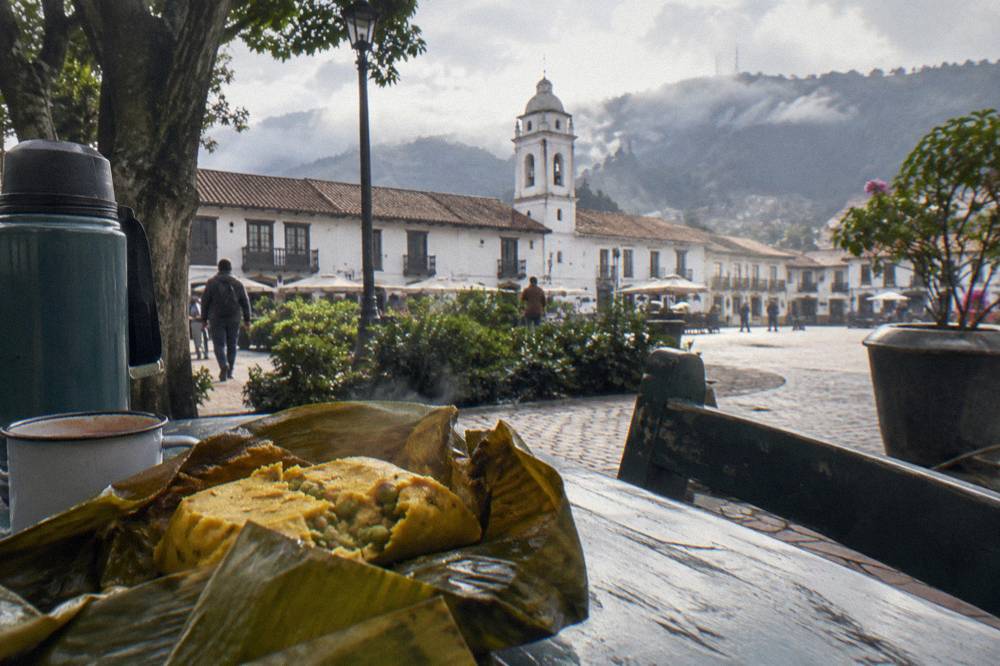
Tamales are Sunday breakfast food in Colombia, especially in Bogotá, where corn dough wrapped in banana leaves with chicken, pork and rice is steamed overnight and eaten in the morning with hot chocolate and bread. The city's tamal tradition is strong enough that it holds an annual festival, with the next edition across multiple market plazas in December 2026.
A Colombian tamal is not the Mexican tamal most visitors know. The dough is a softer, looser masa mixed with peas, rice, chicken, pork and sometimes egg, all wrapped in banana leaves rather than corn husks and steamed for hours. Bogotá's version, the tamal santafereño, is the Sunday classic: families buy them from the same stall or plaza for decades, and the meal of tamal, hot chocolate and bread is the traditional end of the weekend. The city's tamal festival has run across 17 or more market plazas in past editions, with a reported combo of tamal, a hot drink and bread at 10,000 COP, and the Festival del Tamal returns 5 to 8 December 2026.
The December timing is not random. Tamales are celebration food, tied to holidays, family gatherings and the Christmas season, which is why the festival lands in December and why tamal stalls do their best business then. On ordinary Sundays you will find them at market plazas like La Perseverancia, where family-run stalls serve them alongside ajiaco and lechona. For more on that world, see the guide to tamales, lechona and Sunday food in Bogotá.
One practical note for visitors: tamales are filling and rich, closer to a full lunch than a pastry breakfast. Ordering one with chocolate is a two-course event. Pace yourself, or make it your only real meal before mid-afternoon.
The Viejo Bogota Food Tour with 12+ Tastings is the most reviewed food walk compared on this site, rated 5.0 across 714 reviews, and its 4 hour route through the historic centre is the natural pairing for a morning spent thinking about traditional food.
What Are The Everyday Bakery Breakfasts: Arepas, Almojábanas And Pan De Bono?
For most Colombians on a workday, breakfast is grabbed at a corner bakery or window: an arepa with egg or cheese, an almojábana, a pan de bono, or an empanada, with coffee or hot chocolate. These are cheap, fast and everywhere: reported counter prices run around 4,300 to 4,700 COP for the cheese breads, roughly 1.30 to 1.50 USD.
This is the breakfast Colombia actually runs on. The panadería on the corner opens before dawn, and by 6:30 a.m. it has a queue of people buying bread to eat standing up or carry to work. Pan de bono, a small cheese and yuca-starch bread with a chewy stretch to it, and almojábana, its softer, lighter cousin made with fresh cuajada cheese, are the two classics. Empanadas, fried pastry pockets filled with meat or potato, sit in warmers by the till. Reported delivery-app prices from a current bakery listing put an almojábana around 4,700 COP and a pan de bono around 4,300 COP, with empanadas sold in buy-five-get-six packs; bakery counters are usually cheaper than delivery, so treat those as an upper guide and check the counter. More of these guides are collected on Bogota Food Tours.
The arepa is the constant across all of it. Griddled corn cakes appear at every meal in some regions, and at breakfast the versions to know are the arepa con huevo of the Caribbean coast, a fried corn pocket with an egg inside, and the plain griddled arepa served alongside calentado or changua inland. With cheese, with butter, with hogao, split and stuffed, the variations are endless and regional pride about them is real. On the coast the arepa de huevo is a full breakfast in one hand.
| Everyday item | What it is | Reported price guide |
|---|---|---|
| Almojábana | Soft cheese bread made with cuajada | Around 4,700 COP each |
| Pan de bono | Chewy cheese and yuca-starch bread | Around 4,300 COP each |
| Empanadas | Fried pastry with meat or potato filling | Sold in packs, buy-5-get-6 deals reported |
| Fresh juice at a market cart | Lulo juice; curuba with milk | 4,000 and 5,000 COP reported at a La Candelaria cart |
| Tamal festival combo | Tamal, hot drink and bread | 10,000 COP reported at past festival editions |
Prices at stalls and counters move, delivery apps add a margin, and the peso floats: as of early November 2026 one US dollar bought roughly 3,183 COP, so every 3,000 or so pesos is about a dollar. Even with that buffer, the honest summary is that bakery breakfast in Colombia costs very little by traveller standards, and the fruit juices sold beside it, lulo, curuba, mora, cost barely more.
Is Hot Chocolate With Cheese Really A Breakfast Thing?
Yes. Chocolate santafereño, thick hot chocolate served with a piece of fresh cheese dropped into the cup to melt, alongside almojábanas and bread, is a classic Bogotá breakfast and afternoon tradition, tied to the city's colonial era. The historic spot most associated with it, La Puerta Falsa beside the cathedral, has been serving it since 1816.
The mechanics are simple and the effect is strange until it is not: you drink part of the chocolate, drop in the cheese, let it soften, and fish it out with a spoon as the drink cools and thickens. The cheese is a mild fresh queso that does not fully melt so much as turn silky. Almojábana or bread goes alongside, and the whole tray is called an onza when taken in the afternoon. The tradition belongs to the santafereño kitchen of Bogotá's old families, and it survives both in homes and in a small set of traditional establishments around La Candelaria.
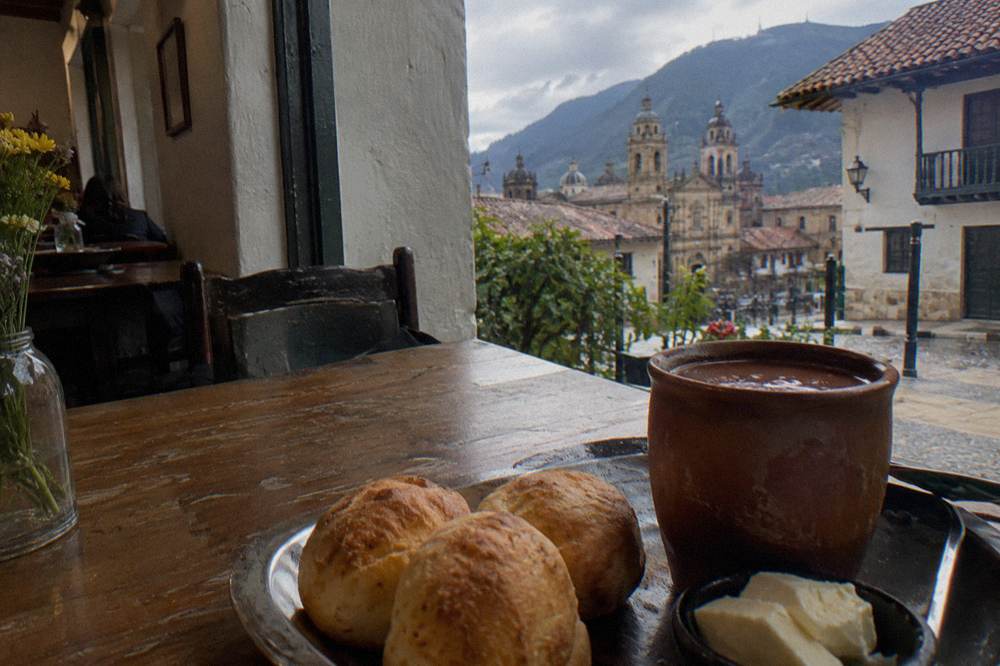
Coffee is, of course, the other morning drink, and Colombia's relationship with it is complicated in an interesting way: for decades the best beans were exported and locals drank cheaper blends, a gap the specialty coffee wave has now closed in the cities. Bogotá in 2026 is one of Latin America's better coffee cities, with roasters like Amor Perfecto, a 1990s pioneer whose baristas have taken multiple national titles, and Catación Pública in Usaquén, which runs public cuppings in a certified lab. The Coffee and Chocolate tour in Bogota, rated 5.0 across 79 reviews, from $49 per person for 2 hours 15 minutes, is a short guided way into both halves of the hot-drink tradition.
For a full treatment of the cheese-in-chocolate ritual, see chocolate santafereño, hot chocolate with cheese.
How Does Breakfast Change By Region In Colombia?
Breakfast in Colombia is regional to the bone: changua and chocolate with cheese in Bogotá's highlands, calentado and arepas in the coffee region, fried arepa con huevo and coastal cheese on the Caribbean coast, and river fish and yuca along the rivers. The constants everywhere are corn, cheese, eggs and something hot to drink.
The coast eats differently from the interior. In Cartagena, Barranquilla and Santa Marta the morning plate is arepa de huevo, the fried pocket described earlier, or eggs with patacón, fried plantain, and fresh juice from fruits the highlands barely sees. Cheese dominates: costeño cheese is salty and firm, and queso frito, fried cheese, appears on breakfast plates with alarming regularity for visitors and complete normality for locals. In Santander the tradition runs to mute, a heavy corn and offal soup, and caldo de pescado along the Magdalena River.
The paisa region around Medellín is calentado country, as covered above, often with chicharrón and arepa and a chocolate to finish. In the coffee region the same plate appears with the region's own soft arepa, thin and pale, which puzzles first-timers who expect the griddled golden version. In Cali and the southwest, mazamorra, a sweet corn porridge with panela, and pandebono hold the morning. None of this is exotic within Colombia; it is simply a big country with distinct kitchens, and breakfast is where the differences show fastest.
For a visitor basing themselves in Bogotá, the practical takeaway is that the capital is the best single place to try the highland tradition, changua, tamal, chocolate with cheese, while market stalls and a good food walk will surface the rest. This site, Bogota Food Tours, exists for exactly that junction of curiosity and appetite.
When And Where Do Colombians Actually Eat Breakfast?
Colombians eat breakfast early and often standing up: bakery counters open before 6 a.m., market stalls serve changua and caldo from around 7 a.m., and office workers grab bread and coffee on the way in. Weekend breakfast is the exception, a long family affair around tamales, calentado or chocolate with cheese, often mid-morning.
The weekday rhythm explains the food. A bakery breakfast exists because nobody has time, and soup exists because the highland morning is cold. Market plazas are the other great breakfast venue: La Perseverancia, with reported hours of 8 a.m. to 4 p.m. weekdays and 6 a.m. to 5 p.m. weekends, is where family stalls serve ajiaco, lechona and traditional plates to neighbourhood regulars, and Paloquemao's wholesale energy peaks pre-dawn to mid-morning before thinning after lunch. Arriving early is not a tourist trick, it is how the city eats.
One health note worth knowing before a food-focused visit: Bogotá sits at about 2,640 m, and the city's official visitor guidance recommends a day or two of light acclimatisation, hydration, lighter meals and little alcohol in the first days. It pairs neatly with breakfast culture: a bowl of changua is not a heavy plate by local design, and the hot drinks help.
For travellers who want structure, a guided morning walk does the finding for you.
Common Questions About Colombian Breakfast
What Do Colombians Eat For Breakfast?
Mostly hot, savoury food: changua soup in Bogotá, calentado with arepa in the coffee region, arepas con huevo on the coast, tamales on Sundays, and bakery breads like pan de bono and almojábana on workdays, with coffee or hot chocolate with cheese.
Is Colombian Breakfast Spicy?
Generally no. Colombian food is not a chili-forward cuisine, and breakfast is the mildest meal of the day. Flavour comes from scallion, coriander, hogao sauce and cheese rather than heat, and hot sauce is offered on the side rather than cooked in.
What Is The Most Traditional Breakfast In Bogotá?
Changua, the milk and egg soup with bread, is the signature highland breakfast, with chocolate santafereño, hot chocolate with melted cheese, and tamales as the traditional Sunday pairing.
How Much Does Breakfast Cost In Colombia?
At a bakery counter, reported prices run around 4,300 to 4,700 COP for pan de bono or an almojábana, roughly 1.30 to 1.50 USD, with market juices around 4,000 to 5,000 COP. A tamal festival combo has been reported at 10,000 COP. Restaurant breakfasts cost more; check the menu.
Do Colombians Eat Breakfast Sweet Or Savoury?
Savoury, overwhelmingly. Sweet things exist, mazamorra with panela in the southwest, obleas as a snack, but the core breakfasts are soup, rice and beans, corn cakes and cheese. Even the hot chocolate comes with savoury cheese in it.
Can You Find These Breakfasts On A Guided Tour?
Some guided food walks include traditional stops and coffee experiences; exactly which tastings a listing includes is stated on its booking page, so check there before booking if a specific dish matters to you.