Bogotá Breakfast Guide: Changua, Calentado, Tamal And Coffee
Breakfast in Bogotá is a hot, sit-down affair built for a city at 2,640 m: milk soup with bread, reheated beans and rice, corn tamales, and chocolate with cheese. Here is what locals actually eat at 7am, where the breakfast spots cluster, and how a morning food walk handles all of it.
Short answer
A typical Bogotá breakfast is changua (a warm milk and egg soup with stale bread), calentado (beans and rice reheated with egg and arepa), or tamal with hot chocolate. Bakery items like almojábanas run about 4,700 COP and pan de bono about 4,300 COP, reported. A morning food walk from $47.15 per person covers several stops with a guide.
Breakfast in Bogotá is not a croissant grabbed on the run. It is soup, it is reheated dinner, it is corn dough steamed in leaves, and it is almost always hot, because the city sits at about 2,640 m and mornings are cold even when the afternoons are bright. Visitors who sleep through it miss a third of what the city's food culture is.
This guide walks through the three dishes that define a bogotano morning, where to find them, what the coffee and chocolate side of breakfast looks like, how the markets handle the first meal of the day, and whether a guided morning walk is worth booking over winging it. Prices for tours come from the operators' booking pages; local prices are marked as reported figures and should be checked on the day.
What Does A Real Bogotá Breakfast Look Like?
A real Bogotá breakfast is hot, savoury and built to fill you up. Expect a bowl of changua, a milk-based soup, or calentado, a plate of reheated beans and rice, or a steamed corn tamal. Any of these usually arrives alongside bread, an arepa, eggs or a cup of hot chocolate, making the first meal of the day a proper one. It is built for a cold mountain morning and a long day, not for lightness. Bakery counters open early and sell almojábanas and pan de bono by the unit, reported at around 4,700 and 4,300 COP respectively, and many people eat standing at the counter before work rather than sitting down.
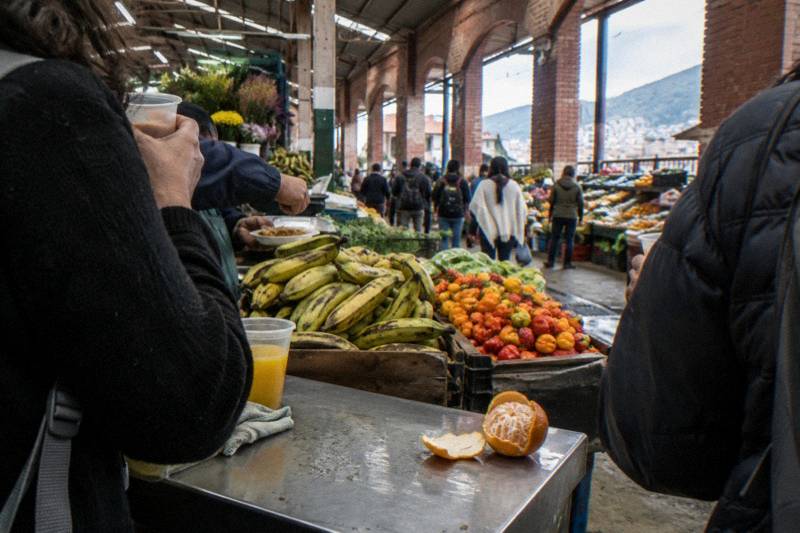
The pattern surprises visitors who expect tropical fruit and cold juice. Fruit is everywhere, but it comes later, in glasses of thick juice alongside the hot plate rather than instead of it. The other surprise is how cheaply the basics are done: a tamal with a hot drink and bread was sold as a 10,000 COP combo across more than 17 city plazas during the December tamal festival, reported, and everyday bakery pricing sits in the same low band.
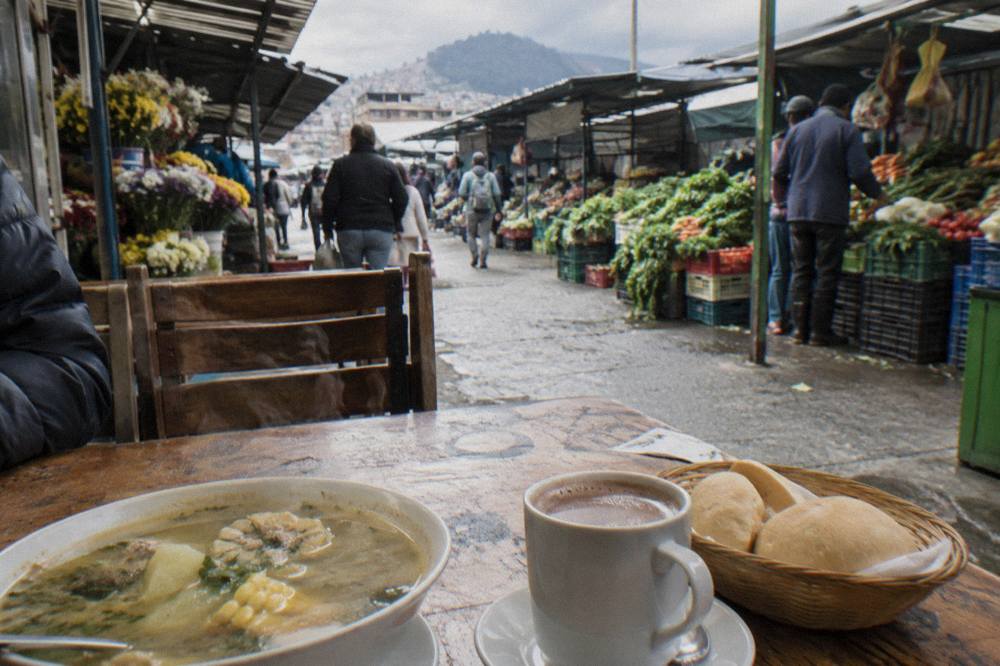
There is a rhythm to it all. Bakeries and market stalls open before 7am, office workers take a proper break mid-morning, and the whole hot-breakfast culture slows after about 10am, when the kitchens pivot to lunch plates like ajiaco. Arrive early and you eat like a local; arrive at 11am and you eat whatever is left.
One practical note before the dishes: the altitude changes appetites. The city's health guidance recommends light meals and steady hydration in the first day or two at 2,640 m, which is a good reason to treat a big changua as a challenge rather than an obligation on day one. Our piece on eating and drinking well at Bogotá's altitude covers the adjustment in more detail.
Changua, Calentado And Tamal: The Big Three Morning Dishes
Changua is a milk and water broth poached with an egg and served with stale bread and cilantro, calentado is last night's beans and rice fried back to life with egg and arepa, and tamal is corn dough steamed in banana leaves with meat and vegetables. Together they are the backbone of the bogotano breakfast table, and each one explains something about the city: changua its cold mornings, calentado its waste-nothing kitchens, and tamal its Sunday-and-market traditions. None of them costs much at a market stall or bakery.
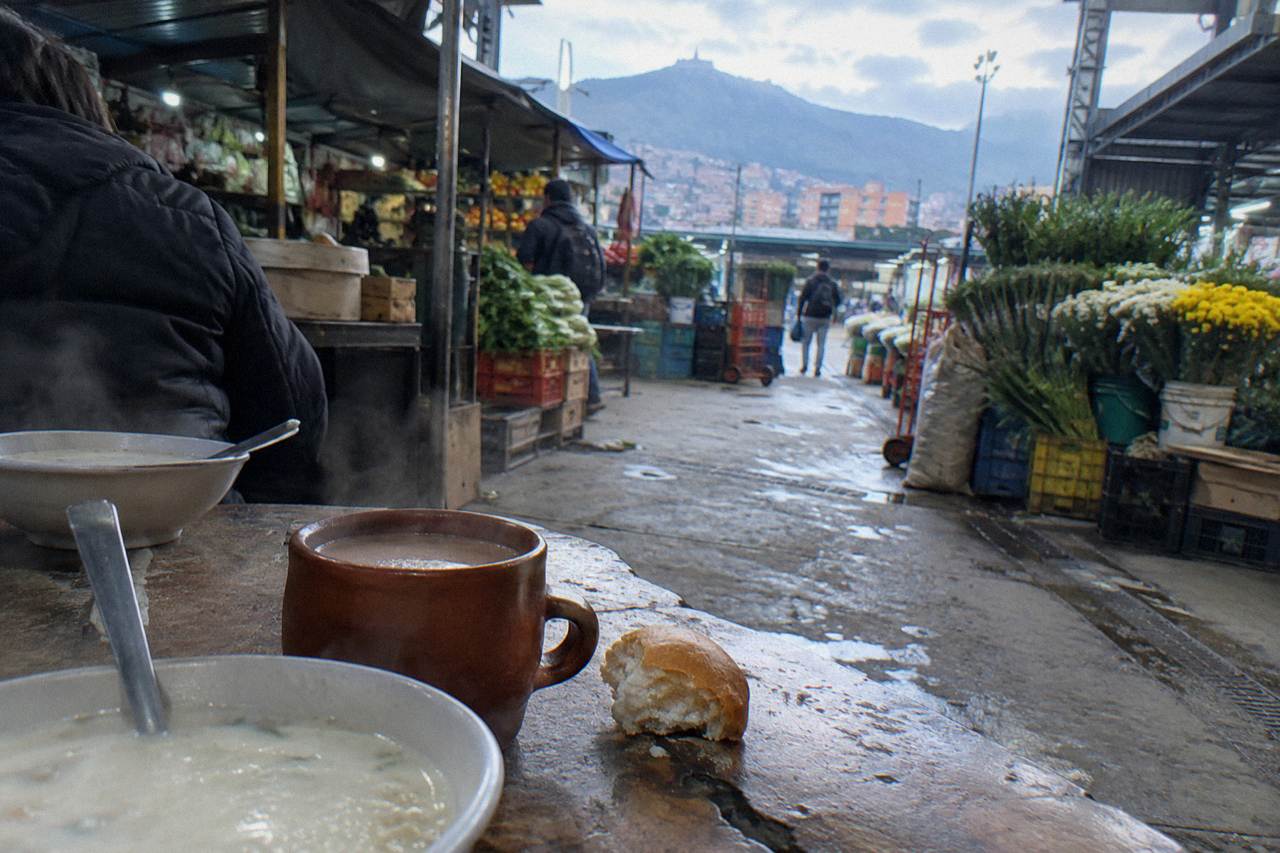
Changua is the one that divides visitors hardest. The broth is milk and water with a pinch of salt, an egg is cracked in raw and gently poached, and a piece of day-old bread called calado sinks into the bowl so it softens as you eat. Cilantro goes on top. It reads like a strange soup for breakfast until the first cold morning makes total sense of it; families serve it as a restorative, and market stalls serve it to workers before dawn.
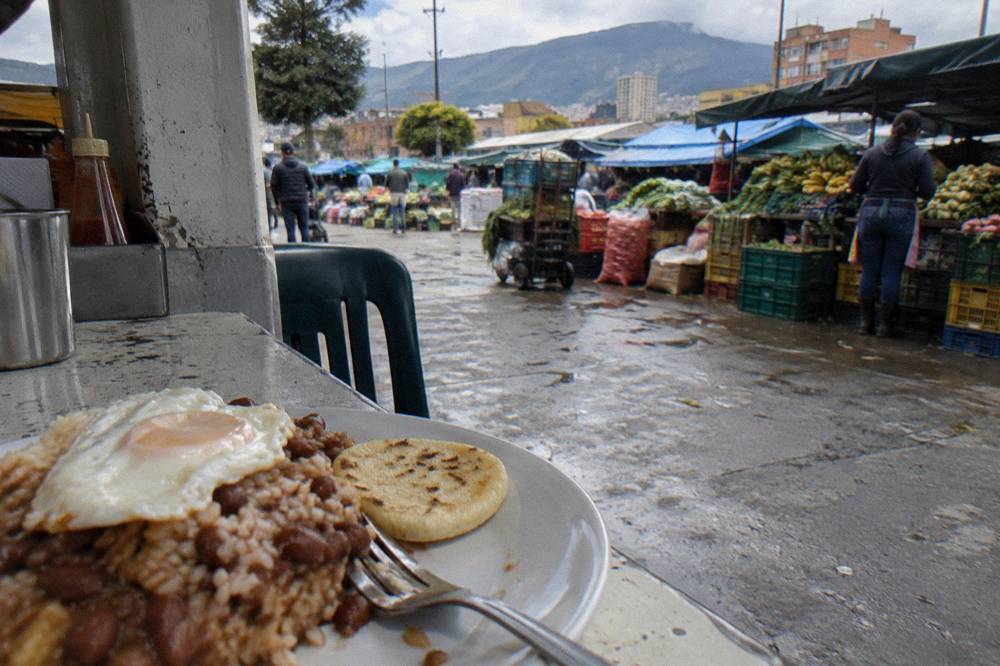
Calentado, literally "heated up", is the honest one. Beans, rice and sometimes chorizo or hogao sauce from the previous night's dinner go back into a pan, an egg lands on top, and an arepa and hot chocolate close the plate. It was invented as a way to use leftovers and became the most common substantial breakfast in the country, particularly in the central region around Bogotá.
Tamal is the weekend heavyweight. Corn dough is mixed with pork or chicken, peas, carrot and rice, wrapped in banana leaves, and steamed for hours; in Bogotá it is eaten with bread rather than cutlery, and often with a cup of hot chocolate. The city's December tamal festival ran the tamal, hot drink and bread combo at 10,000 COP across its participating plazas, reported, and prior editions sold more than 14,484 tamales, a number that tells you how central this dish is to family Sundays.
If you want to try all three in one morning without mapping the stalls yourself, a guided walk does that work for you. The options below are the morning-friendly picks from the range of food walks compared here.
The Bogotá Food Experience: Cultural & Culinary Tour is a 4-hour walk rated 4.9 across 615 reviews, from $47.15 per person, and its morning slots begin where breakfast begins, so early risers get the full hot-food culture rather than the lunch version. What a listing tastes is only what its inclusions name, so check the booking page for the current stop list.
Where Breakfast Spots Cluster Across Bogotá
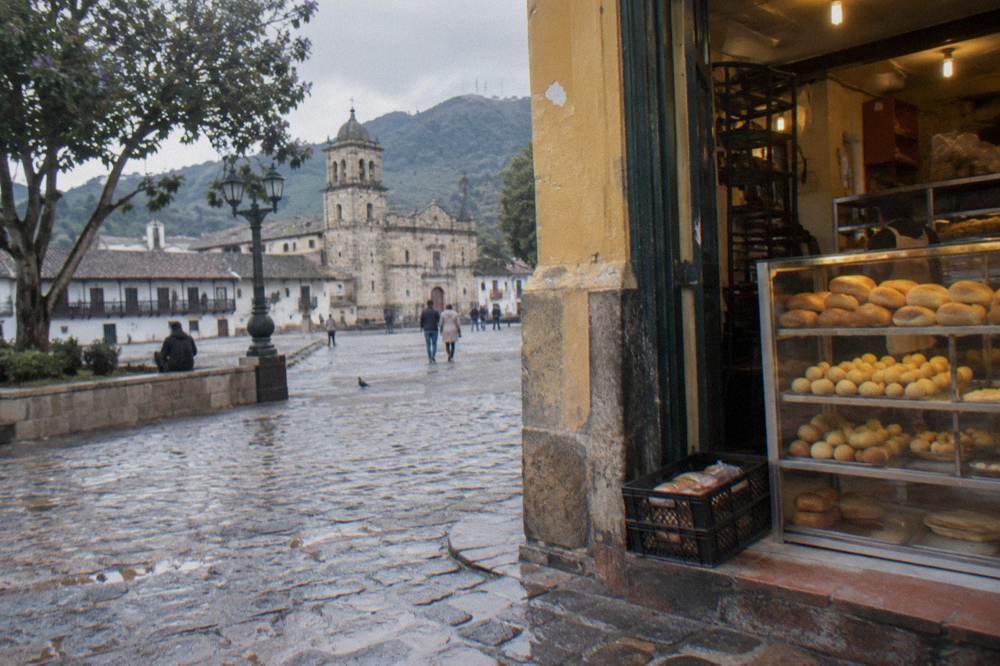
Breakfast spots cluster in four kinds of places: the historic centre around La Candelaria, the market plazas like Paloquemao and La Perseverancia, the bakery-dense residential strips of Chapinero and Usaquén, and the corner pandeos of every working neighbourhood. Each suits a different traveller. La Candelaria pairs breakfast with sightseeing, the markets give the most local version, Chapinero and Usaquén add specialty coffee, and the corner bakeries are simply how the city actually eats at 7am.
La Candelaria is the obvious first stop for visitors because it is where the museums are, and breakfast here runs from tiny traditional rooms to street carts. Reported cluster pricing from one central cart lists lulo juice at 4,000 COP and curuba juice with milk at 5,000 COP, which gives a sense of the juice culture that accompanies a hot plate. The neighbourhood's official hours for the wider market circuit matter too: La Perseverancia, the traditional-food plaza known for ajiaco, lechona and mondongo from family-run stalls, opens 8am to 4pm on weekdays and from 6am on weekends.
Chapinero and Usaquén carry the modern side. Chapinero Alto was named the 7th coolest neighbourhood in the world for 2026 by Time Out, the only Latin American entry in the top 10, and its breakfast tables sit inside a dense specialty coffee scene; Usaquén adds a weekend flea and food market on Carrera 6A between Calles 119 and 120A, running 9am to 5:30pm on Saturdays, Sundays and holiday Mondays with stalls selling arepas, fresh-cut fruit, empanadas and hot chocolate.
For the full traditional sweep, the Bogotá: True Colombian Walking Tour + Local Snacks is a 2 to 3 hour walk from $54.68 per person, rated 4.9 across 130 reviews, and pairs the historic centre's streets with local snacks along the way. Check availability on its booking page if a shorter morning suits your schedule.
The practical choice is time. If your morning holds Monserrate or the Gold Museum, breakfast in La Candelaria saves a commute; if you want the biggest, most local version, get to a market plaza early, before the wholesale energy thins after midday. Public transport makes both easy, with the unified TransMilenio fare at a reported COP 3,550 since January 2026.
Should You Book A Morning Food Walk Or Wing It?
A guided morning walk makes sense if you want the counted tastings, the market navigation and the context explained, while winging it works if you are happy choosing stalls yourself, speak some Spanish and have time to wander; the walks compared here run from $17.71 to $55 per person for shared formats. The low end is the Shared Bogotá Street Food Tour at $17.71, 4.6 across 30 reviews, and the high end of the shared breakfast-friendly group is the Viejo Bogota Food Tour at $55 per person, rated a perfect 5.0 across 714 reviews, the most reviewed food walk described on this site.
The case for a guide is not knowledge of what changua is; you now know that. It is access and pacing. A good walk moves you through five or six stops in three or four hours, orders for the group, handles dietary questions before the food lands, and explains what each dish means to the city while you eat it. On markets like Paloquemao, where hundreds of stalls open before dawn, a guide also cuts straight to the vendors worth stopping at. More of these guides are collected on Bogota Food Tours.
The case for going alone is cost and freedom. A self-guided breakfast crawl through one plaza and one bakery could easily stay under the price of a tour when you are buying single items at reported market prices, and you can linger. The trade is that you will taste fewer things, because a solo traveller rarely orders six portions.
| Walk | Duration | From (USD) | Rating | Reviews |
|---|---|---|---|---|
| Shared Bogotá Street Food Tour | 3 hours | $17.71 | 4.6 | 30 |
| Bogotá: True Colombian Walking Tour + Local Snacks | 2 to 3 hours | $54.68 | 4.9 | 130 |
| Bogotá Food Experience: Cultural & Culinary Tour | 4 hours | $47.15 | 4.9 | 615 |
| Viejo Bogota Food Tour with 12+ Tastings | 4 hours | $55 | 5.0 | 714 |
| Food Tour in La Candelaria Bogotá | 3 hours | $63, varies by group size | 4.9 | 72 |
Note the asterisk behind one of those figures: the Food Tour in La Candelaria shows a from-price that varies by group size, so treat its number as the entry point rather than the final one. That tour is another strong morning pick, from $63 per person and rated 4.9 across 72 reviews.
Whichever way you lean, book the earliest slot offered. Breakfast dishes thin out by late morning as kitchens pivot to lunch, and a 9am start catches the full range that an 11am start simply will not.
Bogotá Coffee And Hot Chocolate At Breakfast
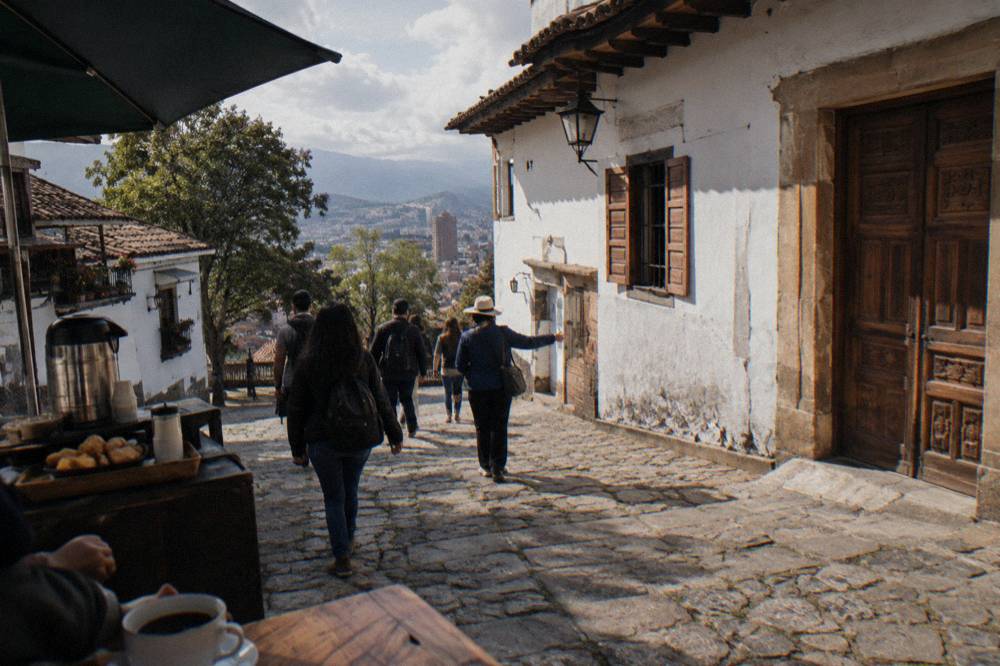
Bogotá breakfast drinks run on two tracks: specialty coffee, poured by a roasting scene that cups single-origin Colombian beans from farms across the country, and chocolate santafereño, thick hot chocolate served with cheese to melt into the cup, alongside almojábanas and bread. One is the modern city; the other is the oldest continuous breakfast tradition in the capital, anchored by addresses like La Puerta Falsa, operating since 1816. Most bogotanos take both, on different mornings, and neither is an afterthought.
The coffee side deserves its own morning. Bogotá's roasters, including Amor Perfecto, a pioneer since the 1990s whose baristas have taken seven national barista championships, Azahar, which buys directly from more than 420 Colombian farmers, and Colo Coffee Roasters in Usaquén, with visible in-house roasting, all open early and many run public cuppings. A tasting tour compresses that scene into a couple of hours: the Coffee and Chocolate tour in Bogotá covers both drinks in 2 hours 15 minutes from $49 per person, rated 5.0 across 79 reviews.
The chocolate side is the one to try at least once, and the classic serving is deliberate: the chocolate arrives thick and hot, a square of fresh cheese goes into the cup to soften, and an almojábana or bread comes alongside. La Puerta Falsa, next to the cathedral and operating since 1816, is the historic address for the full ritual. Workshops exist too: Casa Orígenes, opened in October 2026 in a restored republican house in La Candelaria, focuses on Colombian chocolate with bean-to-bar tastings, and Cacaote in the same neighbourhood runs guided chocolate santafereño preparation sessions.
If a two-drink morning is exactly your speed, this is the tour built for it.
For depth on either drink, the guides to coffee tasting and cupping in Bogotá and to chocolate santafereño with cheese go much further than a breakfast stop can.
Breakfast At Bogotá's Markets
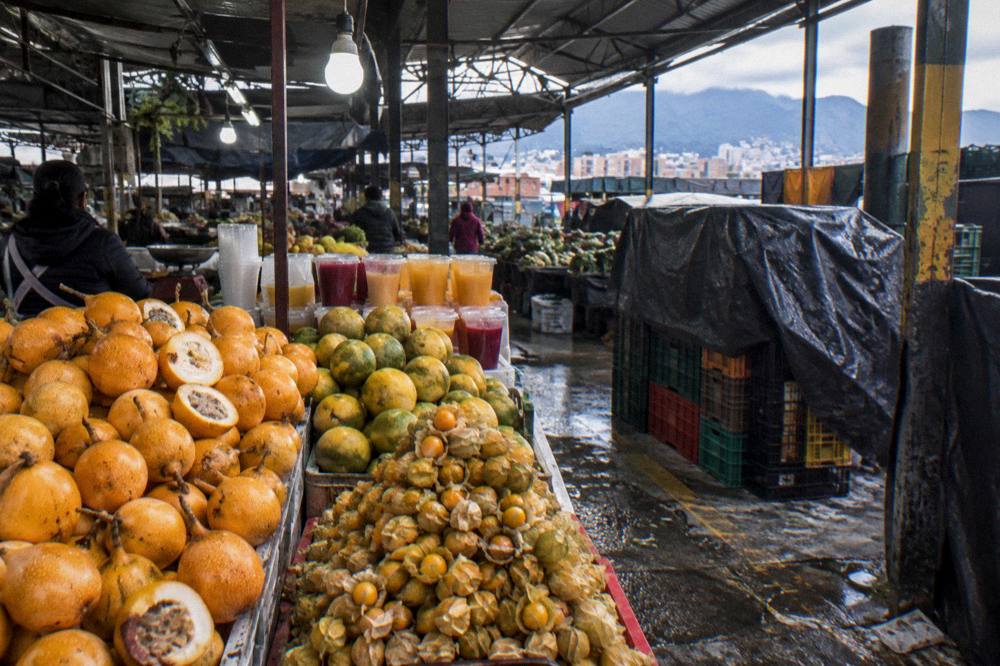
The market plazas are where breakfast is most itself: Paloquemao opens at 4:30am on weekdays with wholesale energy and fruit tastes until mid-morning, La Perseverancia serves traditional plates from family stalls, and the smaller plazas run their own breakfast hours, all best visited before the crowd thins after midday. A market breakfast is the cheapest and most local version of everything in this guide, and it is the format most morning food walks build around.
Paloquemao is the flagship. Official hours are Monday to Saturday 4:30am to 4:30pm and Sundays and holidays 5am to 4:30 pm, with the flower section daily until 11am; the pre-dawn to mid-morning window is when trucks unload and vendors offer tastes of fruits like granadilla, lulo and uchuva. Several guided options centre on it, including the shared exotic-fruit tour at Paloquemao, a 3-hour walk from $50.17 per person rated 4.6 across 32 reviews.
La Perseverancia, featured in the city's 2026 market route for traditional food, opens 8am to 4pm weekdays and from 6am on weekends, and its stalls turn out ajiaco, lechona, mute santandereano, mondongo and fritanga; several of those are lunch dishes, but a weekend 7am arrival puts you in line with the breakfast plates. The city's official market pages carry the current hours, as reported schedules can shift.
| Plaza | Breakfast-relevant hours | What the morning brings |
|---|---|---|
| Paloquemao | Mon-Sat 4:30am-4:30pm; Sun and holidays 5am-4:30 pm | Wholesale energy, fruit tastes, juice and hot plates |
| La Perseverancia | Mon-Fri 8am-4pm; weekends from 6am | Traditional dishes from family-run stalls |
| Samper Mendoza | Nocturnal, Mon and Thu 9pm-5am | Herb and plant market, not a breakfast stop |
| Usaquén flea and food market | Sat, Sun and holiday Mon 9am-5:30pm | Arepas, fresh fruit, empanadas, hot chocolate |
Samper Mendoza is listed above for completeness, since its nocturnal schedule makes it a curiosity rather than a breakfast plan: it runs Mondays and Thursdays 9pm to 5am as the wholesale hub for hundreds of species of herbs and plants, and one count documented 391 species in the plaza, 201 of them native to Colombia.

For planning a full morning around a market, the Paloquemao market food guide and the page on market hours and the best time to go carry the detail this breakfast overview only touches.
Practical Tips For Eating Breakfast In Bogotá
Eat early, carry small cash in the form of low-denomination pesos for market stalls, expect hot and filling portions at reported prices under 10,000 COP for most single items, and give your first day at altitude lighter meals rather than a full tamal assault; tipping is not expected at counters or street stalls. None of this is complicated, but each point saves a small failure on a cold morning when you just want breakfast to work.
The money question first. Bakery items and market breakfasts are priced in pesos, with reported figures like 4,700 COP for an almojábana and 10,000 COP for a festival tamal combo, so a modest amount of cash covers a full morning; cards are fine in cafés and restaurants but not at every stall. The exchange rate has run near 3,183 COP to the dollar, so the arithmetic stays friendly even when you round up.
Timing matters more than money. The hot-breakfast kitchen winds down from about 10am, Paloquemao's best energy is before mid-morning, and La Candelaria's breakfast strip serves the museum crowd rather than a late riser. Set an alarm once. You can always sleep in on day two.
Two health notes, both reported rather than alarmist. Tap water in Bogotá is officially potable, though some visitors still choose bottled water. And the altitude guidance for a city at 2,640 m recommends one to two days of adaptation, steady hydration and lighter meals before strenuous activity, which is a fair argument for easing into the big plates. The city's own health guidance for first-time visitors sets this out plainly.
| Situation | What works best | Rough reported cost |
|---|---|---|
| Museum morning in the centre | Bakery plus juice cart in La Candelaria | 4,000 to 5,000 COP per juice |
| Full local immersion | Weekday early arrival at Paloquemao | Single items under 10,000 COP |
| Weekend with family | Tamal with chocolate at a plaza | 10,000 COP festival combo |
| Coffee-focused morning | A 1 to 3 hour tasting walk or roastery visit | From $20 per person on tours |
| First morning at altitude | Lighter plate, more fluids | Same as above |
Dietary needs deserve one honest caveat. No listing described here is flagged as vegan or gluten-free, and traditional breakfast dishes lean on milk, bread and egg; if that matters, message the operator before booking any walk, and for self-guided eating, know that roughly 36 percent of Bogotá restaurants now offer vegan or vegetarian options, per a 2025 city report, though those are lunch-and-dinner venues more than breakfast rooms. The vegetarian and vegan guide covers that side of the city.
Common Questions About Breakfast In Bogotá
What Does Bogotá Eat For Breakfast?
Changua, a warm milk and egg soup with bread; calentado, reheated beans and rice with egg and arepa; tamal, steamed corn dough in banana leaves; and bakery items like almojábanas and pan de bono, all typically served with coffee or hot chocolate.
What Is Changua And Why Do People Put Bread In It?
Changua is a milk and water broth with a poached egg, cilantro and a piece of day-old bread called calado dropped in to soften. It is a cold-morning restorative native to the Bogotá highlands, and the bread is part of the dish, not an accident.
Is Breakfast In Bogotá Cheap?
Yes, by most traveller standards. Reported figures put bakery items around 4,300 to 4,700 COP each and a tamal with a hot drink and bread at a 10,000 COP festival combo; a guided walk covering many tastings runs from $17.71 per person for shared formats.
What Time Do Bogotá Breakfast Places Open?
Bakeries and market stalls open before 7am, Paloquemao market opens at 4:30am on weekdays and 5am on Sundays, and La Perseverancia opens 8am on weekdays and 6am on weekends. The hot-breakfast kitchen largely winds down by late morning.
Can I Get Coffee Or Hot Chocolate With Breakfast?
Both are standard. Specialty coffee roasters open early across Chapinero and Usaquén, and chocolate santafereño, thick hot chocolate with cheese melted into the cup, is the city's oldest breakfast drink, served with almojábanas or bread.
Is A Breakfast Food Walk In Bogotá Worth It?
If you want counted tastings, market navigation and context in three to four hours, yes: the walks compared here run from $17.71 to $55 per person shared, with the most reviewed option rated 5.0 across 714 reviews. If you are happy choosing stalls yourself, a self-guided crawl costs less and tastes fewer things.