What Food Is Bogotá Famous For?
Ajiaco, tamales, changua, lechona, arepas and chocolate santafereño: the dishes Bogotá is known for, what they are, where to try them, and how one guided walk can cover them all.
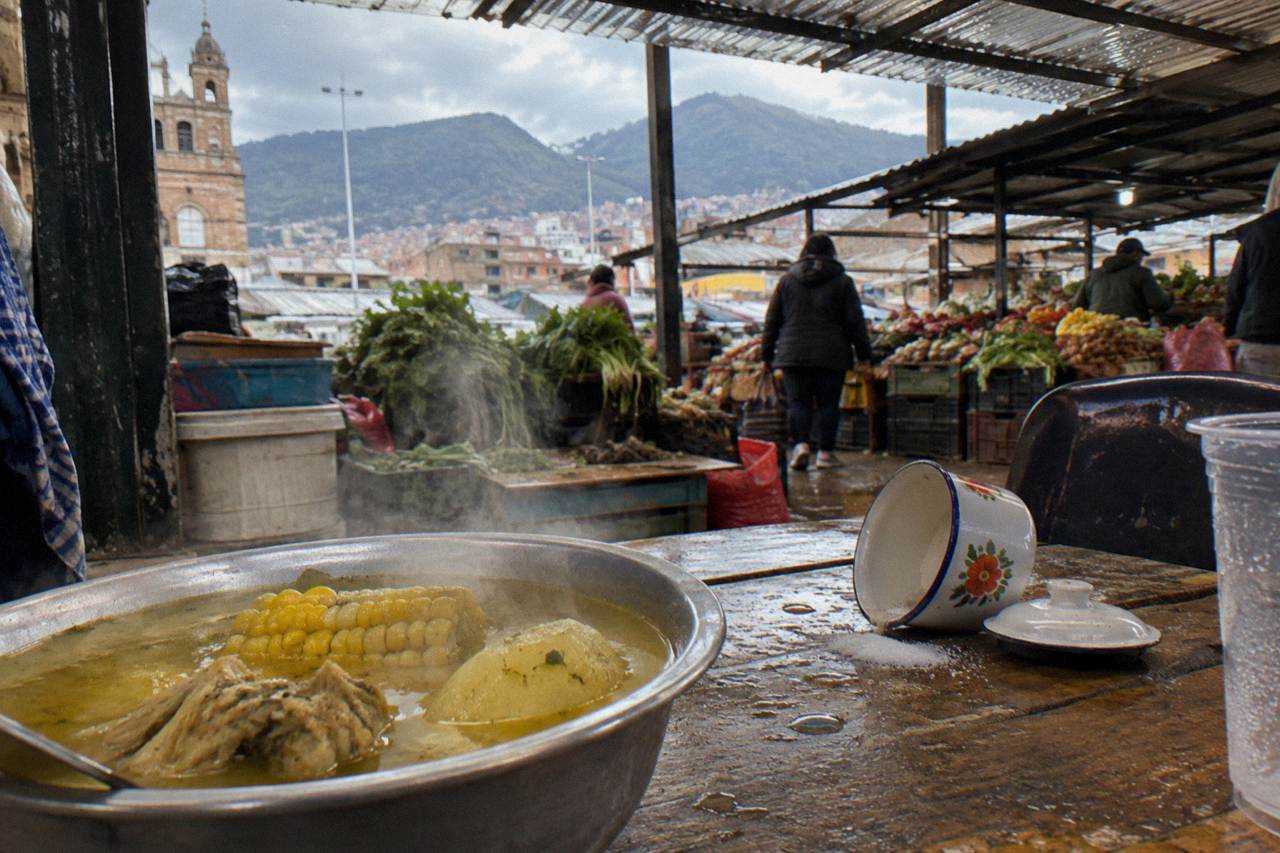
Bogotá is famous for ajiaco, a chicken and potato soup thickened with three potato types and a herb called guascas, plus tamales, changua, lechona, arepas, empanadas, pan de bono, obleas and chocolate santafereño, hot chocolate served with cheese to melt into the cup. Around all of it sits a fruit culture tied to Paloquemao market, where granadilla, lulo and uchuva are everyday purchases rather than exotic novelties.
This is highland cooking. The city sits at about 2,640 m, cool enough that lunch has always meant something hot and substantial, and its dishes come from the countryside of the Bogotá savanna rather than from the coast. Ajiaco, tamal and changua all predate the modern restaurant scene by generations, and they still anchor Sunday lunches and market-plaza counters across the city. The newer layer, specialty coffee bars, craft beer and a serious restaurant district in Chapinero, has grown around those foundations without replacing them.
The altitude also explains the texture of the food culture. Because Bogotá is a hub for the whole country, produce from every climate zone passes through its markets within days of harvest, which is why a single stall can hold fruit from the Caribbean coast, the Amazon foothills and the high plains at once. That same geography pulled migration from every region into the capital, and each wave brought its food: lechona from Tolima, arepas from every direction, coastal fish for the ceviche bars of the north. The result is a city whose classic dishes are local but whose appetite is national.
If you want the short version before a trip, the table below is the city on one plate. Everything on it is general knowledge about what the dish is; where a guided tasting fits in, this article names the specific walks further down.
| Dish or drink | What it is | Where it sits in the day |
|---|---|---|
| Ajiaco santafereño | Chicken soup with potatoes, corn and guascas herb | Sunday lunch, the city's signature dish |
| Tamal bogotano | Corn dough with chicken and pork wrapped in banana leaves, steamed | Weekend breakfast and Christmas season |
| Changua | Milk and egg soup with stale bread and cilantro | Everyday breakfast |
| Calentado | Reheated rice and beans, usually with egg and chorizo | Late breakfast after a long night |
| Lechona | Whole roast pig stuffed with rice and peas | Parties, plazas and festival stalls |
| Arepas and empanadas | Griddled corn cakes and fried stuffed pastries | All-day street snacks |
| Chocolate santafereño | Thick hot chocolate with cheese melted into it | Afternoon, with almojábanas |
Reading the list is one thing. Tasting eight or ten of these in a single afternoon is another, and that gap is exactly what a guided food walk closes: the dishes arrive in context, with a guide explaining what guascas is and why the cheese goes in the chocolate.
Why Is Ajiaco The City's Signature Dish?
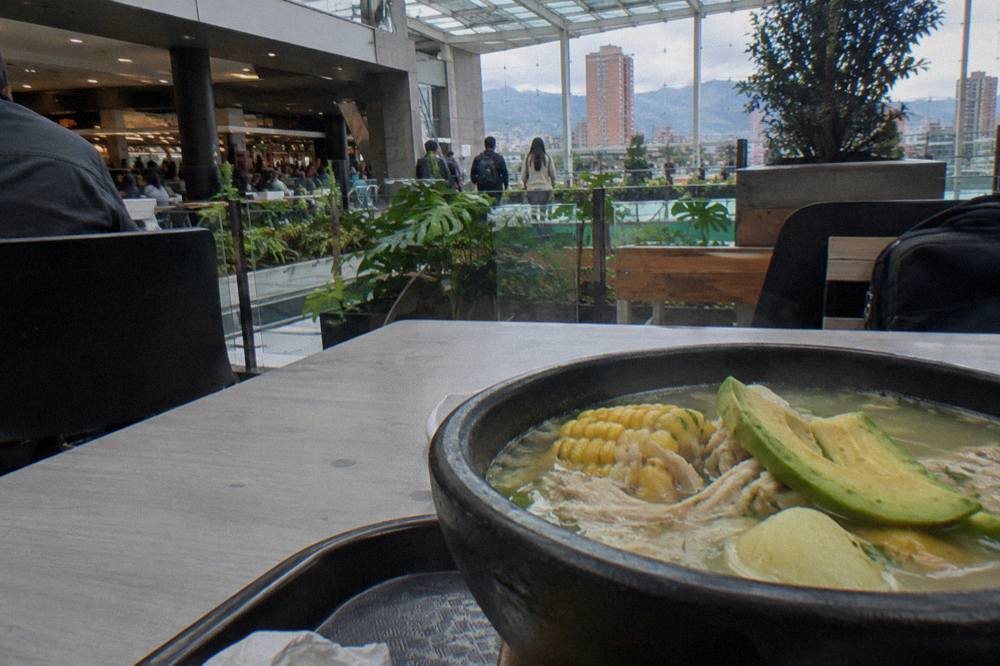
Ajiaco santafereño is a chicken soup built on potatoes, usually several kinds, plus corn on the cob and the Andean herb guascas, which gives the broth its particular smell and flavour. It is the one dish locals will name without hesitation when asked what their city eats, and market plazas across Bogotá still serve traditional versions from family counters.
The potato is the reason this soup belongs to Bogotá and not somewhere warmer. The savanna around the city grows potato varieties that barely appear elsewhere, and a proper ajiaco uses them for body as well as taste, some falling apart to thicken the broth while waxy ones hold their shape. Guascas is the other half of the identity: a dried herb that reads as faintly green and aromatic, without which the soup is just potato and chicken. Readers who want the full breakdown of the herb and the soup's cousins have it in the ajiaco guide for Bogotá.
Where you find it matters too. In October 2026 the local press mapped the market plazas where traditional ajiaco is served, including Plaza Distrital de Mercado 12 de Octubre in Barrios Unidos, and the district's tourism institute runs a returning ajiaco festival that pulls plazas and restaurants into one November programme, per the institute's festival announcement. Delivery menus give a sense of the price of the dish outside the plazas: a 16 oz portion was listed at about 23,700 COP, with a 24 oz portion around 33,900 COP, reported prices that move with the apps. At a market counter you order by the bowl, and the garnishes, avocado, cream and capers, usually arrive on the side so you build your own.
Ordering it well is a small skill of its own. Locals tear the corn cob into the broth to soak, add cream in stages rather than all at once, and treat the capers as a seasoning to balance the richness. The soup also carries a cultural weight that visitors sometimes miss: it is the dish families gather around on Sundays, the one restaurants put on the menu as a statement of identity, and the one the district government promotes when it wants to show the city off. When the tourism institute stages its ajiaco days, the point is not just food sales, it is a claim about belonging.
Wondering whether to book a walk that samples the classics or just find a plaza counter yourself?
What Do Bogotanos Eat For Breakfast?
Breakfast in Bogotá runs from changua, a warm milk-and-egg soup with bread dropped in, to calentado, a fry-up of yesterday's rice and beans, to the weekend tamal served with hot chocolate. Bakery items, almojábanas, pan de bono and empanadas, fill the gaps, and juice with exotic fruit is standard alongside almost all of it.
Changua divides visitors more than any other dish in the city, and that is part of its fame. Milk and water are heated together, an egg is cracked in to barely set, and a piece of stale bread and cilantro finish it. It is rural breakfast food that survived the city, cheap, warm and made for cold mornings at altitude. Calentado is the other morning pillar, literally "heated up", a way of treating last night's dinner as today's first meal, usually with a fried egg and chorizo on top to make it a full plate.
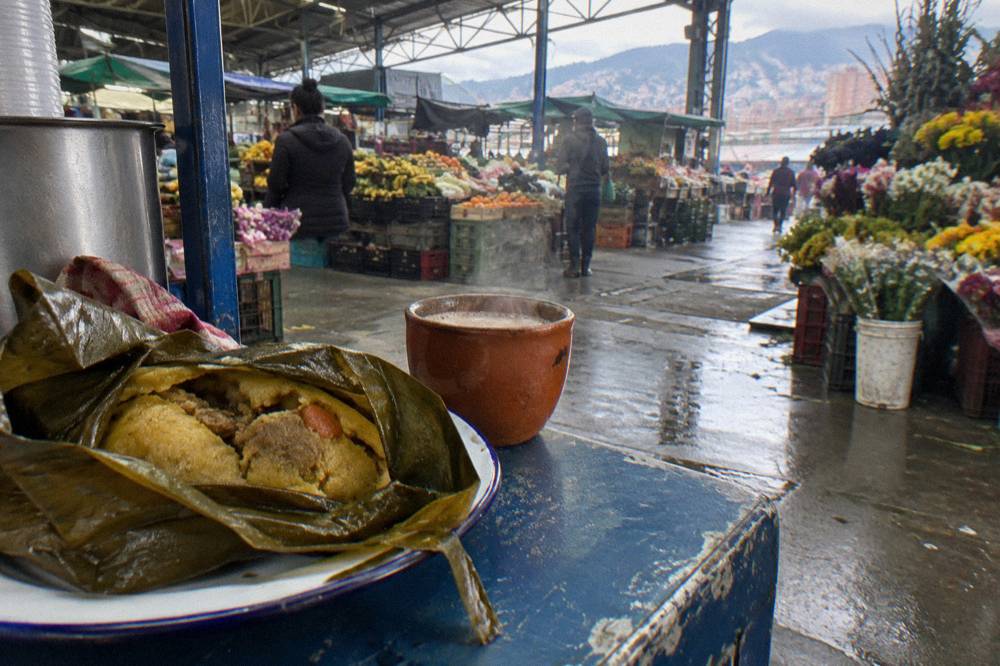
The tamal is the celebration end of the breakfast spectrum. Corn dough seasoned and mixed with chicken and pork, wrapped in banana leaves and steamed for hours, it appears across the city in December, when the district's tamal festival sells a combo of tamal, a hot drink and an arepa or bread at 10,000 COP across more than 17 plazas, per the city's festival page. The 2026 edition runs 5 to 8 December. Prior editions sold more than 14,484 tamales, which tells you how central it is. Bakery prices are gentle: reported app listings put an almojábana around 4,700 COP and a pan de bono around 4,300 COP each.
For visitors, a walking tour that includes local snacks is one efficient way to meet several of these in a morning. The True Colombian Walking Tour runs 2 to 3 hours, is rated 4.9 across 130 reviews and costs from $54.68 per person; its listing describes tastings of local snacks alongside the city sights, and the exact snacks vary, so check the booking page for what the current route includes.
What Street Snacks And Sweets Is The City Known For?
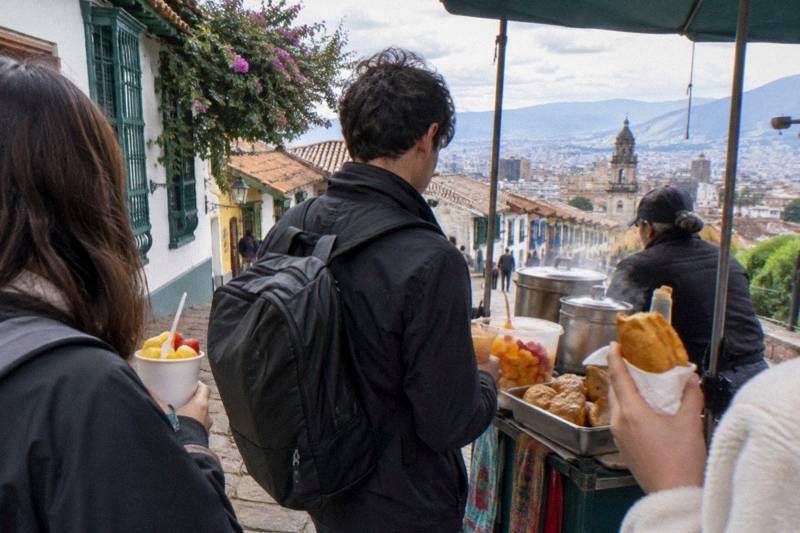
The street layer of Bogotá's food fame is corn and fried dough: arepas, empanadas and pan de bono, joined by obleas, large arequipe-filled wafers, and fresh fruit and juice from carts. A reported cart price in La Candelaria put lulo juice at 4,000 COP and curuba juice with milk at 5,000 COP, which shows how cheap the street tier is.
Arepas are the continent-wide staple with a Bogotá accent: here they tend to be thin, griddled and served with cheese or butter rather than stuffed. Empanadas are the fried, filled half of the pair, usually with meat or potato, bought by the unit and eaten standing. None of this needs a guide to enjoy, but a guide does help with the difference between an arepa boyacense, an arepa de choclo and the plain white version, and with knowing which counter has been there for decades.
The fruit carts deserve their own sentence. Bogotá's altitude climate means the fruit comes from every thermal floor of the country and lands in the city's markets the same week it is picked. A cart on Carrera 2a with Calle 13 in La Candelaria was reported in August 2026 selling lulo and curuba juices at those prices above, and that corner sits inside the area most food walks cover. For the fuller street picture, including where to find each snack, see the Bogotá street food guide.
| Street item | Reported price | Source note |
|---|---|---|
| Lulo juice, street cart | 4,000 COP | La Candelaria cart, reported August 2026 |
| Curuba juice with milk | 5,000 COP | Same cart, reported |
| Almojábana, bakery | around 4,700 COP | Delivery app listing, current |
| Pan de bono, bakery | around 4,300 COP | Delivery app listing, current |
| Tamal festival combo | 10,000 COP | City festival, December edition |
Obleas close the category: two thin wafers glued together with arequipe, the caramelized milk spread that appears in almost every Colombian dessert. Whether obleas are Colombian or Venezuelan is a friendly argument both countries enjoy, and the sweets guide covers it if the question matters to you.
There is a practical layer to the street tier as well. The city's health secretariat publishes seasonal guidance on street food: buy from formal or authorized vendors, check labels and packaging condition on wrapped items, and pass on anything damaged or unlabeled. That is ordinary caution rather than alarm, and it is the same advice locals follow during the busy festival weeks. The fuller discussion of street food hygiene and tap water, including the official position on the city's water supply, sits in the street food safety guide.
What Is Chocolate Santafereño?
Chocolate santafereño is thick, sweet hot chocolate served with a slab of fresh white cheese that you drop into the cup so it softens, alongside almojábanas or bread. It is the city's most distinctive drinking habit, tied to afternoon merienda and to one tiny restaurant near the cathedral that has been pouring it since 1816.
The custom is the point, not the chocolate alone. Melting cheese into a hot drink reads as strange until the first cup, after which it reads as obvious: the cheese goes soft and stringy, the chocolate cools to drinkable, and the almojábana, a cheese bread made with fermented dough, makes it a meal. La Puerta Falsa, on Calle 11 next to the Catedral Primada, has served it since 1816 and is the historic reference point, small enough that a queue at the door is part of the experience. Other pages covering the same trip are gathered on Bogota Food Tours.
The tradition also has a taught version. Cacaote in La Candelaria runs workshops in preparing chocolate santafereño, including a tasting with almojábana, cheese and achira, per the district tourism site's workshop listing, and Casa Orígenes, a chocolate-focused space that opened in a restored La Candelaria house in October 2026, hosts the Colombian edition of the International Chocolate Awards. The wider story, including the cheese question, is in the chocolate santafereño guide.
Chocolate connects to the national picture too. Colombia's cacao and derivative exports reached 413.1 million US dollars in 2025, up 16.4 percent by volume, and the industry's showcase event, Chocoshow, holds its eighth edition in Bogotá in late November 2026 with more than 175 exhibitors. The country grows cacao as a serious export crop, and Bogotá is where that crop turns into bars, bonbons and workshops within reach of a visitor's afternoon.
Where Do The Famous Fruits Come In?
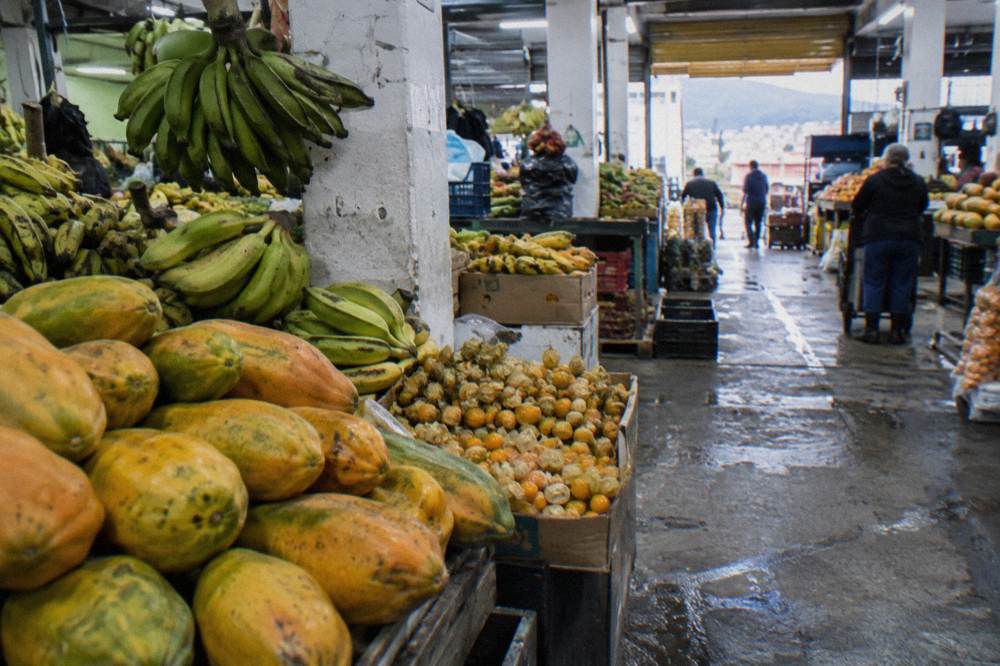
Bogotá's fruit fame runs through its market plazas, above all Paloquemao, where fruit is the main event: stalls of granadilla, lulo, uchuva, feijoa, soursop and dozens more, with vendors offering tastes. The market opens Monday to Saturday from 4:30 a.m. to 4:30 p.m. and Sundays and holidays from 5:00 a.m. to 4:30 p.m., per its official site.
Visitors who only eat fruit off a restaurant menu miss this half of the city's food identity. Colombians shop for fruit by the pile, and the vocabulary needed to buy it, which fruit is for juice, which for eating raw, which needs sugar, is exactly what a market guide teaches. The early hours are the spectacle: wholesale trucks unload from before dawn, and the market thins after midday, so morning is the time to go.
A guided option makes the stall-by-stall world approachable. The Paloquemao Market Food Tour with exotic fruit and local snacks runs 3 hours, from $82 per person with a minimum of two guests, rated 4.9 across 71 reviews. The listing describes exotic fruit and local snacks as its core; for the exact tastings included on the current route, check the booking page, since market stalls rotate with the season.
How Do You Taste A Lot Of It In One Visit?
The efficient answer is a guided tasting walk: the Viejo Bogota Food Tour covers the historic centre in 4 hours with 12 or more tastings, from $55 per person, and at 5.0 across 714 reviews it is the most reviewed food walk compared on this site. A market morning and a shorter snacks walk are the two alternatives, depending on whether fruit or history pulls harder.
One walk can reasonably cover soup, snacks, dessert and coffee in a single afternoon; doing the same alone would eat two days of research. The table below lines up the three formats this article has referenced, with the figures exactly as the listings state them.
| Tour | Duration | From (USD) | Rating and reviews |
|---|---|---|---|
| Viejo Bogota Food Tour with 12+ Tastings | 4 hours | $55 per person | 5.0 across 714 reviews |
| True Colombian Walking Tour + Local Snacks | 2 to 3 hours | $54.68 per person | 4.9 across 130 reviews |
| Paloquemao Market Food Tour, Exotic Fruit | 3 hours | $82 per person, min 2 | 4.9 across 71 reviews |
The 12-tastings walk is the deepest dive of the three, and its review pool, more than five times the next largest, is the closest thing to a consensus you will find in this category. What those tastings are on a given day is listed on the operator's page, so check there rather than assuming a particular dish. To read the full description and see live dates, visit the Viejo Bogota Food Tour page or Check availability.
Dietary needs deserve one note: unless a listing states vegan or gluten-free suitability, message the operator before booking, because market and street kitchens do not always flag ingredients. The site behind this article, Bogota Food Tours, exists to keep these comparisons in one place, including a dedicated page on vegetarian, vegan and gluten-free eating in Bogotá.
How Do Festivals Shape The Food Calendar?
Bogotá's food calendar peaks in November and December: the ajiaco festival returns to plazas in November, Vino al Parque runs 27 to 29 November 2026, Chocoshow brings 175-plus cacao exhibitors to Corferias on the same dates, and the tamal festival takes 17-plus plazas from 5 to 8 December. Timing a visit around one of these changes what the city is eating.
The restaurant scene joins in too. Bogotá Gourmet 2026, its second edition, runs 22 October to 22 November with more than 80 restaurants offering fixed two-person menus in three tiers, from 89,000 to 199,000 COP, per the reported programme. That is the polished end. The plaza end is the tamal festival, where the 10,000 COP combo is about as close to the city's peasant food culture as a visitor can get while standing in a crowd of families doing exactly the same thing.
Even the beer has a calendar. The capital's craft beer festival ran 23 and 24 October 2026 at Gran Estación with 60 local producers, and 3 Cordilleras, the country's largest craft brewer, reported about 48 percent of the national artisanal market as it turned 18 in 2026. None of this is why the city is famous for food, but it is why a November or December trip tastes different from a February one, and the best-time-to-visit guide breaks the timing down month by month.
If one of these windows matches your dates, book the walking part early; festival-season mornings in La Candelaria and Paloquemao are busy, and the popular walks fill first.
Common Questions About Bogotá Food
What Food Is Bogotá Famous For?
Ajiaco, tamales, changua, lechona, arepas, empanadas, pan de bono, obleas and chocolate santafereño, plus the exotic fruit sold at market plazas like Paloquemao. Ajiaco, the potato and guascas soup, is the single dish most locals name first.
What Exactly Is In Ajiaco?
Chicken, several kinds of potato, corn on the cob and the dried herb guascas, served with avocado, cream and capers on the side. The potatoes partly dissolve to thicken the broth, which is what separates it from an ordinary potato soup.
Is Chocolate With Cheese Really A Thing?
Yes. Chocolate santafereño is thick hot chocolate served with fresh white cheese dropped into the cup until it softens, alongside almojábanas or bread. La Puerta Falsa, open since 1816, is the historic reference point.
Which Fruits Should A First-Timer Try?
Lulo, granadilla, uchuva, feijoa and soursop are the usual starting five, and market vendors routinely offer tastes. Paloquemao is the main plaza for fruit, open Monday to Saturday from early morning to mid-afternoon.
Can One Tour Cover Most Of These Dishes?
A tasting walk is built for exactly that. The Viejo Bogota Food Tour runs 4 hours with 12 or more tastings, from $55 per person, and is the most reviewed food walk compared here at 5.0 across 714 reviews. Check the operator's page for what the current route tastes.
When Is The Best Food Season To Visit?
November and December. The ajiaco festival, Vino al Parque, Chocoshow and the December tamal festival all fall in that window, and the restaurant festival menus run through late November.