Is Bogotá Street Food Safe? Tap Water And Stomach Tips
Street food is one of the best reasons to eat in Bogotá, and for most visitors it goes fine. This page sets out what the official guidance actually says about tap water and food hygiene, which habits matter most, and how a guided walk turns guesswork into someone else's problem.
Short answer
Yes, for most visitors Bogotá street food is safe when bought from busy, formal stalls serving food hot. Tap water in Bogotá is officially potable, though many visitors still choose bottled water. The bigger issues are altitude and pace: eat lighter the first day or two, hydrate, and go easy on alcohol while you adjust to 2,640 m.
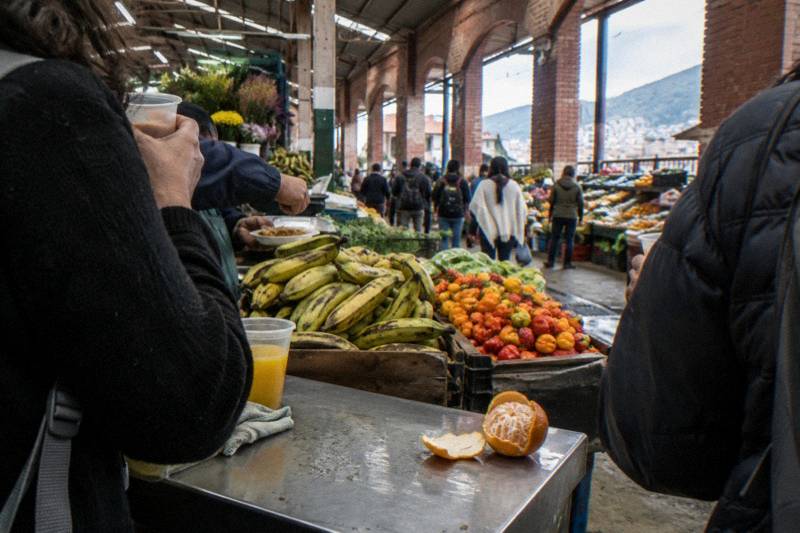
Street food worry is the single most common reason first-time visitors hesitate in Bogotá. The city answers that worry with an enormous, busy, formal street food scene: market plazas with family stalls that have cooked the same dishes for decades, arepa grills with constant turnover, and juice carts pressed fresh in front of you. The official picture on water is also better than most people expect. Bogotá's tap water is treated and monitored, and the UK Foreign Office notes Bogotá as the one Colombian city where tap water is considered safe, though plenty of visitors still buy bottles out of habit or taste. What follows is the practical version: what the guidance says, which habits actually matter, and where a guide earns their fee.
Is Street Food In Bogotá Safe To Eat?
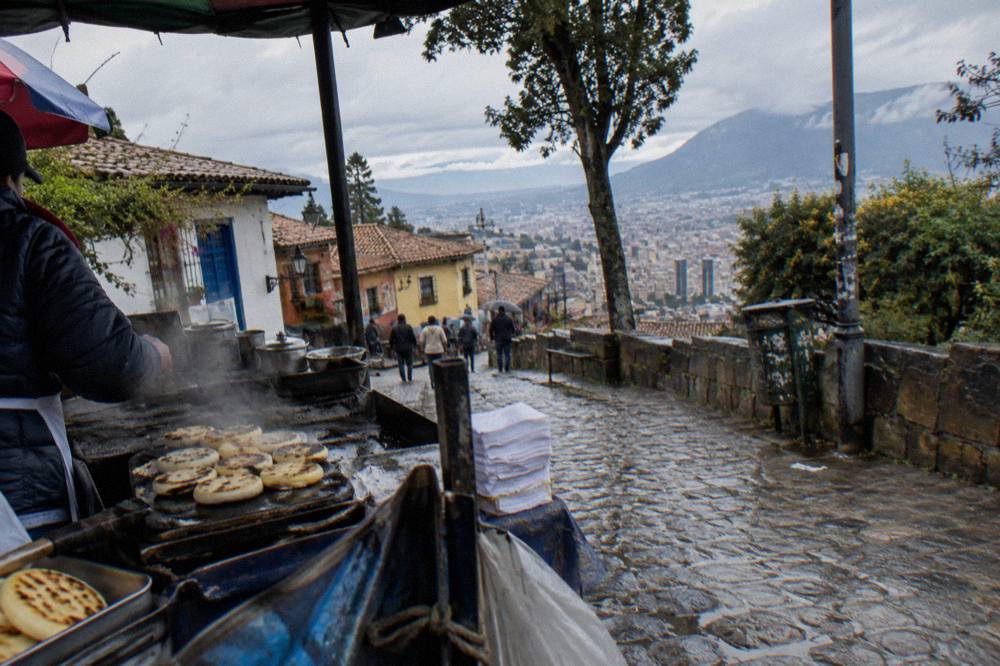
Yes, for most visitors street food in Bogotá is generally safe to eat, and the real risk comes down to which stall you choose rather than street food itself. Pick stands with long lines, visible cooking, and fresh ingredients, and your odds of an upset stomach stay low. Bogotá's food safety authorities publish seasonal guidance around holidays that points to a consistent set of habits: buy from formal or authorised establishments, check that packaging is intact and labelled, avoid damaged or unlabeled items, and prefer food served hot. None of that singles out street food. It rewards the busy stall with fast turnover over the quiet one holding food at lukewarm temperatures.
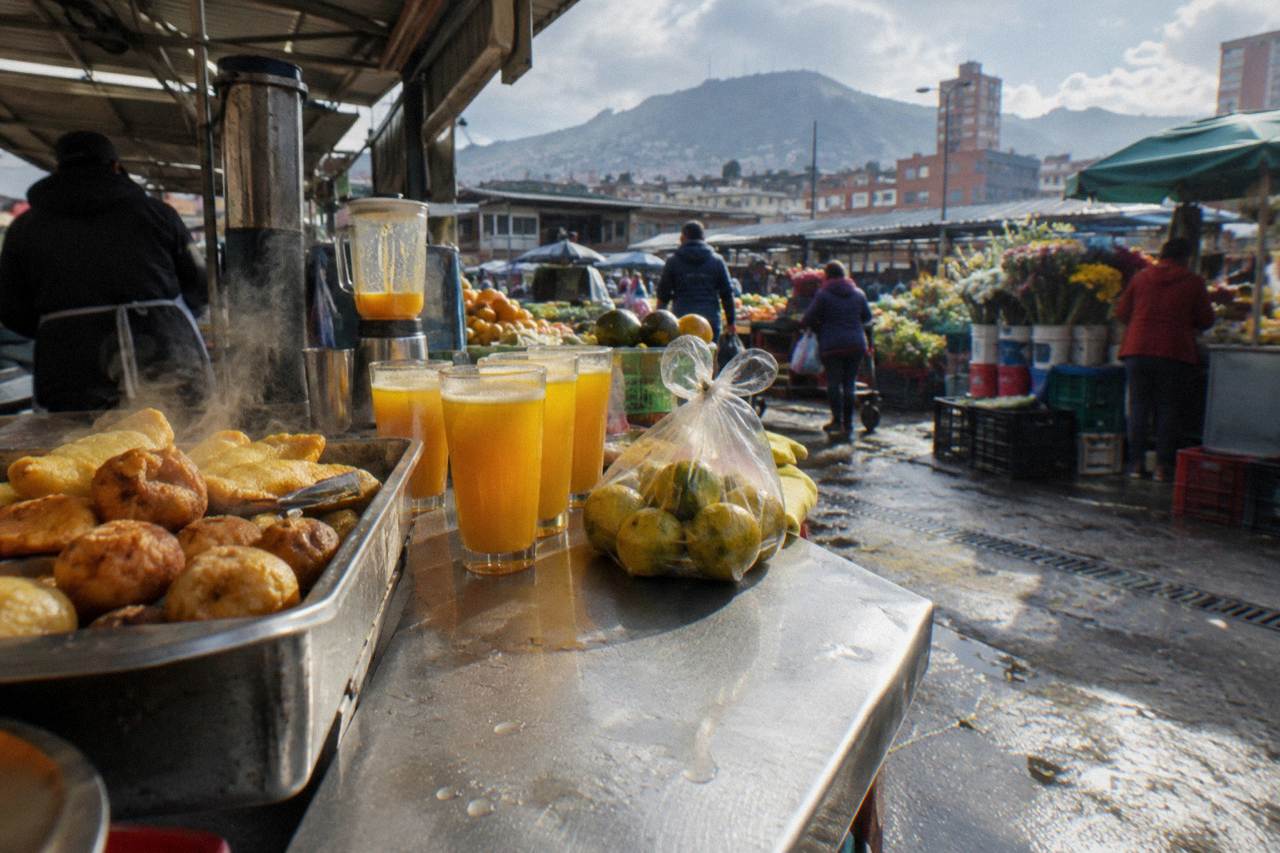
Turnover is the core principle. An empanada stand selling hundreds an hour is frying fresh batches constantly; nothing sits long enough for problems to develop. A stall with a sparse crowd and food resting under a cloth is the one to walk past. The same logic applies to fruit: whole fruit you watch being peeled or cut in front of you is a different proposition from pre-cut trays of unknown age. Juice carts in La Candelaria press lulo and curuba to order, and reported prices there run about 4,000 to 5,000 COP a cup, a sign of volume business rather than tourist-trap economics.
Context matters too, and it is worth being plain about it. The US State Department travel advisory for Colombia stands at Level 3, Reconsider Travel, issued 31 March 2026, with some departments at Level 4; none of those Level 4 areas is Bogotá, and the advisory speaks to countrywide conditions, crime and civil unrest, not to the hygiene of a market stall. The UK Foreign Office names specific regions to avoid and treats the rest of the country, Bogotá included, as normal travel. Conditions change, so check the current advisory before you fly. Neither advisory is a verdict on a plate of arepas.
The habits that matter most are unglamorous and few. Pick stalls where locals queue. Take food hot, not warm. Wash hands before eating, or use the sanitiser you carry, because hands touch more risk than food does in most traveller stomachs. Skip raw shellfish from sources you cannot verify, and be cautious with anything that has sat at room temperature for hours. If you want the deeper dish-by-dish background, the Bogotá street food guide walks through the main formats and where each is usually found.
| Habit | Why It Matters | How To Apply It In Bogotá |
|---|---|---|
| Choose busy stalls | High turnover means food is cooked fresh, not held | Follow the local lunch queue, not the empty stall with a big menu |
| Eat it hot | Heat kills most organisms of concern | Prefer fried, grilled and boiled items straight off the heat |
| Watch the fruit prep | Whole fruit peeled in front of you avoids water contact | Order juices pressed to order; skip pre-cut trays of unknown age |
| Check labels and packaging | Official city guidance for street purchases | Applies mostly to packaged snacks and drinks at kiosks |
| Wash or sanitise hands | Hands are a common transmission route | Carry sanitiser; markets do not always have soap |
Can You Drink The Tap Water In Bogotá?
Yes, on the official record you can drink the tap water in Bogotá: the city's supply is classed as potable, it is monitored for quality, and UK travel advice singles out Bogotá as the one city in Colombia where tap water is considered safe to drink. The city's water utility reports results in a risk index that has sat in the no-risk band, with one late 2025 sample at 2.09 percent on a scale where 0 to 5 percent means no risk. That is a utility reading tap water at source and across the network, and it is the figure behind every official statement that the water is drinkable.
Practice is messier than the official line, in both directions. Some visitors drink tap water all trip with no issue. Others switch to bottled because of the chlorine taste, or because an older building's plumbing is unknown to them, and that is a reasonable personal choice rather than a safety verdict. Restaurants serve filtered or bottled water as standard in most tourist areas. Ice in established bars, restaurants and hotels is made from treated or filtered water; if you are somewhere that feels improvised, ordering drinks without ice is an easy hedge. Brushing teeth with tap water is generally considered fine.
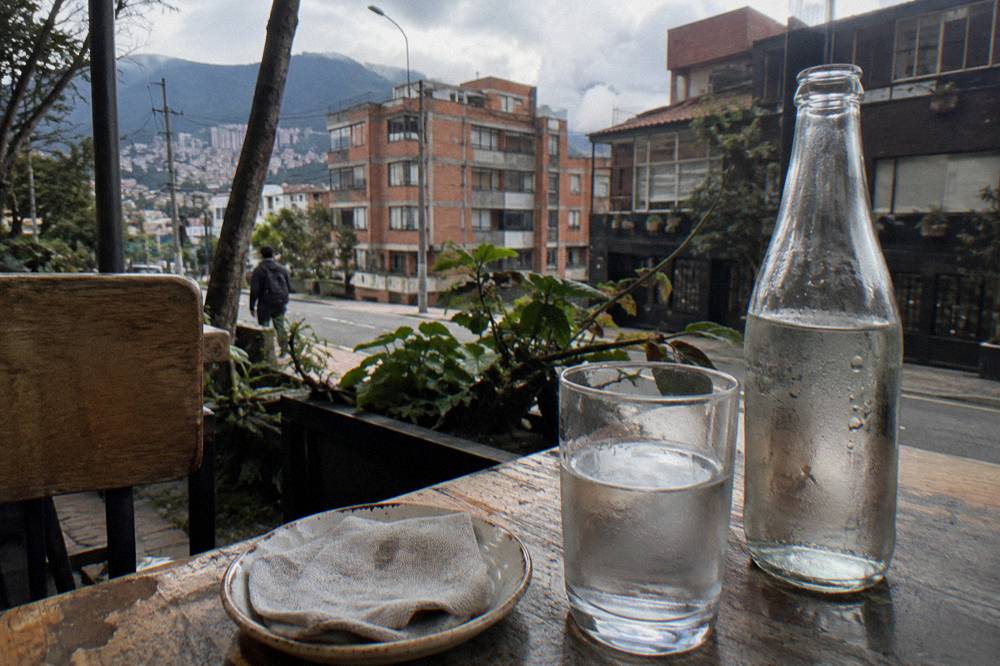
Two claims you should not make, and this page will not make them either: that the water is safe for absolutely everyone, since individual sensitivity varies, and that it is unsafe, which contradicts both the utility's data and the UK guidance. If you want the underlying numbers, this tap water summary for Bogotá pulls together the utility's monitoring record. The sensible default for a short trip is bottled water for drinking if you prefer it, tap water for teeth, and no anxiety about either.

How A Guided Walk Answers The Safety Question
A guided food walk answers the safety question by handing every judgement call a visitor would normally agonise over to a local who eats from these vendors regularly. Stall choice, dish choice, and ordering, the exact decisions that worry visitors most, are removed from the equation, leaving you to follow someone whose regular eating habits already cover this exact food. Guides know which grills turn over fast at lunch, which market rows to buy fruit from, and how to ask for food freshly made. On a paid walk the tastings are counted and listed in advance, so there is no improvising into an unknown stall at hour three when you are tired and hungry.
The featured Viejo Bogotá Food Tour with 12+ Tastings runs about 4 hours, is rated 5.0 across 714 reviews, and costs from $55 per person, making it the most reviewed food walk covered on this site. The Bogotá Food Experience: Cultural & Culinary Tour is another well-reviewed option at 4.9 across 615 reviews, about 4 hours, from $47.15 per person. The Shared Gastronomy Tour in the Historic Center runs 3 hours, is rated 4.9 across 291 reviews, and its $15 headline price is a guide fee only, with tastings costing about US$12 extra on the day. Read the inclusions on the booking page before choosing.
The comparison matters because the three walks answer the safety question differently. The Viejo Bogotá walk is the depth option: 12 or more tastings over 4 hours means many stops, each one a vendor the guide uses routinely. The Cultural & Culinary Tour is similar in length with a cultural framing. The Shared Gastronomy Tour is the light-commitment entry, cheapest up front, but remember the tastings are paid separately, so compare total spend, not just the headline. If dietary needs matter to you, message the operator before booking rather than assuming; no listing here is described as vegan or gluten-free.
A paid walk also adds things a tip-based walk cannot promise: a fixed tasting list, a known meeting point, and a schedule. For the stalls themselves, browsing the what to eat overview before you go makes every stop easier to read.
Altitude, Digestion And Eating Light The First Day
Bogotá sits at about 2,640 m, and at that elevation altitude affects appetite and digestion before anything else, so the official advice is one to two days of adaptation, steady hydration, lighter meals and little alcohol, which is exactly why eating light on day one makes sense. The city's own health guidance for visitors recommends 3 or more litres of water a day, 6 to 8 hours of sleep, sunscreen, and taking strenuous activity gently while you adjust. Symptoms such as headache and fatigue typically peak in the first 24 to 48 hours and ease over 3 to 5 days.
Food plays a real part in how that adjustment feels. Heavy, greasy plates sit harder at altitude, and a big first-night meal plus drinks is the classic recipe for blaming the food when the altitude is the actual culprit. Plan the first day around soups, fruit, arepas and lighter plates, then work up to the lechona and fritanga. Ajiaco, the chicken and potato soup Bogotá calls its own, is close to ideal altitude food: hot, brothy and filling without being heavy. A medium delivery portion runs about 23,700 COP as a reported price, though restaurant pricing varies.
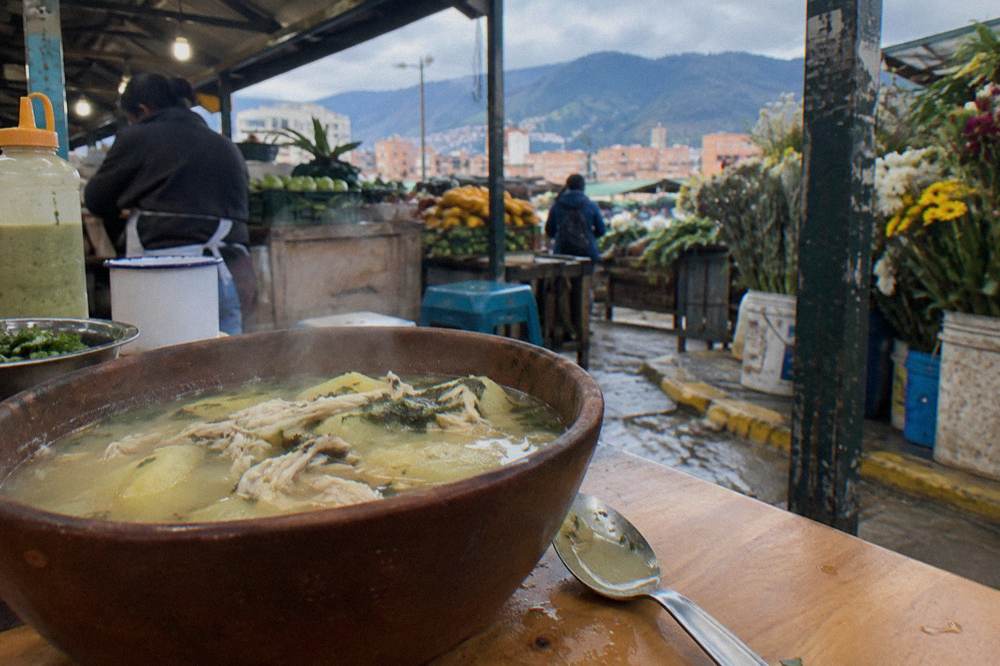
Coffee and alcohol deserve a specific word. Colombian coffee is strong and everywhere, and it is easy to drink more than usual while sightseeing; at altitude, that amplifies dehydration and jitteriness. Alcohol hits harder too, and the guidance is explicit about avoiding excess in the first days. None of this means abstaining, it means sequencing: hydrate first, eat light first, and save the craft beer and aguardentine exploring for day three. The full physiological picture is in the city's official visitor health tips, and the deeper food angle is covered in the eating at altitude guide.
Which Foods Are Safest To Start With?
The safest foods to start with are those cooked at high heat and served immediately, so begin with grilled arepas, fried empanadas, and hot soups, along with juices pressed to order. Leave raw items and anything that has been held for a long time for later in the trip. None of this is about specific dishes being dangerous; it is about temperature and time, the two variables that decide almost everything in street food hygiene anywhere in the world.
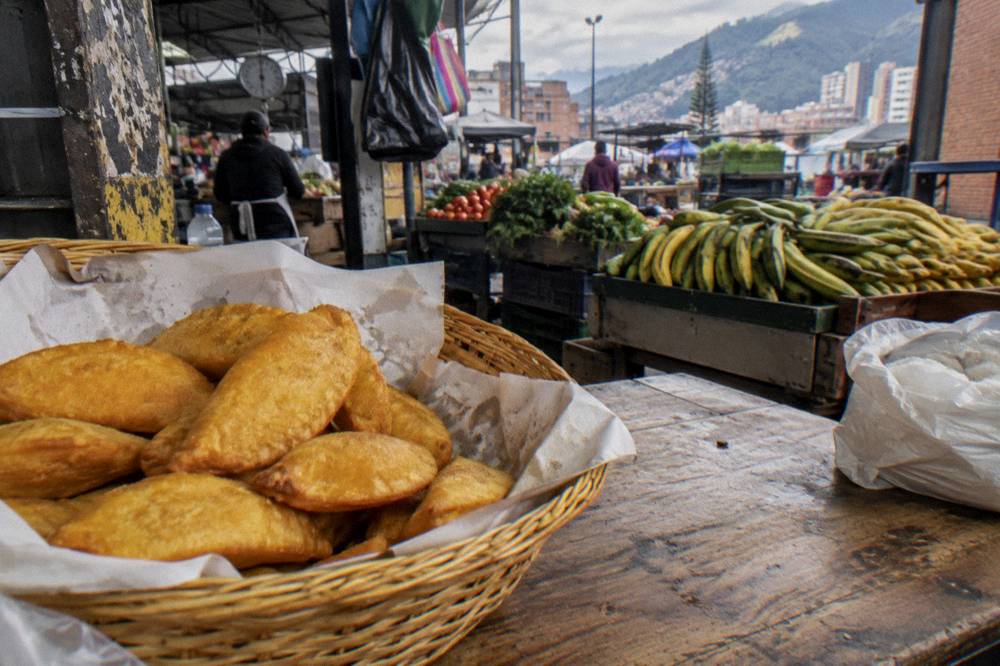
The market plazas are the friendliest possible environment for a cautious eater, because you can see everything. At Paloquemao, official hours run Monday to Saturday 4:30 a.m. to 4:30 p.m. and Sundays and holidays 5 a.m. to 4:30 p.m., with the flower section finishing by 11 a.m.; the early hours are when wholesale energy peaks and vendors hand out tastes of granadilla, lulo and uchuva. La Perseverancia, open weekdays 8 a.m. to 4 p.m. and weekends 6 a.m. to 5 p.m., is the traditional-cooking plaza, with family stalls making ajiaco, lechona and mondongo. Watching a pot at full boil is the most reassuring sight in Colombian food. The wider set of guides lives on Bogota Food Tours.
| Food Or Drink | Risk Profile | Why |
|---|---|---|
| Fried empanadas, fresh from the oil | Low | High heat, seconds from fryer to hand |
| Grilled arepas off the plancha | Low | Cooked in front of you at high heat |
| Hot soups, ajiaco, sancocho | Low | Boiled and held hot in high-turnover stalls |
| Juices pressed to order | Low | Whole fruit, peeled or cut in front of you |
| Pre-cut fruit trays | Higher | Unknown age and handling; whole fruit is better |
| Raw shellfish from unknown sources | Higher | Verify the source or skip it |
| Leftovers held lukewarm under a cloth | Higher | Temperature danger zone, low turnover |
For self-guided exploring, market mornings are the sweet spot: produce is at its freshest, stalls are busy, and you can buy whole fruit, an empanada and a hot chocolate within fifty metres of each other. The Paloquemao market food guide covers the layout stall by stall, and the timing question, including which hours suit which kind of visit, is settled in Paloquemao hours and the best time to go.
Street Smarts Around Food Areas
Yes, you can enjoy Bogotá's street food with confidence, but stay alert to the actual risks: petty theft and drugging scams, not food poisoning. A few simple habits, such as keeping valuables secure and watching anything you drink, handle both, so awareness matters far more than avoidance. Documented 2026 patterns include phone snatching on busy pedestrian stretches, especially in the evenings, pickpocketing around Plaza de Bolívar, La Candelaria and crowded transport, and rare but serious scopolamine incidents where drinks, food or cigarettes from strangers, or encounters arranged through dating apps, lead to robbery. Bogotá's food-safety messaging for celebrations repeats the same advice: buy from formal vendors and check what you are handed.
The habits are simple. Keep your phone in a front pocket or bag in La Candelaria after dark and stay on the main streets rather than side alleys; the 2026 neighbourhood reports describe the historic centre as fine on main streets by day, with more caution advised alone at night. Never accept drinks, food or cigarettes from strangers you have just met, and never hand your phone to someone who asks to look at it. If someone in plainclothes claims to be police and demands a document or money check on the street, do not comply there; walk into a shop and ask them to involve uniformed officers.
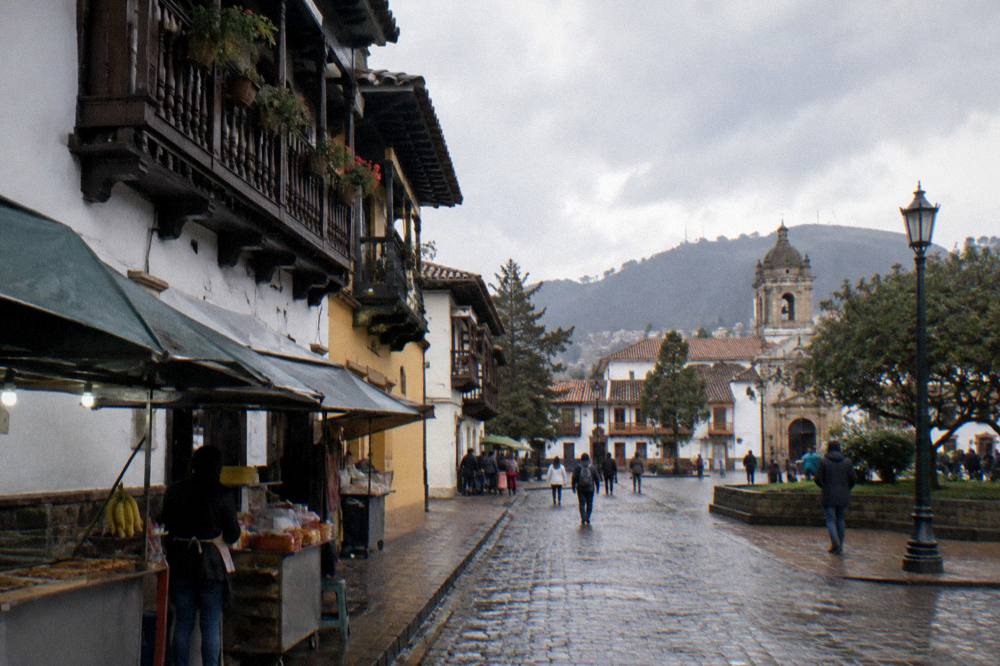
None of this should colour your read of Bogotá as hostile. The same 2026 reports describe Chapinero, Usaquén, Parque 93 and Zona T as comfortable for day and evening walking with standard precautions, and those neighbourhoods hold a serious amount of the city's eating. A food-first walk through Chapinero Alto, named by Time Out in September 2026 as one of the world's coolest neighbourhoods, is an evening plan that involves none of the caution the historic centre needs after dark. The wider picture, including how the advisories are framed and what they do and do not say, is in the UK government's Colombia travel advice and in the is Bogotá safe for tourists guide.
If Your Stomach Acts Up Anyway
If your stomach acts up anyway, most traveller stomach trouble in Bogotá is brief and self-limiting, so the response is straightforward: focus on hydration, eat plain food, and rest until it passes. Seek medical care if symptoms turn severe or last beyond a couple of days. Altitude alone can produce nausea and appetite loss in the first 48 hours, so not every unsettled stomach is the empanada. Drink oral rehydration salts or plenty of fluids, keep eating simple, and give the adjustment days a chance to work before you assign blame.
A small kit earns its space. Rehydration salts, a basic anti-diarrhoeal for travel days, antacid, and any personal medications, all in hand luggage. Pharmacies, farmacias, are dense across the city and used to dealing with travellers. Go to a doctor or clinic if symptoms are severe, if there is fever or blood, or if things have not improved within a couple of days; hotel staff will point you to the nearest clinic. US citizens should remember that routine travel health insurance does not come from the advisory system, so check your coverage before the trip.
Prevention is mostly what this page has already said, with one addition: pace. The visitor who lands at noon, walks La Candelaria all afternoon, eats four fried things at dusk and tops it with aguardiente has stacked altitude, fatigue and fat in one evening. The one who takes the first day gently, hydrates, and eats a bowl of soup is usually fine by day two. Tipping, by the way, is a smaller question than safety, and the tipping guide covers it, including the voluntary 10 percent propina at sit-down places.
| Symptom | Likely Cause | What To Do |
|---|---|---|
| Mild headache, poor appetite day one | Altitude adjustment | Water, rest, light meals, ease off caffeine and alcohol |
| One loose stool, otherwise fine | Usually transient | Fluids, plain food, wait 24 hours |
| Repeated diarrhoea, no fever | Traveller diarrhoea | Rehydration salts, anti-diarrhoeal if travelling |
| Diarrhoea with fever or blood | Infection needing care | See a doctor or clinic promptly |
| Vomiting after drinks with strangers | Possible drugging incident | Get to a safe place with people you trust, seek help |
Putting It Together: A Safe-Eating Plan For Your Trip
Build your safe-eating plan around a few simple habits: choose hot food from busy stalls, drink bottled water if that feels safer to you, keep the first 48 hours light while your body adjusts to the altitude, and let a guided walk handle stall selection on day one or two so you can relax and enjoy every bite. That single sentence is the whole safety strategy, and everything else on this page is detail supporting it. Bogotá rewards eaters who engage with its street food rather than retreating to hotel restaurants, and the engaged eaters are, in the main, the ones who leave well.
A workable shape for a four-day food-first trip: day one, a light soup and fruit, early night, maybe the shared gastronomy walk if you feel good, remembering its tastings are about US$12 extra on top of the guide fee. Day two, the full Viejo Bogotá walk with its 12-plus tastings, from $55 per person, now that you are adjusted and can enjoy it. Day three, a Paloquemao morning for fruit and market snacks. Day four, Chapinero Alto or Usaquén for restaurants and a first proper night out. More ideas for sequencing the whole visit sit in the three-day food itinerary.
For visitors whose worry is specifically the first unaccompanied ordering experience, the Bogotá Food Experience tour, 4 hours, 4.9 across 615 reviews, from $47.15 per person, is the alternative depth walk, while the Shared Gastronomy Tour keeps the commitment small at 3 hours and a $15 guide fee plus tastings. Whichever you choose, message the operator about dietary needs before booking rather than on the day, and recheck the booking page for the current meeting point and cancellation terms.
The last word belongs to proportion. Bogotá's tap water passes official monitoring in the no-risk band, its market plazas are the most transparent food environments a visitor could ask for, and the advisory picture, Level 3 countrywide with no Level 4 area anywhere near Bogotá, is about caution, not avoidance. Millions of meals are eaten from these stalls every week by people with no more protection than you will have. Go hungry, go curious, and take the ordinary precautions. The street food guide is the natural next read, and this site's own Bogota Food Tours pages lay out the full range of walks, markets and tastings across the city.
Common Questions About Bogotá Street Food Safety
Is Bogotá Street Food Safe?
For most visitors, yes. Official city guidance points to buying from formal, busy stalls, eating food served hot, and checking packaging on anything prewrapped. Pick stalls with fast local turnover, take fried, grilled and boiled items fresh off the heat, and sanitise your hands before eating.
Can You Drink The Tap Water In Bogotá?
Officially yes: Bogotá's tap water is potable and monitored, with the utility's risk index in the no-risk band, and UK travel advice names Bogotá as the one Colombian city where tap water is considered safe. Some visitors still choose bottled water for taste, which is a reasonable personal choice, not a safety verdict.
Does Altitude Affect Digestion In Bogotá?
Yes. At about 2,640 m, the official advice is one to two days of adaptation, 3 or more litres of water a day, lighter meals and little alcohol at first. Symptoms typically peak in the first 24 to 48 hours and ease over 3 to 5 days.
What Street Food Is Safest To Start With?
Foods cooked at high heat and eaten immediately: fried empanadas, grilled arepas, hot soups like ajiaco, and juices pressed from whole fruit in front of you. Be more cautious with pre-cut fruit trays, raw shellfish from unknown sources and anything held lukewarm for hours.
Does A Guided Food Tour Reduce The Risk?
It removes the judgement calls. A guide selects vendors they eat from regularly, orders in Spanish, and on paid walks the tastings are counted and listed in advance. The featured Viejo Bogotá walk includes 12 or more tastings over about 4 hours, from $55 per person.
Is It Safe To Walk Around La Candelaria At Night?
The 2026 neighbourhood reports describe La Candelaria as fine on main streets and squares by day, with higher pickpocket risk and advice against walking alone on side streets after dark. Keep phones secure, stay on busy streets, and use app or hotel-arranged transport in the evening.