What Is Colombia's Most Famous Dish?
Ajiaco santafereño is the dish most visitors name as Colombia's most famous. Here is what it is, which other dishes compete for the title, and how to taste them in Bogotá.
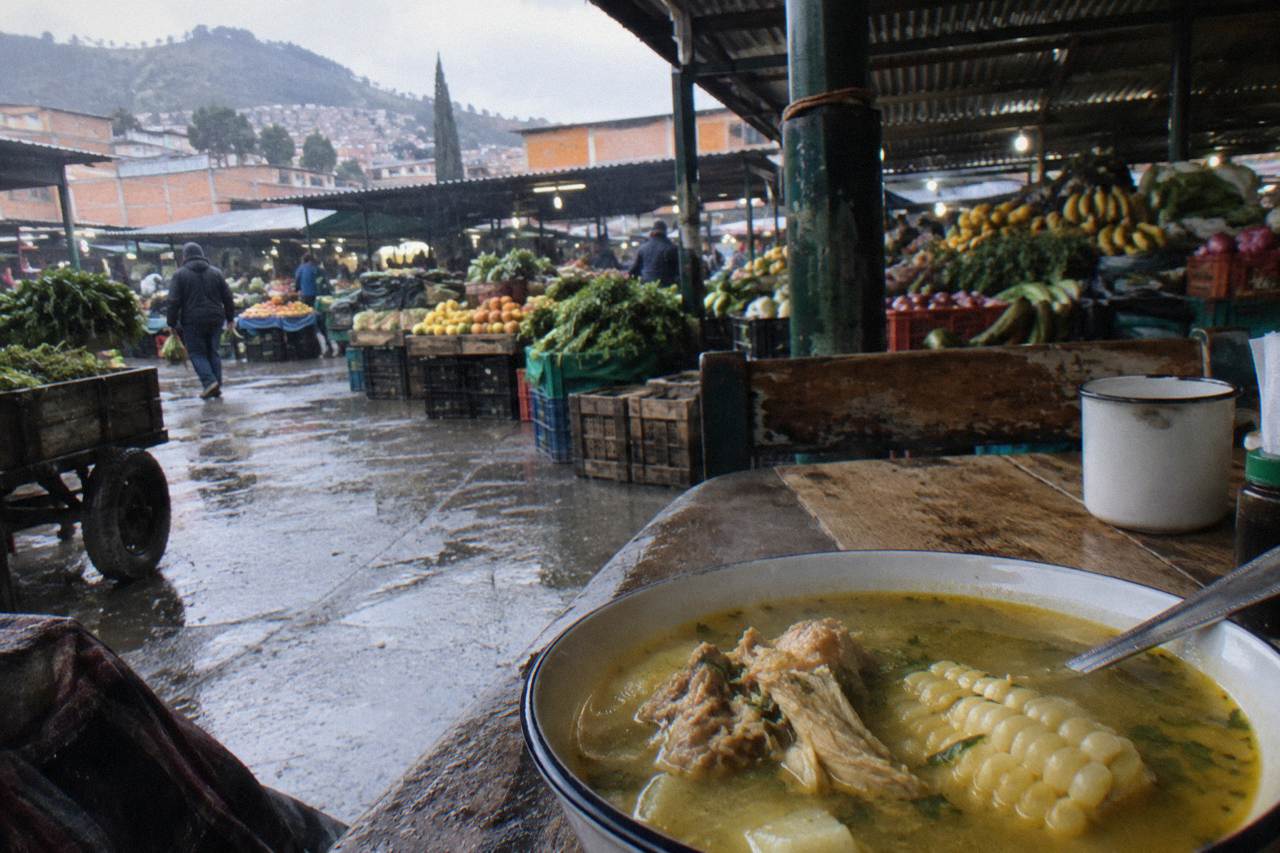
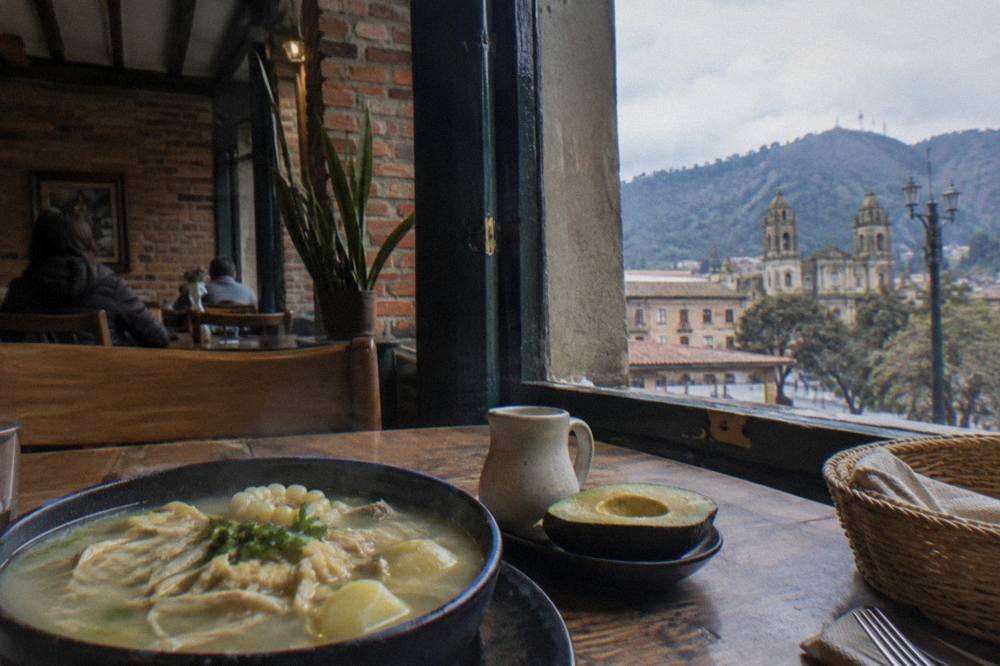
Ajiaco santafereño is the dish most often named as Colombia's most famous: a hearty soup of chicken, three kinds of potato, corn on the cob, and the herb guascas, served with capers, cream, and avocado on the side. It is the signature plate of Bogotá specifically, and its strongest rival is bandeja paisa, the enormous Antioquia platter of beans, rice, chicharrón, and more. Ask ten Colombians and you will likely get a regional argument, but ajiaco is the one dish with a national festival, a dedicated soup name in dictionaries of Colombian cooking, and a spot on nearly every restaurant menu in the capital.
Ask the question a different way and the answer shifts. Ajiaco is the most famous dish, but the arepa, a grilled corn cake eaten at every meal, is arguably the most famous food in the country, simply because it appears at breakfast, lunch, and dinner from the Caribbean coast to the Amazon foothills. So the honest answer has layers, and this article works through them: the soup that holds the official crown, the platter that contests it, the street foods that out-number both, and where in Bogotá you can actually taste each one.
If you want a shortcut, a guided tasting walk compresses the whole argument into a single afternoon. The Viejo Bogota Food Tour with 12+ Tastings is the most reviewed food walk covered on this site, rated 5.0 across 714 reviews, from $55 per person for four hours in the historic centre. Its stops are described on the booking page, so check there for exactly which dishes appear on a given day.
Why Ajiaco Santafereño Holds The Crown
Ajiaco santafereño is a soup built for Bogotá's cold, high climate, made with chicken, three potato varieties that thicken the broth as they break down, whole ears of tender corn, and the Andean herb guascas, then finished tableside with cream, capers, and avocado. The result is thick enough to stand a spoon in, golden from the papa criolla potato, and unlike any other soup in Latin America. It is the dish visitors most often fly home describing, and the one Bogotá itself has decided to celebrate: the city has run a dedicated ajiaco festival, Días de Ajiaco Santafereño, with market plazas and restaurants across the capital participating, organized through the Institute of Tourism and Development.
The regional question is where it gets interesting. In Antioquia and the coffee region, the answer to "most famous" is bandeja paisa, a platter that traditionally stacks beans, white rice, ground meat, chicharrón, fried egg, plantain, arepa, avocado, and black pudding onto a single tray. It is a farm-lunch dish, a deliberate show of abundance, and many paisas will tell you it, not ajiaco, is Colombia's true national plate. The government once floated bandeja paisa as a candidate national dish and the argument that followed proved the point: Colombia's food identity is regional, and the "most famous" title depends on where you are standing.
Ajiaco keeps the edge for a visitor for a practical reason: it is a dish you can only really eat well in and around Bogotá. The papa criolla potato that gives the soup its body and the guascas herb that gives it its aroma are Andean highland ingredients, and versions made abroad with substitute potatoes taste like a different soup entirely. Eating ajiaco in Bogotá at 2,640 m of altitude, with the city's chill outside, is the full experience. You can find it at traditional restaurants across the historic centre and at the city's market plazas: the Plaza Distrital de Mercado 12 de Octubre is one of five plazas highlighted in local reporting as places to eat ajiaco santafereño prepared the traditional way, and La Perseverancia market is known for its family-run traditional food stalls. For the festival angle, the tourism institute's ajiaco festival announcement is the official word on when the celebration returns.
A note on the word itself: outside Bogotá, ajiaco can mean a different soup entirely. In Cuba it is a root-vegetable stew, in parts of Colombia's Caribbean coast it is a spicier broth, and Peruvian cuisine has its own ajiaco-style chicken in cream sauce. When Colombians say ajiaco santafereño they mean the Bogotá potato soup, and the santafereño suffix, referencing the city's colonial name Santa Fe de Bogotá, is what settles the argument.
Tamal, Lechona, And The Other Contenders
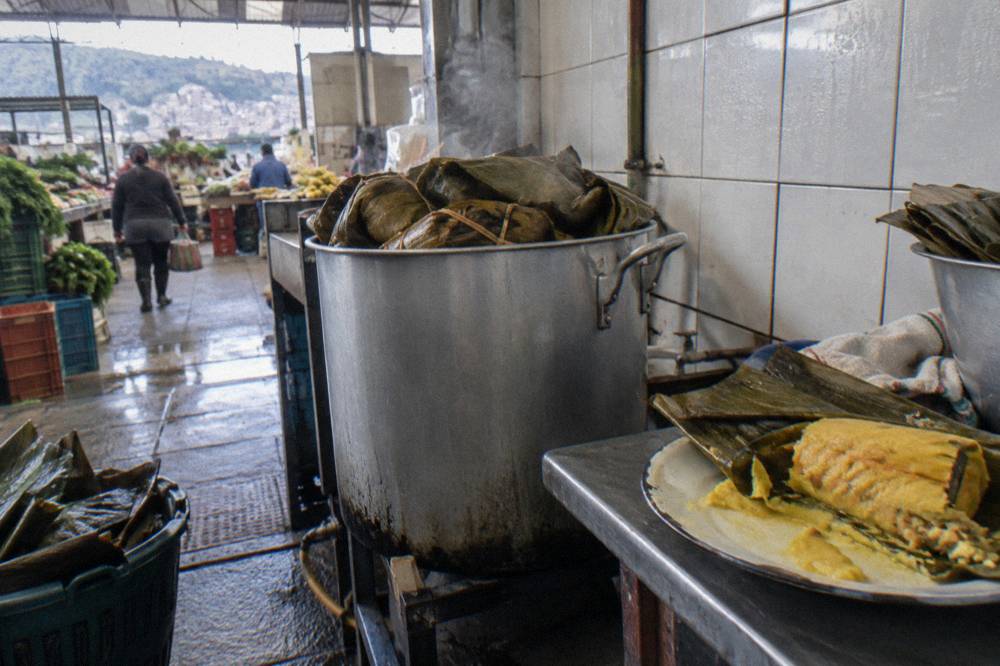
Two other dishes make a serious claim on the title: tamal tolimense, a banana-leaf-wrapped parcel of corn dough, chicken, and pork eaten across central Colombia, and lechona, the Huila specialty of a whole roast pig stuffed with rice and peas. Both are celebration foods, the things Colombians order for family Sundays and holidays rather than quick weekday lunches, and both are easy to find in Bogotá. The tamal in particular is a Sunday institution in the capital, traditionally eaten with hot chocolate and bread, and Bogotá's Festival del Tamal runs 5 to 8 December 2026 across more than 17 market plazas with a tamal, hot drink, and arepa or bread combo reported at 10,000 COP.
Lechona is the louder of the two. A whole pig is deboned, stuffed with rice, peas, and spices, and roasted for many hours until the skin crackles; it is then chopped and served on plates or in arepas, crispy skin on top. It is the dish of Huila department and of every Colombian festival worth the name, and in Bogotá it appears at market stalls and dedicated lechona shops. La Perseverancia market's traditional stalls are among the places local food writers point to for it. It is rich, festive, and unapologetically heavy, which is exactly why it competes for the crown: nobody forgets their first lechona.
Then there is sancocho, the great Colombian stew of meat, plantain, yuca, and potato that exists in a different version in nearly every region: sancocho de gallina on the coast, sancocho trifásico with three meats inland, sancocho de pescado along the rivers. It is arguably more widely eaten than ajiaco, but precisely because it is everywhere and different everywhere, no single sancocho carries national fame the way ajiaco santafereño does. If you are weighing the two soups against each other, our comparison of ajiaco and sancocho differences breaks down the broth, the herbs, and the regions.
The honest ranking, then, looks something like this, with the caveat that fame is regional and fiercely defended:
| Dish | Region of origin | What it is | Where the fame comes from |
|---|---|---|---|
| Ajiaco santafereño | Bogotá and the highlands | Chicken and three-potato soup with corn and guascas | Bogotá's signature plate, city festival, on nearly every capital menu |
| Bandeja paisa | Antioquia and coffee region | Loaded platter of beans, rice, chicharrón, egg, plantain, arepa | The abundant farm lunch, once floated as national dish |
| Tamal tolimense | Tolima and central Colombia | Corn dough with chicken and pork steamed in banana leaves | Sunday and holiday institution, Bogotá's December tamal festival |
| Lechona | Huila | Whole roast pig stuffed with rice and peas | Festival and celebration food, famous for its crispy skin |
| Arepa | Nationwide | Grilled corn cake, filled or plain | Eaten daily everywhere, the country's most common food |
Arepas, Empanadas, And The Street Food Claim
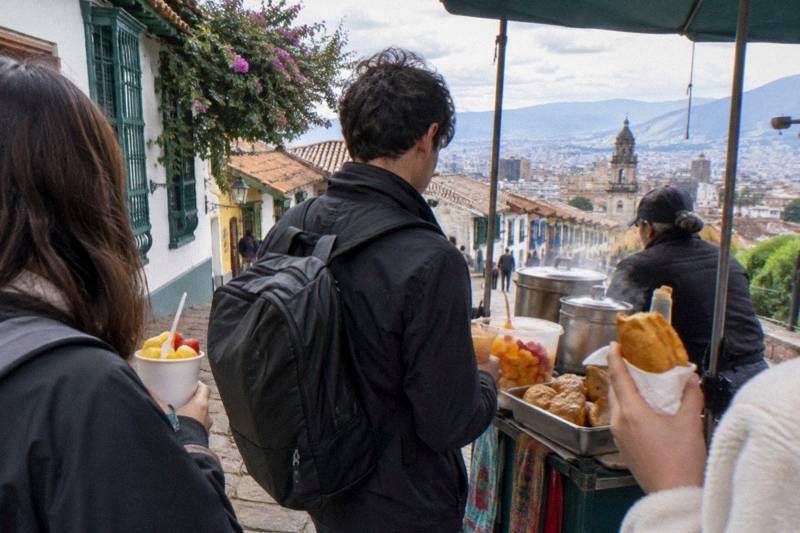
If fame is measured by daily reach rather than restaurant prestige, the arepa wins outright: a round corn cake, grilled or fried, eaten plain with salt and butter for breakfast or split and stuffed with cheese, egg, or meat at any hour. It is not one dish but a family of them, from the thin sweet arepa santandereana to the thick, cheese-filled arepa boyacense and the egg-fried arepa de huevo of the Caribbean coast. The empanada, a fried turnover of corn pastry filled with meat or potato, is its street-side sibling and the most common hot snack in Bogotá's centre.
Bogotá street food has its own supporting cast that tourists meet fast: pan de bono, a chewy cheese-and-yuca bread sold in bakeries for around 4,300 COP per piece in current delivery listings, almojábanas at around 4,700 COP, and obleas, large arequipe-filled wafers sold from street carts as the default street dessert. Fresh fruit juice is the companion to all of it; a cart at Carrera 2a with Calle 13 in La Candelaria was recently reported selling lulo juice at 4,000 COP and curuba-with-milk at 5,000 COP. These are reported street and delivery prices, so expect variation and check the price before ordering.
On eating street food safely, Bogotá's health secretariat advice is consistent: buy from formal or authorized stalls rather than informal vendors, and check that packaged items carry labels and intact packaging. The same practical habits you would apply in any big city apply here, and our longer write-up on street food safety and tap water in Bogotá goes into the details, including the fact that the city's tap water is officially potable even if some visitors stick to bottled.
Where does street food sit in the fame contest? Somewhere between the arepa and everything else. No visitor leaves Colombia without having eaten an arepa, and most remember the empanadas. But street snacks are a category rather than a single dish, which is exactly why the guided walks that string them together have become the standard first move for food-curious visitors. The Bogotá Food Experience: Cultural & Culinary Tour, four hours, from $47.15 per person and rated 4.9 across 615 reviews, is the strongest alternative to the most reviewed walk, covering the same historic-centre territory with a cultural emphasis; its listing details which tastings are included.
Changua, Chocolate Santafereño, And The Breakfast Traditions
Colombia's most famous breakfast is changua, a Bogotá milk-and-egg soup with bread and cilantro that locals either grow up loving or grow up dodging, and its most famous drinkable tradition is chocolate santafereño, thick hot chocolate served with cheese dropped into the cup to melt. Neither competes with ajiaco for the national crown, but both are essential to understanding why Bogotá's food culture feels distinct, and the chocolate-with-cheese ritual in particular is the single most surprising thing most visitors eat in the city.
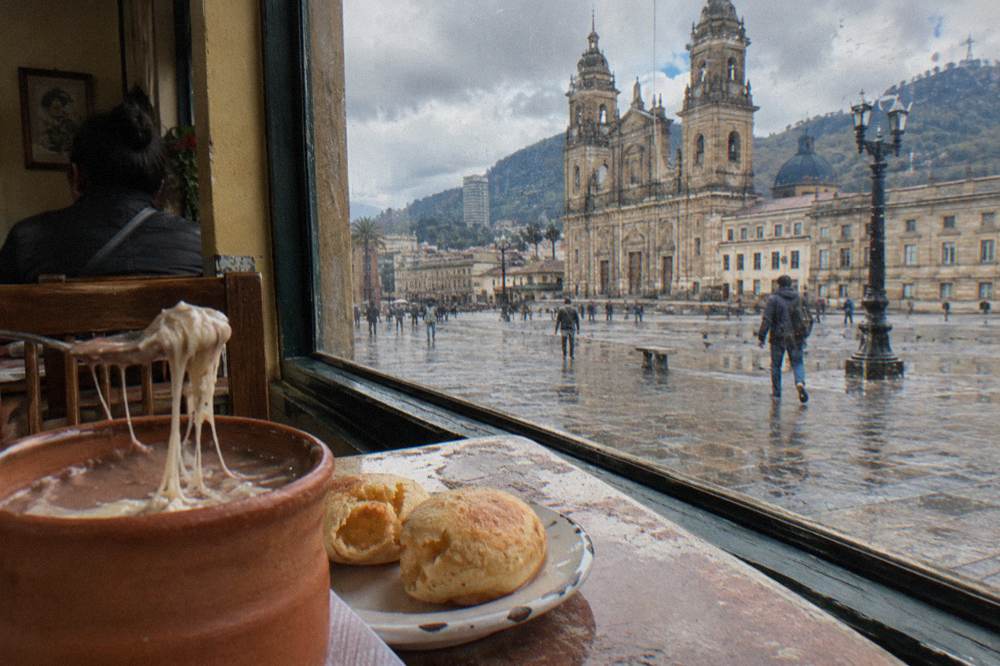
Changua is the highland breakfast: milk simmered with water, scallions and cilantro, into which whole eggs are cracked and poached, finished with stale bread and sometimes a piece of calentado leftovers. It is warming, faint, and built for altitude. Chocolate santafereño is its sweeter twin, a thick drinking chocolate served with fresh white cheese that you drop into the cup so it melts into strings, alongside almojábanas or bread. The most historic place to try it is La Puerta Falsa, a tiny spot next to the cathedral on Plaza de Bolívar that has been operating since 1816, and the preparation ritual is taught in workshops at Cacaote in La Candelaria, where sessions include the chocolate with almojábana, cheese, and achira as listed in late 2026. The wider set of guides lives on Bogota Food Tours.
Desserts and drinks round out the fame list. Obleas, the arequipe-filled wafers, are the street sweet most visitors photograph; arequipe, Colombia's dulce de leche, is the caramel under half the country's pastry. On the drink side, fresh juices from fruits that barely exist outside the tropics, lulo, mora, guanábana, curuba, are what visitors remember most, and the coffee deserves its own sentence: Colombia is one of the world's great coffee nations, and 2026 has been a difficult year for it, with exporters reporting January to September exports of 8.45 million 60-kg sacks, down 13.8 percent year on year. Tasting your way through that story is a whole separate plan, and our guide to coffee tasting and cupping in Bogotá covers it.
One more contender that outsiders rarely meet: mute santandereano, mondongo, and the fritanga platters of grilled meats and potatoes that anchor market lunches. They are why the market plazas, La Perseverancia above all, are where the traditional-food argument is best settled in one sitting.
Where To Taste These Dishes In Bogotá
The fastest way to meet Colombia's famous dishes is a guided walk or class in La Candelaria and the market plazas, where ajiaco's neighbours, the street snacks, and the market traditions sit within walking distance of each other, with guided options from $47.15 per person. Doing it alone works too: the historic centre's traditional restaurants carry ajiaco and tamales, Paloquemao market opens Monday to Saturday from 4:30 a.m. to 4:30 p.m. and Sundays from 5:00 a.m. to 4:30 p.m., and the city's plazas distritales de mercado have been formally promoted on the official Ruta Turística de las Plazas, as the district's own market-plaza guide explains.
The guided options each solve a different problem, and the prices below are the from-prices stated on each operator's booking page:
| Experience | Duration | From (USD) | Rating and reviews | What the booking page shows |
|---|---|---|---|---|
| Viejo Bogota Food Tour with 12+ Tastings | 4 hours | $55 per person | 5.0 across 714 reviews | 12 or more tastings on a historic-centre walk |
| Bogotá Food Experience: Cultural & Culinary Tour | 4 hours | $47.15 per person | 4.9 across 615 reviews | Cultural and culinary walk through the centre |
| Bogota Shared Gastronomy Tour in the Historic Center | 3 hours | $15 guide fee, tastings about $12 extra | 4.9 across 291 reviews | Shared walk, guide fee only, tastings paid on the day |
| Private Colombian Cooking Class and Market Tour | 4 hours | $95, varies by group size | 5.0 across 52 reviews | Market visit plus hands-on cooking class |
Read the price basis carefully on that table, because it changes the comparison. The shared gastronomy tour advertises $15, but that is the guide fee only, with tastings running about US$12 extra, so the real cost sits near the fuller-priced walks. The private cooking class varies by group size, as the booking page states, and in exchange you cook the dishes yourself after shopping for them, which is the difference between tasting ajiaco and knowing how to make it. If your question about Colombia's most famous dish is really the start of wanting to cook these things at home, the class is the answer; check the listing for the dishes covered on your date.
For self-guided tasting, the practical route is straightforward. Start in La Candelaria for breakfast, chocolate santafereño and an almojábana, then walk the centre's snack stalls through the morning. Take a taxi or rideshare to Paloquemao for the fruit and market energy, best before midday while the wholesale trade is still lively, then finish with a late ajiaco lunch at a traditional restaurant or at one of the market plazas. Altitude matters here: the city sits at about 2,640 m and the standard advice is one to two days of adaptation, heavy hydration, and lighter meals while you acclimatize, so consider planning the big bandeja paisa attempt for day three rather than landing day.
A dietary note that applies to every dish above: vegetarian versions of ajiaco without chicken exist but are not universal, and no guided experience should be assumed vegan or gluten-free unless its listing says so. Message the operator before booking with any restriction; the dishes themselves are corn-heavy, potato-heavy, and meat-heavy in that order, so planning ahead saves disappointment.
How To Choose Your First Colombian Food Experience
The most common first choice is the Viejo Bogota Food Tour with 12+ Tastings, and the review count explains why: 714 reviews at a 5.0 rating is by far the largest pool among the food walks compared on this site, which makes it the safest default for a first-time visitor. Four hours and twelve-plus tastings means you will meet the arepas, the empanadas, the sweets, and, depending on the day's stops, more of the dishes on this list than you would assemble on your own. The Bogotá Food Experience sits close behind at 615 reviews and 4.9, at a slightly lower from-price, and suits travellers who want the cultural storytelling threaded through the eating.
For visitors with more days in the city, layering experiences works well: a tasting walk early in the trip to map the dishes, a Paloquemao morning for the fruit and market side, and a cooking class at the end so the recipes travel home with you. Bogotá rewards the sequence because its food culture is genuinely layered, Andean highland traditions, market-plaza cooking, street snacks, and a modern restaurant scene that earned Chapinero Alto a Time Out ranking as one of the world's coolest neighborhoods for 2026, the only Latin American entry in that top ten. The famous dish is the door; the rest of the meal follows.
However you sequence it, book the guided pieces for early in your stay. Everything you taste with a guide on day two gives context to everything you order alone on days three, four, and five, and that context is the difference between eating in Bogotá and understanding what you are eating. Bogota Food Tours exists for exactly that first day.
Common Questions About Colombia's Most Famous Dish
What Is Colombia's Most Famous Dish?
Ajiaco santafereño, the Bogotá chicken and three-potato soup with corn and the herb guascas, is the dish most often named as Colombia's most famous. Bandeja paisa, tamal tolimense, and lechona are its strongest regional rivals, and the arepa is the country's most widely eaten food of all.
Is Ajiaco The Same As Sancocho?
No. Ajiaco santafereño is a Bogotá potato-and-chicken soup thickened by three potato varieties and flavoured with guascas, while sancocho is a broader family of meat-and-root-vegetable stews that changes by region. The broth, the herbs, and the potatoes are the main differences.
Where Can I Eat Ajiaco In Bogotá?
Traditional restaurants across the historic centre and the city's market plazas are the standard places. The Plaza Distrital de Mercado 12 de Octubre is one of five plazas highlighted in local reporting for traditional ajiaco santafereño, and La Perseverancia market is known for its family-run traditional stalls.
Do Food Tours In Bogotá Include Ajiaco?
Only a tour's own listing can confirm which dishes appear, since stops vary by day. Check the booking page for each experience before assuming any specific dish is included; operators describe their tasting lists there, and you can message them with dietary needs before booking.
What Is The Most Popular Colombian Street Food?
The empanada, a fried corn-pastry turnover filled with meat or potato, is the most common hot street snack in Bogotá, with the arepa eaten at all hours nationwide. Pan de bono, almojábanas, and obleas round out the street list, and fresh fruit juices from lulo and curuba are everywhere.
What Do Colombians Eat For Breakfast?
Breakfast depends on region, but the Bogotá classics are changua, the milk-and-egg soup with bread and cilantro, calentado, reheated rice and beans from the night before, and tamal with hot chocolate on Sundays. Chocolate santafereño, thick hot chocolate with melting cheese, is the best-known breakfast ritual.