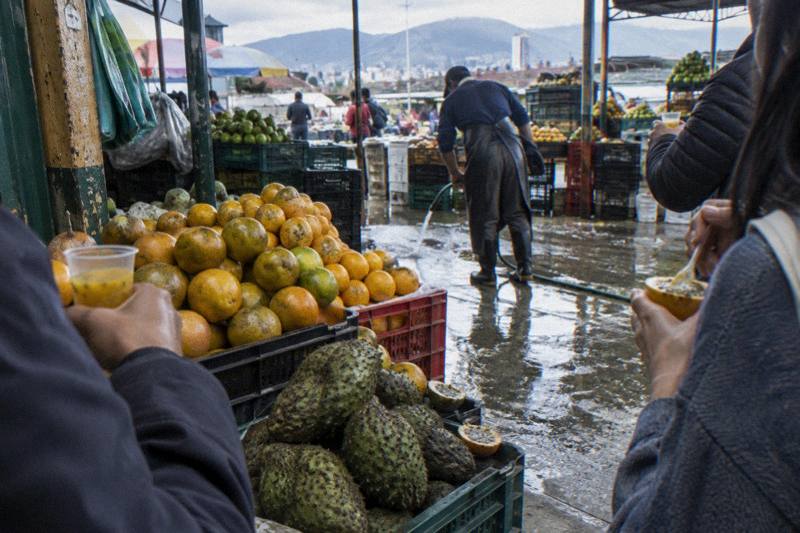
What Is Paloquemao?
Paloquemao is Bogotá's working wholesale and retail market, a 54-year-old plaza famous for exotic fruit, flowers and traditional food stalls. Here is what it is, when to go and how to taste it.
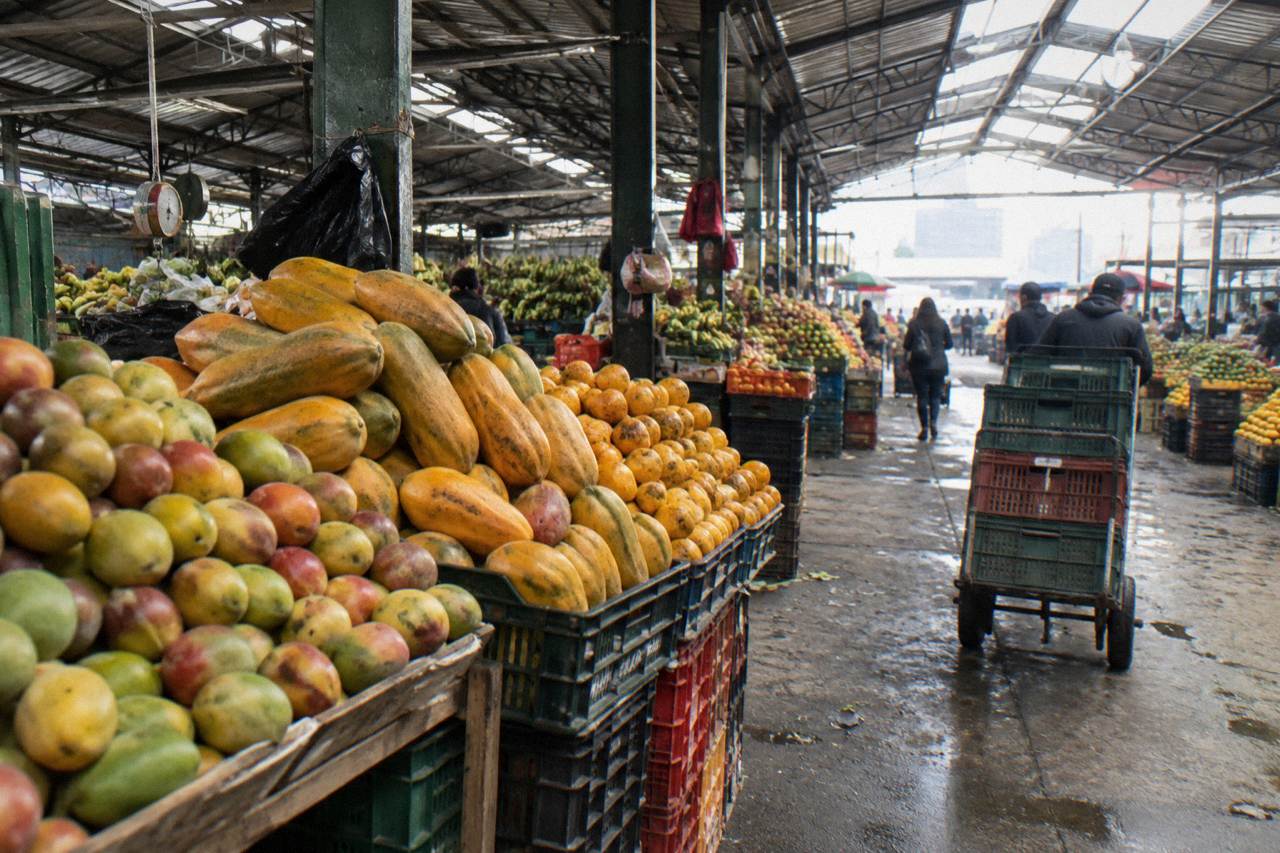
Paloquemao is the plaza de mercado that Bogotá actually runs on. Before most of the city has eaten breakfast, trucks are backing into its loading bays with crates of lulo, granadilla, uchuva, herbs, potatoes and flowers, and by mid-morning the fruit aisles are loud with vendors calling out tastes to anyone who pauses. For a visitor, it is the one place in the city where the entire Colombian fruit basket, plus a solid strip of traditional cooked food, sits within a single roofed block. This page answers the question plainly: what Paloquemao is, how it is laid out, when to go, and how a guided tasting walk turns an overwhelming wholesale hall into a readable one.
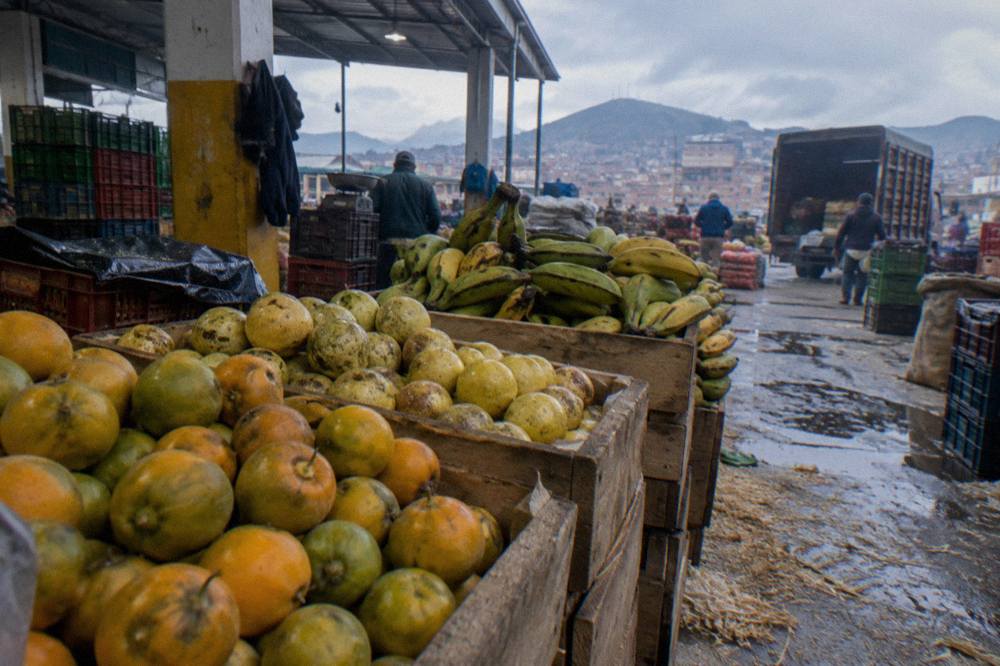
Paloquemao, formally the Plaza de Mercado de Paloquemao, is Bogotá's major working market complex: a 54-year-old plaza where wholesale and retail trade happen side by side, spread across sectors for fruit, vegetables, herbs, meat, fish and flowers. It remains the reference point for produce pricing in the city, and in 2026 it even hosted its first opera performance in its 54-year history.
That last detail is not a gimmick, it says something about what the plaza has become. On 25 October 2026 an opera was performed inside the market for the first time in its history, and the city's tourism office now runs a Ruta Turística de las Plazas Distritales de Mercado that treats Paloquemao and its sister plazas as cultural destinations rather than just supply infrastructure. The market's own operator and the Visit Bogotá tourism site both list it under gastronomy, not shopping, which tells you how the city frames it: come to eat and learn, not only to buy.
The practical answer for a traveller is simpler. Paloquemao is where you go to taste fruit you have likely never seen, because Colombia grows dozens of varieties that barely travel beyond its borders, and the market concentrates them in a few aisles. Vendors habitually offer samples, the early-morning wholesale rush is genuinely photogenic, and the surrounding food stalls serve the kinds of traditional plates, ajiaco, lechona, tamales, that Bogotá households eat on weekends. It is a market first and an attraction second, which is exactly why it rewards a visit.
If you want the fruit aisle decoded rather than guessed at, a guided walk makes the difference. The Paloquemao Market Food Tour with exotic fruit and local snacks, from $82 per person, rated 4.9 across 71 reviews, is the most reviewed guided option centred on the plaza, and Bogota Food Tours covers the market's sectors, hours and food stalls in depth across this site.
Where Paloquemao Sits And How The Plaza Is Organized
The market stands in the Paloquemao district of Bogotá, west of the historic centre in the Los Mártires area, roughly 10 minutes by car from La Candelaria depending on traffic. Inside, it is divided into named sectors: fruit and vegetables, herbs, meats and fish, flowers, and food stalls, and the flower section closes earliest, daily by late morning.
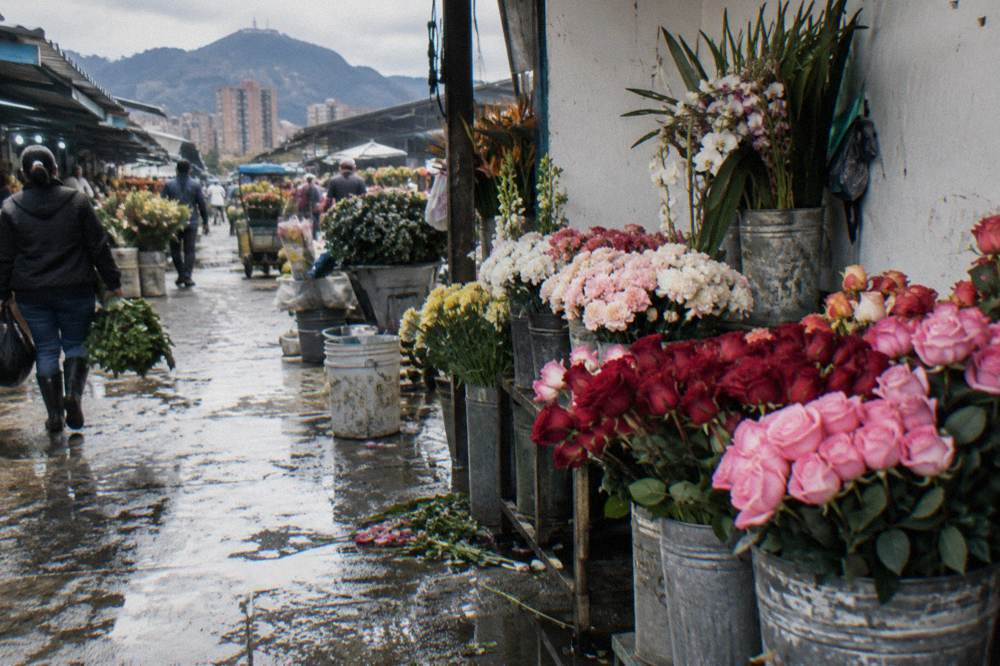
The flower sector is the detail people miss. According to the plaza's own operator information, flowers are available daily until 11:00 a.m., while the market as a whole runs much longer hours. Colombia is one of the world's largest flower exporters and Bogotá's plazas carry that supply, so the buckets of roses and pompons at Paloquemao in the early morning are a genuine spectacle, but one with a closing bell. If flowers are part of your plan, arrive early, and treat the fruit aisles as the main event for the rest of the day.
The rhythm of the trading day matters more than the map. Reports from the market describe the pre-dawn to around 10 a.m. window on weekdays as the peak wholesale energy: trucks unloading, vendors stacking, tastes of granadilla, lulo and uchuva handed across the counters. After midday the plaza thins, some wholesale stalls close, and the atmosphere shifts toward the retail shoppers and the cooked-food counters. Neither version is wrong, they are simply different markets, and which one you get depends on when you walk in.
Orientation is easy enough on your own: the fruit sector is the visual anchor, the food stalls cluster in their own strip, and the flower sector sits apart with its shorter day. If you would rather not work out the sectors yourself, the city's official tourism site profiles the plaza under its gastronomy section, and a tour with a local guide covers the same ground with translations and tastes included. For planning the wider picture, our Bogotá markets beyond Paloquemao guide maps the other plazas worth the trip.
What You Actually See And Taste At Paloquemao
Expect walls of unfamiliar fruit, herb bundles, butchered cuts, flower buckets and a strip of food stalls serving traditional plates. Vendors commonly offer fruit tastes, and the cooked-food counters serve dishes like ajiaco and lechona, though what any individual stall has on a given day varies, so treat dishes as typical of the plaza rather than promised.
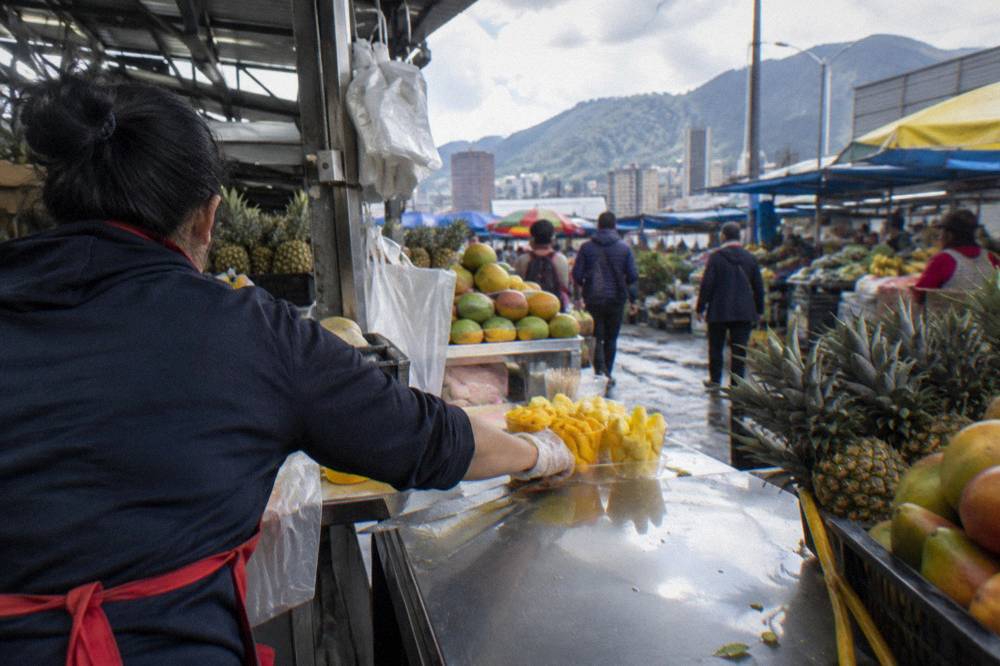
The fruit is the headline. Colombia's markets carry varieties that rarely appear abroad: lulo, a tart orange fruit used for juice; granadilla, a sweet passionfruit relative you crack open by hand; uchuva, the bright yellow husk berry; plus feijoa, guanábana, mamoncillo, badea and many more. Paloquemao concentrates them, and because the vendors sell to restaurants and juice stands, they know exactly what each fruit is for and will usually hand you a piece to prove it. Our Colombian fruits to try in Bogotá guide runs through the main varieties and what to do with them.
The cooked food is the second act. The plazas distritales are where Bogotá's traditional cooking lives at market prices: family-run stalls serving ajiaco santafereño, the chicken and potato soup that is the city's signature dish, alongside lechona, mondongo, fritanga and tamales, as the city's tourism listings describe for the sister plaza La Perseverancia and as is typical across the market network. Ajiaco itself is a soup built on several potato varieties, chicken and a local herb called guascas, and the market stalls that serve it are often cooking for market workers first and visitors second, which is a recommendation in itself.
None of that is guaranteed at any single stall on any single day. Markets rotate, stalls sell out by early afternoon, and the wholesale aisles are not restaurants. What a guided tour adds is certainty about the tasting part: the guided options at Paloquemao advertise counted tastings, fruit-by-fruit explanation, and in some versions coffee, and those inclusions are stated on the booking page rather than improvised. That is the honest gap between walking in alone and going with a guide: alone you will taste some fruit, with a guide you will taste a defined list of it.
Should you book a market walk before you arrive? The shared fruit-focused option, the Shared Tour of Colombian Exotic Fruit at Paloquemao Market, from $50.17 per person, rated 4.6 across 32 reviews, keeps the price down while still covering the fruit sector with tastings, and free cancellation terms are shown on the operator's booking page, so check the conditions there before you commit.
Paloquemao Hours And The Best Time To Visit
Official hours are Monday to Saturday from 4:30 a.m. to 4:30 p.m. and Sundays and public holidays from 5:00 a.m. to 4:30 p.m., with the flower sector available daily until 11:00 a.m. Weekday mornings before about 10 a.m. carry the full wholesale energy; after midday the plaza thins considerably, so the earlier you arrive, the more market you get.
Those hours come from the plaza's own operator pages and the city's tourism listings, and they are consistent across the 2025 and 2026 sources. Two practical conclusions follow. First, Paloquemao is a morning destination, full stop: the 4:30 a.m. opening is real, wholesale trading peaks before breakfast, and by late afternoon the place is winding down. Second, Sunday and holiday visits are shorter by two hours at the closing end, so a Sunday plan should start even earlier or accept a reduced plaza. The rest of the planning pages sit on Bogota Food Tours.
The best-time question also has a food answer. The cooked-food stalls serve market workers from early morning, which means traditional breakfasts, tamal with hot chocolate, calentado, changua, are morning foods here too. Our Bogotá breakfast guide covers what those dishes are, and the market is one of the better places to find several of them in one strip. For the full timing picture, including seasonal crowd notes, the Paloquemao hours and best time to go guide on this site goes deeper.
| Day type | Market hours | Flower sector | What to expect |
|---|---|---|---|
| Monday to Saturday | 4:30 a.m. to 4:30 p.m. | Daily until 11:00 a.m. | Wholesale rush before ~10 a.m., thinner after midday |
| Sundays and holidays | 5:00 a.m. to 4:30 p.m. | Until 11:00 a.m. | Shorter day, more family shoppers, earlier wind-down |
One seasonal note worth folding in: the city's plazas participate in food festivals through the year, and the December tamal festival has run across more than 17 plazas in past editions with fixed-price tamal combos, as the district's own announcements describe. If your visit lands in December, ask at a stall whether the plaza is participating, because festival days change the food strip noticeably.
Fruit, Flowers And Festival: The Plaza's Place In 2026
In 2026 Paloquemao is both a trading floor and a cultural venue: it hosted its first opera performance in its 54-year history on 25 October 2026, sits on the city's official market tourism route, and the plazas network reported more than 21.5 million dollars in sales at an international market encounter in October 2026. The market is busy, solvent and increasingly on the visitor map.
That context matters because markets elsewhere in Latin America have faded as supermarkets grew, and Bogotá's did the opposite: the district invested in the plazas as food culture, ran an international encuentro de plazas in October 2026 with reported sales above $21.5 million, and publishes a tourist route through seven of them. Paloquemao, the largest and most central of the retail-facing ones, is the natural first stop on that route.
The 2026 coffee and cacao news connects too, in a small way. Chocoshow 2026, the national cacao fair with more than 175 exhibitors, runs 27 to 29 November at Corferias, and Colombian chocolate is having a moment in the city generally, with the chocolate house Casa Orígenes opening in La Candelaria in October 2026. A Paloquemao visit sits naturally alongside that wider food scene: the market supplies the fruit, the fairs celebrate the cacao and coffee, and several guided market tours include a coffee component, as their listings state.
For a deeper pairing, the private version of the market walk changes the shape of the visit. The Private Paloquemao Food and Fruit Market Tour, from $103 per person with the price varying by group size, rated 5.0 across 19 reviews, is built around 25 or more tastings per its listing, which turns the fruit aisle from a sampling stroll into a structured tasting.
Taking A Guided Food Walk Through Paloquemao
Guided options at the plaza range from about $50 to $103 per person for three hours: the shared exotic-fruit tour from $50.17, the standard market food tour from $82 with fruit tastings and local snacks, and the private 25-plus-tastings version from $103 with group-size pricing. All three run around three hours, and their exact inclusions are stated on each booking page.
The reason to consider one is not access, the market is free to enter, but decoding. A fruit aisle where forty unfamiliar species sit in crates is genuinely hard to navigate alone, vendors speak Spanish at market speed, and knowing which fruit to eat fresh versus which goes in juice is local knowledge. A guide also handles the food-stall strip, where the safe-with-a-local calculus is easier when someone orders for the table. Food safety guidance from the city's health secretariat recommends buying from formal, authorized establishments and checking labels and packaging, advice that applies to any market visit in Bogotá.
| Guided option | Format | Duration | From (USD) | Rating and reviews |
|---|---|---|---|---|
| Shared Tour of Colombian Exotic Fruit at Paloquemao Market | Shared group | 3 hours | $50.17 | 4.6 across 32 reviews |
| Paloquemao Market Food Tour, exotic fruit and local snacks | Small group, minimum 2 people | 3 hours | $82, varies by group size | 4.9 across 71 reviews |
| Private Paloquemao Food and Fruit Market Tour, 25+ tastings | Private | 3 hours | $103, varies by group size | 5.0 across 19 reviews |
Prices move with group size on the two listings marked as varying, and tasting counts are the operators' own listing claims, so read the inclusion line on the booking page for the version you are buying. None of these listings is described as vegan or gluten-free; if that matters, message the operator before booking rather than assuming. Dietary needs aside, the choice mostly comes down to depth: shared and cheap, standard with snacks, or private and exhaustive.
A market walk also pairs well with a second food experience in the same trip. The city's cooking classes, several of which include their own market visit, are covered in our Bogotá cooking classes guide, and doing the market first, then learning to cook what you saw, is a natural two-day sequence.
Paloquemao Compared With Bogotá's Other Markets
Paloquemao is the largest and most visitor-friendly of Bogotá's plazas distritales, but it is not the only one: La Perseverancia is the traditional-food plaza, Samper Mendoza is the nocturnal herb market open Monday and Thursday nights from 9 p.m., and Usaquén's weekend flea market carries food stalls alongside crafts. Each answers a different question.
La Perseverancia, east of the centre, is where the city's tourism listings point for ajiaco, lechona and mute santandereano from family-run stalls, with hours of 8 a.m. to 4 p.m. on weekdays and 6 a.m. to 5 p.m. on weekends. Samper Mendoza is the strangest and most specialized: a wholesale hub for more than 500 plant species, per its listings, with one recent city count documenting 391 species in the plaza and 201 native to Colombia, and its main trading runs Monday and Thursday nights into dawn. Usaquén's market, Saturdays, Sundays and holiday Mondays from 9 a.m. to 5:30 p.m., is a flea market with arepas, cut fruit, empanadas and hot chocolate rather than a wholesale plaza.
Against those, Paloquemao's role is clear: it is the generalist. If you have one market morning in Bogotá and want fruit, flowers, and cooked food under one roof with the most forgiving logistics, this is the one. If you are chasing a specific tradition, the deep bowl of ajiaco or the midnight herb trade, the specialized plazas win for that single purpose. Many visitors do Paloquemao on one morning and Usaquén on a Sunday, which covers both ends of the market spectrum the city offers.
However you structure it, go early, go hungry, and let the vendors hand you fruit. The plaza has been feeding Bogotá for more than half a century, and the simplest definition of what Paloquemao is remains the one you get standing in the fruit aisle at 8 a.m. with a wedge of lulo in your hand.
Common Questions About Paloquemao
What Is Paloquemao?
Paloquemao is Bogotá's major working market plaza, 54 years old, combining wholesale and retail trade in fruit, vegetables, herbs, meat, fish and flowers, plus a strip of traditional food stalls. It is the city's reference market for produce and its single best stop for tasting Colombian fruit.
What Are Paloquemao's Opening Hours?
Monday to Saturday from 4:30 a.m. to 4:30 p.m., and Sundays and public holidays from 5:00 a.m. to 4:30 p.m. The flower sector is available daily only until 11:00 a.m., so flower shopping needs an early start.
When Is The Best Time To Visit Paloquemao?
Weekday mornings before about 10 a.m., when the wholesale rush is at full energy and vendors are offering fruit tastes. After midday the plaza thins considerably, and Sunday visits run two hours shorter at the closing end.
Can You Eat A Full Meal At Paloquemao?
Yes, the food stalls serve traditional cooked dishes such as ajiaco, lechona and tamales, typical of Bogotá's market plazas, alongside juices and cut fruit. What any stall has on a given day varies, so treat the dishes as typical rather than guaranteed.
Do You Need A Tour To Visit Paloquemao?
No, the market is free to enter and safe to browse with normal precautions during the day. A guided tour adds counted fruit tastings, translation and navigation, with shared options from about $50 and private versions from about $103 per person.