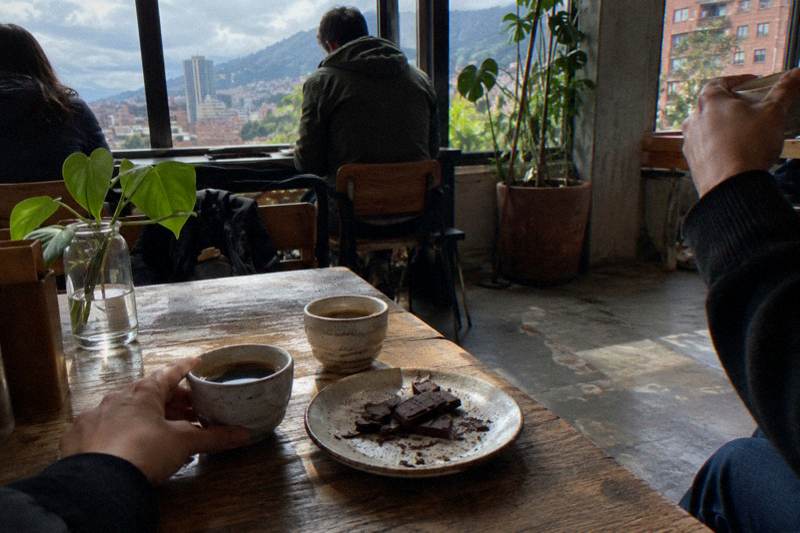
Best Coffee Shops In Bogotá: Specialty Roasters Worth The Detour
Bogotá has quietly become one of the most serious coffee cities in the Americas, with in-house roasters, public cuppings and direct-trade pioneers spread across Chapinero, Usaquén and the historic centre. This guide maps the roasters worth planning a day around, explains what to order, and shows where a guided tasting fits in.
Short answer
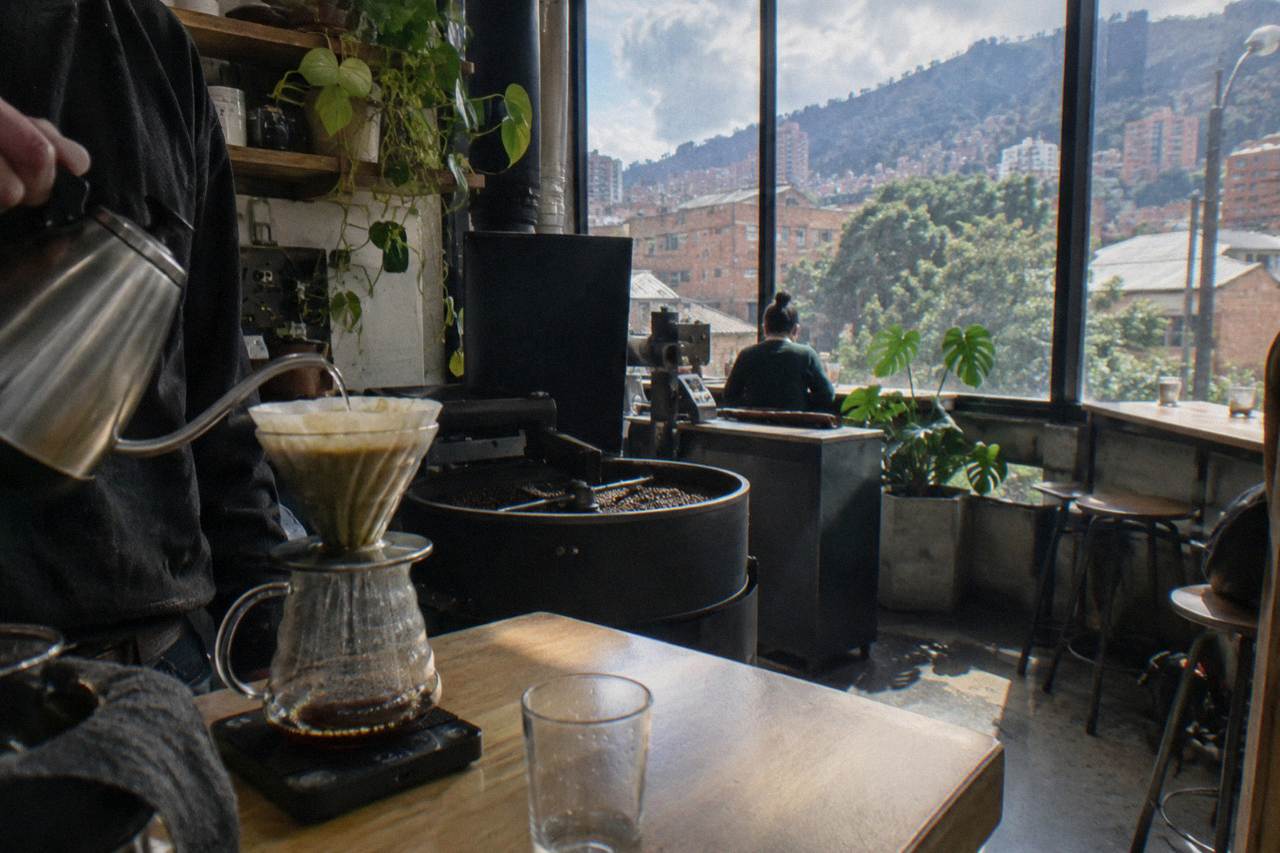
Bogotá's best specialty coffee is concentrated in Chapinero Alto, Quinta Camacho and Usaquén, home to roasters like Amor Perfecto, Bourbon, Colo Coffee, Tropicalia and Catación Pública. Most tastings cost from $31.15 to $49.95 per person, and a guided coffee and chocolate walk runs about 2 hours 15 minutes from $49.
Bogotá drinks its own coffee differently than the rest of the country, and that difference is exactly why the city rewards a dedicated café crawl. Colombia grows most of the world's most sought-after beans, yet for decades almost all of the top-grade lots were exported while locals drank sweet, weak tinto from instant or low-grade grounds. That pattern broke over the past fifteen years as a generation of roasters set up in the capital, bought directly from farms, and started roasting and cupping in public. The result today is a city where you can walk between a 1990s pioneer, a roastery that mills its own parchment in a former convent, and a public cupping lab, all within a few kilometres.
This guide maps the roasters neighbourhood by neighbourhood, tells you what to order once you are standing at the bar, and untangles the tinto confusion that catches nearly every first-time visitor. It also covers the guided side of the scene: tastings, cuppings and combined coffee walks, with prices from the operators' own booking pages. For the wider story of where the city's food day fits together, the itineraries and neighbourhood guides on Bogota Food Tours connect the café stops to markets, street food and dinner.
What Makes Bogotá A Specialty Coffee City?
Bogotá became a specialty coffee destination because its roasters buy directly from Colombian farms, roast in-house, and open their cupping labs and bars to the public, something few coffee capitals offer at this scale. The 2026 scene runs from a 1990s pioneer with seven national barista titles to a roastery that opened in a former convent in 2026. Hours, menus and events change, so confirm details before a long trip across town.
The shift started small. Amor Perfecto, whose flagship sits in Chapinero Alto, began roasting in the 1990s when almost nobody in Colombia was drinking its own best beans, and it has since racked up seven National Barista Champion titles and runs public cuppings. That pioneer made room for others. Azahar Coffee built a direct-trade model with more than 420 Colombian farmers and a premium-price social-impact approach, while Colo Coffee Roasters in Usaquén put its roasting machine in full view of the bar and sources Colombian-only single origins and micro-lots.
The newest chapter is happening right now. Varietale opened in a former convent on Calle 41 in Chapinero in 2026, buys coffee in parchment, mills it in-house, and rotates regional Colombian single origins, and Bourbon Coffee Roasters was slated to open a second store in Zona G in October 2026. A good overview of the in-house roasting scene, including several of the names above, is maintained by Local Specialty Coffee's Bogotá roasting guide.
What this means for a visitor is density. In most cities you find one or two serious roasters; in Bogotá you can build a full day around them, pairing a morning pour-over in Quinta Camacho with an afternoon cupping in Usaquén. The city also sits at about 2,640 m, so pace yourself: reported local guidance suggests a day or two of adaptation, plenty of water, and lighter meals while your body adjusts, and caffeine at altitude hits some people harder than at sea level.
The Roasters Worth Planning Your Day Around
Eight roasteries anchor Bogotá's specialty scene: Amor Perfecto and Varietale in Chapinero, Bourbon and Tropicalia around Quinta Camacho, Colo Coffee and Catación Pública in Usaquén, plus Libertario across two locations and Café 18 for rare varietals. Catación Pública runs an SCA-certified cupping lab with public sessions. Check each café's current hours before visiting.
The practical way to use this list is by neighbourhood, because Bogotá's traffic makes cross-town café hopping slow. Chapinero Alto, named the 7th coolest neighbourhood in the world by Time Out in 2026, holds Amor Perfecto's flagship and Varietale's new convent home. Quinta Camacho and El Nogal nearby give you Bourbon's roastery focus and Tropicalia, which won the SCA 2022 Coffee Design Award and rotates its coffees roughly every three months with rare-varietal filter options.
Usaquén in the north pairs Colo Coffee's visible roaster and community events with Catación Pública, which runs an SCA-certified cupping lab and public cuppings alongside a multi-origin menu. Libertario Coffee Roasters, with locations around Calle 70a and in Usaquén, sources from the celebrated La Palma y El Tucán farm and its neighbouring families. Café 18 rounds out the list for the curious: it pours rare varietals such as Sudan, Pink Bourbon and Harrar, backed by BANEXPORT, in an SCA Coffee Design space.
| Roastery | Neighbourhood | What it is known for |
|---|---|---|
| Amor Perfecto | Chapinero Alto (flagship, multiple locations) | 1990s pioneer, in-house roasting, 7 National Barista Champion titles, public cuppings |
| Varietale | Chapinero (Cl. 41 #8-43, former convent) | Buys in parchment, mills in-house, rotates regional single origins; opened 2026 |
| Bourbon Coffee Roasters | Quinta Camacho roastery, second store in Zona G | Per-microlot roast profiles, single-origin Colombian focus |
| Tropicalia Coffee | El Nogal / Quinta Camacho | SCA 2022 Coffee Design Award, coffee rotation about every 3 months, rare-varietal filters |
| Colo Coffee Roasters | Usaquén (Cra. 6a #117-26) | Visible in-house roasting, Colombian-only sourcing, micro-lots, community events |
| Catación Pública | Usaquén | SCA-certified cupping lab, public cuppings, multi-origin menu |
| Libertario Coffee Roasters | Calle 70a and Usaquén | Sourcing from La Palma y El Tucán and nearby families, three-tier menu |
| Café 18 | Chapinero area | Rare varietals including Sudan, Pink Bourbon and Harrar, BANEXPORT-backed |
If reading that table makes you want a guide to hand you the cups instead, you are exactly who the city's coffee experiences were built for. A tasting walk or workshop compresses weeks of café visiting into a single afternoon, and the three below are the strongest fits for a coffee-focused visitor: the combined coffee and chocolate experience, a hands-on specialty workshop, and a compact guided tasting.
Chapinero Alto And Zona G: Where To Drink First
Chapinero Alto and neighbouring Zona G concentrate the deepest coffee talent in the city, from Amor Perfecto's flagship to Bourbon's new Zona G store and Varietale's convent roastery, and the dining around them makes the area a natural full-day base. Time Out ranked Chapinero Alto the 7th coolest neighbourhood in the world in 2026, the only Latin American entry in the top ten.
Start in Chapinero Alto, where Amor Perfecto's flagship doubles as the historic heart of the scene. Public cuppings here let you taste side by side and ask questions, and the bar staff are used to visitors working through regional differences for the first time. A few blocks away, Varietale's restored convent space is the newest serious stop: coffee bought in parchment and milled on site means you can sometimes smell the milling alongside the roasting, and the rotating single-origin list is the point, so order whatever region is on and ask what replaced it last month.
Zona G, best known for its restaurant density, adds Bourbon Coffee Roasters, whose roastery in Quinta Camacho emphasizes per-microlot roast profiles and whose second store in Zona G was slated to open in October 2026. Toss in Azahar's direct-trade model and Tropicalia's design-award space in El Nogal, and the Chapinero-to-Quinta-Camacho corridor alone can fill a morning and an afternoon. The neighbourhood-by-neighbourhood food guide covers where to eat between cups.
One honest warning about doing this corridor on your own: without context, five pour-overs in a row blur together, and nobody explains why a Huila washed lot tastes different from a natural-processed Nariño unless you ask the right questions. That is the gap a guided tasting fills, and for many visitors it is worth booking one early in the trip so the self-guided café days afterwards make more sense.
The coffee and chocolate experience that anchors this guide's recommendations pairs regional coffee tasting with Colombian chocolate in a 2 hour 15 minute walk rated 5.0 across 79 reviews, from $49 per person. Bookings come with free cancellation on the operator's page, so you can lock a slot before your flight and adjust later: Check availability
Usaquén And The North: Roasters, Cuppings And A Sunday Market
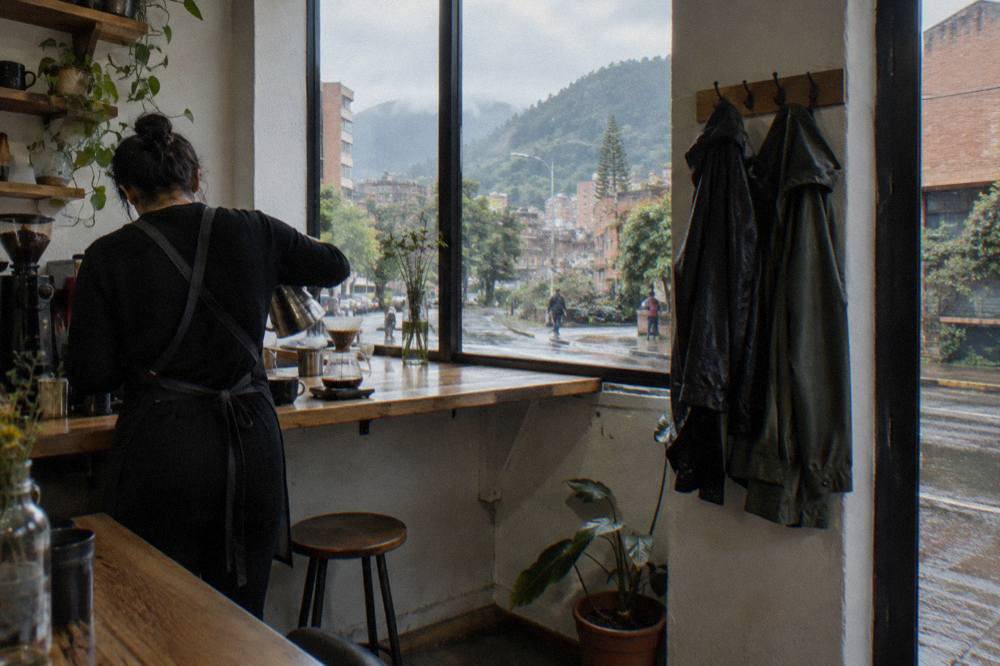
Usaquén gives you Colo Coffee's open roastery and Catación Pública's SCA-certified cupping lab within walking distance of a weekend flea and food market that runs Saturdays, Sundays and holiday Mondays from 9:00 a.m. to 5:30 p.m. on Carrera 6A between Calles 119 and 120A. It is the strongest single-neighbourhood coffee plan in the city.
Colo Coffee Roasters, on Carrera 6a #117-26, makes the roasting part of the visit: the machine sits in view, sourcing is Colombian-only with single origins and micro-lots, and the shop runs community events alongside pour-overs, espresso and retail beans. Catación Pública is the more structured stop. Its SCA-certified cupping lab hosts public cuppings, and one listing describes cuppings led by a certified Q-grader featuring 80-plus SCA-point coffees from 12 Colombian farms, with options ranging from a 20-minute basic session to a one-hour, four-method brew workshop. Schedules for public sessions shift, so confirm times before you commit an afternoon.
The neighbourhood reward is the Sunday combination. The Usaquén flea market's food stalls sell arepas, fresh-cut fruit with salt and lime, empanadas and hot chocolate, which makes a market brunch before two coffee stops an easy, walkable day. If you are planning around a weekend, the Usaquén Sunday market and food guide goes deeper on the stalls and timing.
For visitors who want the cupping experience without working through lab schedules in Spanish on their own, a guided workshop does the translating and the pacing.
La Candelaria: Coffee Inside The Historic Centre
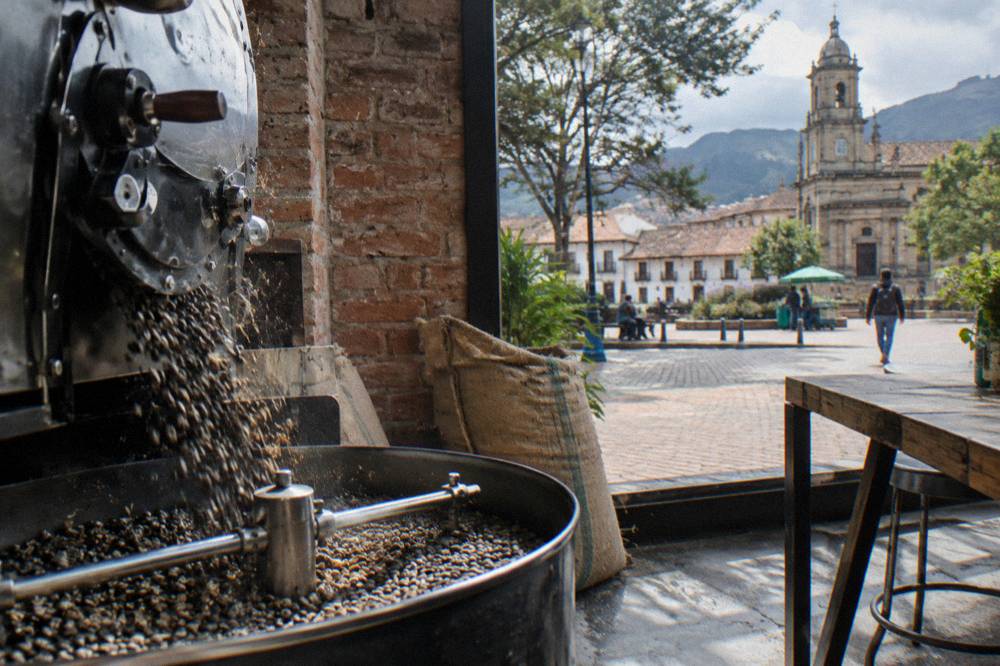
La Candelaria pairs historic chocolate santafereño culture with new specialty coffee presence, including Casa Orígenes, a restored republican house opened in October 2026 by pastry chef Helga Blaha focusing on Colombian chocolate, bean-to-bar tastings, specialty coffee and a curated gastronomic library. La Puerta Falsa, operating since 1816, anchors the traditional side.
The historic centre is where Colombian hot chocolate culture lives. La Puerta Falsa, next to the Catedral Primada, has been serving thick, aromatic chocolate santafereño with cheese to melt into the cup, almojábanas and bread since 1816, and it remains the reference point for the tradition. Cacaote, on Carrera 4 in La Candelaria, offers guided workshops on preparing chocolate santafereño, with tasting that includes almojábana, cheese and achira. The full story of the drink and where to try it sits in the site's chocolate santafereño guide.
On the coffee side, the centre's headline news is Casa Orígenes, opened 5 October 2026 in a restored republican house by chef and pastry chef Helga Blaha. It combines bean-to-bar and tree-to-bar chocolate tastings, author pastries, specialty coffee served with Lacia beans, and a curated gastronomic library. Casa Orígenes also hosts the International Chocolate Awards in Colombia. Late November brings Chocoshow 2026 to Corferias from 27 to 29 November, an eighth edition with more than 175 exhibitors, cacao tastings, live demos and competitions, tied to 2025 cacao and derivatives exports of US$413.1 million.
For travellers staying in the centre, a guided coffee-and-chocolate walk is the most efficient way to cover both threads in one outing, and the related experience on this site's coffee pages covers exactly that combination. If you are weighing the historic centre against the northern roasters, the neighbourhood food guide breaks down the trade-offs.
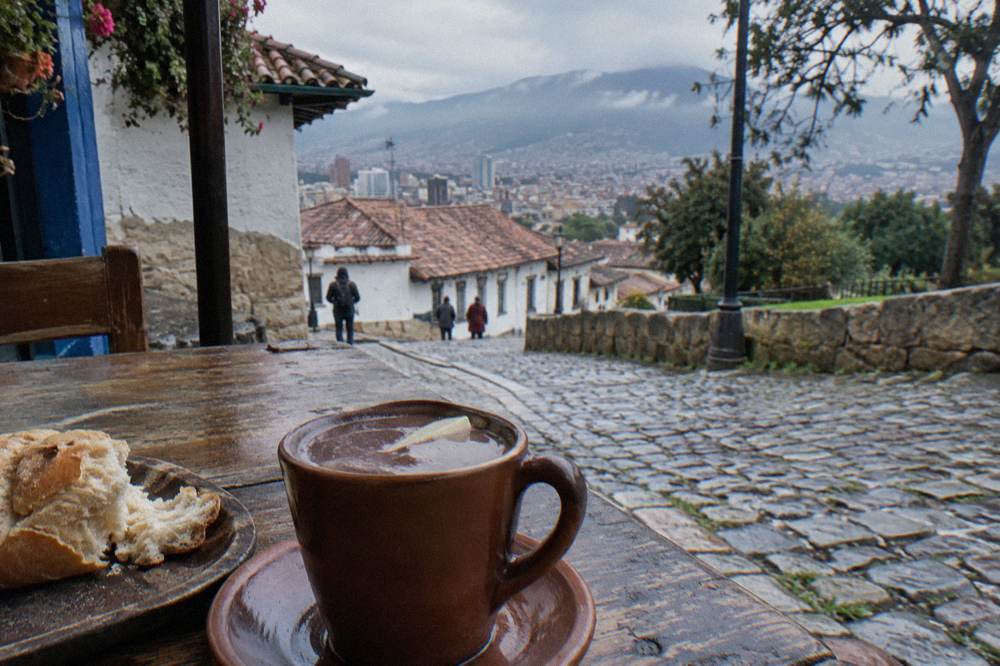
Why Tinto Is Not What Visitors Expect
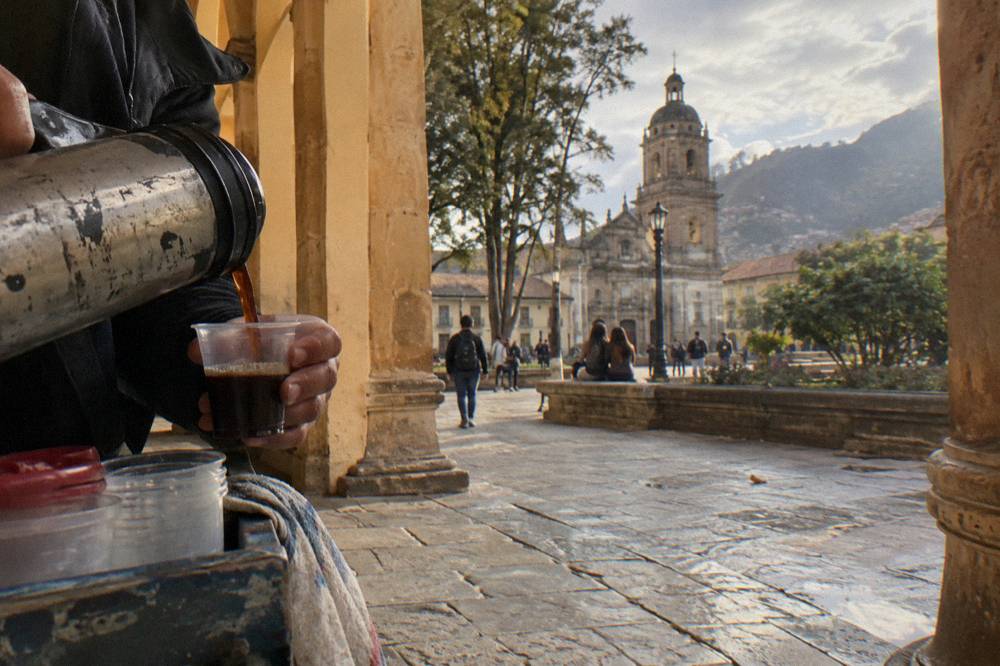
Tinto is not espresso, not filter specialty coffee, and not what most visitors imagine when they order "coffee" in a Spanish-speaking country: it is a small, sweet, often lightly brewed black coffee sold from street thermoses for a few hundred pesos, and it belongs to a different tradition than the pour-overs in Chapinero. Ordering one is a cultural experience rather than a tasting experience.
The word itself just means "ink-coloured", and the drink is typically made from lower-grade beans, brewed weak, and served with generous sugar, sometimes with panela or cinnamon. Street vendors pour it from thermoses the size of fire extinguishers at bus stops, plazas and university corners. Expecting a dark, intense shot is the single most common disappointment visitors report, and it is a category error: tinto is the everyday street drink of a coffee-growing country that historically exported its best beans, not a specialty product.
The specialty scene described in the rest of this guide is the deliberate counter-tradition: micro-lots, roast dates, pour-over bars and cupping labs. Both are worth trying. A useful framing for a first day is to drink a tinto from a street vendor for what it is, then order a washed single-origin pour-over at any roastery in this guide and taste the gap between the two Colombias in one afternoon.
If you want that contrast explained rather than discovered by trial and error, guided tastings are built around it. The compact Colombian coffee tasting runs 2 hours from $31.15 per person and is rated 4.8 across 105 reviews, covering regional styles and brewing methods with a guide.
Tastings, Cuppings And Coffee Tours Compared
Guided coffee experiences in Bogotá run from $31.15 to $49.95 per person for city tastings of 1.5 to 2 hours, up to $94 for a full 8-hour coffee farm day tour rated 4.8 across 87 reviews. The most booked formats are short city tastings; the farm day is the choice for seeing where coffee actually grows. Cancellation terms are on each operator's booking page.
The table below compares the main guided options using each operator's own stated price, rating and review count. Prices marked with an asterisk vary by group size; where a listing shows a per-person from-price, that basis is stated.
| Experience | Duration | From (USD) | Rating and reviews |
|---|---|---|---|
| Coffee and Chocolate tour in Bogotá | 2 hours 15 minutes | $49 per person | 5.0 across 79 reviews |
| Specialty Coffee Workshops in Bogota | 2 hours | $49.95 per person | 5.0 across 149 reviews |
| Bogotá: Colombian Coffee Tasting | 2 hours | $31.15 per person | 4.8 across 105 reviews |
| Coffee Farm Experience Day Tour | 8 hours | $94 per person | 4.8 across 87 reviews |
| Bogotá: Coffee Tasting Experience Tour with Exotic Varieties | 1.5 hours | $37.71 per person | 4.4 across 16 reviews |
| Bogota Private Coffee & Chocolate Tour in La Candelaria | 4 hours | from $112, varies by group size | 5.0 across 20 reviews |
How to choose between them comes down to time and depth. A 1.5 to 2 hour tasting teaches you to taste; a workshop teaches you to brew; the private La Candelaria option adds chocolate and a guide to yourself; and the 8-hour farm day shows you the origin. For visitors with a market morning planned, the site's Paloquemao market guide pairs naturally with an afternoon tasting, since several fruit tours include a coffee component and the market's own juice stalls use the same fruits you will taste in the cupping sessions.
The cupping experiences inside the city's own cafés deserve their own mention and are covered in detail in the coffee tasting and cupping guide. Public cuppings at Amor Perfecto and the Q-grader sessions at Catación Pública are the two most established, and the harvest context below explains why what you taste in late 2026 is worth asking about.
What Colombia's 2026 Harvest Means For Your Cup
Colombia's coffee exports fell in the 2026 coffee year, with Asoexport reporting 8.45 million 60-kg sacks exported from January to September 2026, down 13.8 percent year on year, and production projected at 12 to 12.5 million sacks, a 10 to 15 percent drop. Roasters rotate lots constantly, so the coffee on any bar this season may differ from last season's.
The numbers behind the city's café scene shifted in 2026. Exporters reported January to September exports of 8.45 million 60-kg sacks, down from 9.80 million a year earlier, and the coffee year running October 2025 to September 2026 closed with exports of 11.68 million sacks, down 11 percent. Production for 2026 is projected at 12 to 12.5 million sacks, a 10 to 15 percent decline versus 2025, though September 2026 saw a rebound of 1.17 million sacks exported, up 9 percent. The 90th Cumbre Cafetera was scheduled for 5 and 6 November 2026 in Cartagena. The export picture is tracked in Bloomberg Línea's coffee export coverage.
| Measure | Figure | Change |
|---|---|---|
| Exports, Jan to Sep 2026 | 8.45 million 60-kg sacks | Down 13.8 percent year on year |
| Coffee year exports, Oct 2025 to Sep 2026 | 11.68 million sacks | Down 11 percent |
| Coffee year production | 12.65 million sacks | Down 15 percent from 14.87 million |
| 2026 projected production | 12 to 12.5 million sacks | Down 10 to 15 percent versus 2025 |
| September 2026 exports | 1.17 million sacks | Up 9 percent, a rebound |
For a visitor this matters in one practical way: menus change. A roastery whose Nariño lot you loved in a review from spring may be pouring something else entirely by your visit, because smaller harvests and shifting lots force faster rotation. Ask what is currently on the bar rather than asking for a specific farm, and treat any café's rotation, Tropicalia's roughly three-month cycle being a documented example, as part of the fun.
Weather adds another wrinkle. A 1 November 2026 crop note described the main crop in berry-filling and early harvest phases with uneven moisture, including a dry stretch in Huila, and IDEAM's September 2026 forecast put a strong El Niño at more than 90 percent probability for late 2026 into early 2027, expected to bring Bogotá drier, sunnier days and colder nights through February 2027. Pleasant café weather, in other words, with a jacket for the walk between stops.

Planning Your Coffee Day: Order, Timing And Budget
A realistic coffee day costs roughly $31 to $50 for a guided tasting, or close to nothing beyond transport if you self-guide between roasters, where individual drink prices are not verified in current sources; one aggregate note put average café drinks around $2 to $2.60, reported. Group the roasters by neighbourhood, allow 90 minutes per café, and drink water between stops at 2,640 m.
The route logic is simple: pick one corridor. A Chapinero day covers Amor Perfecto, Varietale, Azahar and, a short ride away, Bourbon and Tropicalia. A north day covers Colo Coffee, Catación Pública and the Usaquén market on a weekend. A centre day pairs Casa Orígenes and Cacaote with the historic chocolate tradition and the museums around Plaza de Bolívar. Attempting more than one corridor in a day loses the tasting to traffic.
| Corridor | Cafés on the route | Best day | Pair it with |
|---|---|---|---|
| Chapinero Alto and Quinta Camacho | Amor Perfecto, Varietale, Azahar, Bourbon, Tropicalia | Weekday morning | Zona G restaurants at lunch |
| Usaquén and the north | Colo Coffee, Catación Pública, Libertario | Saturday or Sunday | Usaquén flea market food stalls, 9:00 a.m. to 5:30 p.m. |
| La Candelaria | Casa Orígenes, Cacaote, La Puerta Falsa | Any day, morning | Museums around Plaza de Bolívar |
What to order at each stop follows the roastery's strength. At roasteries with visible machines and rotating micro-lots, order the filter of the day and ask about the process, washed versus natural. At cupping labs, book the session instead of the bar. At rare-varietal specialists like Café 18, order the odd lot you have never heard of. And at least once, order a tinto from a street vendor to taste the other tradition.
Budget the guided part from the operator pages: the 2-hour tasting from $31.15, the workshop from $49.95, the coffee and chocolate walk from $49, and the 8-hour farm day from $94. Dietary notes and exact inclusions are stated on each booking page; where a listing does not mention a vegan or gluten-free option, message the operator before booking rather than assuming. Tipping guidance for guides and cafés is covered in the site's tipping in Bogotá guide.
Common Questions About Coffee Shops In Bogotá
What Makes Bogotá A Specialty Coffee City?
Bogotá's roasters buy directly from Colombian farms, roast in-house and open their labs to the public, from Amor Perfecto's public cuppings to Catación Pública's SCA-certified lab. New openings in 2026, including Varietale's convent roastery and Bourbon's Zona G store, keep the scene expanding.
Which Bogotá Neighbourhood Has The Best Coffee Shops?
Chapinero Alto and the adjoining Quinta Camacho and El Nogal areas hold the densest concentration, including Amor Perfecto, Varietale, Bourbon, Tropicalia and Azahar. Usaquén is the strongest alternative, pairing Colo Coffee and Catación Pública with a weekend food market.
Why Tinto Is Not What Visitors Expect?
Tinto is a small, sweet, lightly brewed black coffee sold from street thermoses, not an espresso or specialty filter. It is the traditional everyday drink of a country that long exported its best beans, and tasting it alongside a single-origin pour-over shows both sides of Colombian coffee in one day.
How Much Does A Coffee Tasting In Bogotá Cost?
Guided city tastings run from $31.15 for a 2-hour Colombian coffee tasting to $49.95 for a 2-hour specialty workshop, and $49 for a 2 hour 15 minute coffee and chocolate walk. An 8-hour coffee farm day tour runs from $94. Confirm inclusions on each booking page.
Where Can I Try Traditional Hot Chocolate With Cheese?
La Puerta Falsa, operating since 1816 next to the Catedral Primada, is the historic reference for chocolate santafereño served with cheese to melt in. Cacaote in La Candelaria runs preparation workshops with almojábana, cheese and achira, and Casa Orígenes opened a chocolate-focused house in October 2026.
When Is The Best Day To Do A Coffee Crawl In Bogotá?
Weekends pair best with Usaquén, whose flea and food market runs Saturdays, Sundays and holiday Mondays from 9:00 a.m. to 5:30 p.m. Weekdays suit Chapinero and Quinta Camacho, and early mornings catch the calmest café bars. Current El Niño conditions point to drier days through February 2027.