Vegetarian, Vegan And Gluten-Free Food In Bogotá
Colombian home cooking leans hard on chicken, pork, potato and maize, but Bogotá's restaurant scene has quietly rebuilt itself around plants, and the city's markets are among the most vegan-friendly places in the country. Here is what actually works on a plate, and what to ask before you book a tasting walk.
Short answer
Yes, with planning. Around 36% of Bogotá restaurants offer vegan or vegetarian menu options, and markets like Paloquemao serve fruit and corn-based staples that are naturally plant-based. No food walk listed here is described as vegan or gluten-free, so message the operator before booking. Corn arepas are often gluten-free; empanadas and ajiaco usually are not.
Is Bogotá Easy For Vegetarian And Vegan Eaters?
Yes, Bogotá is easier for vegetarian and vegan eaters than its meat-heavy reputation suggests. Colombian home cooking leans on chicken, pork and beef, but Bogotá is the country's restaurant capital, and the city government reported that about 36% of restaurants offer vegan or vegetarian menu options, so plant-based eaters who plan even lightly will not go hungry.
That figure comes from the district's own gastronomic plan coverage, and it shows up on the ground in Chapinero, Zona G and Usaquén, where dedicated vegan restaurants sit alongside ordinary menus that carry a plant-based section. The same coverage names the growth in demand as the driver, which means the options concentrate where the restaurants are: the northern and central dining neighbourhoods rather than every street corner.
The gap is traditional food. A market stall selling lechona, fritanga or mondongo has nothing plant-based on the counter, and a tourist who walks into a plaza de mercado expecting a vegan plate will be disappointed. That is the honest split: modern Bogotá is very workable, traditional Bogotá is mostly not, and the skill is knowing which one you are walking into.
Altitude adds one twist worth naming. Official guidance for visitors recommends light meals and heavy hydration during the first day or two at 2,640 m, which happens to suit a fruit-and-vegetable-heavy approach better than a heavy meat feast. The city's tap water is officially potable, though some visitors still choose bottled water; nobody should call it safe for every individual.
What Can You Actually Eat? The Plant-Based Shortlist
In practice you eat corn, plantain, potato, beans, fresh tropical fruit, juices and hot drinks: arepas, patacones, boiled potatoes with ají and bean stews form a workable core that exists everywhere in the city, not only in vegan restaurants. Almost none of it needs translating into a special diet, because this is the ordinary cheap food of the country, minus the meat dishes sitting beside it.
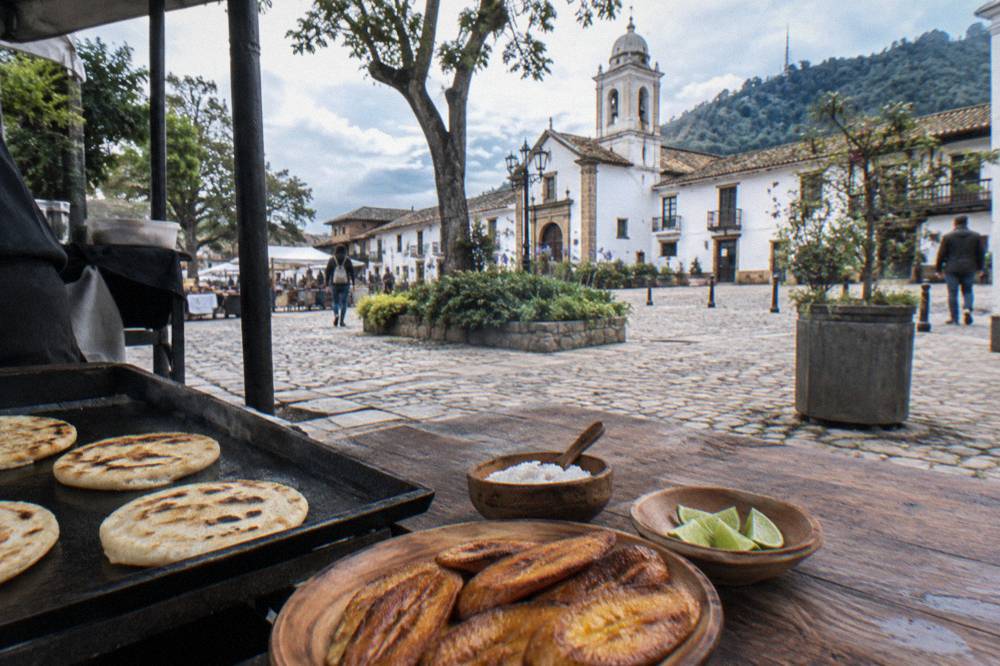
The arepa is the anchor. Made from ground maize, water and salt in its simplest form, a plain arepa with cheese left off is vegan by ingredients, and it appears at breakfast, lunch and from street grills all day. Empanadas are the trap: the shell is usually wheat flour in Bogotá, not corn, so gluten-free eaters should treat them as off the list rather than assume. Tamales, wrapped and steamed for hours, are traditionally made with maize and meat together, so they are neither vegan nor worth interrogating at a stall.
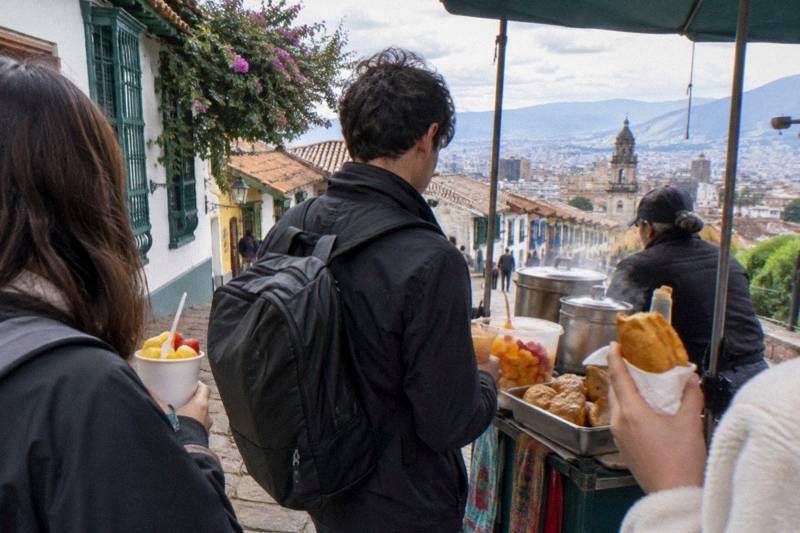
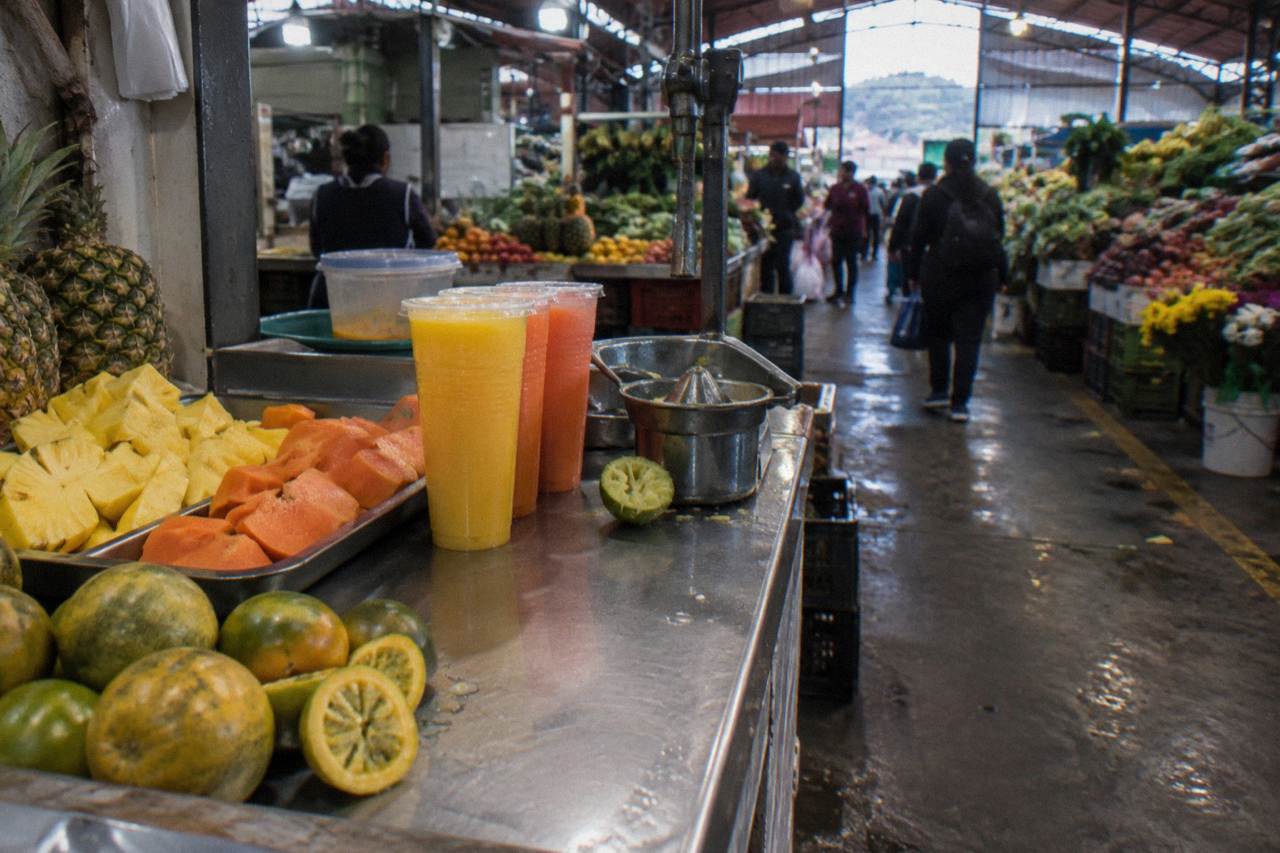
Fruit is the quiet superpower. A juice bar serving lulo, curuba, guanábana, mora and maracuyá offers more variety than most vegan restaurants in Europe, and a reported street-cart price in La Candelaria put lulo juice at 4,000 COP and curuba with milk at 5,000 COP, so the cost is trivial. Skip the milk, ask for it "en agua", and the whole category becomes vegan. Our guide to Colombian fruits you should try in Bogotá lists the ones worth hunting down by name.
The city's dedicated vegan and vegetarian restaurants, concentrated in Chapinero and Zona G, handle the rest: full plant-based menus, burgers, bowls and desserts, several of them participants in the VegUp! festival model of fixed-price plant-based menus. The cluster coverage names Maria Candela Vegan, Herbívoro and Pianta among the dedicated spots. Beyond those, treat every ordinary restaurant menu as needing a scan rather than a guarantee.
| Dish | Usually vegan? | Gluten notes |
|---|---|---|
| Plain arepa (maize, no cheese) | Yes, by ingredients | Usually gluten-free, but grills are shared |
| Patacón (fried plantain) | Often, ask about toppings | Fried in shared oil |
| Empanadas (Bogotá style) | No, usually meat-filled | Wheat shell, not gluten-free |
| Fresh fruit and juices "en agua" | Yes | Gluten-free |
| Boiled potatoes with ají | Often, check for cheese | Gluten-free |
| Ajiaco santafereño | No, chicken-based | Gluten-free by recipe but check thickening |
| Tamal | No | Contains maize, not a wheat dish |
| Changua (milk and egg soup) | No | Gluten-free |
A word on the modern end: the restaurant scene moves fast, and a plant-based bakery that exists this month may not next year. Use the neighbourhood guides in our street food guide for Bogotá for the staples that do not move, and treat new vegan openings as a bonus.
One practical note for anyone juggling both diets: the shortlist above splits differently depending on which restriction applies. Fruit and juices ordered "en agua" serve vegans and the gluten-free alike, while ajiaco santafereño and changua, both off the table for vegans, are gluten-free by recipe. The gluten risk that remains is less about ingredients than method: the shared grill under the arepa and the shared oil under the patacón, so ask how something is cooked, not only what is in it.
For planning, treat the two layers of the scene separately. Since the core dishes turn up everywhere, there is no need to cross town for an ordinary meal; save the Chapinero and Zona G cluster of dedicated spots for a sit-down plant-based menu or dessert. The VegUp! fixed-price model helps with budgeting too: participating restaurants work from set plant-based menus, so the cost of the plate is known before you order.

Can A Food Walk Accommodate A Vegan Or Gluten-Free Diet?
Sometimes, but only if you arrange it with the operator before you pay, because no listing promises vegan or gluten-free service. None of the tasting walks compared on this site is described by its operator that way; a route built around 12 tastings in the historic centre will include meat and wheat unless substitutions are arranged in advance, and even a market fruit walk, the friendliest format by nature, needs confirming since its snack stops may not flex.
The Bogotá Food Experience: Cultural & Culinary Tour runs 4 hours, is rated 4.9 across 615 reviews, and is priced from $47.15 per person. It is the most reviewed cultural food walk on this site after the Viejo Bogota walk, and like any long tasting route it works best for a restricted eater when the guide knows in advance. The same applies to the Viejo Bogota Food Tour with 12+ Tastings, 4 hours, rated 5.0 across 714 reviews, from $55 per person, which is the most reviewed food walk described here. A dozen-plus tastings is exactly the format where a surprise chorizo tasting lands badly, so the message-before-booking rule is not a formality.
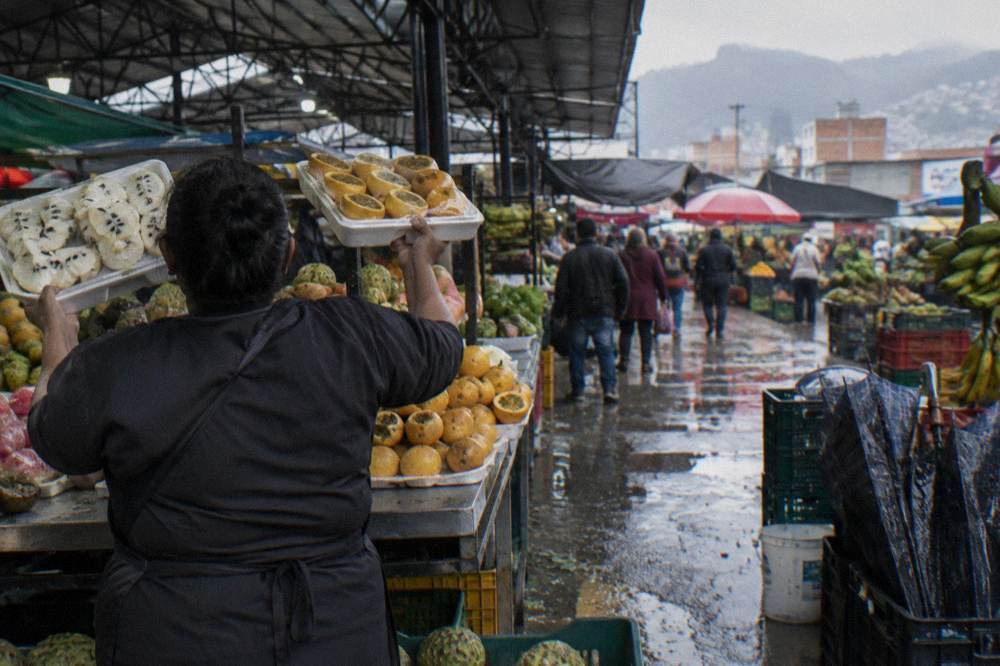
Fruit-market formats are the natural fit. The Paloquemao Market Food Tour with exotic fruit and local snacks runs 3 hours, priced from $82 per person with a two-person minimum, rated 4.9 across 71 reviews. Its spine is fruit, and operators of market walks can usually weight the stops toward fruit and corn-based snacks, but the listing carries no vegan or gluten-free flag, so ask. The Shared Tour of Colombian Exotic Fruit at Paloquemao Market, 3 hours from $50.17 per person, rated 4.6 across 32 reviews, is an even purer fruit format.
Coffee and chocolate formats round out the picture for gluten-free eaters, since black coffee and plain chocolate carry no wheat, though cross-contact in a workshop kitchen is a fair question for coeliacs rather than preference avoiders. The Colombian Coffee Tasting runs 2 hours from $31.15 per person, rated 4.8 across 105 reviews. Every one of these operators can answer a dietary question in one message; none of them can fix it on the day.
What Should Gluten-Free Eaters Watch For In Bogotá?
Watch for wheat hiding in fried foods, and treat shared griddles, fryers and counters as the real risk, since surfaces are shared in every market and most kitchens. Corn, potato, plantain, rice, beans, meat and soups make the traditional plate more gluten-free-friendly than European cooking, bread appears mostly at breakfast, and a full day without wheat is realistic, though a coeliac needs a stricter lens.
The three things to treat as suspect, in order: empanadas, whose Bogotá-style shells are wheat; anything breaded or "apanado"; and sauces, where a thickened soup or a dressing can carry flour quietly. Ajiaco is naturally wheat-free when thickened with potato alone, which is the traditional method, but a restaurant kitchen is the only place to confirm that. Craft beer, covered in our Bogotá craft beer guide, is off the list entirely, as is regular beer.
Language matters more here than in a vegan context, because "sin gluten" is understood in modern restaurants but not always in a market stall. The phrases worth having ready: "sin trigo" (no wheat), "sin harina" (no flour), and "¿esto tiene harina de trigo?" (does this have wheat flour?). In dedicated vegan restaurants and higher-end kitchens in Chapinero, staff generally understand gluten-free requests; at a plaza de mercado stall, the maize you can see is safer than anything you cannot. More of these guides are collected on Bogota Food Tours.
| Situation | Risk level | Practical move |
|---|---|---|
| Plain arepa from a grill | Low to moderate (shared griddle) | Fine for preference, question for coeliac |
| Fruit and juices | Minimal | Ask for juice "en agua" |
| Market soup of the day | Unknown | Ask what thickens it |
| Empanadas and fried pastry | High | Skip |
| Upscale Chapinero or Zona G restaurant | Low | Say "sin gluten" at the start |
| Food walk tasting | Unknown until confirmed | Message the operator first |
With craft beer off the list, coffee and chocolate carry the tasting day. If the food-walk row above reads as too uncertain, these experiences sit at the lower-risk end of Bogotá's guided tasting scene, because the sample on the table is the drink or the cacao itself rather than anything breaded, fried, or flour-thickened. The selection is wide on both price and time. At the short end, the Bogota: Coffee tasting tour runs a single hour from US$20 and holds a 5 rating, while the Bogota: Coffee Tasting Experience Tour with Exotic Varieties covers exotic varieties in 1.5 hours from US$37.71 with a 4.4 rating. In the middle, Specialty Coffee Workshops in Bogota is a 2-hour workshop at US$49.95 rated 5, and the Bogota: Colombian Coffee Tasting is also 2 hours, from US$31.15, with a 4.8 rating.
Two tours add chocolate to the cup. The Coffee and Chocolate tour in Bogota lasts 2 hours 15 minutes at US$49 and carries a 5.0 rating, and the Bogotá: Coffee & Fine Chocolate Tasting Tour in Chapinero runs 1.5 to 2.5 hours at US$49, also rated 5, which places it in the same neighbourhood as the higher-end Chapinero kitchens mentioned above. The most controllable format for a coeliac is the Bogota Private Coffee & Chocolate Tour in La Candelaria, a 4-hour private tour at US$112 where the price varies by group size. A private guide means the "sin gluten" conversation happens once, with one person, before the first cup is poured, which is the same principle as saying it at the start in an upscale restaurant.
One caution keeps all of this consistent with the advice above: a tasting plate beside the cup can still carry a biscuit or pastry, so "¿esto tiene harina de trigo?" stays useful even in a coffee bar, and the same ask covers anything served alongside rather than in the drink. For a coeliac, these tours shrink the number of shared surfaces in play on a food-focused outing; they do not replace the direct question to whoever plates the food. For a preference-level gluten-free visitor, they come close to worry-free. With prices running from US$20 for the one-hour option up to US$112 for the four-hour private tour, and durations from 1 hour to 4 hours, there is enough range to slot a tasting before an arepa breakfast or between a market lunch and dinner in Chapinero without loosening the wheat-free day described above.
Where Do Markets Fit Into A Plant-Based Trip?
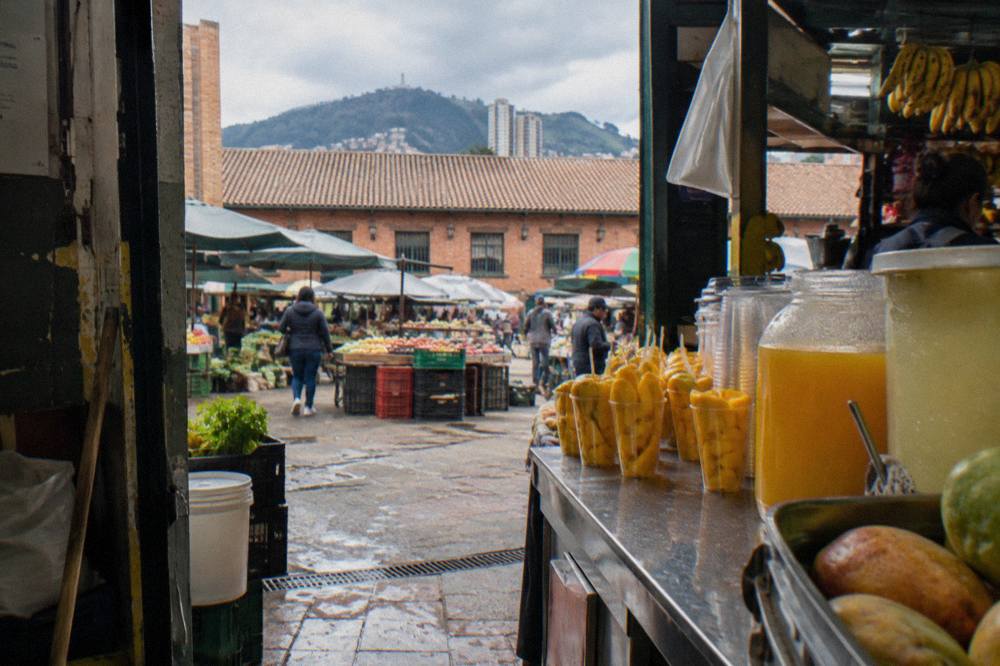
Markets are the cheapest and most reliable plant-based eating in Bogotá, provided you eat fruit and corn rather than expecting a composed vegan plate. Paloquemao, the city's flagship market, anchors the scene with its fruit pavilion, while Usaquén's weekend market adds arepas, fresh-cut fruit with salt and lime, empanadas and hot chocolate.
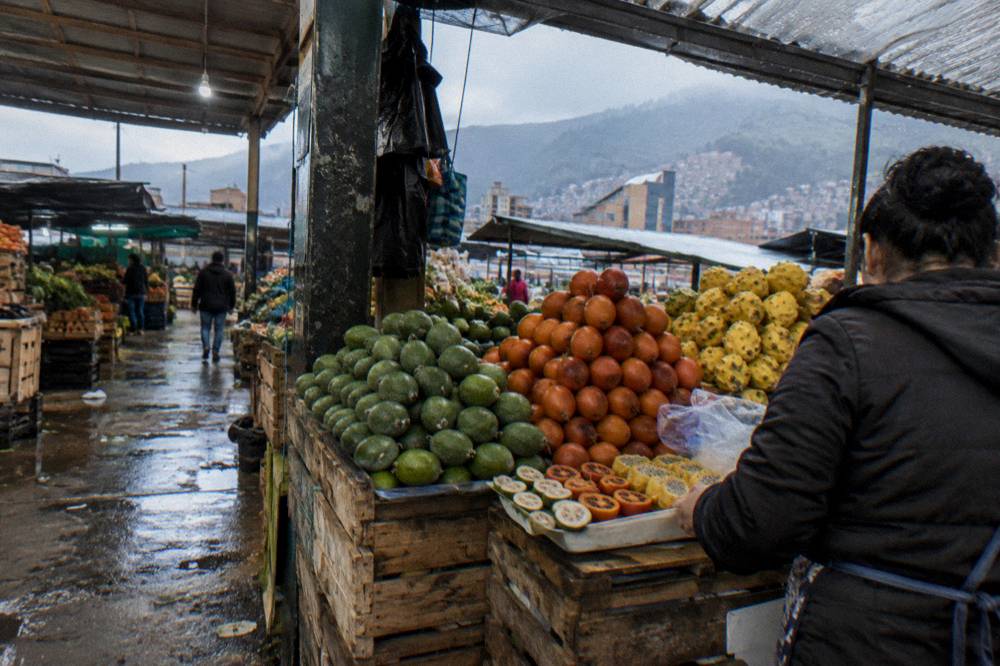
La Perseverancia, Monday to Friday 8:00 a.m. to 4:00 p.m. and weekends 6:00 a.m. to 5:00 p.m., is the traditional-cooking plaza: ajiaco, lechona, mondongo and fritanga from family stalls. That is the market a meat eater books a walk for, and a vegan should visit for the atmosphere and leave for lunch elsewhere. The district's 2026 market-tourism route, which promoted seven plazas by speciality, named Samper Mendoza for its herbs, a plaza where 391 plant species have been documented, 201 of them native to Colombia, and where a night market runs Mondays and Thursdays from 9:00 p.m., a genuinely plant-centric spectacle even if you buy nothing.
The smart pattern for a plant-based traveller is a morning market run for fruit, juices and maybe an arepa, then a restaurant meal in Chapinero or Zona G at midday. Timing matters at Paloquemao: the wholesale energy and the most generous fruit tastes run pre-dawn to about 10 a.m. on weekdays, and the market thins after midday. Our Paloquemao hours and best time to go guide covers the timing in detail.
A guided market walk adds context a solo visit misses, and the market tours listed here are the formats most likely to flex around a diet since their core product is fruit. For readers who want the whole traditional-food picture, meat included, what food Bogotá is famous for is the companion read.
How Do You Check A Tour Operator Before Booking?
Before paying, send one specific message naming the diet precisely, "vegan" rather than "vegetarian where convenient", asking whether substitutions are possible at every stop or only some, and asking what the alternative is if a stop cannot flex. Keep the reply and read the cancellation terms on the booking page: an operator who answers in detail has done this before, while a vague "no problem" has not understood the question.
This matters because the listings themselves are silent. No tasting walk compared on this site carries a vegan or gluten-free flag from its operator, and the price and inclusion lines describe tastings, stops and durations, not dietary adaptations. The Bogotá Food Experience walk, 4 hours from $47.15 per person, is built around small tastings at 7 stops, so message the operator about substitutions before booking. Its meeting point is on the booking page, and the Bogota Food Tours tour page carries the full details. Readers wanting a fuller comparison of walks can start with which Bogotá food walk to book.
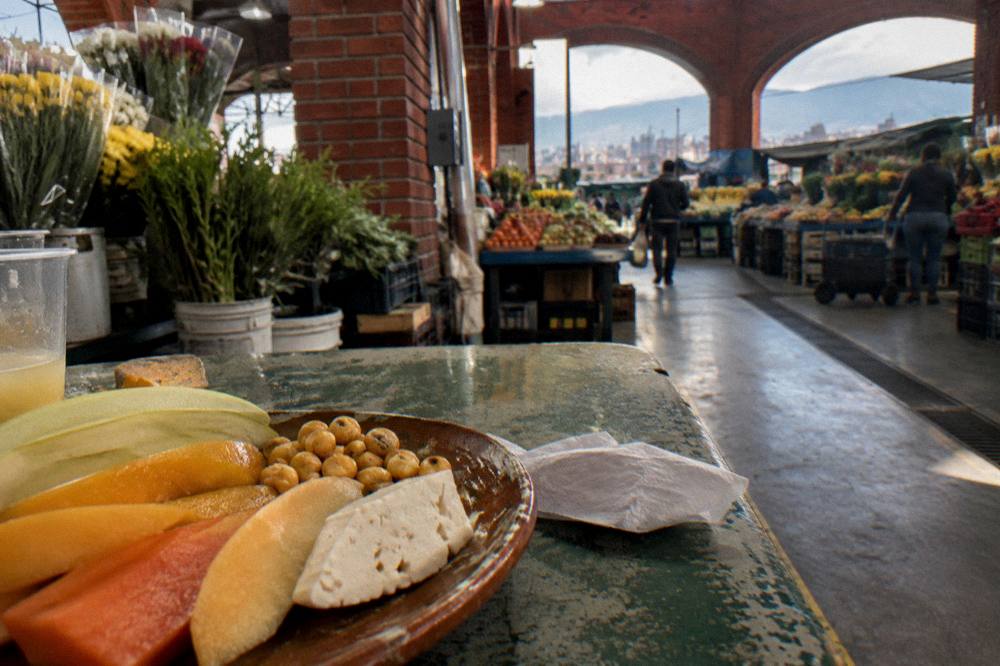
Coffee and chocolate tasting sits outside most dietary concerns, which makes it a strong backup plan when a food walk cannot adapt. The Colombian Coffee Tasting, 2 hours from $31.15 per person and rated 4.8 across 105 reviews, involves no wheat and no animal products by default, though workshop kitchens handle milk and pastries nearby. That is the practical hierarchy for a restricted eater in Bogotá: fruit first, coffee and chocolate second, adapted cultural walk third, full traditional tasting route last.
| Format | Typical diet flexibility | Check before booking |
|---|---|---|
| Market fruit walk | High, fruit-based core | Snack stops beyond fruit |
| Coffee or chocolate tasting | High for gluten-free | Milk options, pastry pairings |
| Cultural food walk, 4 hours | Medium, guide-dependent | Substitution at every stop |
| Traditional tasting walk, 12+ stops | Low without advance work | Which stops can flex |
| Cooking class | Medium, you cook it | Ingredient list and market visit |
One practical note on payment: several walks on this site offer free cancellation, and the terms are stated on each booking page. Booking a refundable slot while you wait for an operator's dietary reply costs nothing and removes the pressure to accept a vague answer. Readers planning around a bigger itinerary should also read eating at altitude in Bogotá, since light meals and hydration shape how any food-heavy day feels at 2,640 m.
The cultural walk below is the most reviewed option in its family and a reasonable first message to send: name the diet, ask the substitution question, and book only when the reply is specific.
Common Questions About Vegan And Gluten-Free Food In Bogotá
Is Bogotá Good For Vegans?
Better than its meat-heavy reputation. About 36% of the city's restaurants offer vegan or vegetarian menu options, dedicated vegan restaurants cluster in Chapinero and Zona G, and markets sell fruit and corn-based staples that are plant-based by default. Traditional dishes like ajiaco and tamales remain off the menu.
Are Colombian Arepas Gluten-Free?
A plain arepa is made from ground maize, water and salt, so it is gluten-free by ingredients. The risks are shared griddles and, in some versions, cheese or fillings. Coeliac travellers should ask about preparation surfaces; preference avoiders can generally eat them freely.
Can A Food Walk In Bogotá Be Made Vegan?
Sometimes. No tasting walk compared on this site is described by its operator as vegan, so nothing is promised. Market fruit walks are the most adaptable by nature, and cultural walks can sometimes substitute stops. Message the operator with your exact diet before booking and keep the reply.
Does Colombia Have Vegan Food Outside Bogotá?
Yes, and the trend is national: the VegUp! Plant Based Fest in late 2026 linked more than 40 restaurants across Bogotá, Medellín and Cali with fixed plant-based menus. Options thin out fast in smaller towns, where the standard plate is meat, rice, bean and plantain, with the meat simply removable.
What Should Gluten-Free Eaters Avoid In Bogotá?
Bogotá-style empanadas, whose shells are wheat flour; anything breaded; and unverified soups, since some kitchens thicken with flour. Beer, including the local craft scene, is out. Corn, potato, plantain, rice and fruit form a safe base, and upscale restaurants in Chapinero generally understand "sin gluten".
Is Ajiaco Gluten-Free?
Traditionally yes: the soup is thickened with potato, not flour, and its ingredients are chicken, corn, potatoes and herbs. The chicken makes it non-vegan regardless, and the guascas herb is the flavour signature. Confirm thickening with the kitchen if you are strictly gluten-free.