Colombian Drinks: Fresh Juices, Aguapanela, Canelazo And More
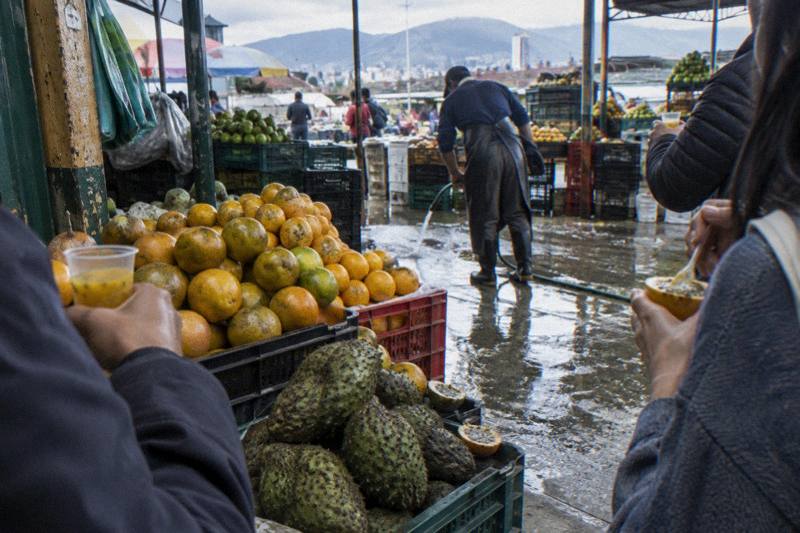
Bogotá drinks its fruit more than it eats it. This primer covers the juices, hot drinks, coffees and alcohols a first-timer will actually meet, what they cost at street level, and how to read a juice bar menu without guessing.
Short answer
Start with fresh lulo or curuba juice, order aguapanela with cheese on a cold afternoon, and finish with a canelazo if the night turns chilly. Coffee is cheap and excellent, tap water is officially potable, and aguardiente should be taken slowly at 2,640 m. A Paloquemao fruit market tour runs from $82 per person with tastings included.
Bogotá sits at about 2,640 m, cool enough that locals drink hot and cold things with equal conviction, sometimes in the same sitting. A bowl of changua comes with a glass of lulo juice. Hot chocolate arrives with cheese dropped into it. Canelazo warms the hands while a beer beside it never quite gets cold. The city's drink culture is one of the most distinctive parts of eating here, and it rewards a little preparation.
This primer walks through the categories a first-timer meets in order of likelihood: juices first, because they are everywhere, then the hot drinks, coffee, and finally alcohol, where altitude changes the arithmetic. Where a detail varies, the advice is to check the booking page or ask at the counter.
What Should You Drink In Bogotá? A First-Timer's Primer
Order one fresh juice per day, one hot drink per cold afternoon, and treat alcohol as something to pace rather than race. The five names to know are jugo de lulo, aguapanela, canelazo, chocolate santafereño and café, and between them they cover almost every menu in the city from breakfast stalls to Chapinero restaurants. Juices are the entry point because they need no explanation and no tolerance. The hot drinks explain Bogotá's highland character better than any museum. Coffee deserves its own attention because the city roasts and serves some of the best of it on the planet, often for less than a fancy juice. Alcohol comes last here deliberately: at 2,640 m the standard advice from the city's own health guidance is to drink lightly, hydrate heavily and expect one drink to land like two.
One structural note that surprises visitors: many restaurants include a "jugo del día", a juice of the day, with the set lunch. That single fact makes the set lunch the cheapest way to try three or four fruits across a week without ever ordering a juice on its own. Ask "¿cuál es el jugo de hoy?" and you get whatever the kitchen blended that morning.
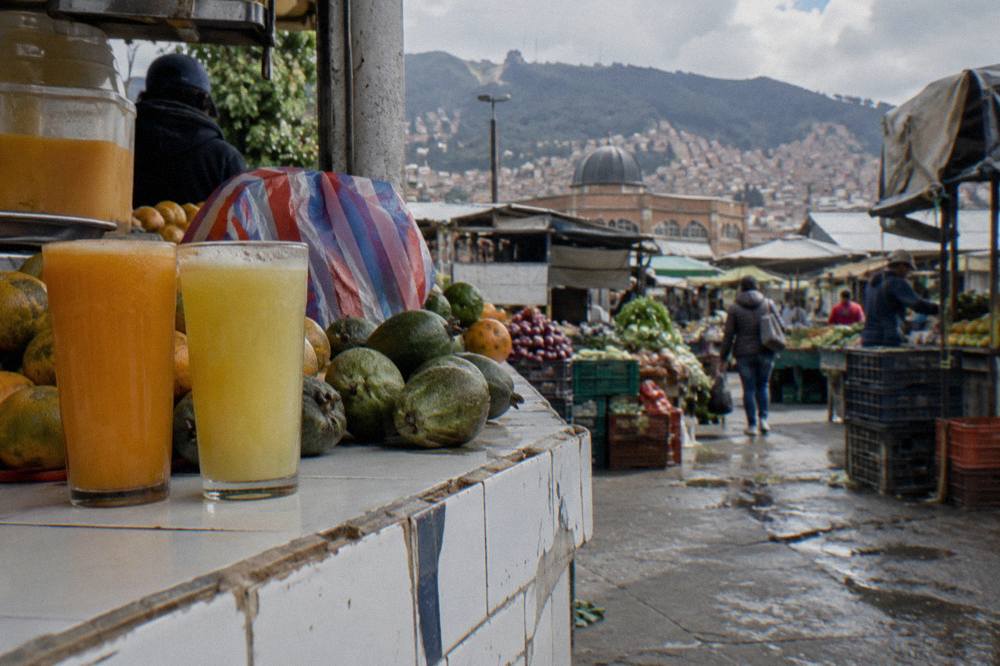
If you want the fruit before the glass, our guide to Colombian fruits in Bogotá names the ones worth hunting down, and the Paloquemao market food guide explains where the city's juice ingredients actually come from.
Fresh Fruit Juices: Lulo, Curuba, Maracuyá And The Juice Bar Menu
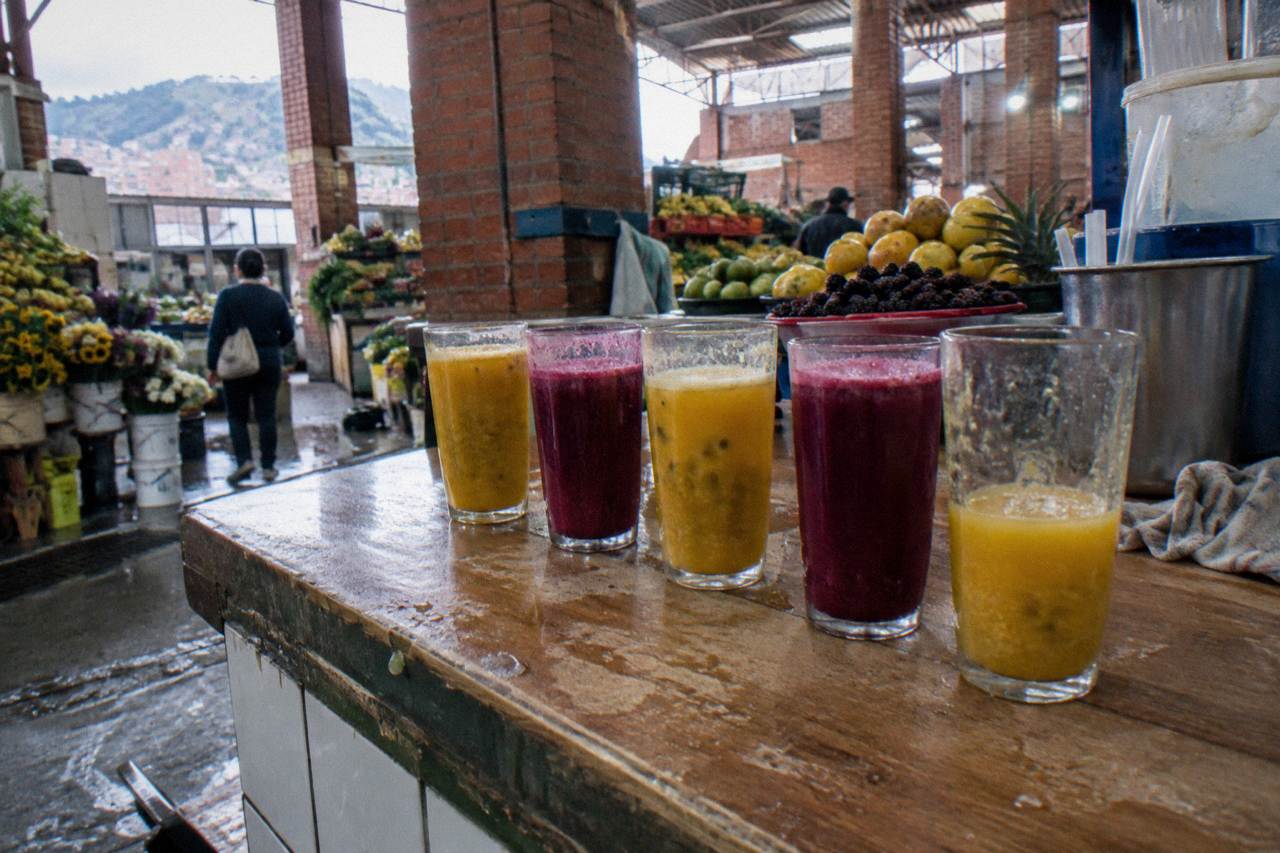
A Bogotá juice bar menu runs to twenty or more fruits, including lulo, curuba and maracuyá, but the four to start with are lulo, curuba, mora and guanábana; whichever you choose, the standard order is "en agua" (blended with water) or "en leche" (with milk). Lulo is tart, orange-green and unlike anything exported; curuba, a highland passionfruit relative, is almost custardy with milk; mora is a blackberry that tastes deeper than the European kind; guanábana, soursop, makes a thick, perfumed white juice. Maracuyá is the familiar passionfruit and needs sugar. Reported street prices give a sense of scale: at a La Candelaria fruit cart documented in 2026 market coverage, lulo juice ran 4,000 COP and curuba with milk 5,000 COP, roughly a dollar and a half for the pair.
| Fruit | What it tastes like | Usual order | Notes for first-timers |
|---|---|---|---|
| Lulo | Tart, citrusy, slightly green | En agua | The most local choice; often the jugo del día |
| Curuba | Floral, custard-like | En leche | Milk softens the seeds' tang |
| Mora | Deep blackberry | En agua | Common with breakfast |
| Guanábana | Creamy, perfumed | En agua or en leche | Thick; almost a smoothie |
| Maracuyá | Sharp passionfruit | En agua with sugar | Most familiar to visitors |
| Tomate de árbol | Savory-sweet, tangy | En agua | An acquired taste worth one try |

Two habits make the juice bar easier. First, "con agua o con leche" is the question you will be asked; either answer is fine, milk versions cost slightly more and sit heavier. Second, fruit stalls at the plazas de mercado will hand you tastes of the raw fruit, which is the fastest education available: Paloquemao's early-morning hours, before the wholesale energy thins out after midday, are when vendors have time to talk. The market runs Monday to Saturday from 4:30 a.m. to 4:30 p.m. and Sundays and holidays from 5:00 a.m. to 4:30 p.m., with the flower section best before 11:00 a.m., according to the plaza's own posted hours.
A guided tasting turns the produce aisle into a lesson. The Paloquemao market food tour with exotic fruit and local snacks, from $82 per person with the price varying by group size and rated 4.9 across 71 reviews, walks the market with tastings included, and the smaller Discover 20 Fruits and Coffee with a Gastronomist session, $40 per person, covers twenty fruits in three hours for travelers who want the deep dive without a private guide. Both are bookable on the operators' live listings.
For more on the raw material, the guide to Colombian fruits to try in Bogotá covers the odder ones, and Bogotá markets beyond Paloquemao maps the other plazas where juice costs less than in the center.
Aguapanela, Canelazo And Hot Chocolate: The Highland Warmers
The highland warmers are three drinks built for cold Andean mornings and nights: aguapanela, panela (raw unrefined cane sugar) dissolved in hot water; canelazo, that same drink spiked with aguardiente and cinnamon; and hot chocolate. Plain aguapanela works as breakfast tea, with lemon it is the classic cold remedy, and canelazo serves as the Andean night cap. Hot chocolate santafereño belongs in the same family: thick, aromatic chocolate served with cheese you drop into the cup and an almojábana on the side. Together these three drinks explain why Bogotá's cafes fill at 4 p.m. when the temperature drops, and why "algo caliente" is a complete sentence at any bakery counter.
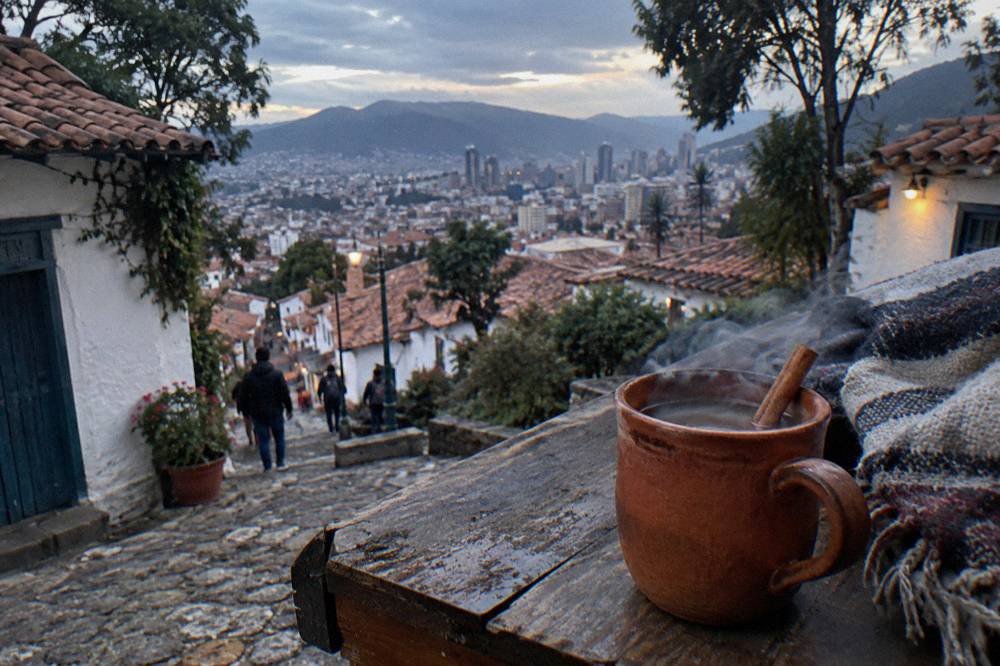
Panela itself is worth understanding. It comes in hard brown blocks or cones, is sold by weight at every market, and is Colombia's traditional sweetener for everything from coffee to desserts. At home it is simply boiled with water; the ratio controls whether you get a pale breakfast drink or something closer to syrup. Vendors at Usaquén's Sunday market, which runs Saturdays, Sundays and holiday Mondays from 9:00 a.m. to 5:30 p.m., pour hot chocolate alongside stalls selling arepas and fresh-cut fruit, per 2026 market reporting.
| Drink | What it is | When locals order it | Alcohol? |
|---|---|---|---|
| Aguapanela | Hot panela and water | Breakfast or when ill | No |
| Aguapanela con limón | Aguapanela with lemon | Cold evenings, sore throat season | No |
| Canelazo | Aguapanela, cinnamon, aguardiente | Nights out, cold weather | Yes |
| Chocolate santafereño | Hot chocolate with cheese to melt in | Afternoon, with almojábana | No |
| Café con panela | Coffee sweetened with panela | Rural tradition, some old cafes | No |
The historic spot for chocolate santafereño is La Puerta Falsa, next to the Catedral Primada, operating since 1816, where the thick chocolate comes with cheese to melt in and bread or almojábanas, per 2026 coverage of the institution. In La Candelaria, Cacaote runs chocolate santafereño preparation workshops that include tasting with almojábana, cheese and achira. The full story of the cheese-in-chocolate custom, and where else to try it, is in our chocolate santafereño guide.
Coffee And Chocolate Drinks: What To Order In The City That Roasts
Colombia grows the coffee and Bogotá increasingly roasts it, so skip the hotel machine and order a pour-over of a named region at a specialty roastery; a "tinto" at a corner shop is the cheap everyday alternative, sweet and black. The city's roaster scene is genuinely deep: Amor Perfecto in Chapinero Alto has roasted in-house since the 1990s and holds multiple national barista championships, Azahar buys directly from more than 420 Colombian farmers, and Varietale, opened in a former convent in Chapinero in 2026, mills its own parchment coffee and rotates regional single origins. Tropicalia in Quinta Camacho rotates its filter list roughly every three months and stocks rare varietals.
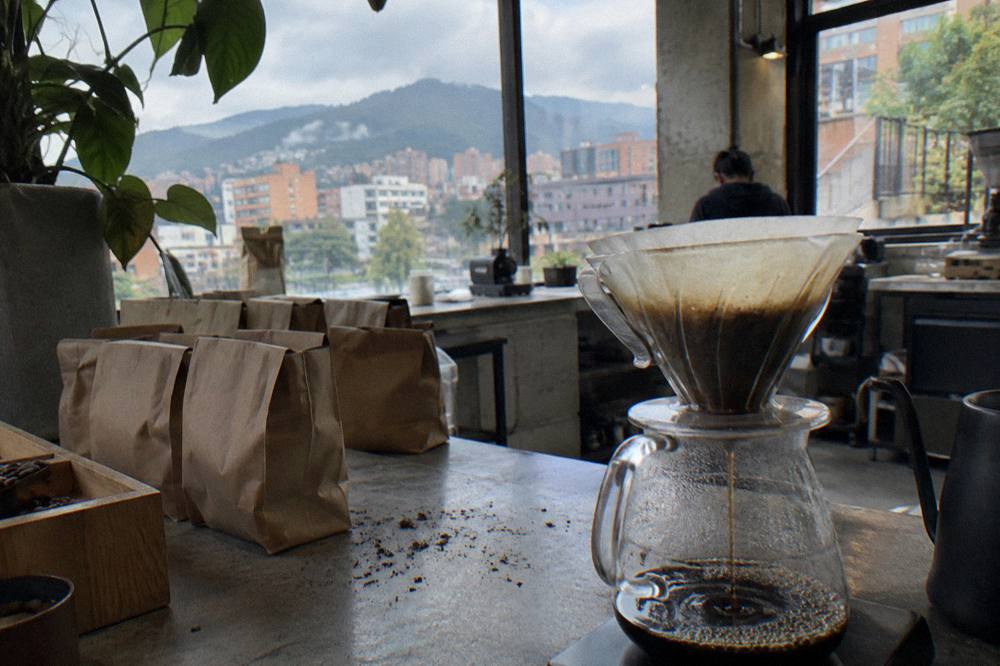
Ordering vocabulary is short. A tinto is small, black and sweet. A café con leche is half milk. A perico has a splash of milk. At specialty shops, order by method, pour-over, espresso, or the house filtration, and by region, Huila, Nariño, Tolima or Cauca, and you will be asked which you prefer. Public cuppings, including sessions at certified labs in Usaquén led by Q-graders covering 80-plus point coffees from a dozen farms, are listed in our Bogotá coffee tasting and cupping experiences guide, and the wider roastery map is in the best coffee shops in Bogotá.
For a guided version, the Colombian coffee tasting session, from $31.15 per person and rated 4.8 across 105 reviews, covers two hours of origins and methods, and the coffee and chocolate tasting tour in Chapinero pairs both under one booking, Check availability if your dates are close.
Chocolate drinks deserve equal billing. Chocolaterías serve the santafereño style described above, but the fine-chocolate scene has grown fast: Casa Orígenes, opened in October 2026 in a restored republican house in La Candelaria, runs bean-to-bar tastings and even hosts the International Chocolate Awards in Colombia, while the national Chocoshow fair brings more than 175 exhibitors to Corferias on 27 to 29 November 2026. A hands-on option is the Colombian chocolate workshop, from $159.58 per person and rated 4.8 across 49 reviews, a one-hour bonbon- and truffle-making session that ends, naturally, in drinking what you made; details and dietary options are on the booking page.
Aguardiente, Chicha And Craft Beer: Drinking At 2,640 Metres
Aguardiente is Colombia's national spirit, an anise-flavored cane liquor usually drunk neat in small shots with friends, and at Bogotá's altitude the honest rule is to drink half of what you would at sea level, with water between rounds. The city's health guidance for visitors recommends one to two days of adaptation, three or more liters of water a day, light meals and little alcohol while you acclimatize, advice worth taking seriously on night one. Chicha, the fermented corn drink of the Andes, is the traditional alternative, served in some La Candelaria spots and at festivals; it is mild, cloudy and sour, closer to a beer cousin than a spirit.
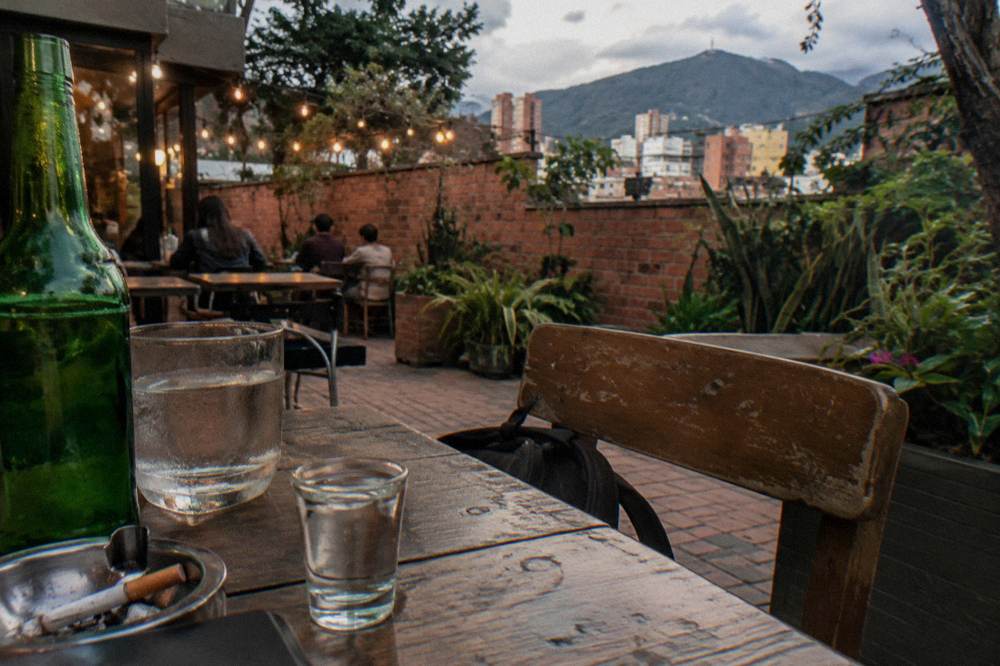
Craft beer is the other story. 3 Cordilleras, based in Medellín, held roughly 48 percent of the national artisanal market in 2026 reporting and is the label you will see most; Bogotá Beer Company, with multiple city pubs, pours pints reviewed at around 80,000 COP and now sits within a major international group. October's Festival de la Cerveza Artesanal brought 60 local producers to Gran Estación, a sign of how fast the scene is consolidating. The full brewery and bar rundown, including where the roasters' taprooms are, is in our Bogotá craft beer guide, and the aguardiente and Colombian spirits guide explains the brands and the ritual.
| Drink | Style | Typical strength context | How it is served |
|---|---|---|---|
| Aguardiente | Anise cane spirit | Shot-sized pours | Neat, shared, often with canelazo at night |
| Chicha | Fermented corn | Mild, traditional | In cups at traditional spots and festivals |
| Craft beer | Mostly ales and IPAs | Standard beer range | Pints at brewpubs, around 80,000 COP reported at one major chain |
| Canelazo | Hot panela with aguardiente | One shot per mug | Hot, cinnamon, cold nights |
A Constitutional Court ruling in February 2025 struck down the departmental barriers that had carved up Colombia's aguardiente market, so brands that were regionally locked, like Amarillo del Valle, now pour legally in Bogotá, per 2026 reporting. One practical note carried over from the practical guidance for the city: keep an eye on your drink in crowded bars, never leave it unattended, and use app-based transport home. For the tejo-and-beer combination, venues in Chapinero advertise one hour of play with two beers from a reported 45,000 COP per person, though availability and current pricing should be confirmed directly.
The craft beer tour with tasting, from $149.53 per person and rated 4.9 across 121 reviews, is the one guided beer option in the city's food-tour selection; it runs three hours and the listing states which venues and pours are included, so check the booking page for the current route.
Is Bogotá Tap Water Safe? Juices, Ice And Street Stands
Bogotá's tap water is officially potable, the one Colombian city where foreign travel advice says so outright, and the utility's own risk index samples have sat in the no-risk band, so juices made with water, ice and washed fruit at established stalls are generally fine; some visitors still prefer bottled, which is a taste choice, not a safety verdict. The distinction that matters is the stall, not the liquid. The city's health secretariat advises buying from formal, authorized vendors and checking that bottled drinks have intact seals and legible labels, standard advice it repeats each festival season. A busy juice bar with a blender running constantly is a better bet than a quiet cart with pre-cut fruit sitting out.
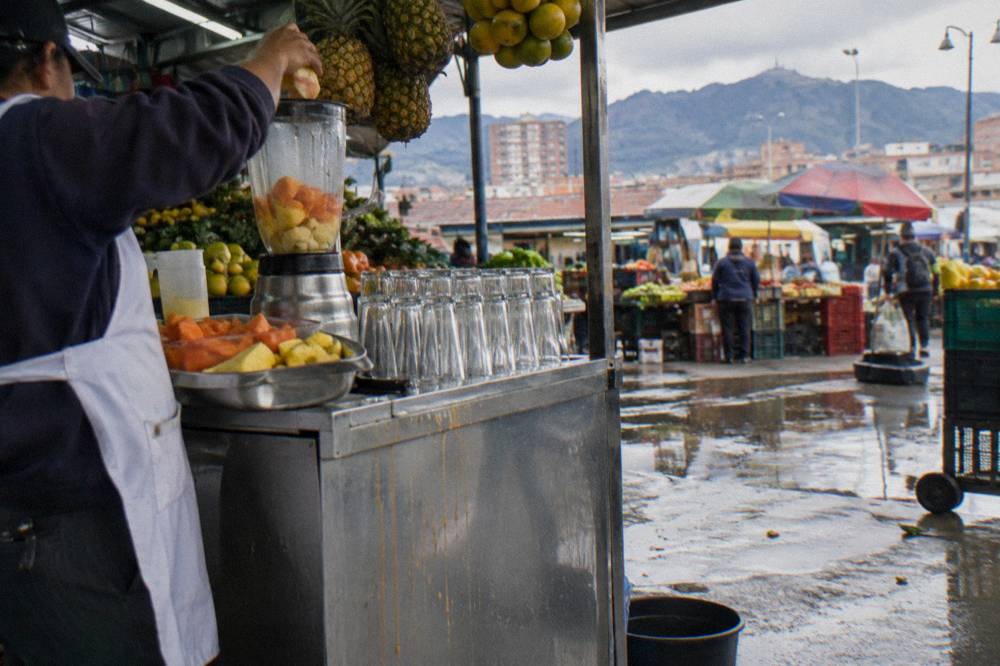
Practical rules that hold up: drink bottled or filtered water your first day if you are nervous, then decide; skip ice only if you are somewhere that clearly has no plumbed supply; and treat street alcohol with more caution than street juice, because the health authority's warnings about unlicensed liquor are specific and repeated. The fuller discussion, including the water-quality numbers and the health-secretariat guidance, is in is Bogotá street food safe and can you drink the tap water. Official visitor health tips, including the altitude and hydration advice quoted above, are published by the city at Bogotá's international visitor guidance, and the documented street-cart juice prices come from 2026 La Candelaria stall reporting.
| Situation | Reasonable choice | Why |
|---|---|---|
| Established juice bar or restaurant | Juices with water or milk, ice fine | Plumbed supply, high turnover |
| Busy market fruit stall | Whole fruit, juices blended to order | Formal vendors, per city guidance |
| Remote roadside cart | Bottled drinks with sealed caps | Sealed and labeled, per health advisories |
| Night out with alcohol | Bottle service from licensed venues | Unlicensed liquor is the documented risk |
| First day at altitude | Extra water, less alcohol | Standard acclimatization advice |
How To Fit The Drinks Into A Market Walk Or Tasting Tour
Pair your drinks education with where they are made: juices at Paloquemao in the early morning, coffee in Chapinero's roasteries in the afternoon, and canelazo in La Candelaria at night, and a single guided market walk covers the first of those in three hours with tastings included. The logic is simple. A market is where lulo, curuba and granadilla sit in crates with names on them, and a guide who knows the vendors will get you tastes you would hesitate to ask for alone. The featured Paloquemao market tour, from $82 per person with the price varying by group size, rated 4.9 across 71 reviews, meets in the center, requires a minimum of two people, and includes the exotic fruit and local snack tastings; the meeting point and full inclusions are on the booking page. The tour page for the Paloquemao market food tour carries the details, or Check availability for your dates. This is the site Bogota Food Tours recommends most often for a first market morning.
Timing matters at the plaza. Paloquemao's posted hours run 4:30 a.m. to 4:30 p.m. Monday to Saturday and 5:00 a.m. to 4:30 p.m. on Sundays and holidays; the wholesale energy, trucks unloading and vendors handing out fruit tastes, peaks before about 10 a.m. on weekdays and thins after midday. A 9 a.m. tour start catches it; a 2 p.m. start sees a calmer, emptier hall. The Paloquemao hours and best time to go guide breaks this down hour by hour.
If drinks are only one strand of a longer eating plan, the Bogotá in 3 days food-first itinerary slots a market morning, a coffee afternoon and an evening of canelazo into a schedule that also covers ajiaco and arepas.
Common Questions About Colombian Drinks
What Is The Most Popular Colombian Drink To Try In Bogotá?
Fresh fruit juice, above everything. Lulo and mora are the most common orders, and the set-lunch jugo del día is the cheapest way to try them. Among hot drinks, aguapanela and chocolate santafereño are the classics, and canelazo is the one visitors remember from cold nights.
What Is Aguapanela Made Of?
Panela, an unrefined cane sugar sold in hard blocks, dissolved in hot water. It can be drunk plain, with lemon, or with milk, and it is the base of canelazo when aguardiente and cinnamon are added.
Can You Drink The Tap Water In Bogotá?
Yes, officially. Bogotá's water is potable and meets national standards, and it is the one Colombian city where UK travel advice considers tap water safe. Some visitors still choose bottled for taste, which is fine. At street stalls, prefer formal vendors and sealed bottles, per city health guidance.
What Is The Difference Between Tinto And Café Con Leche?
A tinto is small, black and usually pre-sweetened, the everyday corner-shop coffee. A café con leche is larger and half milk. At specialty roasteries you order by method and region instead, and the quality is a different league.
Is It Safe To Drink Aguardiente At Bogotá's Altitude?
In moderation and with food and water. At 2,640 m alcohol hits harder and faster, and the city's visitor health advice is to hydrate well and drink lightly, especially in the first day or two. Order canelazo by the mug, not the bottle, and use licensed venues.
Do Any Bogotá Tours Include Drink Tastings?
Yes. The Paloquemao market tours include exotic fruit tastings, coffee tasting sessions run from $31.15 per person, the coffee and chocolate tour combines both, and a three-hour craft beer tour with tastings runs from $149.53 per person. What each includes is stated on the operator's booking page.