Arepas, Empanadas And Pan De Bono: A Bogotá Bakery And Snack Guide
Corn dough, fried pastry and cheese bread: the three snack families that anchor Bogotá's bakeries, market stalls and street corners, explained side by side.
Short answer
An arepa is a round corn cake, grilled or fried and usually split and filled; a Colombian empanada is a fried corn pastry with a meat or cheese filling; pan de bono is a baked cheese bread made with cassava starch and cuajada. Reported bakery prices run around 4,300 COP for pan de bono and 4,700 COP for an almojábana.
Colombian empanadas turn up on several Bogotá food walks, and they arrive on the plate surrounded by a supporting cast that confuses first-time visitors. Is that round white disc an arepa or a patty? Is pan de bono a bread, a biscuit or a cheese ball, and why does the bakery next to it sell something called an almojábana that looks almost the same? This guide separates the three families, explains the regional differences inside each one, gives the reported prices from current bakery and street-stall listings, and points to the tours that sample several of them in a single outing.
What Is The Difference Between An Arepa, An Empanada And Pan De Bono?
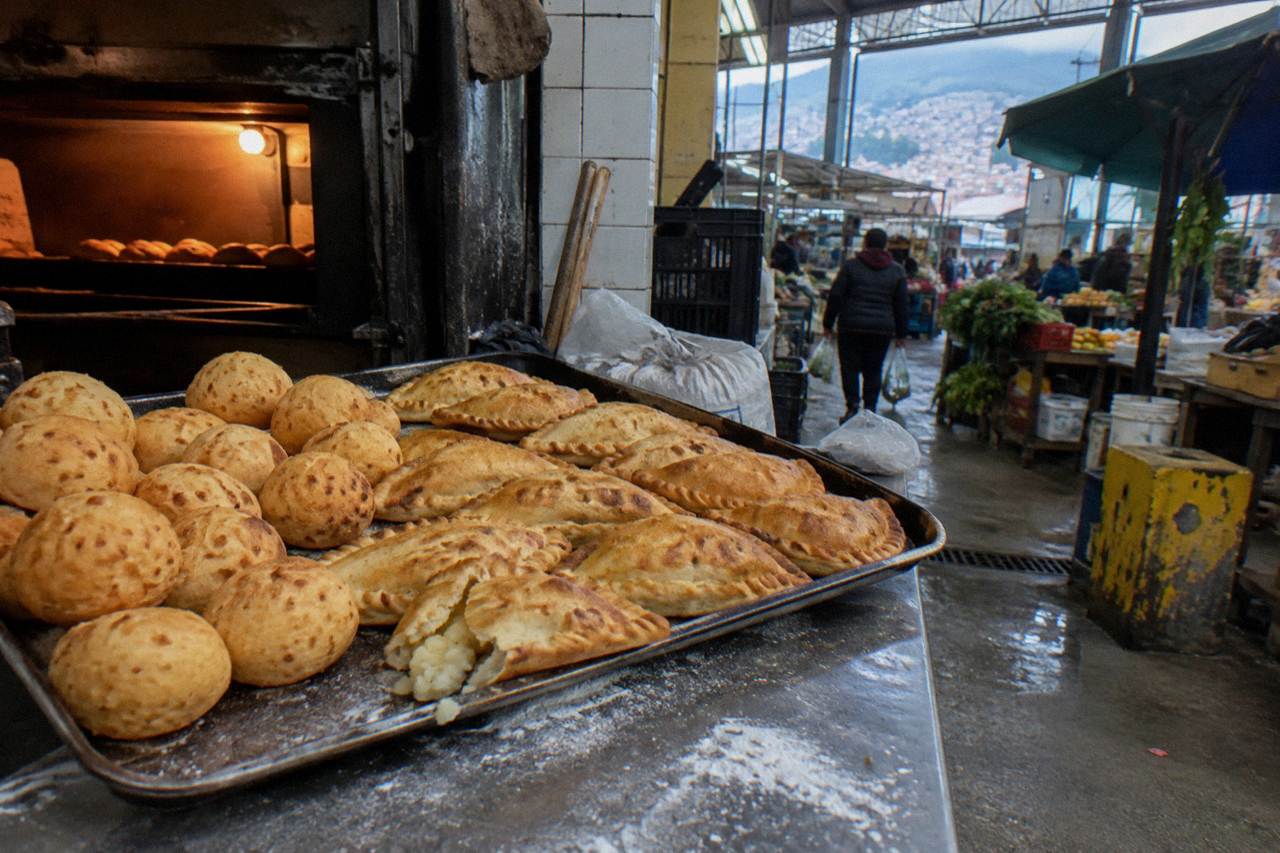
An arepa is a flat, round corn cake, grilled, fried or baked, that is split and filled or eaten alongside a meal; a Colombian empanada is a half-moon of corn dough, folded around a cooked filling and deep-fried; pan de bono is a baked cheese bread made from cassava starch, corn flour and cheese, with a chewy interior and no filling at all. They sit in different branches of the Colombian kitchen. The arepa is the daily staple, present at breakfast, lunch and dinner. The empanada is the snack, sold by the unit from glass counters and street carts. Pan de bono belongs to the bakery family, the panadería tradition of warm cheese breads that includes almojábana, pandebono's softer cousin, and pan de yuca.
The clearest way to tell them apart on a counter is the base ingredient and the cooking method. Arepas start from pre-cooked corn dough, masa de maíz, and are cooked dry on a griddle or in a fryer. Empanadas use the same corn dough lineage but are sealed around a filling and always fried, which is why their surface blisters gold and their shape is a folded crescent. Pan de bono skips corn dough as its base and uses starches, cassava starch and sometimes cheese curd, which is what gives it the stretch and the faint tang that corn cannot.
| Snack | Base | Cooking Method | Filled Or Plain | Where You Meet It |
|---|---|---|---|---|
| Arepa | Pre-cooked corn dough | Griddled or fried | Usually split and filled, or plain alongside a meal | Breakfast tables, restaurants, street griddles |
| Empanada | Corn dough with achiote | Deep-fried | Always filled: beef, chicken, cheese or pipián | Bakery glass cases, street carts, market stalls |
| Pan de bono | Cassava starch, corn flour, cheese | Baked | Never filled; cheese is in the dough | Panaderías and bakery counters |
| Almojábana | Corn flour and cuajada curd cheese | Baked | Never filled; served with coffee or hot chocolate | Panaderías, hot chocolate houses |
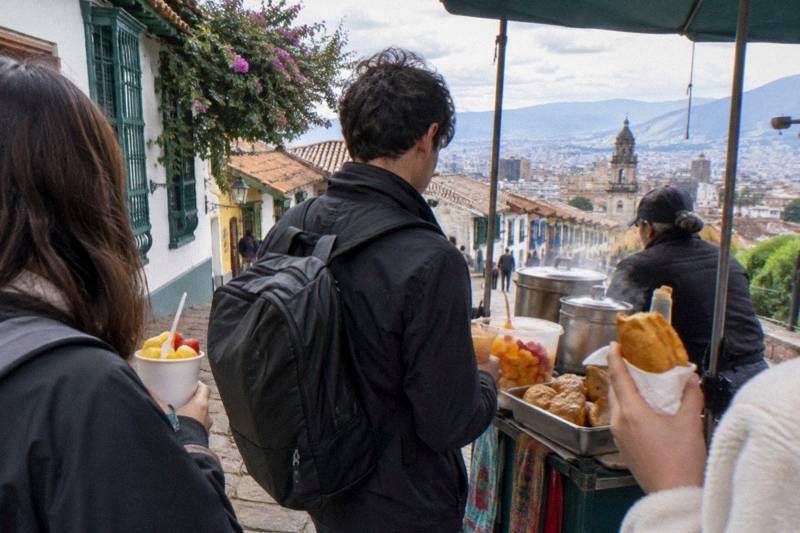
A visitor eating through Bogotá will meet all three within a single morning if the route passes a panadería, a market plaza and a street corner. A Bogotá street food guide route through La Candelaria typically does exactly that, and the differences stop being academic after the first bite of each. The pairing culture matters too: empanadas come with ají, a loose Colombian chili sauce poured into the first bite, arepas come with butter and salt or a filling, and pan de bono comes with coffee or, in the classic Bogotá combination, a cup of hot chocolate.
Which Arepa Types Should You Try In Bogotá?
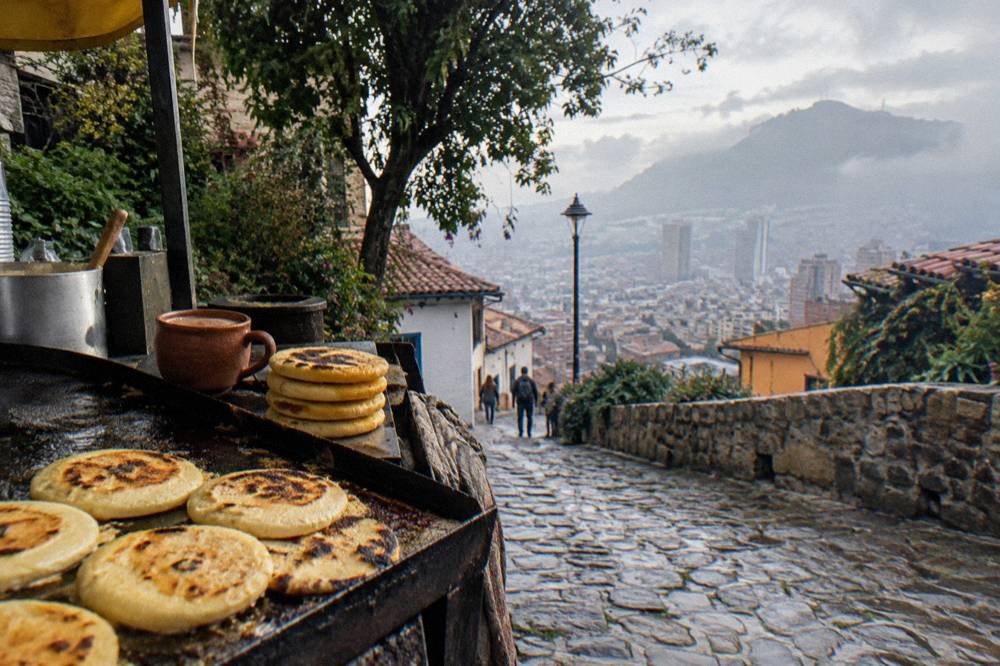
The four arepa types a visitor most often meets are the plain white arepa served with breakfast, the arepa de choclo, a sweet corn arepa from the Antioquia tradition, the arepa rellena, split and stuffed with cheese or egg, and the arepa de huevo from the Caribbean coast, which is fried with a whole egg inside the dough. Bogotá sits in the Andean highlands, so the default arepa here is the thin, pale, griddled disc that arrives next to eggs or soup without ceremony. It is the least flashy of the four and the one locals eat most.
The arepa de choclo is the sweet one, made from tender young corn, griddled until the sugars caramelise, and usually topped with a slice of salty white cheese. In Bogotá it appears on restaurant starters and on the griddles of the Cundinamarca weekend route, and it converts visitors who find the plain breakfast arepa too austere. The arepa rellena is thicker, opened like a pocket while still hot and filled with melting cheese, as in the arepa de queso, or with beans, hogao sauce or shredded meat. The arepa de huevo is the most theatrical: the dough is fried, cut open, a raw egg is poured in, and the whole thing is returned to the oil so the egg sets inside a crisp shell. It is coastal in origin, but restaurants in Bogotá that specialise in Caribbean food serve it, and it is a regular talking point on tasting walks.
Naming the type matters when you order, because the word arepa alone will usually get you the plain breakfast disc. If you want the cheese-filled version, ask for the arepa de queso or the rellena; if you want the sweet corn one, choclo is the word. The hot chocolate pairing deserves a line of its own, and the chocolate santafereño guide covers the full ritual of cheese melted into the cup, almojábana on the side.
A tasting walk is the efficient way to meet several arepa types in one afternoon, because stalls that sell them are scattered and rarely advertise in English. Three options fit this mission well.
The Bogotá: True Colombian Walking Tour + Local Snacks runs 2 to 3 hours, from $54.68 per person, rated 4.9 across 130 reviews, and its listing centres on local snacks in the historic centre, which is exactly the lens this guide applies. For depth over breadth, the Viejo Bogota Food Tour with 12+ Tastings is a 4-hour walk from $55 per person, rated 5.0 across 714 reviews, the most reviewed food walk compared on this site. Whichever you choose, message the operator before booking if you need the route to avoid a specific ingredient, because snack stalls vary daily and no listing can promise a fixed cart lineup.
What Goes Inside A Colombian Empanada?
The standard Colombian empanada filling is a stew of shredded beef or pork with potato, onion, cumin and hogao, a tomato and scallion sauce; the other common fillings are chicken, cheese, and a mix called pipián, a yellow potato filling bound with hogao and typical of the Bogotá savanna. The dough is corn, pre-cooked and dyed a deep orange with achiote, which is why a Colombian empanada looks sun-coloured next to the paler baked Argentine kind. It is always fried, never baked, and it is always served with ají for pouring.
The fillings divide roughly by region. The beef-and-potato mix is the national default, the one in every glass case at every bakery and every roadside stall. Chicken appears almost as often, usually in a loose stew with the same hogao base. Cheese empanadas, with a soft white cheese that pulls when the pastry breaks, are the safe entry point for visitors and for children. Pipián is the local specialty: a spiced mashed-potato filling, sometimes with a hard-boiled egg inside, associated with the Bogotá savanna and the towns around it. A useful detail for anyone ordering at a counter is that stalls often mark pipián empanadas with a strip of pastry or a different crimp, so it is worth asking before pointing.
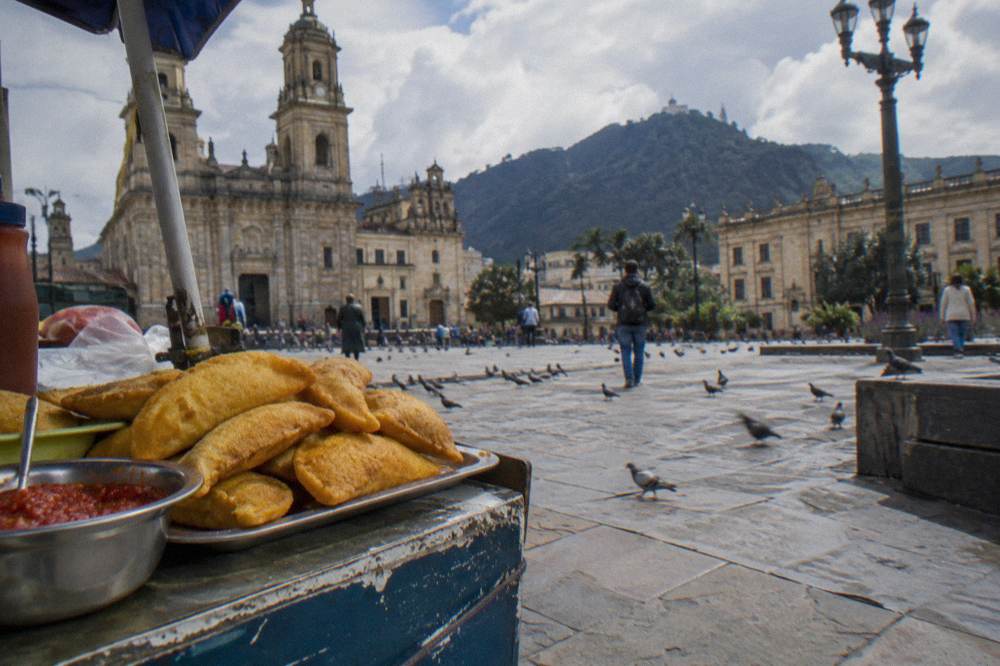
The ají deserves as much attention as the filling. Colombian ají in this context is not a thick sauce but a loose, vinegary mix of chopped chili, onion, coriander and water, served in a squeeze bottle or a small cup, and the first bite of an empanada without it is considered incomplete by most locals. It is hot in an honest, clean way, and you control the dose.
On food safety, the Bogotá health secretariat's standing advice for street snacks is to buy from formal or authorised stalls, check that packaging is intact and labels readable, and avoid damaged or unlabeled items, guidance repeated in its seasonal advisories. The street food safety and tap water guide covers the same ground in more detail, including the city's official position on tap water.
If you would rather have the stalls chosen for you, a shared walk keeps the price down. The Bogota Shared Gastronomy Tour in the Historic Center runs 3 hours with a listed price of $15, but read the basis carefully: that figure is a guide fee only, and the tastings cost about US$12 extra per person, paid as you go. It is rated 4.9 across 291 reviews.
What Is Pan De Bono And How Is It Different From Almojábana?
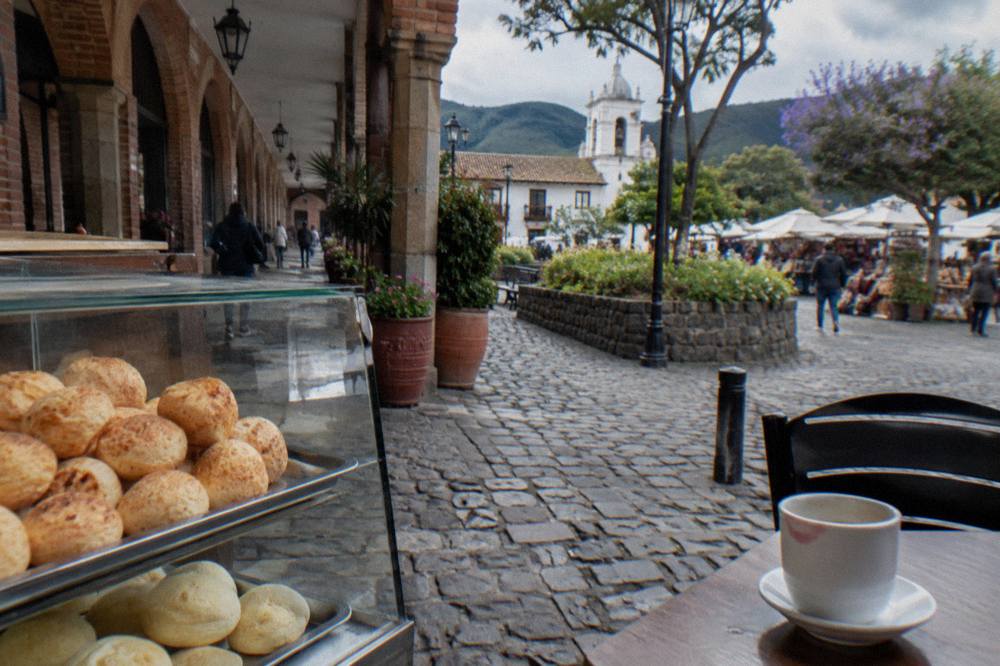
Pan de bono is a round, bun-sized cheese bread made from cassava starch, corn flour and cheese, baked until the outside is firm and the inside is stretchy; almojábana is its airy, domed relative, made with cuajada, a fresh curd cheese, and corn flour, giving a softer crumb and a more lactic, tangy taste. Both are bakery items, both are eaten warm, and both belong to the same morning ritual as coffee or hot chocolate. The confusion is legitimate because they sit side by side in the same glass case and share a family tree in the cassava-and-cheese bread tradition of the country's interior.
The practical difference at the counter is texture and shape. Pan de bono is denser and holds its round shape, with a bite that pulls slightly, the cassava starch doing the work gluten would do in a wheat bread. Almojábana rises into a lighter dome, hollows a little inside, and tastes distinctly of fresh cheese, slightly sour in the way of cuajada. In Bogotá tradition, the almojábana is the one dropped into a cup of chocolate santafereño to soften, alongside bread, and the historic snack counters around the Plaza de Bolívar have served that combination for generations. La Puerta Falsa, operating since 1816 next to the Catedral Primada, is the best known of them for thick hot chocolate with cheese and almojábanas.
Both breads are gluten-free in their traditional form because their structure comes from cassava starch and cheese rather than wheat, though a visitor with coeliac disease should still ask at each bakery, since recipes vary and shared ovens are common. The wider sweets landscape, from obleas to brevas con arequipe, is covered in the Colombian desserts and obleas guide.
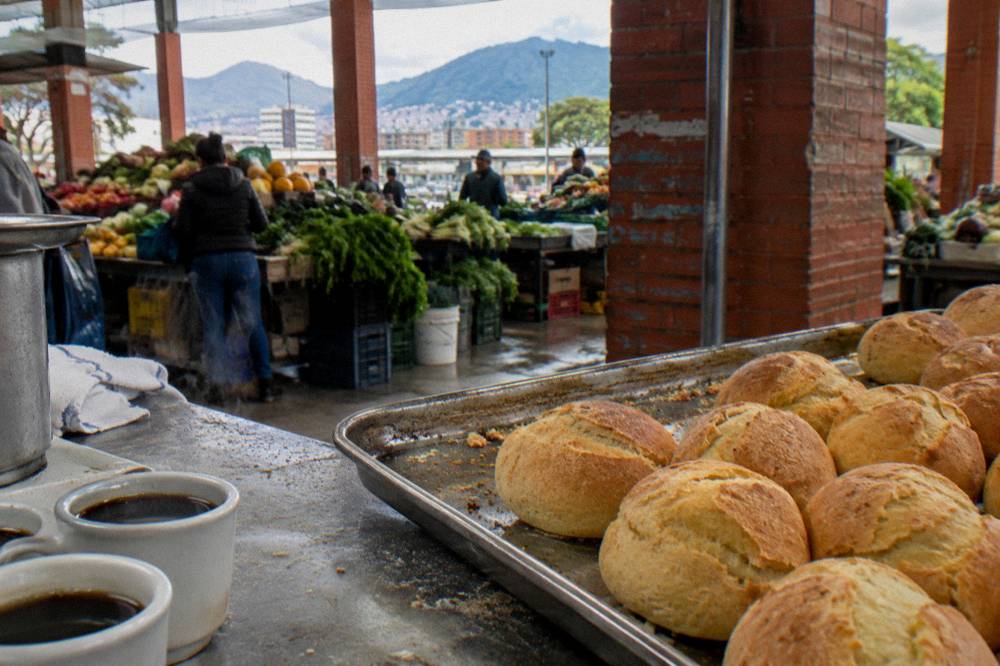
If the bakery-and-chocolate pairing sounds like your morning, the Coffee and Chocolate tour in Bogotá is built around it: 2 hours 15 minutes, from $49 per person, rated 5.0 across 79 reviews, pairing coffee tasting with chocolate in the city centre.
Would a guided walk settle the pan de bono question for you in one morning?
A guide orders at the counter, translates the case, and explains which bread is which before you commit, and free cancellation on the booking page means the plan stays flexible.
What Do Arepas, Empanadas And Bakery Snacks Cost In Bogotá?
Reported 2026 prices put an almojábana around 4,700 COP per unit and a pan de bono around 4,300 COP at city bakery chains, a lulo juice at 4,000 COP and a curuba juice with milk at 5,000 COP at a La Candelaria street cart, and a tamal-with-hot-drink combo at 10,000 COP at the December festival plazas. At an exchange rate near 3,183 COP to the dollar, the bakery breads land under two US dollars each. These are reported figures from current listings, not fixed tariffs, and counter prices move with ingredients and neighbourhood.
| Snack | What It Is | Reported Price | Source Type |
|---|---|---|---|
| Almojábana | Airy curd-cheese bread, domed | Around 4,700 COP per unit | City bakery delivery listing |
| Pan de bono | Round cassava-starch cheese bread | Around 4,300 COP per unit | City bakery delivery listing |
| Lulo juice | Fresh fruit juice, street cart | 4,000 COP | La Candelaria cart, reported |
| Curuba juice with milk | Fresh fruit juice, street cart | 5,000 COP | La Candelaria cart, reported |
| Tamal combo | Tamal with hot drink and arepa or bread | 10,000 COP | Festival pricing across 17+ plazas |
The street-cart juice figures come from a documented fruit cart at Carrera 2a with Calle 13 in La Candelaria, where the reported menu lists lulo at 4,000 COP and curuba with milk at 5,000 COP, per a late-August street-food survey. The bakery figures come from current delivery listings of a city bakery chain, which price single units the way a counter would. None of these are guarantees: a bakery in Chapinero Alto will charge more than a stall at a market plaza, and festival pricing, like the tamal combos, is a seasonal special rather than a year-round rate.

For anyone building a whole day around eating, the full landscape of what to eat in Bogotá stretches well beyond snacks into ajiaco, lechona and the Sunday tamal tradition, and the breakfast dishes get their own treatment in the changua, calentado and tamal guide.
Can You Try All Of These Snacks On One Tour?
Yes, several walks sample arepas, empanadas and bakery snacks in a single outing: the Bogotá: True Colombian Walking Tour + Local Snacks covers local snacks over 2 to 3 hours from $54.68, the Viejo Bogota Food Tour with 12+ Tastings runs 4 hours from $55 with the deepest stop count, and the Bogota Food Tour: 7 Tastings Through the Heart of La Candelaria is a 3-hour, $64.99 per person format. The honest caveat is that no operator can promise a specific dish at a specific stop, because stalls rotate; the listing's inclusion notes tell you what the walk is built around, and the guide adapts the route to what is open.
The choice between them comes down to depth and pace. The True Colombian Walking Tour is the shortest and cheapest of the three, from $54.68 per person, rated 4.9 across 130 reviews, and it frames snacks as part of a city walk rather than the whole purpose. The Viejo Bogota tour, rated 5.0 across 714 reviews, is the most reviewed walk compared on this site and its 12-plus tastings make it the one for visitors who want the bakery case, the empanada counter and the fruit stall all in one itinerary. The 7 Tastings walk is new to the range, with only a handful of reviews so far, so its rating carries little weight either way; its selling point is the tighter La Candelaria focus at 3 hours.
| Walk | Duration | From (USD) | Rating And Reviews | Snack Angle |
|---|---|---|---|---|
| Bogotá: True Colombian Walking Tour + Local Snacks | 2 to 3 hours | $54.68 | 4.9 across 130 reviews | Snacks woven into a city walk |
| Viejo Bogota Food Tour with 12+ Tastings | 4 hours | $55 | 5.0 across 714 reviews | Deepest tasting count, historic centre |
| Bogota Food Tour: 7 Tastings Through the Heart of La Candelaria | 3 hours | $64.99 | Too few reviews to judge | Compact neighbourhood focus |
| Bogota Shared Gastronomy Tour in the Historic Center | 3 hours | $15 guide fee, tastings about $12 extra | 4.9 across 291 reviews | Budget shared format |
| Shared Bogotá Street Food Tour | 3 hours | $17.71 | 4.6 across 30 reviews | Street-stall focus |
A market-first alternative is worth naming for visitors whose real interest is the raw ingredients behind these snacks. The PALOQUEMAO MARKET FOOD TOUR, 3 hours from $82 per person and rated 4.9 across 71 reviews, walks the city's principal food market with exotic fruit and local snacks as its stated theme, which pairs naturally with the arepa and empanada stops covered above.
Timing advice is consistent across operators: morning walks catch bakeries at their best, when pan de bono and almojábanas come out of the oven rather than out of a warming drawer, and the morning or evening food walk guide breaks down the trade-offs in full. For the practical backdrop, altitude and pacing are covered in the first-timer altitude guide, since a 2,640 m city rewards light meals and steady hydration on day one.
The one thing a snack tour does that independent snacking cannot is sequencing. A guide who moves the group from a plain breakfast arepa to a sweet arepa de choclo to a fried empanada with ají is teaching a vocabulary, not just feeding people, and the differences between the three land differently when they arrive twenty minutes apart instead of on three separate days. That is the argument for booking a walk even as a confident independent eater, and it is why this site exists: Bogota Food Tours compares the formats so the choice is informed rather than guessed.
If you are still weighing the options, these three formats cover the range from a short snack stroll to a full tasting itinerary.
Common Questions About Arepas, Empanadas And Pan De Bono
What Is The Difference Between An Arepa And An Empanada?
An arepa is a flat, round corn cake cooked dry on a griddle or fried, usually served plain or split and filled. An empanada is corn dough folded around a cooked filling such as shredded beef with potato, chicken or cheese, sealed and deep-fried. The arepa is the staple; the empanada is the filled snack.
What Is The Difference Between Pan De Bono And Almojábana?
Pan de bono is a round cheese bread made with cassava starch, corn flour and cheese, denser and stretchy inside. Almojábana is made with fresh curd cheese, cuajada, and corn flour, bakes into a lighter dome and tastes more tangy and lactic. In Bogotá tradition the almojábana is the one dipped into hot chocolate.
What Goes Inside A Colombian Empanada?
The national default is shredded beef or pork stewed with potato, onion, cumin and hogao sauce. Chicken and cheese are the other common fillings, and pipián, a spiced mashed-potato filling from the Bogotá savanna, is the local specialty. Every empanada is served with ají, a vinegary chopped-chili sauce.
How Much Do Arepas, Empanadas And Pan De Bono Cost In Bogotá?
Reported 2026 prices put an almojábana around 4,700 COP per unit and pan de bono around 4,300 COP at city bakery chains, with a lulo juice at 4,000 COP at a documented La Candelaria street cart. Counter prices vary by neighbourhood, so treat these as reported ranges rather than fixed prices.
Which Arepa Types Should I Try In Bogotá?
Start with the plain white breakfast arepa for context, then the sweet arepa de choclo with salty cheese, then a split arepa de queso with melted cheese inside. If you find the coastal arepa de huevo, fried with a whole egg inside the dough, order it; it is the most theatrical of the four.
Can A Food Tour Cover Arepas, Empanadas And Bakery Snacks In One Outing?
Yes. The Bogotá: True Colombian Walking Tour + Local Snacks runs 2 to 3 hours from $54.68 per person, rated 4.9 across 130 reviews, and the Viejo Bogota Food Tour with 12+ Tastings covers the widest spread over 4 hours. No operator can promise a specific dish at a specific stop, so check each listing's inclusion notes before booking.