Best Time To Visit Bogotá For Food And Weather
Bogotá sits at about 2,640 m on a high plateau, so its weather runs on two rainy seasons and two dry ones rather than four seasons. That rhythm changes what you eat, which markets hum, and which food walks feel best.
Short answer
The driest, most reliable windows are December to February and June to September, with rainy seasons from April to May and October to November. For food, aim for November or December, when the tamal festival, Vino al Parque and Chocoshow land back to back, and markets are at their fullest.
Bogotá does not have a summer and winter the way most visitors picture them. The city sits at roughly 2,640 m on the Andean plateau, which gives it a cool, springlike climate all year with daytime temperatures that barely move from month to month. What changes is the rain: two rainy seasons, roughly April to May and October to November, alternate with two drier stretches, and afternoon showers during the wet months can reshape a day of market browsing or street eating.
For a food-focused trip, the weather matters less than you might expect and the calendar matters more. December brings the tamal festival across the city's market plazas, late November stacks a wine festival and a chocolate expo in the same weekend, and the markets themselves shift their energy with the seasons. This guide lays out the weather rhythm, the food calendar, and how to match both to the kind of eating you want to do, with the practical figures you need to plan around.
When Is The Best Time To Visit Bogotá For Food And Weather?
The best time to visit Bogotá for food and weather is December to February, when the city is dry, festive, and full of tamales; June to September is a close runner-up, drier than the calendar suggests and carrying noticeably fewer crowds. Since altitude keeps daytime temperatures in a narrow band all year, your real choice is between rain and dryness, and between a quiet market Tuesday and a plaza full of steam and tamal wrappers.
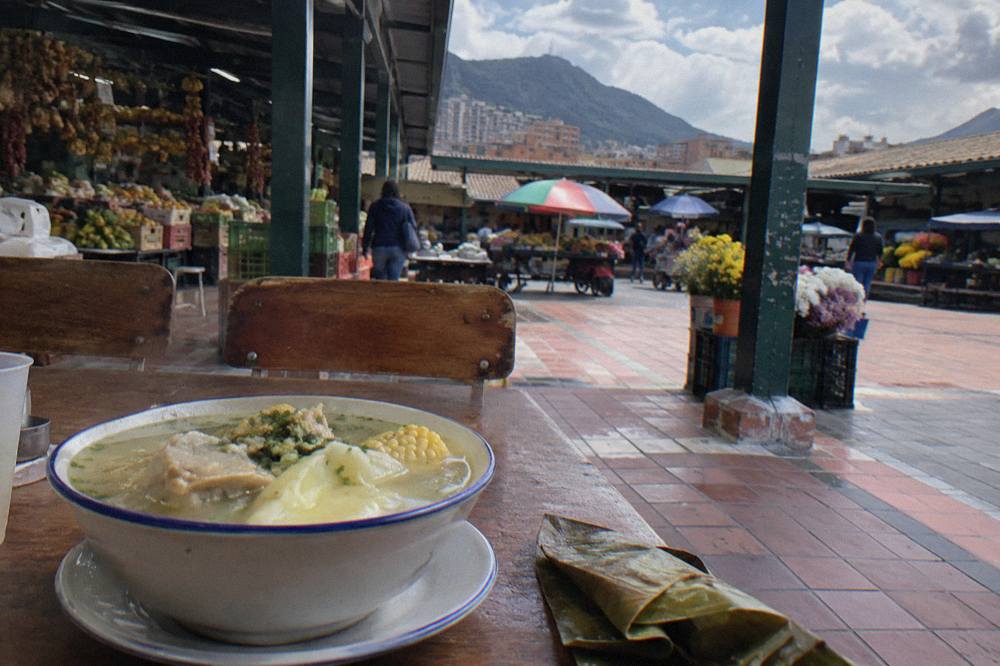
The honest answer for weather is that there is no bad month, only wetter and drier ones. The bimodal pattern means April and May, then October and November, carry the highest chance of an afternoon downpour. Rain in Bogotá rarely lasts all day; it arrives hard in the afternoon or evening and clears. A morning food walk in the historic centre, followed by an indoor lunch of ajiaco while the rain passes, is a perfectly normal local rhythm.
The food calendar tilts the balance. The Festival del Tamal runs 5 to 8 December across more than 17 plazas, the ninth Vino al Parque lands 27 to 29 November, and Chocoshow, the national cacao gathering at Corferias, runs the same final November weekend with more than 175 exhibitors. If those dates fit your leave, plan around them. If they do not, the markets and food walks run every week of the year.
Budget note: tour prices in Bogotá do not swing much between high and low season, unlike hotel rates. What changes is availability, since December fills up faster. Book ahead for late November and December dates, and check the booking page for the day you want rather than assuming a spot.
Dry Season Versus Rainy Season In Bogotá
Bogotá alternates between two dry seasons, December to February and June to August, and two rainy seasons, April to May and October to November. Because of the city's altitude, daytime temperatures stay cool and nearly constant all year, so your choice between seasons comes down to rainfall rather than temperature. Afternoon showers are the signature of the wet months rather than all-day rain, and the current outlook points to a drier than average stretch ahead because of a strong El Niño pattern in the Pacific.
The 2026 to 2027 outlook matters for trip planning. Colombia's weather institute IDEAM forecast in September 2026 a greater than 90 percent probability of a strong El Niño through late 2026 into early 2027, potentially the most intense since 1950. For Bogotá, that reported forecast means less rain than usual, sunnier days and colder nights through February 2027. It is a forecast, not a promise, so pack for rain anyway. The full seasonal breakdown explains the bimodal pattern in detail.
| Period | Season | What it means for eating | Festival highlights |
|---|---|---|---|
| December to February | Dry, festive | Warm midday sun for markets and plazas, cold nights for hot chocolate | Festival del Tamal, 5 to 8 December |
| March | Shoulder | Mix of sun and showers | Sabor Bogotá programming continues |
| April to May | Rainy | Morning walks, indoor lunches, fewer tourists | Fewer large festivals |
| June to August | Drier, mild | Best balance of weather and quiet streets | Regular market rhythm |
| September | Shoulder | Increasingly sunny | VegUp plant-based fest ran Sept to Oct 2026 |
| October to November | Rainy, then festival ramp | Afternoon showers, big November events | Craft beer festival, Vino al Parque, Chocoshow |
What the table cannot show is texture. During the October craft beer festival at Gran Estación, held 23 and 24 October 2026 with 60 local producers, the rain outside made the indoor beer halls feel earned. A month later, the same wet season delivers Vino al Parque with more than 1,100 wine references, and Chocoshow's cacao tastings. The rainy season is, awkwardly, Bogotá's festival season.
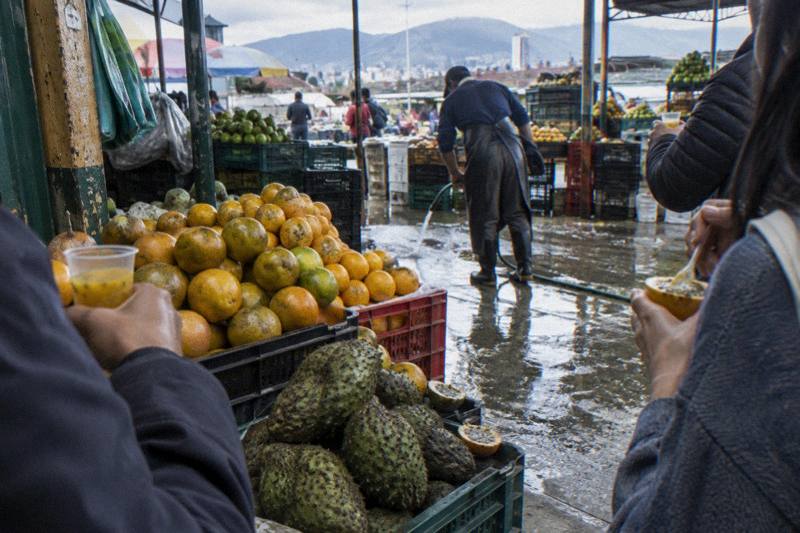
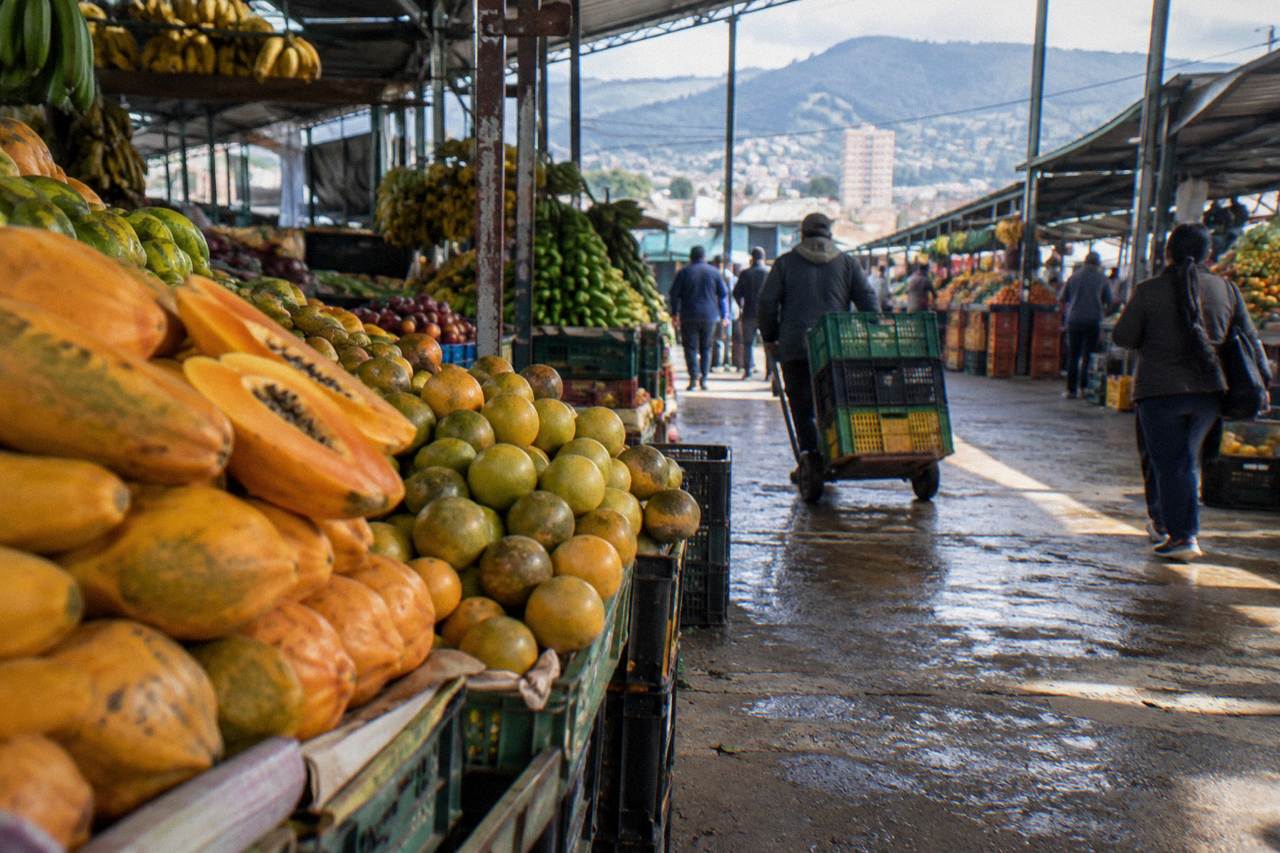
There is a practical angle too. Paloquemao market is at its raw, wholesale best before midday, and weekday mornings in the dry season mean you can walk the outside fruit rows comfortably. In the rainy months, arrive early anyway: the market's covered halls do not care about the weather, and the pre-dawn truck-unloading energy runs regardless. The flowers section is only worth it before 11 a.m., a detail worth building a morning around.
A food walk in the dry season and one in the rainy season are genuinely different products. The Viejo Bogota Food Tour with 12+ Tastings is a four-hour walk through the historic centre, from $55 per person, rated 5.0 across 714 reviews, the most reviewed walk compared on this site. In dry months you linger in plazas; in wet months you move faster between stops, which the format absorbs easily. Check availability for your dates on the live listing before assuming space, especially in December.
The Food Festival And Market Calendar
The food festival calendar peaks in November and December: Vino al Parque and Chocoshow both run from 27 to 29 November 2026, and the Festival del Tamal follows shortly after, from 5 to 8 December, with events spread across more than 17 market plazas. Between those anchors sit a craft beer festival in late October, a citywide gourmet restaurant month through 22 November, and the everyday market calendar, which is a festival of its own if you time it right.
Start with Bogotá Gourmet, which ran 22 October to 22 November in its 2026 edition, with fixed two-person menus at three price tiers reported at 89,000, 139,000 and 199,000 COP. That is roughly 28 to 63 USD at the approximate rate of 3,183 COP per USD, though the exchange rate moves, so check it near your travel date. If you want to eat at Chapinero's and Usaquén's better restaurants cheaply, that window is the moment.
The Festival del Tamal is the one to plan a trip around. In past editions, a combo of tamal, a hot drink and an arepa or bread sold at 10,000 COP across participating plazas, and prior festivals moved more than 14,484 tamales. The 2026 edition runs 5 to 8 December, per the city's announcement. It is street food at its most communal: families, steam, and plazas that smell of corn and chicken for four days. The city's festival page lists participating plazas.
| Date (2026) | Event | Where | Why it matters for food travelers |
|---|---|---|---|
| 22 Oct to 22 Nov | Bogotá Gourmet | 80+ restaurants citywide | Fixed two-person menus at reported COP 89,000 to 199,000 |
| 27 to 29 Nov | Vino al Parque | Central Bogotá park venue | 1,100+ wine references, 120+ by-the-glass options |
| 27 to 29 Nov | Chocoshow | Corferias | 175+ cacao exhibitors, tastings, competitions |
| 5 to 8 Dec | Festival del Tamal | 17+ market plazas | Tamal combos at reported 10,000 COP |
| Through 20 Dec | Ceviche festivals | La Fragata venues | 17 high-cuisine plates at one, 30+ sharing options at the other |
The market calendar runs underneath all of this. Paloquemao opens Monday to Saturday from 4:30 a.m. to 4:30 p.m. and Sundays and holidays from 5:00 a.m. to 4:30 p.m., with the flower section daily until 11 a.m. Usaquén's flea and food market runs Saturdays, Sundays and holiday Mondays from 9 a.m. to 5:30 p.m. La Perseverancia, the traditional-cooking plaza, runs weekdays 8 a.m. to 4 p.m. and weekends 6 a.m. to 5 p.m. Match your dates to those rhythms, not just the festivals. The official Paloquemao page confirms current hours.
One seasonal quirk worth knowing: Samper Mendoza, the herb plaza, runs a nocturnal market on Mondays and Thursdays from 9 p.m. to 5 a.m., trading more than 500 plant species, with 391 species documented in one count and 201 native to Colombia. It is not a food stall experience, but for anyone curious about the herbs that define ajiaco and Colombian broths, a Monday night visit is unlike anything else on the calendar.
What Bogotá Weather Feels Like Month By Month
Expect cool, springlike weather every month, with daytime highs that barely change across the year and nights that dip sharply, because Bogotá's altitude of about 2,640 m flattens seasonal temperature swings almost completely. The real monthly variable is rain: April, May, October and November carry the highest shower risk, while December to February and June to August are the driest stretches on record for the city, and the difference shapes your daily plans more than any thermometer reading.
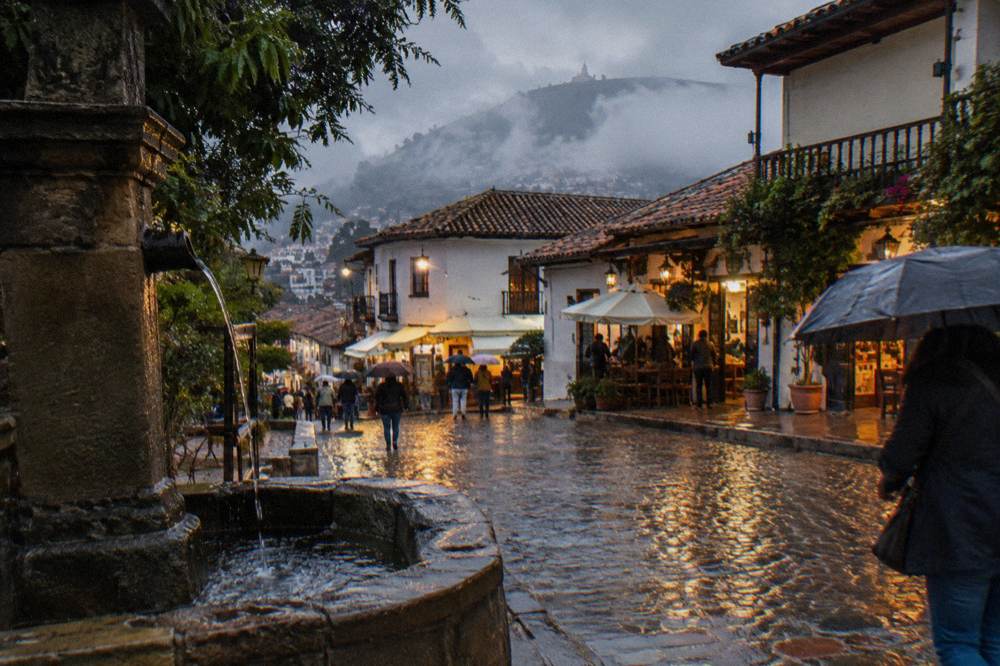
Altitude does things to the numbers that surprise visitors. Days feel mild, often sunny between showers in the wet season, but once the sun drops the temperature falls fast, and nobody in Bogotá eats a cold dinner on a plaza in January without a jacket. The city's own health guidance recommends one to two days of adaptation before strenuous activity, heavy hydration, light meals and limited alcohol in the first days, advice worth pairing with any food-heavy itinerary. Sibling reading: the altitude guide for first timers covers the eating side in detail.

What the rain actually looks like matters for planning. In the wet months, mornings are frequently dry and bright, with clouds building after lunch and showers arriving mid to late afternoon. That makes a morning market visit and an afternoon indoor tasting an almost foolproof daily shape. In the dry months, you can put a long walking day together without a rain contingency, which is when the four-hour food walks and the six-hour private gastronomy tours earn their length. Everything else covered here is indexed on Bogota Food Tours.
The El Niño outlook adds a wrinkle for 2026 to 2027 trips: the reported forecast points to drier, sunnier days and colder nights than normal through February 2027. If you are travelling in that window, lean into outdoor eating and plaza time, and bring an extra layer for the nights, which the pattern makes sharper than usual. Forecasts shift, so treat this as a planning tilt rather than a schedule.
Timing A Food Walk: Morning, Evening And Season
Morning is the strongest slot for market-based tours because Paloquemao's wholesale energy peaks before midday and the flower section closes at 11 a.m., while evening suits historic-centre walks and the craft beer tour's 3-hour indoor format. Season changes the mood more than the feasibility: every walk compared here runs year round, so what you are really choosing between is sun, showers and festival crowds, not whether the tour happens at all.
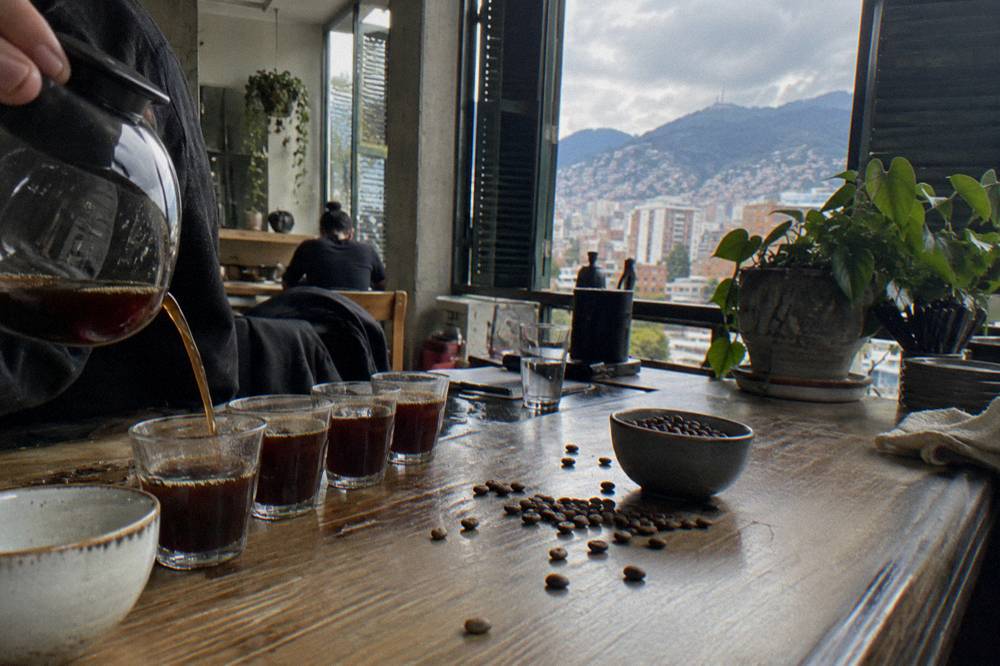
Coffee tours are the most weather-proof category in the city. The Coffee and Chocolate tour in Bogotá runs 2 hours 15 minutes, from $49 per person, rated 5.0 across 79 reviews, and mostly happens indoors around a roaster and a tasting table. Rain outside arguably improves it. The Bogota Colombian Coffee Tasting, 2 hours from $31.15, rated 4.8 across 105 reviews, is similarly sheltered. In the rainy season, pair one of these with a morning market walk and you have a full eating day with almost no weather exposure.
Market tours reward early starts in any season. The Paloquemao Market Food Tour, 3 hours from $82 per person, rated 4.9 across 71 reviews, works the fruit and snack stalls with tastings built in, and its minimum of two passengers makes it a couples default. In the dry season you get the outdoor rows comfortably; in the wet months you get the same halls and the same fruit, just with fewer cameras out. If your dates fall on a Sunday, remember the market closes early, at 4:30 p.m., so book the morning slot.
Evening belongs to beer and to the historic centre. The Bogotá Craft Beer Tour with Tasting, 3 hours from $149.53, rated 4.9 across 121 reviews, moves between breweries and bars where the rain is someone else's problem. Bogotá's craft scene has real weight behind it: 3 Cordilleras alone holds a reported 48 percent of Colombia's artisanal beer market and turned 18 in 2026, so the pours on offer are nationally significant, not token local taps.
For a deep single day, the Coffee Farm Experience Day Tour runs 8 hours from $94, rated 4.8 across 87 reviews, and takes you out of the city into coffee country. Weather-wise this is the one tour where the season genuinely matters: a dry-season booking gives you the farm walks and views, while a rainy-season day keeps you closer to the processing sheds. Either way it is the only full-day coffee option compared here, and it earns its length.
Practical Planning: Altitude, Getting Around And Costs
Plan on light meals and easy first days at 2,640 m, carry a layer for cold nights, use the TransMilenio at a unified 3,550 COP fare or app taxis, and expect a voluntary 10 percent propina at sit-down restaurants but not at street counters. None of these costs swing much by season, which makes Bogotá easy to budget: your weather decisions cost you comfort, not money.
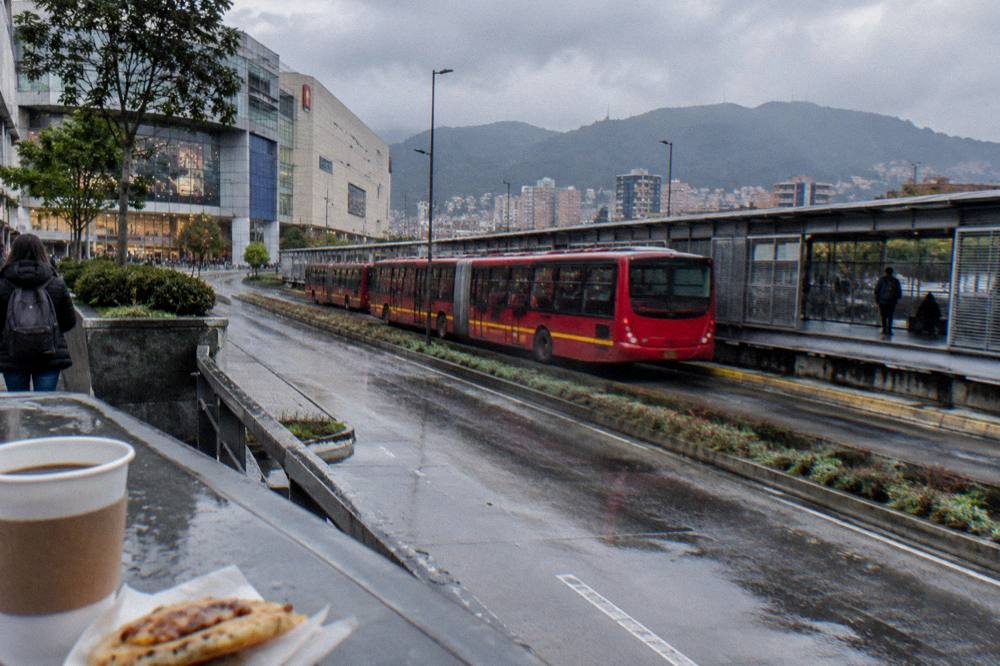
Getting around is season-neutral. The unified TransMilenio fare has been 3,550 COP since 14 January 2026, covering the trunk lines, zonal feeders and cable, with a 125-minute free transfer window. From El Dorado airport, authorized yellow taxis run on a meter with an airport surcharge, and app-based cars operate from designated pickup points a short walk from the taxi lane. A morning market run across town is cheap in either direction. The getting around guide compares the options in full.
Money habits are simple. At sit-down restaurants staff ask whether to add the voluntary 10 percent propina, capped by law; most locals accept for good service, and it can be declined. Street counters and market stalls expect no tip. Tour guides on paid walks are typically tipped if you feel the service earned it, in line with the general tipping customs guide. Carry small notes for market mornings, since juice and snack stalls rarely take cards.
Safety framing, reported plainly: the US State Department advisory for Colombia stands at Level 3, Reconsider Travel, issued 31 March 2026, with some departments at Level 4; none of the Level 4 areas is Bogotá. The UK FCDO names specific zones elsewhere in the country. Neighbourhood reports for 2026 describe Chapinero, Usaquén, Parque 93 and Zona T as the more policed visitor areas, with La Candelaria fine on main streets by day and better avoided alone after dark. Conditions change, so check current advice before you fly, and read the safety guide for the full picture.
Which Tours Fit Which Season
Pair dry-season dates with the long outdoor formats, the four-hour historic-centre walks and the eight-hour coffee farm day, and pair rainy-season dates with the sheltered coffee, chocolate and beer tastings plus early morning market tours. Price differences between seasons are minimal; the real variable is availability, which tightens around the November and December festivals.
| Tour | Length | From (USD) | Rating and reviews | Best season fit |
|---|---|---|---|---|
| Viejo Bogota Food Tour with 12+ Tastings | 4 hours | $55 | 5.0 across 714 reviews | Any; dry season for plaza lingering |
| Paloquemao Market Food Tour | 3 hours | $82 | 4.9 across 71 reviews | Any; book mornings, Sundays open 30 minutes later |
| Coffee and Chocolate tour in Bogotá | 2 h 15 min | $49 | 5.0 across 79 reviews | Rainy season, fully indoors |
| Bogota Shared Gastronomy Tour | 3 hours | $15 guide fee, tastings about $12 extra | 4.9 across 291 reviews | Budget dry-season pairing |
| Coffee Farm Experience Day Tour | 8 hours | $94 | 4.8 across 87 reviews | Dry season for the farm walks |
| Bogotá Craft Beer Tour with Tasting | 3 hours | $149.53 | 4.9 across 121 reviews | Rainy evenings |
Note the Shared Gastronomy Tour's price structure, because it trips people up: the $15 figure is the guide fee, and tastings run about $12 extra on top, so the real per-person cost is higher than the headline. Every other from-price in the table is per person as listed. Dietary needs are worth a message to the operator before booking, since the listings do not describe vegan or gluten-free arrangements.
If you can only pick one week, the argument for late November is strong: Chocoshow and Vino al Parque in one weekend, Bogotá Gourmet menus still running, and the tamal festival a week behind. If you would rather have quiet streets and dry plazas than festivals, aim for June to August, when the walks are emptier and the weather holds. And if you want the full packing and weather breakdown, the month-by-month companion piece covers it.
Common Questions About The Best Time To Visit Bogotá
What Is The Best Time To Visit Bogotá For Food And Weather?
December to February is the strongest combined window: dry, festive, with the Festival del Tamal from 5 to 8 December. June to September is the quieter dry alternative, and late November stacks Vino al Parque and Chocoshow into one weekend.
What Is The Rainy Season In Bogotá?
Two rainy seasons run roughly April to May and October to November, with afternoon showers the norm rather than all-day rain. Mornings are often dry even in wet months, which keeps market visits workable.
Is Bogotá Cold In The Dry Season?
Bogotá feels cool all year at about 2,640 m. Days are mild and often sunny, while nights drop sharply in every season, and the reported El Niño outlook points to colder nights than usual through February 2027.
Do Food Tours Run In The Rain?
Yes. Every walk compared here runs year round. Coffee, chocolate and beer tastings are largely indoors, and market halls are covered; only the longest outdoor formats, like the 8-hour coffee farm day, feel meaningfully different in the wet.
When Is The Festival Del Tamal In Bogotá?
The 2026 edition runs 5 to 8 December across more than 17 market plazas. Past editions sold tamal, hot drink and arepa combos at a reported 10,000 COP, and moved more than 14,484 tamales.
Are Tours More Expensive In High Season?
No listing compared here prices differently by season. What changes is availability, which tightens around the November and December festivals, so book those dates further ahead.