Getting Around Bogotá: TransMilenio, Uber And Walking
Bogotá is a big, high-altitude city spread across distinct food neighborhoods, and most of what a visitor wants to eat sits in a handful of walkable pockets. Here is how the transit system, the apps and your own two feet fit together, with 2026 fares and the practical details that matter when you are trying to reach a tasting walk on time.
Short answer
The TransMilenio bus rapid transit system charges a unified fare of COP 3,550 (about USD 1.10) as of January 2026, with a free 125-minute transfer window. App-based cars such as Uber and DiDi operate in a legal gray area but are widely used. La Candelaria, Usaquén and Chapinero are walkable once you arrive; the airport is 30 to 60 minutes from the center depending on traffic.
Getting around Bogotá well is really a question of matching the tool to the moment. The city sits at about 2,640 m, spreads its urban fabric north to south across a high plateau, and concentrates its most famous food in districts that are each walkable internally but far apart from one another. A visitor who lands at El Dorado airport, drops bags in Chapinero, and then wants a street-food walk in La Candelaria will use three different modes in one afternoon. This guide lays out what each one costs, what the official 2026 figures say, and how it all connects to the eating plans described across Bogota Food Tours.
How Does TransMilenio Work And What Does It Cost?
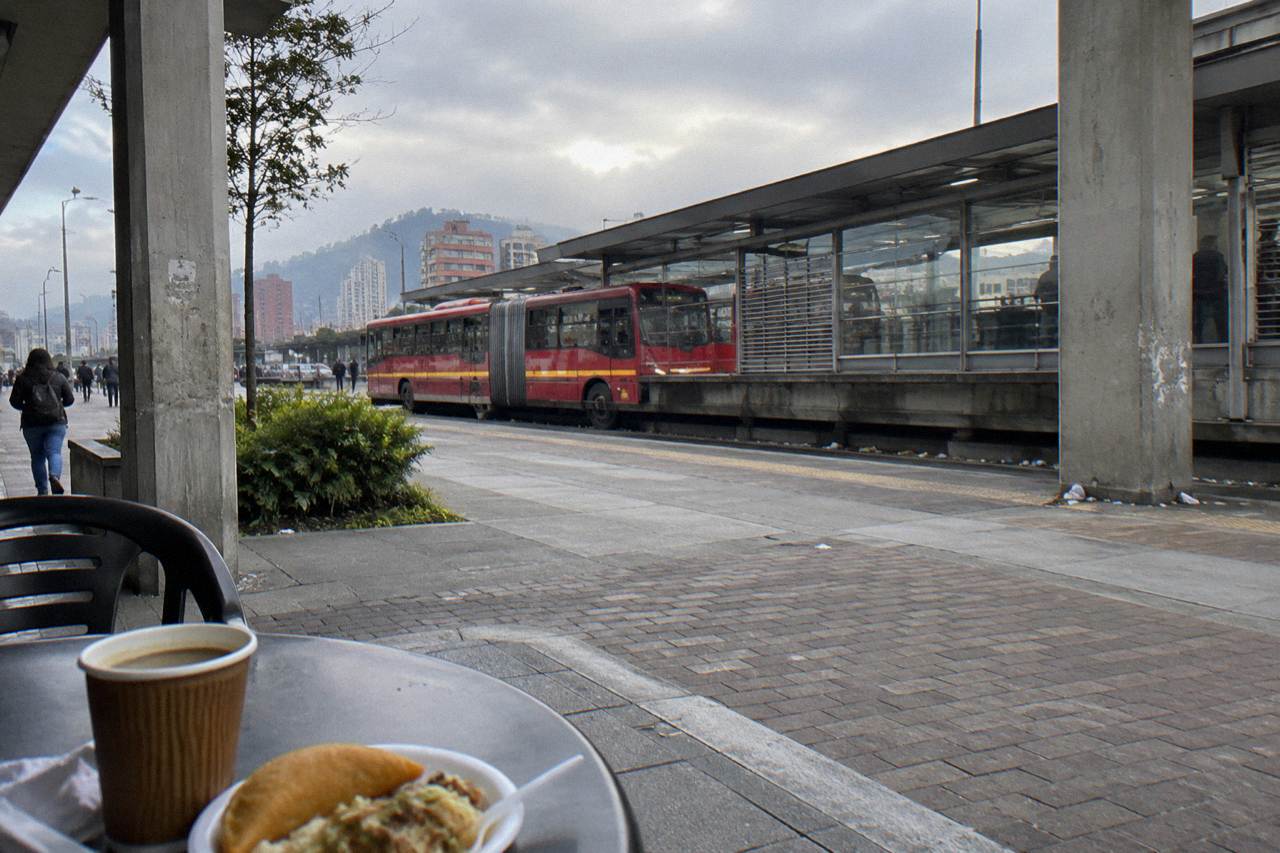
TransMilenio is Bogotá's bus rapid transit system: red articulated buses running on dedicated lanes along the main trunk corridors, fed by smaller zonal buses, with a single unified fare of COP 3,550, roughly USD 1.10 at the approximate rate of 3,183 COP per USD, effective since 14 January 2026. Every fare includes a 125-minute free transfer window between trunk and feeder services, so one ticket covers a connection.
The 2026 fare was set through a 10.9 percent adjustment announced by the city and applies uniformly to trunk services, zonal feeders and the TransMiCable gondola, a detail confirmed on the official city mobility page. Fares are paid with a rechargeable card bought at station entrances; there is no cash payment at the gate, so get the card the first time you enter a station rather than assuming a tap of a foreign bank card will work. Targeted free passes exist for vulnerable groups and the TransMiPass scheme continues, though neither applies to short-stay visitors.
For a food-focused visitor, two corridors matter most. The A Caracas trunk runs straight down the spine of Chapinero toward the center, connecting the coffee shops of Chapinero Alto with the museums and market stalls of La Candelaria. The Carrera Séptima corridor parallels it through the historic core. If your plan is a morning of specialty coffee in Chapinero and an afternoon tasting walk in the historic center, TransMilenio is the cheapest way to bridge the two, usually faster than a car in peak traffic because the buses have their own lanes. The dedicated lanes are the whole point of the system: what looks like a traffic-choked avenue on the map is a clear run for the red buses at exactly the hours when everything else stalls.
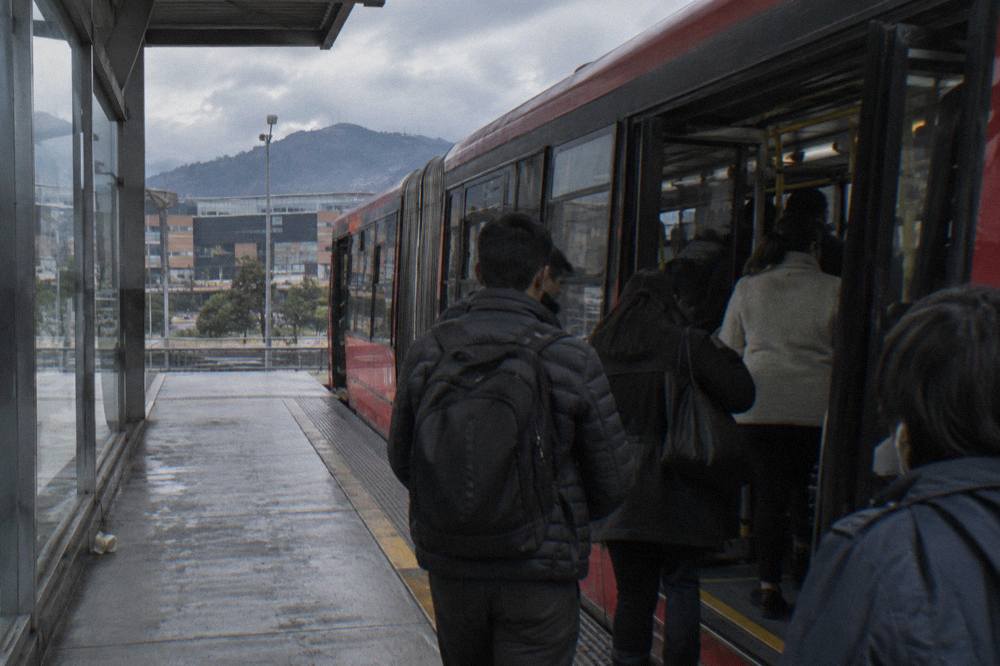
Two honest cautions. First, the system is crowded at rush hour, roughly 6 to 9 a.m. and 4 to 7 p.m., and pickpocketing on crowded transport is among the commonly documented incident patterns in the city, so keep phones and wallets inside a zipped layer. Second, station signage is mostly in Spanish; the free transfer window and the trunk letters take a ride or two to internalize. None of this makes the system difficult, it just means a first ride is easier outside peak hours. Board with less luggage than you would carry onto a metro in Europe, and treat the first trip as a learning ride rather than the one you time a tour departure around.
Before going further, here is the whole toolkit in one view, because the choice between modes is usually made in about ten seconds on a street corner:
| Mode | Cost basis | Best for | Watch out for |
|---|---|---|---|
| TransMilenio and feeders | COP 3,550 flat, 125-minute transfers | Riding between districts cheaply | Rush-hour crowds, Spanish signage, no cash at gates |
| Authorized yellow taxi | Metered district tariff plus COP 8,000 airport surcharge | Airport runs, late-night rides | Use the official rank, not street offers |
| Uber, DiDi, Cabify, inDrive | App fare, logged in the app | Everyday point-to-point trips | Legal gray area; airport pickup points away from the rank |
| Walking | Free | Within La Candelaria, Chapinero strips, Usaquén core | Altitude fatigue; side streets in the center after dark |
Is Uber Or A Regular Taxi Better From El Dorado Airport?
Authorized yellow taxis use a regulated meter under a district decree, with a flag rate near COP 4,500 plus distance charges and a COP 8,000 airport surcharge, while app-based services like Uber, DiDi and Cabify pick up at app-designated points, sometimes a short walk from the taxi lane. App-based transport operates in a legal gray area in Colombia under a vehicle-rental-with-driver classification, yet it is in wide everyday use.
The practical difference at the airport is where you meet the car. Authorized taxis queue at the official rank with the metered tariff structure above; app cars are usually directed to a designated pickup zone away from the rank, which can mean a five-minute walk with luggage. During the day either works. Late at night, many visitors prefer an app car precisely because the destination, route and price are logged in the app, or a hotel-arranged car for the same reason. The metered taxi tariff includes supplements at night, on Sundays and on holidays, so an identical ride does not always cost the same on different days.
From El Dorado to the city center, the ride runs 30 to 60 minutes depending on traffic, and to Chapinero or Usaquén typically a bit longer at peak times. The airport also connects to the city by TransMilenio trunk route K86 and SITP feeder buses, which cost the standard unified fare but are less practical with suitcases. If you are heading straight to a food engagement on arrival day, budget the traffic variance rather than the map distance. Bogotá's congestion is famous for a reason, and the difference between a Sunday morning arrival and a Tuesday evening one is the difference between a quick hop and a long sit.
One arrival-day detail worth knowing: Check-Mig, the online pre-registration with Migración Colombia, is free and optional rather than mandatory, is recommended to speed the immigration process, and can be completed from 72 hours down to 1 hour before your flight through the official site only. It does not move your taxi any faster, but it can shave the queue at the border. The official Migración Colombia site is the only place to file it.
One thing worth deciding early is how much of this logistics work you want to do yourself at all. A guided tasting walk that starts in La Candelaria, such as the La Candelaria tasting walk, hands you a single meeting point in the most transit-accessible district of the city, which removes most of the route-planning from your first day. It runs 3 hours, from USD 63 per person, rated 4.9 across 72 reviews; check the booking page for the exact meeting point and inclusions.
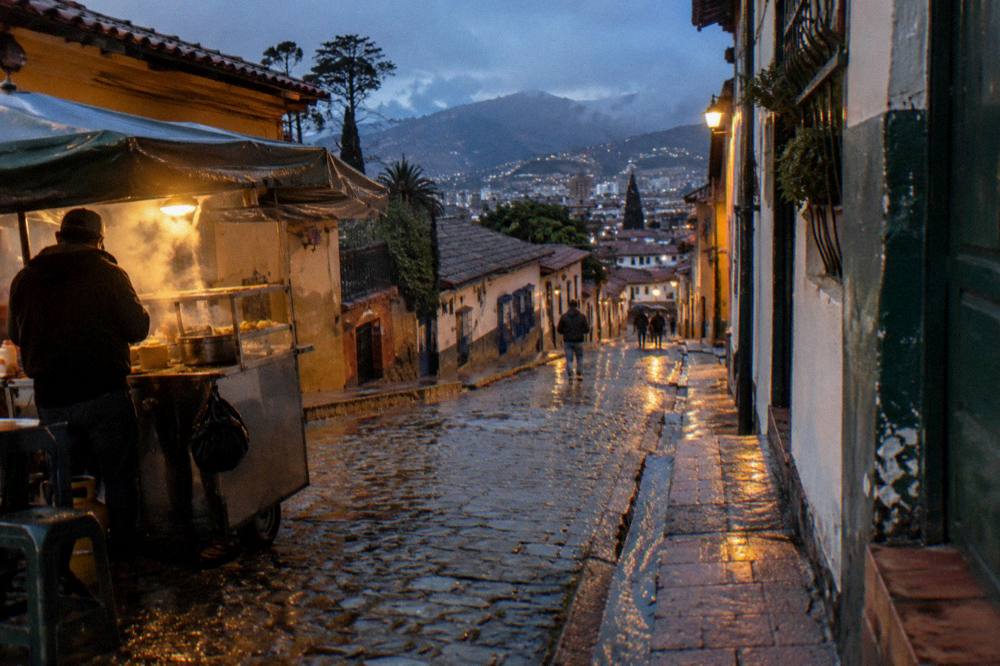
All three meet in or near the historic center, where TransMilenio, taxis and app cars converge.
Which Parts Of Bogotá Are Walkable, And Which Are Not?
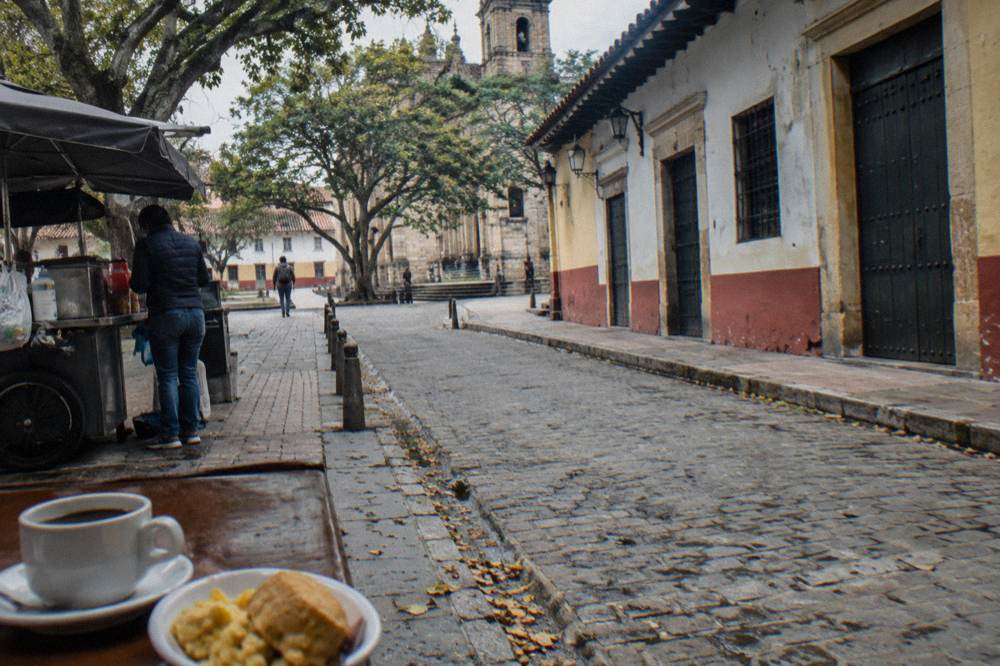
La Candelaria, the Parkway stretch of Teusaquillo, Usaquén's core around the Sunday market, and Chapinero's restaurant strips are all genuinely walkable once you arrive. The gaps between these districts are not: crossing from La Candelaria to Chapinero on foot means roughly 7 km of busy avenue, so plan to walk within a district and ride between districts.
Walking is also how you notice things a bus window hides. The fruit juice cart at Carrera 2a with Calle 13 in La Candelaria, reported selling lulo juice at COP 4,000 and curuba with milk at COP 5,000, is the kind of stop you find on foot, not from a trunk bus. The same goes for bakery windows: reported delivery-app prices put an almojábana around COP 4,700 and a pan de bono around COP 4,300, and you pass a dozen of them on any walk through Chapinero. Street eating rewards the slow mode; the health secretariat's own guidance for street food is to buy from formal or authorized establishments and to check labels and packaging condition, advice that is easier to follow when you can see the stall you are buying from.
2026 neighbourhood reports describe Chapinero, Usaquén, Parque 93 and Zona T as the more policed, comfortable districts for day and evening walking with standard precautions, and La Candelaria as safe on its main streets and squares by day but with higher pickpocket risk and a standing recommendation against walking side streets alone after dark. Conditions change, so treat those as reports, not verdicts. Related detail is gathered in the safety overview for visitors.
Altitude shapes walking more than distance does. The city's health guidance recommends 1 to 2 days of adaptation before strenuous activity, heavy hydration, light meals and limited alcohol, with symptoms like headache and fatigue typically peaking in the first 24 to 48 hours; the city's official health tips for first-time visitors are the primary source. Practically, that means a flat stroll through La Candelaria on day one, and saving the uphill stretches, anything climbing toward Monserrate, for later in the week. The altitude eating guide covers the food side of this.
What Street Smarts Matter While Moving Around?
Keep your phone secured on busy pedestrian stretches, since documented 2026 incident patterns show snatching, especially along Carrera 7 in Chapinero in the evenings. Also guard against scopolamine drugging through drinks, food, cigarettes, or dating apps, refuse street document or money checks from anyone claiming to be police, and use app-based or hotel-arranged transport at night.
None of this is unique to Bogotá, and none of it argues against eating your way through the city; it argues for a few habits. Carry the phone you are using for maps in a pocket that closes, not in your hand on a busy sidewalk. Accept drinks and food only from established businesses rather than strangers. If someone in plain clothes demands a document check, walk into a shop or hotel and let staff help; genuine checks happen at checkpoints, not through a stranger asking to hold your wallet. Pickpocketing clusters in the crowded, famous spots, Plaza de Bolívar, the Monserrate area, packed buses, which is exactly where guided walks earn their keep, since a local guide moves a group through those zones with an eye on the surroundings.
The travel advisories sit in the background of all this and are worth reading plainly. The current US advisory for Colombia is Level 3, Reconsider Travel, issued 31 March 2026, with certain departments at Level 4; none of those areas is Bogotá. The UK's foreign office names specific zones, mainly border regions and parts of the Pacific coast, and advises normal precautions for the capital area. Report these as they are, check the official pages before you fly, and note that conditions change. Advisories describe a country, not a street, and your actual exposure on a food walk in La Candelaria at 3 p.m. has very little to do with a border department 600 km away.
A last habit: keep the address of your hotel saved offline, in Spanish if possible, and screenshot your tour meeting point before you leave wifi. Data is cheap and coverage is good in the city, but the moment you most need the address is the moment the phone battery dies, and a printed or memorized meeting point has saved more than one late arrival.
How Do You Reach The Big Market Meeting Points?
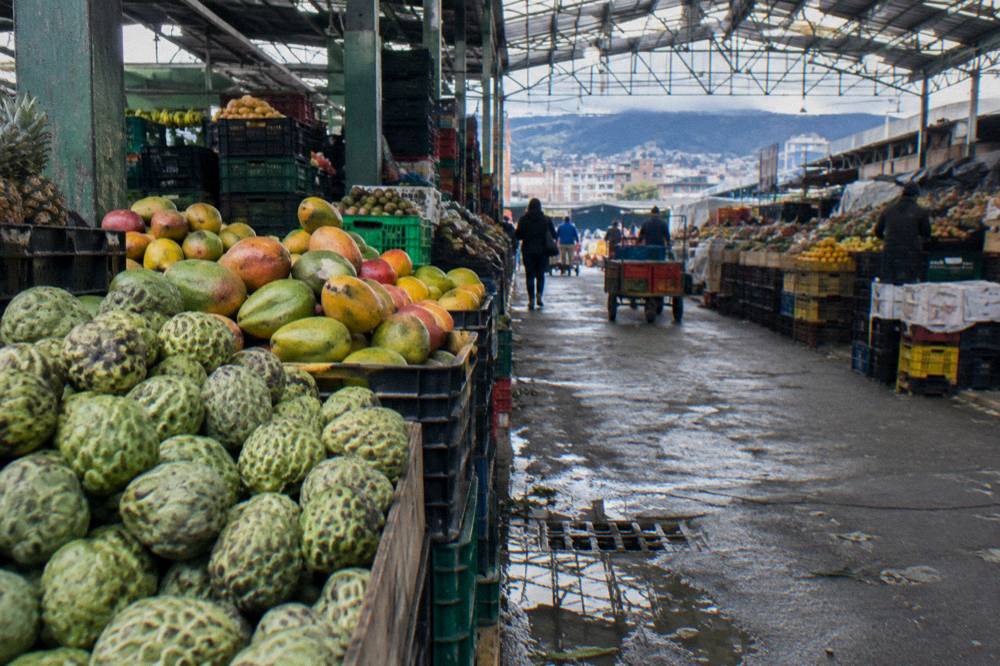
Paloquemao market, the starting point for most fruit-tasting tours, sits west of the center and is best reached by taxi or app car, usually 10 to 20 minutes from La Candelaria; TransMilenio serves the area with a walk at the end. Usaquén's Sunday market is in the far north, reachable on the A Caracas corridor or by car from Chapinero in about 20 minutes.
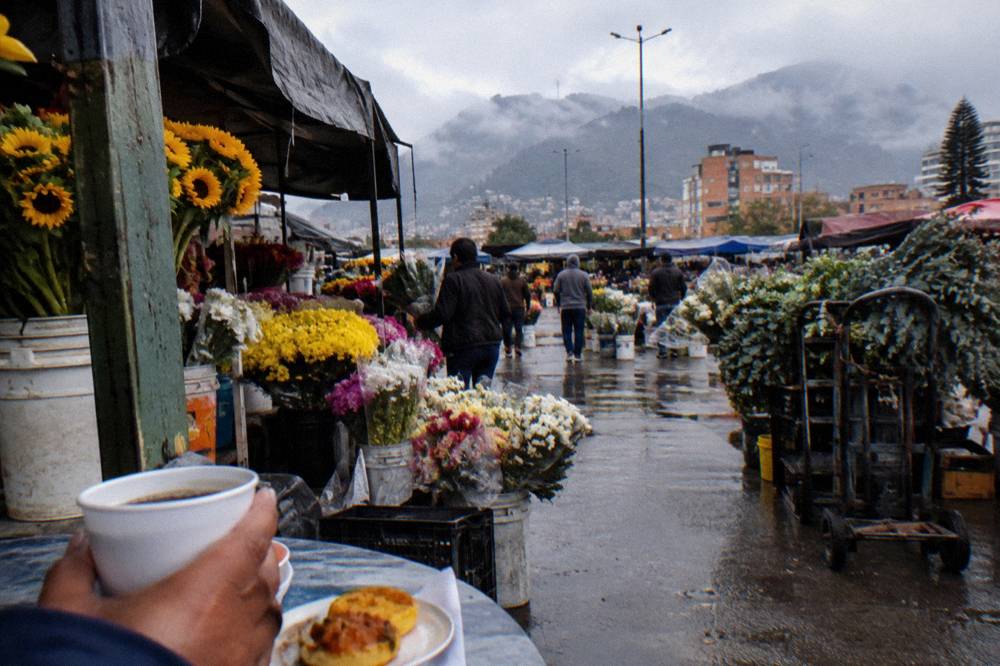
Paloquemao's official hours are Monday to Saturday 4:30 a.m. to 4:30 p.m. and Sundays and holidays 5:00 a.m. to 4:30 p.m., with the flower sector only until 11:00 a.m., per the plaza's own published times. The early morning, before about 10 a.m. on weekdays, is when trucks unload produce and vendors hand out tastes of granadilla, lulo and uchuva; the wholesale energy thins after midday. If your tour meets there mid-morning, as the Paloquemao tasting walks do, an app car from the center is the simplest option and the driver will know the plaza by name. The Paloquemao hours and timing guide works through the scheduling in detail, and the wider markets beyond Paloquemao guide covers the other plazas if your route allows.
Usaquén is the opposite problem: far from the center but compact once you arrive. The flea and food market runs Saturdays, Sundays and holiday Mondays, 9:00 a.m. to 5:30 p.m., on Carrera 6A between Calles 119 and 120A, with stalls selling arepas, fresh-cut fruit, empanadas and hot chocolate. From Chapinero it is a direct ride up Carrera Séptima or Caracas; from La Candelaria, budget a longer ride by car and more again on transit, since you are crossing most of the city's length northward. The Usaquén Sunday market guide covers the stalls.
One market runs on a clock all its own. Samper Mendoza's nocturnal herb market operates Monday and Thursday nights from 9:00 p.m. to 5:00 a.m., trading hundreds of species of aromatic, medicinal and culinary plants; a 2026 city count documented 391 species in the plaza, 201 of them native to Colombia. It is a wholesale, working-night scene rather than a tourist stop, and it is not a sensible first-night plan after a long flight, but it explains why some Bogotá food schedules simply do not map onto ordinary opening hours.
Here is how the main food destinations compare for a visitor based in the center:
| Destination | Walk from La Candelaria | Best mode | Notes |
|---|---|---|---|
| La Candelaria circuit | It is the district | On foot | Main streets by day; rides after dark |
| Paloquemao market | No | Taxi or app car, 10 to 20 min | Official hours Mon to Sat to 4:30 p.m. |
| Chapinero Alto and Zona G | No, about 7 km | TransMilenio A Caracas or car | Coffee shops cluster near the trunk line |
| Usaquén market | No, far north | Car or A Caracas transit | Market Sat, Sun and holiday Mondays |
| La Perseverancia plaza | No | Short taxi ride | Traditional dishes; weekday hours end at 4 p.m. |
| Samper Mendoza | No | Taxi at night only | Nocturnal market Mon and Thu 9 p.m. to 5 a.m. |

What Should You Know About Fares, Tipping And Money On The Move?
The unified transit fare is COP 3,550 with a 125-minute transfer window, the approximate exchange rate is 3,183 COP per USD, and the voluntary restaurant propina is capped by law at 10 percent, is optional, and is not expected at street counters or market stalls. For taxis and apps, rounding up is the local norm rather than a percentage.
The propina voluntaria rule comes from Colombian law and is worth knowing before your first sit-down meal: staff will ask whether to add the 10 percent, most locals accept for good service, and you may decline or adjust it. At market stalls, juice carts and bakery counters there is no tipping expectation at all, which is one of the quiet pleasures of eating through the markets. Small cash amounts for porters and housekeeping, in the range of COP 2,000 to 10,000, are the other convention worth knowing. The tipping guide covers tour guides and hotels too.
For cash planning, the COP figures in this guide convert at roughly 3,183 COP per USD, an approximate rate read on 2 November 2026, so the transit fare is a bit over a dollar and a lulo juice is a bit over a dollar. The rate has moved inside a fairly narrow band over the past year, which means a budget sketched before travel holds up reasonably well. Markets are cash-first, especially the early-morning stalls; restaurants and app cars take cards. A workable pattern is a small amount of cash for markets and street food, cards for everything else, and no need to carry large notes, since vendors often cannot change them.
| Item | Cost as reported | Basis |
|---|---|---|
| TransMilenio unified fare | COP 3,550 | Official tariff, from 14 January 2026 |
| Airport taxi surcharge | COP 8,000 | District tariff, on top of metered fare |
| Taxi flag rate | about COP 4,500 | District tariff, plus distance charges |
| Lulo juice, La Candelaria cart | COP 4,000 | Reported street price, August 2026 |
| Curuba juice with milk, same cart | COP 5,000 | Reported street price, August 2026 |
| Almojábana, bakery | about COP 4,700 | Reported delivery-app price |
| Porter or housekeeping tip | COP 2,000 to 10,000 | Reported local custom |
| Usaquén market entry | Free | Public street market |
What Does A Sensible Food-First Day Look Like?
A workable rhythm is a walkable breakfast district in the morning, a market or museum district around midday reached by transit, and a guided tasting walk in the late afternoon so that the logistics of the last, biggest meal are handled by someone who knows the streets. Most guided food walks in the historic center start within a short walk of a TransMilenio station or a five-minute taxi hop from anywhere central.
Consider the shape of a first day. A changua or calentado breakfast in La Candelaria needs no transport at all if you are staying there; the breakfast guide maps the options. A mid-morning Paloquemao fruit visit is one app car away, timed to the official hours above. Back in the center by early afternoon, a 3-hour tasting walk such as the Food Tour in La Candelaria covers the evening's eating and the walking between stops in one guided arc, rated 4.9 across 72 reviews, from USD 63 per person.
For a bigger appetite or a second day, two alternatives stand out. The Viejo Bogota tasting walk runs 4 hours with more than 12 tastings, from USD 55 per person, rated 5.0 across 714 reviews, which makes it the most reviewed food walk compared on this site. The Bogotá Food Experience covers a similar 4-hour cultural format from USD 47.15 per person, rated 4.9 across 615 reviews.
Both also meet centrally, so neither adds a transport leg beyond what you have already read about here.
Weather plays a small part in the plan. Bogotá's rainy seasons fall around April to May and October to November, with afternoon showers common, and the El Niño forecast noted above points to drier days than average into early 2027. Mornings are the reliable window for walking; afternoons are when a bus or car with a roof earns its fare. The packing notes in the weather and packing guide follow the same logic, and the three-day food itinerary sequences whole days around these same transport realities.
Common Questions About Getting Around Bogotá
How Much Does TransMilenio Cost In 2026?
The unified fare is COP 3,550, roughly USD 1.10, effective 14 January 2026, and it covers trunk buses, zonal feeders and the gondola, with a 125-minute free transfer window.
Is Uber Legal In Bogotá?
App-based services operate in a legal gray area under a vehicle-rental-with-driver classification, but Uber, DiDi, Cabify and inDrive are in wide everyday use. Pickups at the airport happen at app-designated points, sometimes a short walk from the taxi rank.
Can You Walk Between Bogotá's Food Districts?
Not between them. La Candelaria, Chapinero and Usaquén each walk well internally, but they sit kilometres apart, so ride between districts and walk within them.
How Do I Get From El Dorado Airport To The City Center?
Authorized yellow taxis run on a metered district tariff with a COP 8,000 airport surcharge; app cars pick up nearby at designated points; TransMilenio route K86 and SITP feeders connect to the city for the standard fare but are awkward with luggage. Expect 30 to 60 minutes depending on traffic.
Do You Tip Taxi Drivers In Bogotá?
Round up the fare for taxis and app cars; a percentage tip is not the custom. At sit-down restaurants the voluntary 10 percent propina, capped by law, is optional and can be declined. No tipping is expected at street stalls or market counters.
When Is The Best Time Of Day To Move Around Bogotá?
Mornings are the most reliable window: transit and traffic are manageable before the 6 to 9 a.m. crush fully builds, markets are at their liveliest, and showers, when they come, tend to arrive in the afternoon.