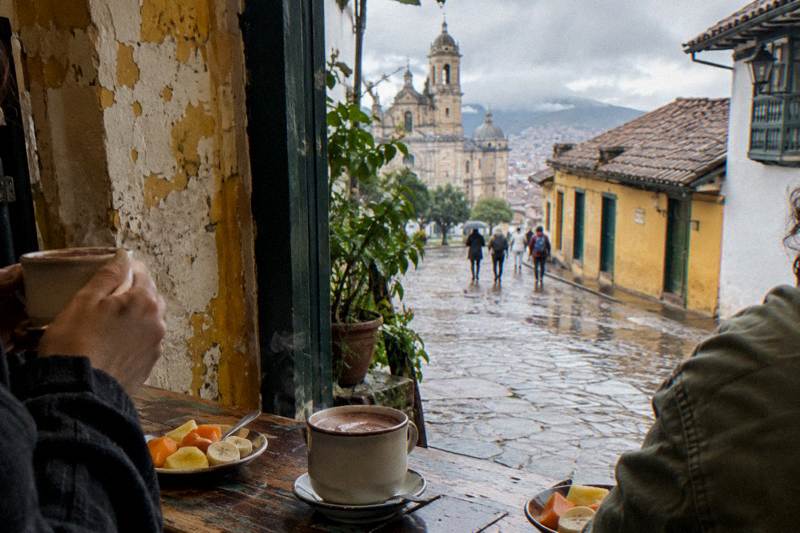
Where To Stay In Bogotá For Food Lovers
The neighbourhood you sleep in decides how early you reach the markets, how late you can walk home from dinner and how far you travel to meet a food walk. Here is how La Candelaria, Chapinero, Usaquén and Zona G compare for eaters.
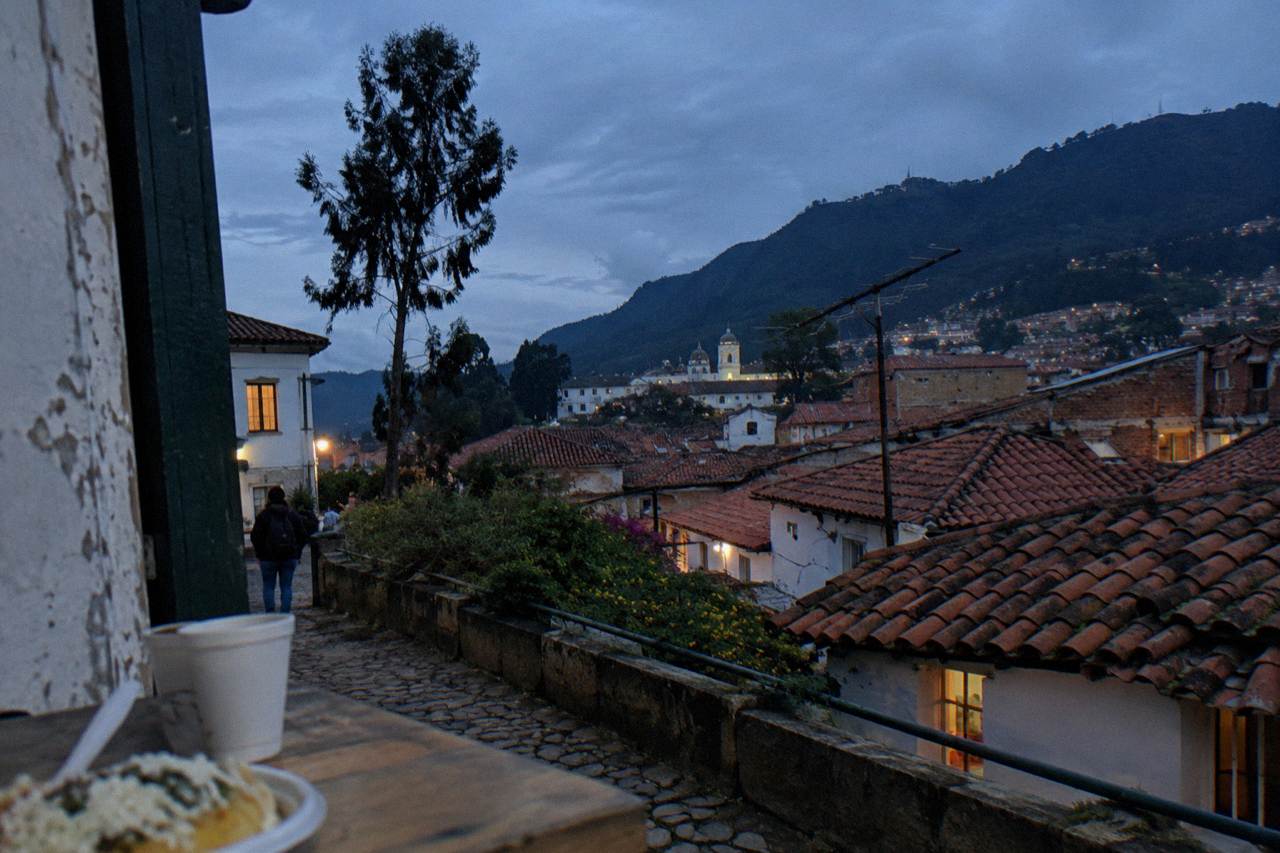
Short answer
La Candelaria puts you at the start point of most tasting walks, from about $15 guide fee plus tastings, and a short taxi ride from La Perseverancia market. Chapinero and Zona G put you in the restaurant heartland. Usaquén trades proximity for a Sunday market and village calm. Most food walks start in La Candelaria or at Paloquemao market.
Bogotá rewards the hungry walker, and punishes the badly based one. The city sprawls across a 2,640 m plateau, its food scene split between a colonial core of tamal counters and chocolate houses, a mid-city belt of specialty roasters and chef-driven restaurants, and a leafy north of Sunday markets and gastropubs. Pick the wrong zone and you will spend your trip in TransMilenio, which costs a reported COP 3,550 a ride and runs hot and crowded at rush hour, instead of at a table.
The short version: if your trip is built around tasting walks and market mornings, sleep in or near La Candelaria or Chapinero. If it is built around restaurants and craft beer, sleep in Chapinero or Zona G. If you want calm and a Sunday flea market with food stalls, Usaquén earns its distance. The food-first neighbourhood guide covers the full map; this page settles the one decision that shapes everything else, where to book the bed.
Which Neighbourhood Suits A Food Lover Best?
For a first visit built around food, Chapinero is the strongest all-round base: it sits between La Candelaria's tasting walks and the northern markets, holds Zona G's restaurant cluster at its edge, and the 2026 reports describe its central streets as among the more policed visitor areas. La Candelaria wins on walkability to food history but thins out after dark. Zona G and Parque 93 win for dining out, Usaquén for Sunday market calm.
Chapinero Alto was named the 7th coolest neighbourhood in the world for 2026 by Time Out, the only Latin American entry in the top ten, and the citation leaned on exactly what a hungry visitor cares about: a dense, walkable dining scene. Roasters like Amor Perfecto, whose flagship sits in Chapinero Alto and runs public cuppings, and Azahar Coffee, which buys directly from more than 420 Colombian farmers, anchor the coffee side; the restaurant side runs from Longo's, which opened its seventh location on Calle 56 in September 2026 in a restored conservation house, up through the Zona G boundary.
That mid-city position matters more than any single restaurant. From Chapinero, La Candelaria is a short taxi or one bus corridor south, Paloquemao market sits west, and Usaquén is north. Nothing food-relevant is more than about 30 minutes away by car. La Candelaria, by contrast, is superb for two days and limiting for five: its evenings quieten early, and the 2026 neighbourhood reports advise against walking its side streets alone after dark, so dinner often means a taxi.
| Neighbourhood | Best for | Walkable food density | Trade-off |
|---|---|---|---|
| La Candelaria | Tasting walks, food history, budget eats | High by day, low at night | Thins after dark; pickpocket risk noted in 2026 reports |
| Chapinero | Everything, worst at nothing | Very high, all day | Fewer colonial sights; traffic on Cra. 7 |
| Zona G / Parque 93 | Restaurants, wine, special occasions | High, evening-weighted | Pricier; far from markets and La Candelaria |
| Usaquén | Sunday market, village calm, brewpubs | Moderate, weekend-weighted | 30 to 40 minutes from the historic centre |
Is La Candelaria The Best Base For A Tasting Walk?
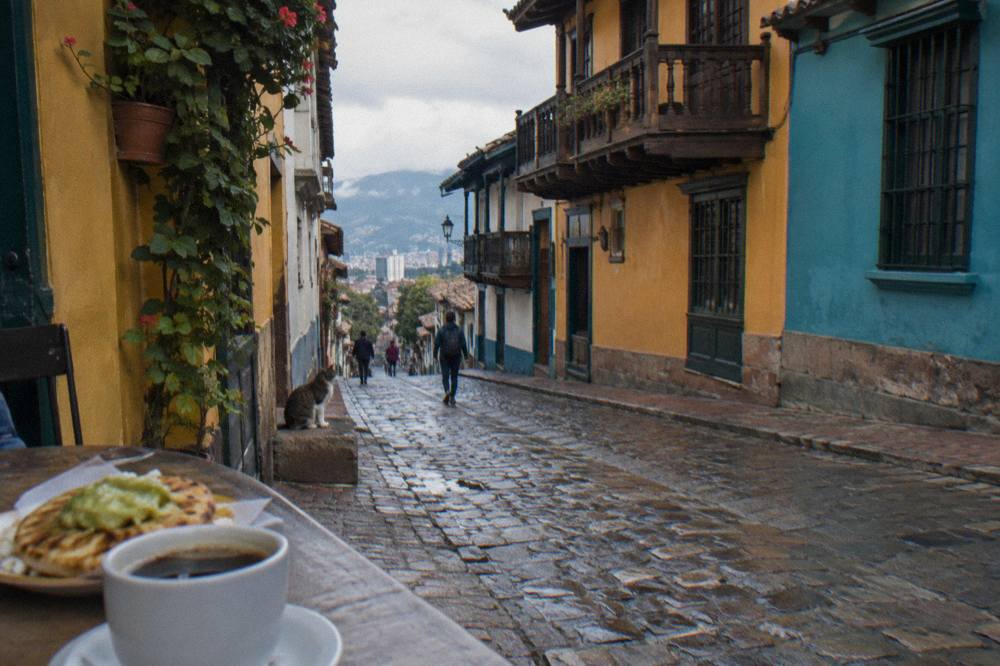
Yes, if the tasting walk is the spine of your trip. Most of the food walks compared here meet in or start from La Candelaria, including the featured Food Tour in La Candelaria, from $63 per person, rated 4.9 across 72 reviews. Staying there means a five-minute walk to your meeting point instead of a cross-city trip at 9 a.m., and the neighbourhood's own stalls, tamal counters and chocolate houses fill the rest of the day.
The historic centre concentrates the dishes most visitors come to try. La Puerta Falsa, operating since 1816 beside the cathedral, still serves chocolate santafereño with cheese to melt into the cup; Casa Orígenes, opened in October 2026 by pastry chef Helga Blaha in a restored republican house, runs Colombian chocolate tastings and a gastronomic library a few blocks from the Plaza de Bolívar. The 2026 street-food reporting documents juice carts in La Candelaria selling lulo juice at a reported 4,000 COP and curuba with milk at 5,000 COP.
Staying here also puts La Perseverancia market within reach, open Monday to Friday 8 a.m. to 4 p.m. and weekends 6 a.m. to 5 p.m., whose family-run stalls plate ajiaco, lechona and fritanga; it features in the city's 2026 market tourism route for traditional food, per the district's own plazas de mercado guide.
Three walking food experiences dominate the shortlist for this base:
The Viejo Bogota walk, from $55 and rated 5.0 across 714 reviews, the largest review pool of any walk compared on this site, runs four hours with 12 or more tastings; the Bogotá Food Experience, from $47.15 and rated 4.9 across 615 reviews, covers similar ground in the same four hours. Both are La Candelaria-centred, so a base in the neighbourhood turns each into a door-step departure. The three-hour Shared Gastronomy Tour in the Historic Center charges a from-price of about $15 as a guide fee, with tastings at roughly US$12 extra paid on the day, worth knowing when you compare its headline price against all-inclusive walks.
Why Chapinero Might Be The Smarter Base?
Chapinero splits the difference between every food district in the city: about 15 minutes south to La Candelaria's walks, 10 minutes west to Paloquemao's fruit halls, and Zona G's restaurant row inside walking distance. If your trip mixes a tasting walk, a market morning, specialty coffee and serious dinners, Chapinero spends less of your day in transit than any other single base, with the best evening dining within reach on foot.
The coffee case alone is strong. The 2026 roaster reporting tracks a cluster of in-house roasters across Chapinero and its edges: Amor Perfecto's flagship with public cuppings, Bourbon Coffee Roasters in Quinta Camacho with a second Zona G store slated for October 2026, Tropicalia, which rotates its coffees roughly every three months and holds an SCA 2022 Coffee Design Award, and Varietale, milling its own parchment in a former convent on Calle 41 and noted as one of the city's newest roasteries as of early November 2026. The full landscape is covered in the specialty coffee shop roundup, and tasting options are compared in the coffee cupping experiences guide.
The safety reporting supports the choice too. The 2026 neighbourhood reports list Chapinero, especially its Alto, Zona Rosa and Gourmet stretches, among the more policed and comfortable areas for day and evening walking with standard precautions, while flagging phone snatching on Carrera 7 in the evenings. That is a report on conditions, not a verdict; conditions change, and the same reports advise the usual care everywhere.
From a Chapinero base, the featured Food Tour in La Candelaria is a short ride to its meeting point rather than a walk, but everything else clusters closer: Paloquemao for a fruit-and-coffee morning, Zona G for dinner, and the craft beer scene, with the Craft Beer Tour with Tasting running three hours from $149.53 and rated 4.9 across 121 reviews, meeting on the Chapinero side of town.
Is Usaquén Worth Staying In For The Food?
Usaquén earns its northern position one day a week. Its Sunday flea and food market, open Saturdays, Sundays and holiday Mondays from 9 a.m. to 5.30 p.m., sells arepas, fresh-cut fruit with salt and lime, empanadas and hot chocolate from stalls along Carrera 6A. The rest of the week it is a calm, pleasant village quarter of restaurants and brewpubs, 30 to 40 minutes by car from the historic centre.
The market is the draw. Unlike Paloquemao, which is a working wholesale plaza, the Usaquén market is a stroll-and-snack affair; the details, hours and stall habits are covered in the Usaquén Sunday market guide. Around it sits one of the city's more relaxed eating strips, including the Usaquén branches of the craft beer scene; 3 Cordilleras, which holds a reported 48 percent of Colombia's artisanal beer market and turned 18 in 2026, is part of the northern brewpub landscape.
The honest trade-off is distance. Every La Candelaria tasting walk, Paloquemao market morning and Zona G dinner starts with a 30 to 40 minute ride. For a three-day food-focused trip that cost adds up; for a week that mixes sightseeing, shopping and a slower pace, Usaquén's calm repays it, and the reporting on its streets is among the most comfortable in the city.
What About Zona G And Parque 93?
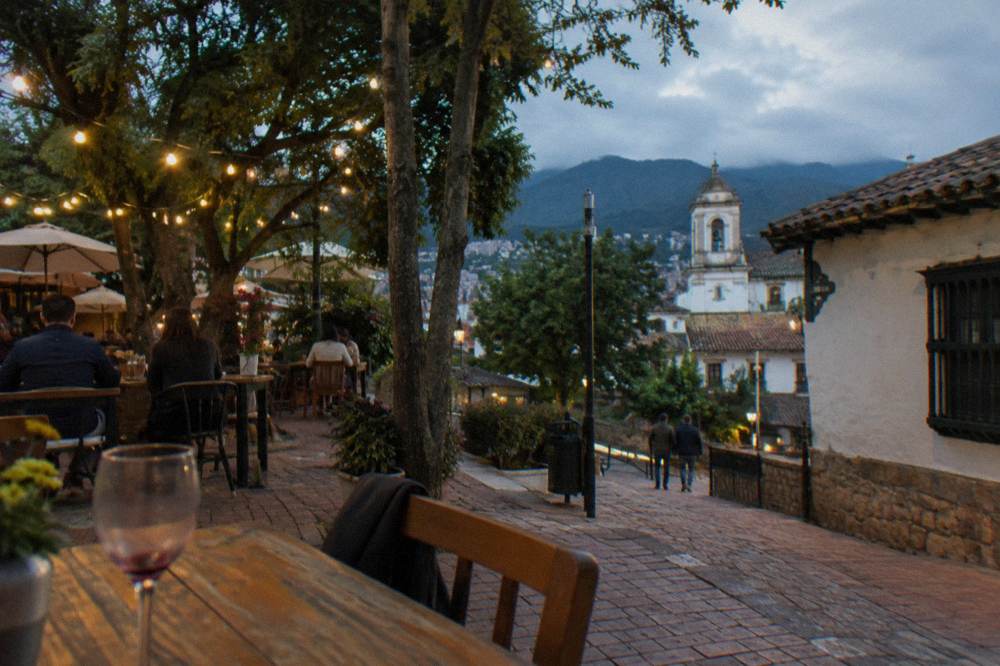
Zona G and Parque 93 are where Bogotá goes to spend on dinner. The 2026 Michelin hotel selections landed here, with Four Seasons Casa Medina in Zona G and Four Seasons Bogotá near Zona Rosa earning Keys and Casa Legado in Quinta Camacho retaining its, and the restaurant density matches. As a food base it is evening-weighted: superb from 7 p.m., thinner for markets and street food, and furthest from La Candelaria's walking tours.
The dining credentials are current. El Chato in Chapinero held the number one spot in Latin America's 50 Best as of December 2025 and was awaiting the November 2026 world results; no Colombian restaurant appeared in the 51 to 100 extended list announced in October 2026. The zone's restaurant weeks and festivals lean premium: Bogotá Gourmet 2026 runs to 22 November with fixed two-person menus at reported COP 89,000, 139,000 or 199,000 depending on tier, across more than 80 restaurants in Chapinero, Usaquén and beyond.
For a food lover whose trip is dinner-led, anniversary-grade, wine-list-first, Zona G is the base. For a trip that also wants a $17 shared street food walk or a dawn fruit market, it is the least practical of the four, and a Chapinero base one neighbourhood over captures most of its restaurant access at usually lower room rates. Room prices themselves are not verified here, so compare directly when booking.
Can You Stay Near Paloquemao Market?
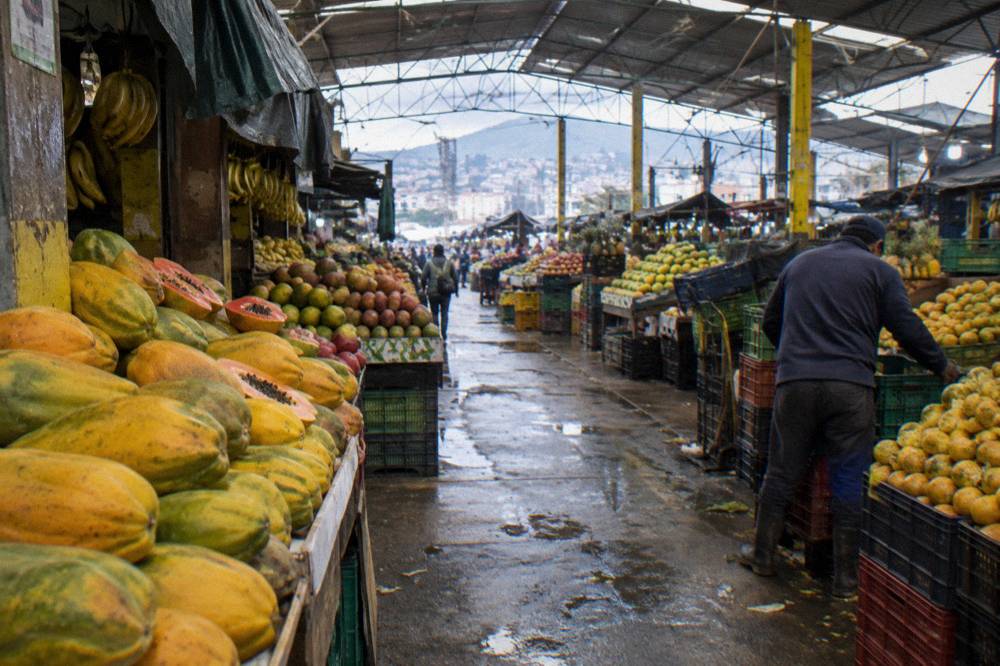
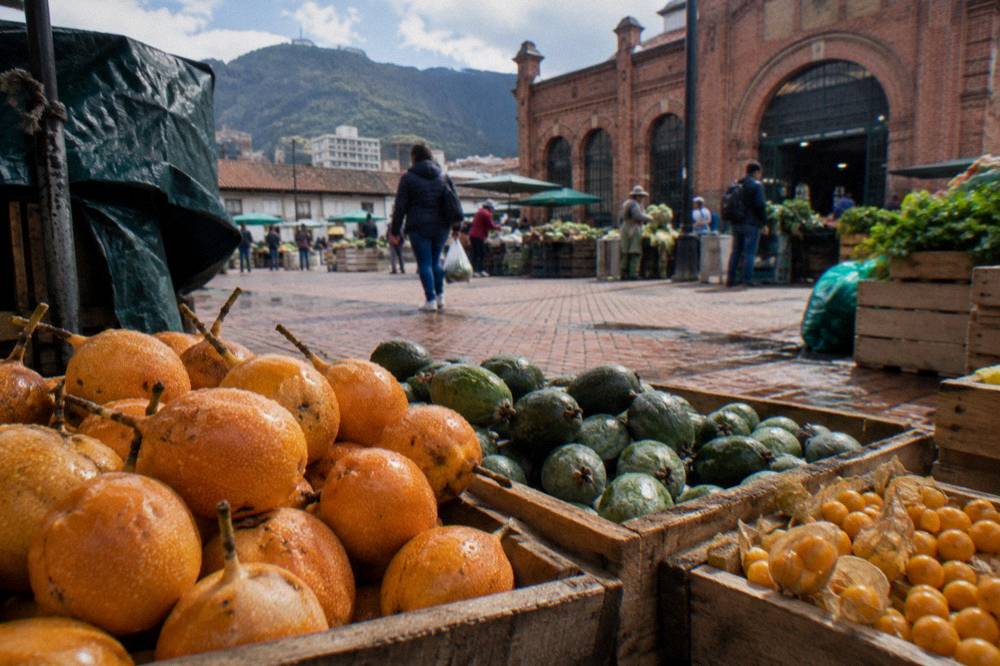
You can, and market obsessives should consider it. Paloquemao opens Monday to Saturday from 4.30 a.m. to 4.30 p.m. and Sundays and holidays from 5 a.m. to 4.30 p.m., so a nearby bed puts you inside early for the wholesale energy, when vendors hand out tastes of granadilla, lulo and uchuva. The district around it is workaday rather than charming, and the evening dining scene is limited.
The market itself had a cultural moment in 2026: its first opera performance in 54 years, staged on 25 October among the fruit stalls. Official hours and visitor information are on the plaza's own site, and Visit Bogotá carries the visitor overview. What a stay here really buys is the fruit-tour convenience: several of the market tours compared here meet inside Paloquemao, including the Shared Tour of Colombian Exotic Fruit, three hours from $50.17 and rated 4.6 across 32 reviews, and a private option from $112 with 25 or more tastings.
The practical compromise most visitors land on: sleep in Chapinero, reach Paloquemao by taxi in about 10 minutes for a morning tour, and be back in restaurant country by lunch. The fuller market picture, including what to buy and when to go, is in the Paloquemao market guide.

How Do Tour Meeting Points Change The Math?
Every walking food experience compared here meets in one of three places: La Candelaria, the historic centre broadly, or Paloquemao market. Staying in La Candelaria puts you at the meeting point for the 12-tasting and cultural walks; staying in Chapinero adds a short ride to all of them. No tour compared here meets in Usaquén or Zona G, so northern bases always travel to eat with a guide.
The meeting points and durations, as each operator states them:
| Experience | Duration | From price | Rating | Typical base |
|---|---|---|---|---|
| Viejo Bogota, 12+ tastings | 4 hours | $55 | 5.0 across 714 reviews | La Candelaria |
| Bogotá Food Experience | 4 hours | $47.15 | 4.9 across 615 reviews | Historic centre |
| Shared Gastronomy Tour | 3 hours | $15 guide fee, tastings about $12 extra | 4.9 across 291 reviews | Historic centre |
| True Colombian Walking Tour + Local Snacks | 2 to 3 hours | $54.68 | 4.9 across 130 reviews | La Candelaria |
| Food Tour in La Candelaria | 3 hours | $63 | 4.9 across 72 reviews | La Candelaria |
Two details matter when you book. First, the Shared Gastronomy Tour's headline price is a guide fee only; the tastings cost extra on the day, so its true cost sits near the all-inclusive walks. Second, morning departures dominate: a 9 or 10 a.m. start from La Candelaria is a stroll, but from Usaquén it is a pre-8 a.m. taxi. If morning markets matter more to you than guided walks, flip the logic and sleep near Paloquemao. Inclusion details and exact meeting points are stated on each operator's booking page, so confirm there before you commit.
What Does A Food-First Day Look Like From Each Base?
From La Candelaria: breakfast chocolate at an old counter, a morning tasting walk from your door, afternoon museums, dinner a short taxi away. From Chapinero: a roastery pour-over at 8 a.m., a 10-minute taxi to Paloquemao or La Candelaria for a tour, dinner in Zona G on foot. From Usaquén: one long food expedition per day. From Zona G: the city's best dinner tables walking distance home.
The altitude shapes all four. Bogotá sits at about 2,640 m, and the guidance recommends one to two days of adaptation, heavy hydration, light meals and little alcohol before strenuous days; symptoms such as headache typically peak in the first 24 to 48 hours. Plan your tasting walk for day two or three, not your landing morning, and keep day one light, a market stroll and soup rather than a four-hour, 12-tasting marathon. The details are in the eating at altitude guide.
Budget days differ sharply by base too. A La Candelaria day can run on street prices: the documented stall prices include a lulo juice at a reported 4,000 COP and a bakery almojábana at around 4,700 COP. A Zona G day runs on restaurant prices, with the Bogotá Gourmet menus a fair proxy for mid-to-premium dining. Neither is wrong; match the base to the trip you are actually taking, not the one you imagine.
| Base | Morning | Midday | Evening | Transit burden |
|---|---|---|---|---|
| La Candelaria | Chocolate and almojábanas nearby | Tasting walk from your door | Taxi to dinner | Lowest by day, taxi at night |
| Chapinero | Roastery pour-over | 10 to 15 min to any tour | Walk to Zona G | Lowest overall |
| Usaquén | Brewpub or cafe brunch | 30 to 40 min to any tour | Local restaurants | Highest |
| Zona G / Parque 93 | Cafe nearby | 20 to 30 min to tours | The point of staying here | High by day |
What About Getting Around And Safety?
The 2026 reports describe Chapinero, Usaquén, Parque 93, Zona T and Chicó as the more policed, comfortable visitor areas for day and evening walking, and La Candelaria as fine by day on main streets but higher risk for pickpocketing and best not walked alone after dark. The US advisory for Colombia stands at Level 3, Reconsider Travel, issued 31 March 2026, with no department-level listing on Bogotá itself. Treat these as reports; conditions change.
Transport is cheap and plentiful. The unified TransMilenio fare is a reported COP 3,550 as of January 2026, with a 125-minute transfer window; taxis from El Dorado airport run on a metered district tariff with an airport surcharge; app cars operate widely, often collecting from designated points. The full picture, including how each works with luggage and at night, is in the getting around guide.
The scam patterns worth knowing from the 2026 reporting: phone snatching on Chapinero's Carrera 7 in the evenings, drink-spiking followed by robbery, and fake plainclothes police demanding document checks, which you should never comply with on the street. None of this argues against any particular neighbourhood base; it argues for phones in pockets, drinks watched and the same street sense you would carry in any large city. Official advice is tracked by the UK foreign travel desk and the US State Department; check both before travel.
Which Base Should You Actually Book?
Book La Candelaria if the tasting walk is the centrepiece and you want the colonial core at your door. Book Chapinero if you want one base for everything, coffee, markets, walks and dinners, with the least transit. Book Zona G for a restaurant-led splurge, Usaquén for calm and the Sunday market. For most first-time food visitors, Chapinero with a La Candelaria walk booked for day two is the combination that wastes the fewest hours.
Whatever you choose, book the bed for the neighbourhood you will eat in at the hours you will eat, and the walk for the day after you land. The rest of the city is a short, cheap ride away, and Bogota Food Tours keeps the neighbourhood, market and dish guides that fill the gaps between meals.
Common Questions About Where To Stay In Bogotá For Food Lovers
Is La Candelaria Or Chapinero Better For A Food-Focused First Visit?
La Candelaria is better if tasting walks and food history are the priority and you accept taxis after dark. Chapinero is better as an all-round base, close to everything with the city's densest coffee and restaurant scene. Many visitors split the difference: Chapinero for the bed, La Candelaria for the walks.
Is It Safe To Stay In La Candelaria?
The 2026 neighbourhood reports describe La Candelaria as safe by day on main streets and squares, with higher pickpocket risk, and advise against walking alone after dark or in side streets. It is a report on conditions, not a verdict, and conditions change; standard city precautions apply.
How Far Is Usaquén From La Candelaria?
Roughly 30 to 40 minutes by car depending on traffic. Every walking food tour compared here meets in La Candelaria, the historic centre or Paloquemao, so a Usaquén base means a ride to every guided food experience.
Where Do Food Tours In Bogotá Meet?
The walks compared here meet in La Candelaria, the wider historic centre, or Paloquemao market. Exact meeting points are stated on each operator's booking page, so confirm before you book, especially if you are choosing a hotel around one tour.
Is Zona G Worth It For Food Lovers?
Yes for dinner-led trips: the 2026 Michelin hotel Keys landed in and around it and the restaurant density is among the city's best. It is the weakest base for markets and street food, so pair it with taxis or choose Chapinero next door for similar dining access.